Although individuals still need to learn a minimum of 7 separate subjects in order to receive a KCSE certificate, the new assessment system allows for greater flexibility than the previously strict system which required students to study specific science and non-science subjects regardless of their achievement in those subjects. KNEC now wants to place emphasis on a student’s most successful subjects.
To determine which subjects a student’s grade will be based on:
Mathematics is a compulsory subject and will always be included in a student’s average grade.
KNEC will then evaluate a person’s marks in English, Kiswahili and/or Kenyan Sign Language (where appropriate for someone who is hard of hearing). They will add to a pupil’s language score the best mark from these three subjects.
Finally, KNEC will review all other subjects that a student has studied and identify the five highest-scoring ones. If a person’s second language is among these 5, it will be incorporated into their average grade. However, if it is not, it will not be.
Marks for each subject are given on a 12-point scale. 12 points produces an unchanged A grade whereas 1 point results in an E. After identifying the 7 relevant subjects for assessment, KNEC will total the points and to calculate an individual’s score out of a maximum of 84.
This is then used to identify a person’s average grade. An overall score of 81–84 produces an unchanged A. A total of 46–52 points equates to a C+ grade which is the lowest requirement for entry to an undergraduate university course. An overall score of 7–10 points results in an E. Overall, then,, the revised assessment system enables those students who study more than seven subjects to ignore their subjects in which they performed less successfully, and so increase their average grade.
Liverpool beat Manchester United 4-0 at Anfield on Sunday. It was a complete demolition. Dominik Szoboszlai scored first, Wirtz scored second just three minutes later, and then Rio Ngumoha and Victor Munoz finished the job.
Wirtz was named Man of the Match. He scored and assisted. After the game, Sky Sports asked him about the table, because all the teams on top had dropped points that weekend.
Wirtz said: Yeah, this victory was definitely important today, also for the table situation. I think a lot of teams on top of the table, they did not win this weekend so it is good that we could use the chance.
He was honest about the red card too. Leny Yoro was sent off early after a run from Alexander Isak. Wirtz said the red card influenced the game a bit, but Liverpool earned it.
Then the reporter asked him directly: Are you talking about Arsenal?
Wirtz shut it down. He said: I was not talking about Arsenal. All the teams, I do not know, from one to three.
He said Liverpool did not speak so much about it in the dressing room, but everybody knew it was a big chance to make some points. He said he is happy they used this chance.
For me, that is why this is powerful. Wirtz is not talking like a fan. He is talking like a winner. He is saying we are Liverpool. We do not need to talk about one team. We believe we can go on top, because we are Liverpool.
Look at the table now. Liverpool are fourth on 21 points. They are just one point behind Manchester City and Brighton on 22 points. They are seven points behind leaders Arsenal. They are four points clear of fifth placed Bournemouth.
Wirtz also said he feels very good now. He said it is because the team is developing and getting better. He praised his two coaches, Andoni Iraola at Liverpool and Jurgen Klopp with Germany. He said both bring different qualities and he is happy to have both.
Next is the Merseyside derby at Everton. If Liverpool win there, they can move to within four points of Arsenal before Arsenal play Manchester City.
Do you believe Wirtz? Can Liverpool go on top of the Premier League this season? Tell me in the comments, I want to hear from Arsenal fans too.
Sources:
This article is based on Wirtz post match interview with Sky Sports on 22 November 2026 after Liverpool 4-0 Manchester United, as reported by Liverpool FC official website, Liverpool Echo, and DAZN.
The development comes as Kenya experiences a shortage of bitumen supplies, which has contributed to delays in major road projects, including the Rironi-Naivasha section of the Rironi-Mau Summit Highway. The Ministry of Roads and Transport has attributed the reduced supply partly to ongoing conflicts in the Middle East. If successful, the Japanese technology could offer Kenya an alternative approach to road construction while supporting plastic recycling and reducing pressure on conventional construction materials.
Source courtesy of https://www.facebook.com/100064288795404/posts/1592068746279403/?app=fbl
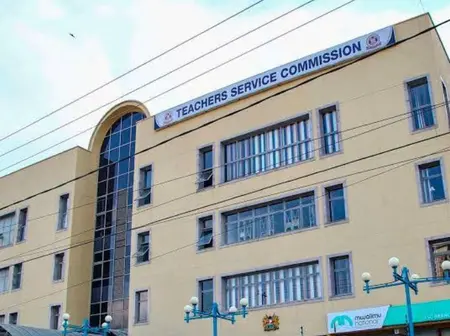
The Teachers Service Commission (TSC) has received a significant budget increase of Sh52.8 billion, bringing its total allocation to Sh477 billion, with the additional funding expected to support teacher recruitment, promotions, salary increments and the conversion of intern teachers to permanent and pensionable employment.
TSC Chief Executive Officer Cheptumo Ayabei announced the development, highlighting the increased financial allocation as an opportunity to address some of the longstanding challenges affecting teachers and improve service delivery in the education sector.
The expanded budget is expected to support the recruitment of additional teachers to address staffing shortages in public schools, particularly as the country continues implementing the Competency-Based Education (CBE) curriculum.
Teacher shortages have remained a major concern, with schools across different parts of the country reporting inadequate staffing levels, especially following the transition to junior and senior school under the new education system.
The allocation will also support teacher promotions, an issue that has attracted growing attention from educators and their unions over concerns about career stagnation and limited opportunities for professional advancement.
Thousands of teachers have previously raised concerns about remaining in the same job groups for extended periods despite gaining additional experience and qualifications.
Additionally, the increased funding is expected to facilitate salary adjustments for teachers as the government continues implementing agreed remuneration arrangements under the Collective Bargaining Agreement (CBA).
Another key priority is the conversion of teachers serving under internship contracts into permanent and pensionable employment.
The planned transition is expected to provide greater job security and improve working conditions for thousands of teachers who have been employed under internship arrangements.
The conversion programme has been among the major demands by teachers' unions, which have consistently called for the government to absorb intern teachers into permanent employment.
Ayabei's announcement comes as he assumes leadership of the commission, taking over an institution responsible for managing the country's teaching workforce.
The increased allocation is expected to strengthen TSC's capacity to manage teacher recruitment, remuneration, career progression and employment matters.
The development also comes amid continued pressure on the government to address teacher shortages and improve the welfare of educators across the country.
Homa Bay Town MP Peter Kaluma has left many Kenyans stunned after making remarks that appear to be critical of President William Ruto's government, a sharp turn from the stance he has held for a long time.
Speaking in a mix of Kiswahili and English, Kaluma said that the person who is chasing you away does not tell you to leave, a Swahili saying suggesting that people can tell when they are no longer wanted.
He went on to complain about the situation in Luo Nyanza, saying teachers are retiring without ever being employed by the Teachers Service Commission, while other regions are seeing teachers, soldiers and police officers being hired. He added that the children of the region are being treated as goons.
Kaluma also used the phrase "Tutam unconditionally" while expressing his frustration, in what many read as a dig at the unconditional support he once gave the president's re-election bid.
The MP has been known as one of the most vocal defenders of the Ruto government and has often said the president will win a second term.
His change of tone has surprised many, especially because it comes from a legislator who has strongly backed the government's broad-based arrangement with ODM.
Reactions online have been mixed. Some Kenyans have laughed it off, saying ground pressure is forcing even the staunchest allies to rethink their positions, while others have joked that the broad-based arrangement has left the region behind.
Some users have also questioned whether the remarks signal a real break with the government or are meant to put pressure on it to address the region's concerns.
While Grade 9 examinations remain a major concern for many Kenyan families, attention is increasingly shifting to the next stage of education. Parents are now preparing for senior school admission and the transition expected in January 2027.
The Kenya Junior School Education Assessment (KJSEA) will play an important role in this process. Besides assessing learners' performance in different subjects, it will help determine their suitability for the available senior school pathways.
Here are five important points parents should understand about the assessment and the transition.
Unlike the previous primary school assessment system, KJSEA does not combine all nine learning areas into one overall mark.
According to the Kenya National Examinations Council (KNEC) guidelines, learners' performance is assessed across individual subjects. A mathematical formula is then used to determine their potential across the three senior school pathways.
This approach recognises that learners have different strengths and abilities.
The final KJSEA assessment is not based entirely on the Grade 9 examination. It also takes into account learners' performance in earlier assessments.
According to KNEC guidelines, the assessment comprises:
This means that learners' performance throughout their earlier years of schooling contributes to the assessment.
Under the Competency-Based Education (CBE) system, senior school offers three broad pathways.
STEM covers Science, Technology, Engineering and Mathematics. Social Sciences includes areas such as humanities and languages, while Arts and Sports Science caters to learners interested in creative and sporting disciplines.
These pathways allow learners to develop skills in areas that match their interests and abilities.
Parents should therefore consider the subjects and facilities available at a senior school, rather than focusing on its name alone.
The government is targeting December 2026 for the release of KJSEA results.
On November 20, Education Cabinet Secretary Julius Ogamba said the Ministry of Education had prioritised the processing of the assessments to allow learners to be placed in senior schools before January 2027.
The marking exercise involves 13,484 examiners working across 24 centres, while multiple-choice responses are being processed using machines.
The December timeline will give parents and schools an opportunity to prepare for the admission process before the new academic year begins.
Once placement is completed, senior schools will need to ensure they have the facilities and teachers required to support learners in their selected pathways.
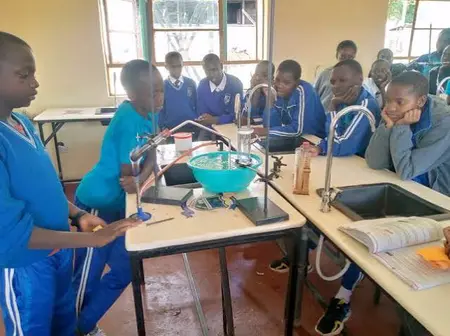
For example, schools offering science-related subjects need properly equipped laboratories. Other specialised learning areas also require suitable facilities, learning materials and teachers with relevant expertise.
Parents should also wait for official admission instructions before making financial commitments. They should verify school requirements through the Ministry of Education or the relevant institution rather than relying on unconfirmed information circulating on social media.
After the assessment process is completed, KNEC will release the results and provide the information required for senior school placement.
The Ministry of Education will oversee the transition, with learners expected to begin Grade 10 in January 2027.
For parents, understanding how KJSEA works will help them prepare for the next stage of their children's education. The priority will be ensuring that learners are placed in suitable pathways and have access to the resources needed to develop their abilities.
The agreement, announced in Nairobi on Tuesday, November 24, 2026, will see the two organisations expand medical coverage at domestic league matches and selected international fixtures.
The partnership targets four major competitions: the Kenya Premier League, FKF Women's Premier League, National Super League and Women's National Super League.
Under the arrangement, clubs and match organisers will have access to ambulance services, first aid teams, trained medical personnel and emergency response equipment.
The equipment will include trauma bags and stretchers to support the handling of injuries and other medical emergencies at football venues.
The agreement will also cover international matches hosted in Kenya, while Division One competitions will benefit from first aid services.
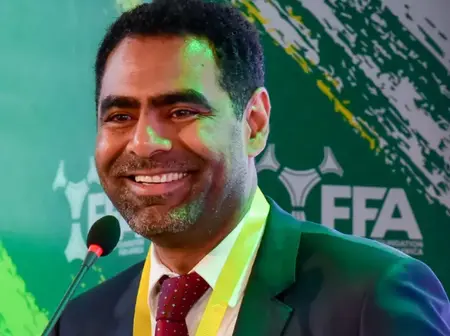
FKF President Hussein Mohammed said the partnership was part of the federation's broader efforts to improve safety standards and ensure football activities are supported by reliable medical services.
He emphasised that the responsibility of football administrators extends beyond organising matches to protecting the people who participate in and attend sporting events.
The partnership builds on an existing working relationship between FKF and the Kenya Red Cross, which has previously provided medical assistance during the Women's Premier League, the African Nations Championship (CHAN) and other international matches hosted in Kenya.
The expanded arrangement is expected to reduce the financial and logistical pressure on clubs and match organisers, who often have to make independent arrangements for medical support during fixtures.
By providing a coordinated medical response, the two organisations hope to improve preparedness in situations involving injured players, match officials and supporters.
Kenya Red Cross Society Secretary General Dr Ahmed Idris said the organisation would deploy its E-Plus ambulance services and first aid teams to football venues under the agreement.
Idris explained that the presence of trained responders and emergency equipment would help ensure that medical assistance is available when incidents occur during matches.
Beyond immediate match-day services, the partnership will also support youth-led initiatives intended to strengthen grassroots football development.
The two organisations will additionally support the FIFA Arena programme, which seeks to create safe spaces where young people can participate in football and develop their sporting abilities.
The initiative is expected to extend the partnership's impact beyond professional leagues by supporting opportunities for young players at community level.
The KSh54 million arrangement marks a significant investment in football safety, with its success expected to depend on how effectively the promised ambulances, medical teams and emergency equipment are deployed across the targeted competitions.
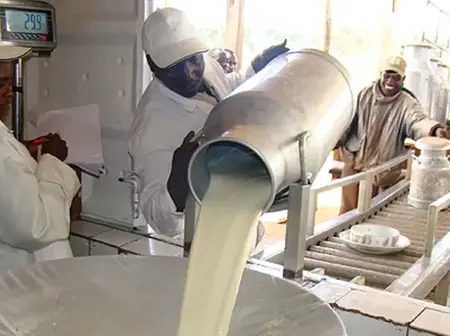
The announcement comes after President William Ruto promised farmers Ksh65 per litre and an additional quarterly bonus of Ksh2 per litre in October. Meanwhile, KNBS reported that milk deliveries to processors declined to 74.8 million litres in September 2026, down from 79.1 million litres in August, as some farmers increasingly opted for direct sales to consumers.
Source courtesy of https://www.facebook.com/100064288795404/posts/1591954956290782/?app=fbl
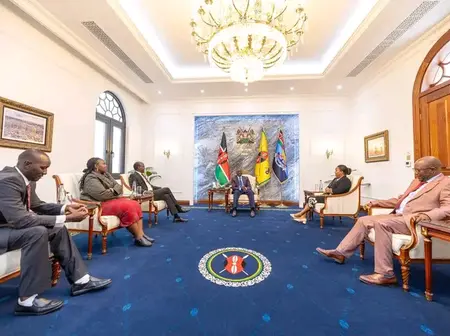
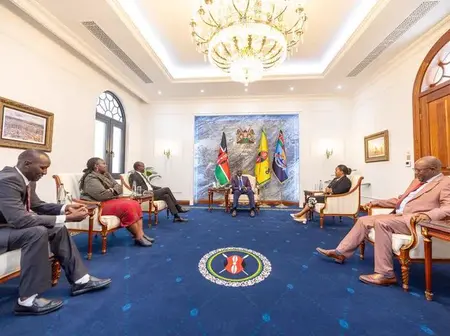
The meeting brings the Head of State face to face with Samburu leaders at a time when talks between national government and local representatives carry significant political weight. However, the specific issues discussed have not been made public.
That leaves residents and political observers waiting for details. Was the meeting focused on development priorities, government programmes, or broader political cooperation? Until an official account clarifies the agenda, it would be premature to attach particular promises or agreements to the engagement.
Samburu is an important part of Kenya’s political and development landscape. Like other counties, its residents look to leaders to address concerns affecting livelihoods, infrastructure, access to services and economic opportunities. Any discussion involving their representatives at State House is therefore likely to attract attention.
The presence of local leaders matters because they can communicate issues affecting communities directly to the national leadership. Residents will also expect such engagements to translate into clear action rather than remain ordinary political meetings.
The encounter has placed Ruto’s engagement with Samburu leaders under public focus. Many people were left talking about its significance, while the incident sparked reactions online. Supporters appeared divided on what the engagement might signal, although the actual outcome will depend on details released by the leaders.
For now, the public is waiting for a fuller explanation of the meeting and any decisions that may have emerged.
As Kenyans follow the developments, the key question is whether the engagement will lead to practical benefits for Samburu residents. What issue should Samburu leaders put first when engaging President Ruto? Share your views in the comments.
President William Ruto has held a meeting with leaders from Samburu County at State House, Nairobi, where discussions focused on ongoing government development programmes and projects aimed at improving the lives of residents.
The meeting provided an opportunity for the President and local leaders to review the progress of various development initiatives being implemented across the county, with particular attention given to infrastructure, water supply, housing and education.
In a statement following the meeting, President Ruto said his administration was committed to transforming Samburu County through development programmes being undertaken in collaboration with local leaders.
Among the key projects discussed was the upgrading of major roads, including the Maralal-Baragoi-South Horr and Kisima-Wamba roads.
The projects are expected to improve transport and connectivity, making it easier for residents to access markets, healthcare facilities and other essential services.
The leaders also reviewed progress on the Yamo Dam project, which is expected to strengthen water access for households and support economic activities in the region.
Water remains a major concern in several parts of Samburu County, particularly for communities that depend on livestock keeping and other agricultural activities.
The development of water infrastructure is therefore considered an important step towards improving livelihoods.
Affordable housing, modern markets and hostels for university and college students were also among the projects discussed during the engagement.
The proposed modern markets are expected to provide traders with better working environments while creating opportunities for local businesses to expand.
Meanwhile, student hostels are intended to improve accommodation facilities for young people pursuing higher education.
President Ruto emphasised the importance of working closely with local leaders to ensure that government development programmes deliver meaningful results to residents.
The meeting comes as the national government continues to push its development agenda across different counties, with infrastructure and access to essential services remaining key priorities.
The engagement also highlighted the role of cooperation between national and local leaders in identifying development needs and ensuring that ongoing projects benefit communities.
Through the initiatives discussed, the government aims to accelerate development in Samburu County and improve the economic and social well-being of its residents.