While Grade 9 examinations remain a major concern for many Kenyan families, attention is increasingly shifting to the next stage of education. Parents are now preparing for senior school admission and the transition expected in January 2027.
The Kenya Junior School Education Assessment (KJSEA) will play an important role in this process. Besides assessing learners' performance in different subjects, it will help determine their suitability for the available senior school pathways.
Here are five important points parents should understand about the assessment and the transition.
Unlike the previous primary school assessment system, KJSEA does not combine all nine learning areas into one overall mark.
According to the Kenya National Examinations Council (KNEC) guidelines, learners' performance is assessed across individual subjects. A mathematical formula is then used to determine their potential across the three senior school pathways.
This approach recognises that learners have different strengths and abilities.
The final KJSEA assessment is not based entirely on the Grade 9 examination. It also takes into account learners' performance in earlier assessments.
According to KNEC guidelines, the assessment comprises:
This means that learners' performance throughout their earlier years of schooling contributes to the assessment.
Under the Competency-Based Education (CBE) system, senior school offers three broad pathways.
STEM covers Science, Technology, Engineering and Mathematics. Social Sciences includes areas such as humanities and languages, while Arts and Sports Science caters to learners interested in creative and sporting disciplines.
These pathways allow learners to develop skills in areas that match their interests and abilities.
Parents should therefore consider the subjects and facilities available at a senior school, rather than focusing on its name alone.
The government is targeting December 2026 for the release of KJSEA results.
On November 20, Education Cabinet Secretary Julius Ogamba said the Ministry of Education had prioritised the processing of the assessments to allow learners to be placed in senior schools before January 2027.
The marking exercise involves 13,484 examiners working across 24 centres, while multiple-choice responses are being processed using machines.
The December timeline will give parents and schools an opportunity to prepare for the admission process before the new academic year begins.
Once placement is completed, senior schools will need to ensure they have the facilities and teachers required to support learners in their selected pathways.
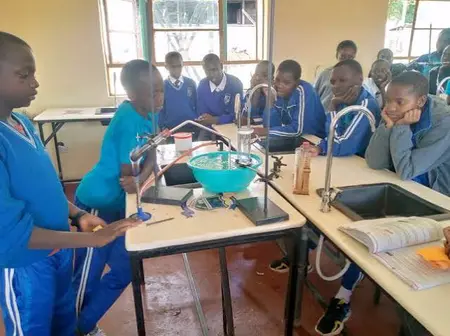
For example, schools offering science-related subjects need properly equipped laboratories. Other specialised learning areas also require suitable facilities, learning materials and teachers with relevant expertise.
Parents should also wait for official admission instructions before making financial commitments. They should verify school requirements through the Ministry of Education or the relevant institution rather than relying on unconfirmed information circulating on social media.
After the assessment process is completed, KNEC will release the results and provide the information required for senior school placement.
The Ministry of Education will oversee the transition, with learners expected to begin Grade 10 in January 2027.
For parents, understanding how KJSEA works will help them prepare for the next stage of their children's education. The priority will be ensuring that learners are placed in suitable pathways and have access to the resources needed to develop their abilities.
Leave a Reply