PAY ATTENTION:TUKO is in WhatsApp Channels now! Subscribe and read news in your favourite messenger.
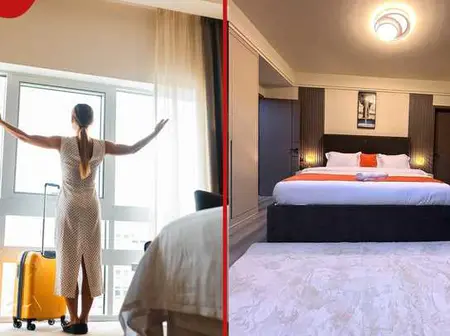
Entrepreneurs in Nairobi can enter the short-stay accommodation market without owning property through a model called rental arbitrage.

This involves leasing an apartment on a long-term contract, furnishing it to hotel standard, and re-letting it on platforms such as Airbnb or Booking.com at nightly rates.
The model differs from co-hosting, where an operator manages another person's listed property for a fee of roughly 15–25% of revenue, and from full property management contracts.
Rental arbitrage offers greater income potential but demands significantly more upfront capital and carries fixed monthly costs regardless of occupancy.

Safaricom clarifies what to do after receiving M-Pesa prompt: "Jikinge"
PAY ATTENTION:TUKO is in WhatsApp Channels now! Subscribe and read news in your favourite messenger.
Operating a short-let unit in Nairobi is legal but heavily regulated. Landlord consent is the first and most critical requirement.
You should get a written lease clause explicitly permitting short-stay subletting, as a verbal agreement or ambiguous contract is insufficient and risks eviction.
Building management or residents' associations must also approve the arrangement, as some compounds carry bylaws that prohibit short-term rentals.

Kenya Power flags poster selling prepaid meters for KSh 4,000
Beyond landlord permission, operators must obtain a Unified Business Permit from Nairobi County, costing roughly KSh 10,000 to KSh 30,000 annually, and register with the Tourism Regulatory Authority (TRA) under the 2025 regulations.
A TRA licence for a single serviced apartment costs KSh 1,000 to apply and KSh 12,000 per year, and the licence number must appear on both the Airbnb listing and at the property.
A 2% tourism levy on gross short-stay revenue, introduced in 2026, must also be remitted to the Tourism Fund.
Nairobi rental arbitrage is work-intensive and capital-intensive, but with careful planning it can yield returns.
The conservative path is to start with one unit (or even just co-host first), learn the ropes, ensure compliance, and only then replicate if profitable.
No unit on its own is a gold mine in Nairobi; operators report modest net profits per flat.
Startup capital for a single one-bedroom unit in an area such as Westlands and Kilimani ranges from roughly KSh 800,000 for a basic setup to over KSh 1.5 million for a mid-range fit-out.
That figure covers a lease deposit, furnishing, soft goods, photography, permits and three months of operating reserves. Working capital is frequently underestimated; without a cash buffer, a slow launch period can end the venture before it gains momentum.

Kenyans advise Saudi returnee earning KSh 70k on best business ideas, suggest several
Nairobi-wide average occupancy sits at approximately 26%, with Westlands recording around 32% and an average daily rate of roughly KSh 7,100.
A realistic base-case projection for a one-bedroom unit, with an average daily rate of KSh 8,000 and 50% occupancy, produces monthly gross revenue of around KSh 120,000 against costs of approximately KSh 92,000, leaving a net of roughly KSh 28,000.
Single-unit margins are described by analysts as thin, with scale across five or more units needed to absorb seasonal gaps.
She advised prospective hosts to begin with the numbers rather than the apartment search.
She recommended co-hosting or managing an existing property as a lower-risk starting point before committing capital to a lease.
Source: TUKO.co.ke
Leave a Reply