
Listen to articleThe findings showed that strength training was more effective at reducing depressive symptoms than the other activities. The difference was particularly noticeable among people who already had a mental health diagnosis.Exercise has long been recommended for people experiencing depression, but new research suggests that strength training, particularly lifting weights, may be more effective at reducing symptoms than other forms of physical activity.
Category: Health
-

Alcohol Use Among Young People Raises Public Health Concerns in Kenya
Nairobi, Kenya: Alcohol intake among young adults is raising public health concerns in the country, with university students recording higher levels of consumption and addiction than the general population.A 2024 study by the National Authority for the Campaign Against Alcohol and Drug Abuse (NACADA) found that alcohol use was higher among university students, at 18.6%, compared with 3.8% among secondary school students and 2.6% among primary school pupils.
-

Saturday surgery: Things to know about corneal transplant as Baba Talisha goes under the knife
Kenyan content creator Baba Talisha is scheduled to undergo his first corneal transplant on Saturday, November 21, 2026, as he battles a severe eye condition that has left him unable to see through his left eye.The procedure is aimed at replacing damaged corneal tissue and potentially restoring his vision following an aggressive infection that doctors diagnosed after conducting more than 14 medical tests over approximately two months.
-
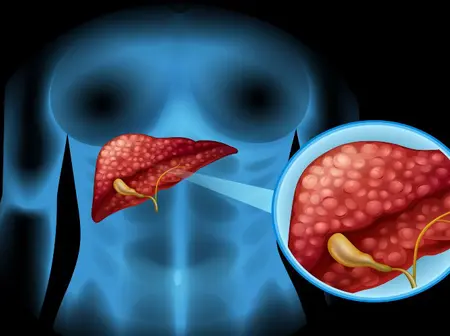
New pill and chemotherapy combination shrinks pancreatic cancer tumours in trial
Listen to articleDesigned to block signals that make cancer cells multiply and spread, it was taken once a day alongside two chemotherapy drugs, gemcitabine and nab-paclitaxel, which were given through injections twice during each treatment cycle.A new daily pill combined with chemotherapy has made pancreatic cancer tumours disappear from scans in some patients and significantly reduced their size in others, offering hope of better treatment for one of the deadliest forms of cancer.
-
Good News to SHA Users as Government Makes This Bold Statement
During his recent remarks, Ruto stated that approximately 33.7 million Kenyans had registered with SHA, representing a significant increase from the roughly eight million people who were registered under the National Hospital Insurance Fund (NHIF) in 2022.
The figures highlight the government's efforts to expand access to healthcare through the new insurance system, which replaced NHIF as part of the administration's wider health reforms.
However, the numbers have raised questions about what registration actually means for ordinary Kenyans seeking medical services.
Although millions of people have reportedly enrolled in the new system, registration alone does not necessarily mean that every individual can access medical treatment without difficulties.
There is also a need to distinguish between the number of people registered, those making regular contributions and individuals who can successfully receive healthcare services when they need them.
The distinction is important because the success of SHA cannot be measured by registration figures alone. The quality of services, hospital access, claims processing and the ability of families to obtain treatment are equally important.
The government has maintained that the new healthcare programme is intended to improve access to medical services and reduce the financial burden on households.
Nevertheless, the latest examination places renewed focus on whether the impressive registration figures reflect meaningful improvements in healthcare delivery.
As debate surrounding the programme continues, Kenyans will be watching closely to see whether the promises made under SHA translate into better and more affordable medical services.
-

Nairobi Hospital CEO Felix Osano Officially Exits After 18 Months in Office
The Nairobi Hospital has announced a major leadership change following the departure of its Chief Executive Officer, Felix Osano, who has officially left office after serving for 18 months.
The announcement was made by the hospital's Board Chair, Dr Barcely Onyambu, who confirmed Osano's exit as the institution prepares for a transition to new leadership.
Osano's departure marks the end of his tenure at the helm of one of Kenya's leading private healthcare institutions.
He had served as CEO for approximately one and a half years before officially leaving the position.
Following his exit, the hospital's management has moved to ensure continuity in its operations by appointing an acting chief executive to oversee its affairs during the leadership transition.
Dr Magdalene Wambui Kamande, who previously served as the Director of ICT and Transformation Services at the hospital, has been appointed Acting Chief Executive Officer.
Her appointment places her at the centre of the institution's leadership as it navigates the transition and continues delivering healthcare services to patients.
Dr Kamande brings experience from her previous role within the hospital, where she was responsible for overseeing ICT and transformation services.
Her familiarity with the institution's internal operations is expected to be important as she assumes the additional responsibilities of leading the organisation.
The leadership changes come at a time when major healthcare institutions face growing expectations to improve service delivery, strengthen management systems and maintain public confidence.
The Nairobi Hospital is among the country's prominent private healthcare providers, serving patients from different parts of Kenya and beyond.
Although the board has confirmed Osano's departure and Dr Kamande's appointment in an acting capacity, further details regarding the circumstances surrounding the CEO's exit and the process of selecting a substantive replacement were not provided in the announcement.
Attention will now turn to the hospital's next steps as Dr Kamande takes charge during this transitional period.
Sources;
https://www.facebook.com/share/p/19sCaCegyj/
-
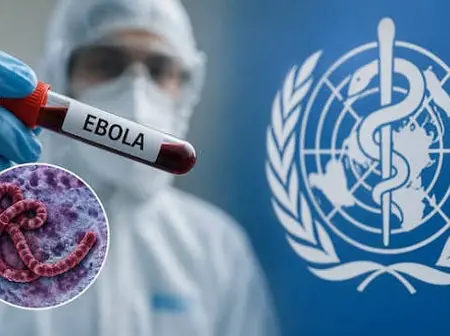
Uganda Announces Fresh Measures as Ebola Threat Raises Concern Along DRC Border
Uganda has introduced additional Ebola prevention measures, including mandatory health assessments and 21 days of quarantine or monitored self-isolation for citizens returning from the Democratic Republic of Congo (DRC).
The new directives, announced by Uganda's Ministry of Health on Thursday, November 19, 2026, follow increased movement of people across the country's borders, including through unauthorised crossing points.
The ministry warned that the movement of people through unofficial routes could increase the risk of Ebola entering Uganda and spreading to other communities and neighbouring countries.
“With the current heightened surveillance, the Ministry has observed continued movement of people across our borders, including through ungazetted crossing points, which has increased the risk of the disease entering Uganda and spreading to our communities and to other countries,” the statement read.
As part of the measures, authorities have intensified health prevention procedures at Entebbe International Airport for both arriving and departing passengers. All air travellers must now complete passenger locator forms before boarding to support contact tracing.
Airlines and other transport operators found knowingly carrying unauthorised or improperly documented travellers will face sanctions. People caught crossing the border illegally, together with those who facilitate such movements, may also face prosecution or other penalties under the law.
Ugandans returning from the DRC will undergo mandatory health risk assessments before being placed under 21 days of quarantine or monitored self-isolation.
Humanitarian workers intending to cross the border must also obtain clearance from the Director General of Health Services before travelling.
The government has further suspended concerts, festivals, rallies and similar mass gatherings in designated high-risk border districts until further notice. Such events will only be allowed with written clearance from the Ministry of Health.
Additional requirements have been introduced for communities and institutions operating in the affected areas. New arrivals and people relocating to high-risk districts must immediately report to their respective Local Council I chairpersons.
The movement of day scholars between Uganda and the DRC within 34 designated high-risk districts has also been prohibited.
Hotels and other accommodation facilities must maintain accurate guest records, verify visitors using valid identification documents and make the information available to health and security authorities.
Schools, health facilities, transport terminals, places of worship, hotels and other public places have also been directed to provide handwashing facilities and observe infection prevention and control measures.
The developments come as Kenya continues monitoring its Ebola situation following progress in contact tracing.
On Tuesday, November 17, Kenya's Ministry of Health announced that all 135 identified contacts had been successfully traced, achieving 100 per cent coverage against the World Health Organisation's benchmark of 85 per cent.
The ministry also reported that no new cases had been recorded since October 19, 2026, and that there was no evidence of community transmission. The final group of contacts completed monitoring and was released on November 11.
Kenya had entered the sixth day of its mandatory 42-day countdown towards an anticipated Ebola-free declaration on December 23, 2026, provided no new confirmed infections were reported.
The Ministry of Health said surveillance and screening would continue throughout the countdown period to guard against further infections.
Source
-

Uganda Announces New Measures Along DRC Border Amid Ebola Threat, Issues Fresh Directives
The Ugandan government has introduced fresh measures to prevent the spread of Ebola Virus Disease from the Democratic Republic of Congo (DRC), raising attention across East Africa.
In a statement issued on Thursday, November 19, Uganda's Ministry of Health announced additional restrictions following increased movement of people across the country's borders, including through unofficial crossing points.
The new measures immediately took effect in 34 designated high-risk districts as authorities stepped up efforts to prevent further infections.
Among the measures is intensified screening at Entebbe International Airport, where passengers arriving and departing will face additional health checks. All air travellers must also complete passenger locator forms before boarding to support contact tracing.
Ugandans returning from the DRC will undergo mandatory health risk assessments and may be placed under 21 days of quarantine or monitored self-isolation, depending on their circumstances.
The government has also suspended concerts, festivals, political rallies and other large gatherings in the affected districts unless organisers obtain written clearance from the Ministry of Health.
Additionally, humanitarian workers crossing the border must first obtain clearance from the Director General of Health Services. The transfer of bodies across Uganda's borders will also require official authorisation.
The restrictions further require hotels and accommodation facilities to maintain accurate guest records and verify visitors using valid identification documents.
Schools, hospitals, places of worship and other public facilities have also been directed to strengthen hygiene measures, including providing handwashing facilities.
Ugandan authorities warned that people crossing the border through unauthorised routes, as well as those facilitating illegal entry, could face prosecution.
The announcement comes as the Ebola outbreak in the DRC continues to raise public health concerns across the region.
Kenya is also monitoring the situation after recording nine confirmed cases linked to an imported infection earlier in October.
The country has since reported no new cases since October 19 and is working towards a possible Ebola-free declaration around December 23, provided no further infections emerge.
Uganda's latest measures highlight the importance of cross-border surveillance as East African countries strengthen their preparedness against the disease.
-
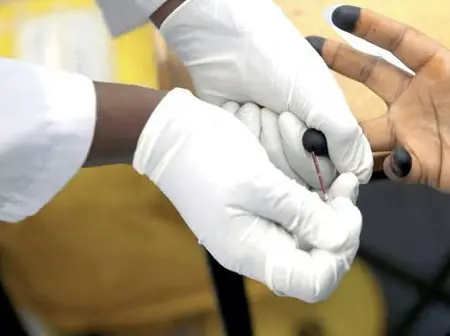
Kenya’s Female Sex Workers Among Groups Most Affected by HIV, NSDCC Reveals
The first case of HIV in Kenya was detected in 1984. By the mid-1990s, HIV was one of the major causes of illness in the country, putting huge demands on the healthcare system as well as the economy. In 1996, 10.5% of Kenyans were living with HIV, although prevalence has almost halved since then, standing at 5.9% by 2015. This progress is mainly due to the rapid scaling up of HIV treatment and care. In 2016, 64% of people living with HIV were on treatment, 51% of whom were virally suppressed.
In adjusted analyses, HIV seroprevalence was associated with childhood and adolescence including violence from militia or soldiers (AOR = 1.60; 95%CI:1.00–2.53), young age at sexual debut (≤15 years old vs. ≥18 years AOR = 0.57; 95%CI:0.39–0.84) and teenage pregnancy (AOR = 1.37; 95%CI:1.00–1.88). For adulthood the factors included lower SES score (lowest vs. highest tertile AOR = 0.63; 95%CI:0.40–0.98); reduced housing insecurity (AOR = 0.52; 95%CI:0.54–0.79); lower alcohol/drug use score (AOR = 0.44; 95%CI:0.31–0.61); and a longer duration of selling sex (0–5 years vs. ≥11 years AOR = 2.35; 95%CI:1.44–3.82).
Kenya has an estimated 300,000 female sex workers who account for 27% of new HIV infections nationwide, according to figures cited from the National Syndemic Diseases Control Council (NSDCC). While public health reports highlight high HIV prevalence among female sex workers in Kenya, there is no official ranking showing Kenya as leading the world in female sex work or having the highest HIV prevalence globally.
Female sex workers make up roughly 27% of new HIV infections in Kenya.
The NSDCC chief executive further revealed that the country spends between KSh15,000 and KSh20,000 annually to keep each person living with HIV on treatment, translating to an estimated KSh25 billion in yearly expenditure.
On key populations, Bosire noted that Kenya has approximately 300,000 female sex workers, who account for 27 per cent of new HIV infections, while men who have sex with men account for 19 per cent.
The council also reported that 75 per cent of children know their HIV status.
https://www.facebook.com/share/19vjFqsgew/
-
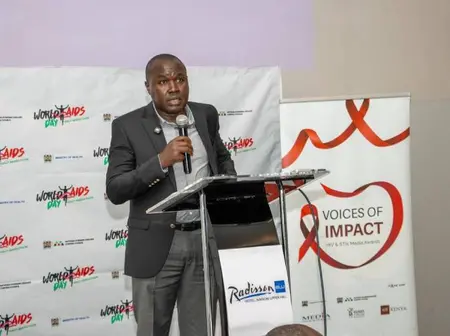
Health Officials Plan Nationwide Community Dialogues and Accountability Forums Ahead of December 1
The report underscores the severe toll of delayed diagnosis and interrupted therapy on young patients. The AIDS-related death rate among children currently stands at 32.1 per 1,000, more than double the adult mortality rate of 12.2 per 1,000, with Nairobi, Homa Bay, and Kisumu counties recording the highest burden of child AIDS mortality.
Speaking on the findings, National Syndemic Diseases Control Council (NSDCC) Chief Executive Officer Douglas O.
Bosire noted that a child born with HIV in Kenya today has every reason to live a full life, stressing that closing the survival gap is now a matter of logistics and sustained attention rather than medical science.
Ahead of World AIDS Day on December 1, 2026, county governments and health partners—including organizations such as AHF Kenya—are mobilizing across all 47 counties to address pediatric testing and treatment bottlenecks.
Planned interventions include community dialogues, public accountability forums, memorial vigils, and candle-lighting ceremonies aimed at combating stigma, strengthening postnatal follow-up, and ensuring every HIV-exposed child is tested and retained in care.
What are your thoughts about this article? Share your reactions in the comment section and don't forget to share and follow for more updates.
https://www.standardmedia.co.ke/health/health-science/article/2001562709/more-than-14000-children-living-with-hiv-remain-undiagnosed-in-kenya