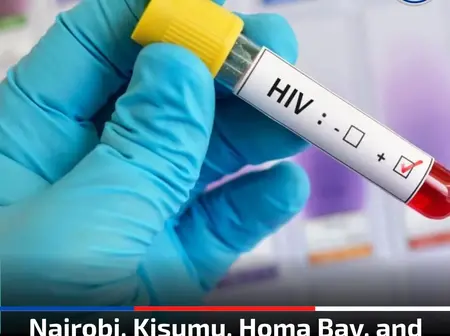
Nairobi, Kisumu, Homa Bay, and Migori counties recorded the highest numbers of new HIV infections in Kenya, accounting for nearly a third of all new cases reported nationwide, according to the latest National Syndemic Diseases Control Council report.Data from the 2026 Kenya HIV Estimates reveals that out of the 13,936 new HIV infections recorded across the country over the past year, Nairobi County topped the chart with 1,516 new cases.
Category: Health
-
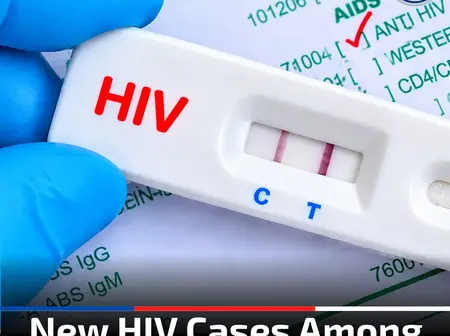
New HIV Cases Among Women Double Men’s
New HIV infections among adult women in Kenya are more than double those recorded among men, even as overall annual infections dropped by 30 per cent nationwide, according to the latest National Syndemic Diseases Control Council report.Data released ahead of World AIDS Day commemorations shows that Kenya recorded 13,936 new HIV infections over the past year, with 1.35 million Kenyans currently enrolled on lifesaving antiretroviral therapy.
-

Babu Owino raises fresh concerns over Nairobi hospitals, demands better healthcare
Embakasi East MP and Nairobi governor aspirant Babu Owino has raised fresh concerns over the state of healthcare facilities in Nairobi, saying residents deserve better medical services and treatment that upholds their dignity.
“The state of our hospitals in Nairobi is heartbreaking,” Babu said.
He argued that access to quality healthcare should not be treated as a privilege, but as a fundamental right, urging authorities to address the challenges affecting service delivery in medical facilities.
“Our people deserve dignity, quality healthcare and a system that works for everyone,” he stated.
“Access to quality healthcare is not a privilege. It is a fundamental right,” he added.
The MP’s remarks renew attention on healthcare service delivery in Nairobi, particularly the quality, affordability and accessibility of treatment in public facilities.
On Wednesday, February 11, 2026, Babu addressed the National Assembly during debate on the Health Laws (Amendment) Bill, which sought to address the treatment of emergency patients and the retention of bodies over unpaid medical bills.
“If you walk into Mama Lucy Kibaki Hospital and you do not have Ksh500 for a chest X-ray, it means you will die,” he told the House.
He also questioned the practice of hospitals retaining bodies over unpaid bills, saying it compounded the suffering of bereaved families.
The latest statement does not identify particular hospitals or outline specific interventions Babu wants implemented, but renews his call for improvements in Nairobi’s healthcare system.
“Nairobians deserve better,” he said.
His remarks come as he positions himself for the Nairobi gubernatorial contest, placing healthcare service delivery among the issues he has publicly raised.
-

Doctors to Receive Up to Sh3 Million Each in Sh76 Million Salary Arrears Deal
Medical practitioners across the country are set to receive up to Sh3 million each following the release of Sh76 million in unpaid salary arrears negotiated between the Kenya Medical Practitioners, Pharmacists and Dentists Union and the Ministry of Health.In a statement announcing the breakthrough, KMPDU Secretary General Davji Bhimji Atellah confirmed that the funds have been released to clear long standing remuneration balances owed to doctors under the Collective Bargaining Agreement.
-

Health professionals call for tighter controls on antibiotic use
Kenya’s medical, dental and pharmaceutical professionals have called for tighter controls on the use of antibiotics and other antimicrobial medicines amid concerns that drug resistance could trigger a major public health crisis.
The Kenya Medical Association (KMA), Kenya Dental Association (KDA) and Pharmaceutical Society of Kenya (PSK) warned that antimicrobial resistance (AMR) threatens the effectiveness of life-saving medicines. They urged the government to strengthen regulation, surveillance and public awareness.
In a joint statement issued to mark World Antimicrobial Resistance Awareness Week 2026, observed from November 18 to 24, the associations said Kenya must take urgent action to prevent the growing threat from undermining healthcare gains made over recent decades.
The organisations cited estimates showing that bacterial antimicrobial resistance was linked to approximately 4.7 million deaths globally in 2021 and could directly cause 39 million deaths between 2025 and 2050.
Africa is expected to bear a disproportionate share of the burden, making the threat particularly concerning for countries such as Kenya.
“AMR is one of the greatest threats to global health,” the associations said, calling for coordinated interventions under a One Health approach that recognises the interconnectedness of human, animal and environmental health.
They reaffirmed their commitment to supporting Kenya’s National Action Plan on AMR, noting that preserving the effectiveness of existing medicines was essential to improving health outcomes.
The professionals identified infection prevention as the strongest defence against resistance. They called for increased vaccination, proper hand hygiene, infection prevention and control measures, and improved oral health.
They also urged healthcare practitioners to prescribe and dispense antimicrobial medicines responsibly and only when clinically necessary.
The associations called for stronger antimicrobial stewardship programmes to educate patients and healthcare workers on appropriate medicine use and the safe disposal of unused drugs.
They challenged the government to enforce documented, prescription-based use of antimicrobials to curb inappropriate access and consumption.
Other proposed interventions include expanding diagnostic services and surveillance systems to monitor antimicrobial use and resistance, as well as strengthening enforcement against substandard and falsified medicines in the market.
The associations further urged the government to utilise existing County AMR Focal Persons to improve coordination, implementation and public awareness at county and grassroots levels.
They also called for infection prevention and oral health interventions to be strengthened within Kenya’s National Action Plan on antimicrobial resistance.
The warning comes amid growing global concern over the misuse and overuse of antimicrobial medicines, which can make infections increasingly difficult to treat.
Addressing the public, the three professional organisations cautioned Kenyans against self-medication, sharing antibiotics or keeping unused medicines for future use.
They urged patients to take antibiotics only when prescribed by qualified healthcare professionals and to follow instructions on dosage and duration.
Unused medicines should be returned to pharmacies for safe disposal rather than retained or discarded improperly.
“Protecting the effectiveness of antimicrobials is a shared responsibility,” the associations said, urging collective action to safeguard essential medicines and protect communities for generations to come.
The 2026 awareness campaign is being conducted under the theme, “One Health, One Action: Prevent AMR Now.”
-
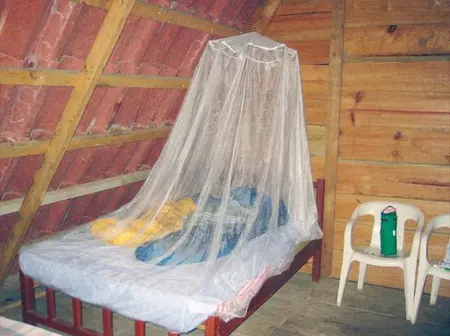
Kenya to distribute 10.79 million mosquito nets in 18 malaria-endemic counties
Listen to articleThe nets will be distributed free of charge, with households warned against paying anyone to access them.The Ministry of Health is targeting 18 malaria-endemic counties and 99 sub-counties in a nationwide campaign to distribute 10.79 million insecticide-treated mosquito nets to protect communities most at risk of infection.
-

Junk food linked to poorer mental health, cognition – study
Listen to articleHigh consumption of energy-dense, nutrient-poor foods and sugary drinks was associated with young people's mental health, wellbeing and academic results.Poor diets high in junk food and sugary drinks are associated with poorer mental health, cognitive performance and academic outcomes among Australian children and adolescents, new research finds.
-
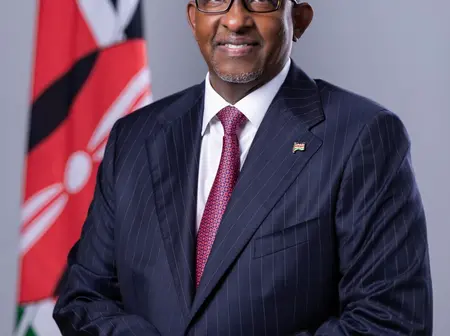
Kenya rolls out SMS verification to curb false SHA drug claims
The government has introduced a patient verification system that allows Kenyans to report hospitals that fail to provide prescribed medicines, exposing the facilities to deductions from their Social Health Authority (SHA) reimbursement claims.Health Cabinet Secretary Aden Duale said the mechanism requires patients to confirm through text messages whether they received medicines prescribed during their hospital visits.
-
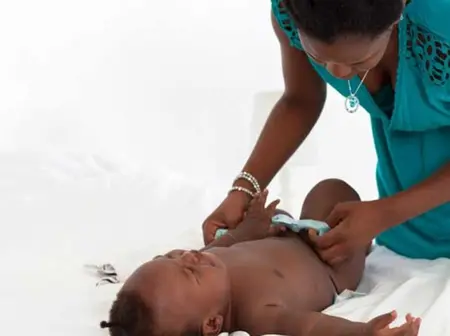
Can Diapers Affect Baby Boys’ Penis Growth? Doctor Explains
The discussion attracted public attention after members of the Kikuyu Council of Elders reportedly raised the issue during traditional circumcision ceremonies, claiming they had observed what they considered unusually small reproductive organs among some boys undergoing initiation.
The elders suggested that disposable diapers, particularly when worn for extended periods, could expose boys' private parts to excessive heat and potentially interfere with their development. Their remarks prompted parents and members of the public to question whether a product commonly used in modern childcare could have unintended consequences.
However, medical experts have challenged the claims, explaining that there is currently no convincing scientific evidence showing that disposable diapers reduce penis size or prevent normal genital development.
According to NTV's report, consultant urologist Dr Winstar explained that concerns surrounding diaper use should not be confused with established medical facts. Although disposable nappies can create a warm and moist environment around a baby's genital area, this does not demonstrate that they interfere with the growth of the penis.
Medical experts explain that male genital development is influenced by several biological factors, including genetics, hormones and general health. Testosterone, in particular, plays an important role in male reproductive development, while hereditary factors contribute significantly to differences in physical characteristics.
Doctors also point out that some boys may appear to have smaller reproductive organs because of a condition known as buried penis. The condition occurs when a normally developed penis is partially concealed by surrounding skin or fatty tissue, making it appear shorter than it actually is.
Another important consideration is that children develop at different rates. Parents are therefore discouraged from comparing their sons' genital development with that of other children, especially when there are no medical assessments to support such conclusions.
Despite dismissing the alleged connection between diapers and penis growth, health professionals encourage parents to observe proper hygiene when using disposable nappies. Leaving a child in a wet or soiled diaper for prolonged periods can cause skin irritation, discomfort and diaper rash.
Parents are also advised to choose appropriately fitting diapers, change them regularly and clean their babies gently during diaper changes. Allowing children some diaper-free time can also help keep the skin dry.
The debate highlights the importance of separating traditional beliefs from medical evidence, particularly when discussions involve children's health and development. While parents can make informed decisions about the products they use on their children, doctors say concerns about genital development should be addressed through proper medical examinations rather than assumptions.
Ultimately, there is no established scientific proof that disposable diapers make baby boys' penises smaller. Parents who notice unusual genital development or have concerns about their children's reproductive health should consult a qualified medical professional.
https://x.com/ntvkenya/status/2123345440074772797/photo/1?a=788WNSaOEvjXtTu8jdE&s=19
-
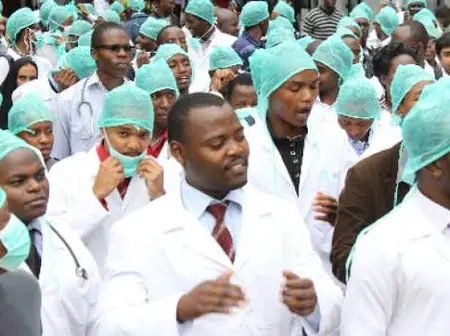
KMPDU Announces KSh76 Million Salary Arrears Payment for Doctors in November
The union has announced that the Ministry of Health has allocated KSh76 million towards the partial settlement of outstanding payments owed to doctors, some of which date back to 2017.
KMPDU Secretary General Dr Davji Bhimji Atellah announced the development on Thursday, November 19, 2026, following a meeting with Principal Secretary for Medical Services Dr Ouma Oluga.
According to Atellah, the allocated amount is expected to reflect in doctors' November payslips. However, the payment will only cover part of the outstanding arrears, with the amount received by each doctor depending on their individual entitlements.
Some doctors could receive payments of up to KSh3 million, depending on the arrears accumulated over the years.
The meeting also resulted in the formation of a joint taskforce comprising officials from the Ministry of Health and KMPDU. The team will be responsible for verifying and recalculating the outstanding amounts owed to individual doctors.
The exercise will cover the period between 2017 and June 2026 and will include doctors working in health facilities as well as those serving at the Ministry of Health headquarters.
Atellah said the verification process was intended to establish the correct balances owed to each doctor and ensure that all eligible practitioners receive their dues.
Once the exercise is completed, the government is expected to settle the remaining verified arrears through the December 2026 payroll.
Beyond the salary arrears, the discussions also addressed disparities in the remuneration of doctors serving under the Department of Medical Services.
According to the union, Oluga committed to writing to the Salaries and Remuneration Commission (SRC) to facilitate the harmonisation of doctors' remuneration using facility-based rates.
The proposed harmonisation is expected to take effect in January 2027. If implemented, the arrangement could address differences in pay among doctors serving under the department.
The meeting also considered the long-standing issue of unpaid call allowances. The Ministry committed to making provision for the outstanding payments in the 2027/2028 financial year budget, with disbursements expected to begin in July 2027.
The latest commitments come amid continued engagements between doctors and the government over employment benefits, salary adjustments and the implementation of agreements reached with the union.
In recent years, KMPDU has repeatedly called for the government to honour its commitments to medical practitioners, arguing that delayed payments and unresolved employment issues affect doctors' welfare and morale.
On November 4, 2026, the union issued a 21-day strike notice to 17 county governments over failure to implement agreed basic salary adjustments. It warned that doctors in the affected counties could withdraw their services from November 25 if the outstanding adjustments were not reflected in their payslips.
The latest agreement with the Ministry of Health is, however, a separate development focusing on arrears owed to doctors serving under the national Department of Medical Services.
Atellah welcomed the commitments made during the meeting but maintained that the union would continue monitoring their implementation to ensure that the promised payments are delivered.
The November allocation is expected to provide partial relief to affected doctors as the government works towards clearing the remaining verified arrears in December and addressing other outstanding remuneration concerns in the coming financial years.