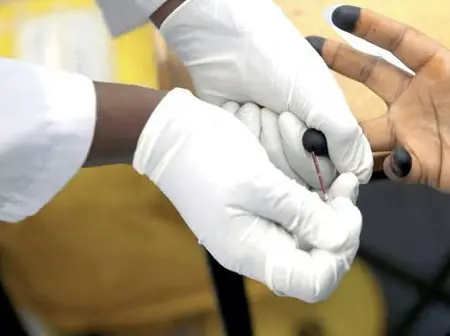
The first case of HIV in Kenya was detected in 1984. By the mid-1990s, HIV was one of the major causes of illness in the country, putting huge demands on the healthcare system as well as the economy. In 1996, 10.5% of Kenyans were living with HIV, although prevalence has almost halved since then, standing at 5.9% by 2015. This progress is mainly due to the rapid scaling up of HIV treatment and care. In 2016, 64% of people living with HIV were on treatment, 51% of whom were virally suppressed.
In adjusted analyses, HIV seroprevalence was associated with childhood and adolescence including violence from militia or soldiers (AOR = 1.60; 95%CI:1.00–2.53), young age at sexual debut (≤15 years old vs. ≥18 years AOR = 0.57; 95%CI:0.39–0.84) and teenage pregnancy (AOR = 1.37; 95%CI:1.00–1.88). For adulthood the factors included lower SES score (lowest vs. highest tertile AOR = 0.63; 95%CI:0.40–0.98); reduced housing insecurity (AOR = 0.52; 95%CI:0.54–0.79); lower alcohol/drug use score (AOR = 0.44; 95%CI:0.31–0.61); and a longer duration of selling sex (0–5 years vs. ≥11 years AOR = 2.35; 95%CI:1.44–3.82).
Kenya has an estimated 300,000 female sex workers who account for 27% of new HIV infections nationwide, according to figures cited from the National Syndemic Diseases Control Council (NSDCC). While public health reports highlight high HIV prevalence among female sex workers in Kenya, there is no official ranking showing Kenya as leading the world in female sex work or having the highest HIV prevalence globally.
Female sex workers make up roughly 27% of new HIV infections in Kenya.
The NSDCC chief executive further revealed that the country spends between KSh15,000 and KSh20,000 annually to keep each person living with HIV on treatment, translating to an estimated KSh25 billion in yearly expenditure.
On key populations, Bosire noted that Kenya has approximately 300,000 female sex workers, who account for 27 per cent of new HIV infections, while men who have sex with men account for 19 per cent.
The council also reported that 75 per cent of children know their HIV status.
https://www.facebook.com/share/19vjFqsgew/
Leave a Reply