Announcing the outcomes on Thursday, November 19, 2026, Joho explained that the winning consortia emerged after undergoing a rigorous three-stage technical, legal, and financial evaluation.
For the Mrima Hill Niobium, Rare Earth Elements and Other Minerals Project in Kwale County, the Ministry issued a Notice of Intention to Award to the US-based Frontier Minerals Consortium, comprising Frontier Minerals LLC, Bunker Hill Mining Corp, ReElement Technologies, and American Resources Corporation.
Meanwhile, a Chinese joint venture bringing together Fangda Special Steel Technology Co. Ltd and Sinohydro Corporation was selected for two deposits: the Kang'ura Chromite Development Project in Samburu County and the Kamacabi Copper Development Project in Tharaka Nithi County.
Conversely, tenders for the Lali Hills Manganese Project in Tana River County and the Kiritiri Coltan Project in Embu County did not attract qualifying bids and will be handled separately under the law.
Joho clarified that the notices do not amount to immediate prospecting licences. Before formally applying through the Online Mining Cadastre, the selected investors must conduct transparent public consultations with host communities, landowners, and county governments.
Urging the firms to engage residents with humility and respect, the CS emphasized that final licensing depends on demonstrable commitments to local employment, environmental conservation, and domestic value addition.
What are your thoughts about this article? Share your reactions in the comment section and don't forget to share and follow for more updates.
The Nairobi-Thika project is estimated to cost Ksh100 billion and will run for 30 years. The Treasury expects the project to secure full funding and reach the final investment stage in the 2028/29 financial year. Meanwhile, the Nairobi Southern Bypass project will involve operating, maintaining, and collecting toll fees on the existing road. It is valued at Ksh12.265 billion, with a contract period of 25 years.
The Mombasa Northern Bypass project is estimated to cost Ksh30 billion and will also have a 30-year contract period. Its financial closure is expected in the 2028/29 financial year. However, the Treasury listed all three projects as anticipated, meaning they are still awaiting approval from the relevant government agencies.
The government also plans to introduce toll charges on the Rironi-Mau Summit and Mau Summit-Malaba highways once the ongoing expansion works are completed. The move is part of efforts to attract private investors to help fund major infrastructure projects across the country.
However, the Treasury has not announced the proposed toll fees or collection points. The charges are expected to be determined through agreements between the government and private investors.
Link source:https://www.facebook.com/share/p/18rpRRcRTn/
Kenya’s Standard Gauge Railway (SGR) recorded a significant decline in passenger numbers in September 2026, with new figures showing a reduction of 81,147 travellers compared with the previous month.
According to the Kenya National Bureau of Statistics (KNBS) September 2026 Leading Economic Indicators report, the railway carried 208,542 passengers in September, down from 289,689 recorded in August.
The decline represents a drop of approximately 28 per cent, highlighting a slowdown in passenger traffic on one of Kenya’s major transport networks.
The reduction in passenger numbers was accompanied by lower revenue from ticket sales. SGR passenger revenue fell from KSh505.3 million in August to KSh392 million in September, representing a decrease of KSh113.3 million.
Freight transportation also recorded a decline during the same period. Cargo volumes dropped from approximately 754,900 metric tonnes in August to 641,300 tonnes in September.
Revenue generated from freight services also decreased, falling from KSh1.72 billion to KSh1.68 billion.
The figures indicate that both passenger and cargo operations experienced a slowdown, affecting the railway's overall earnings during the month.
The SGR, which connects Nairobi and Mombasa, remains an important part of Kenya’s transport infrastructure. It provides passenger services and an alternative channel for transporting goods between the Port of Mombasa and inland destinations.
The railway has played a significant role in supporting cargo movement and passenger travel since its introduction.
However, the September statistics raise questions about the factors behind the decline in demand for its services.
KNBS has not attributed the drop to any specific cause in the reported figures.
Following the conclusion of a competitive procurement process conducted under the Mining Act and Public Procurement regulations, the ministry issued Notices of Intention to Award to the highest-scoring bidders targeting critical reserves of niobium, rare earth elements, chromite, and copper.
The announcement marks a crucial step in the government's broader initiative to commercialize key national mineral assets and drive domestic value addition.
Under the awarded tenders, the American-led Frontier Minerals Consortium—comprising Frontier Minerals LLC, Bunker Hill Mining Corp, ReElement Technologies, and American Resources Corporation—was selected to develop the Mrima Hill Niobium, Rare Earth Elements, and Other Minerals Project in Kwale County.
Concurrently, a joint venture between Chinese firms Fangda Special Steel Technology Co. Ltd and Sinohydro Corporation secured awards for both the Kang'ura Chromite Development Project in Samburu County and the Kamacabi Copper Development Project in Tharaka Nithi County.
However, tenders for the Lali Hills Manganese Project in Tana River and the Kiritiri Coltan Project in Embu failed to yield qualifying bids and will be handled separately in accordance with statutory procedures.
Addressing stakeholders in Nairobi, CS Joho emphasized that the selected investors underwent a rigorous three-stage technical, legal, and financial evaluation to guarantee world-class engineering capability and environmental stewardship. Joho underscored that winning the tender does not grant immediate prospecting rights.
Successful bidders must first secure formal community consent, engage local landowners and county leadership, and obtain statutory environmental licenses prior to launching ground operations.
The ministry maintains that strict social licensing will remain mandatory to ensure surrounding host communities benefit directly through local employment, capacity building, and equitable resource sharing.
What are your thoughts about this article? Share your reactions in the comment section and don't forget to share and follow for more updates.
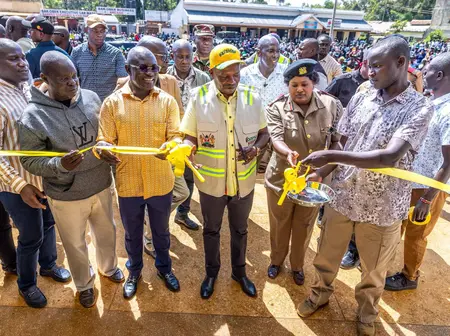
According to a statement shared by Deputy President Kithure Kindiki on Thursday, November 19, 2026, the Bar Ober market is intended to provide small-scale traders with decent and organised spaces to conduct their businesses.
Many traders operate in difficult conditions, often facing limited space and inadequate infrastructure. Modern markets are expected to provide a better trading environment and support everyday economic activity.
The statement also indicated that two additional markets are planned in Ugenya, at Wichun and Asembo Bay. Other parts of Siaya County are expected to benefit from the wider programme. If delivered, the projects could improve access to trading spaces for businesses beyond the county's main commercial centres.
Funding for the construction programme is being supported by the Housing Fund. The statement said the fund had provided Sh10 billion for markets, housing and student accommodation facilities within Siaya County. It did not give a breakdown of how the allocation would be shared among the different projects.
For traders, the key issue will be how quickly the plans move from announcements to completed facilities that are accessible, affordable and properly managed. Well-planned markets can create a more orderly business environment, but their long-term value will depend on quality construction, fair stall allocation, reliable services and regular maintenance.
The proposed markets are therefore an important development to watch in Siaya. Residents and traders will be keen to follow progress at Bar Ober, Wichun and Asembo Bay and see how the projects benefit local businesses.
What are your views on the planned markets in Siaya County, and what should be prioritised to make them useful to traders? Share your remarks and comments in the comment section.
Mining Cabinet Secretary Hassan Joho has announced that a US-linked consortium has been selected to develop the Mrima Hill mineral deposits in Kwale County, in a project estimated to be worth KSh8 trillion.
In a statement issued on Thursday, November 19, Joho confirmed that the Ministry of Mining had issued a Notice of Intention to Award the project to Frontier Minerals Consortium.
The consortium brings together four companies: Frontier Minerals LLC, Bunker Hill Mining Corp, ReElement Technologies and American Resources Corporation.
Joho said the selection marked a key step in the process of developing the mineral deposits, but the investors would have to meet several requirements before beginning operations.
He explained that the successful bidders must first engage communities living around Mrima Hill, landowners, county leaders and other local stakeholders.
The investors will also be required to obtain the necessary approvals and consents before carrying out any prospecting activities.
“Each successful bidder must now go to the ground, engage openly and respectfully with the host communities, landowners, county leadership, and relevant local stakeholders, and obtain all requisite consents as mandated by law,” Joho stated.
The CS emphasised that no prospecting work would be allowed without the support of affected communities and the formal approvals required by law.
“No prospecting operation can proceed without the social licence and formal consents of the people on the ground,” the statement added.
The consortium must also submit applications for prospecting licences through the ministry's Online Mining Cadastre (OMC) platform.
Those applications will then be reviewed by the Mineral Rights Board before any licences are issued.
The licensing process is expected to determine whether the selected investors have met the legal requirements to explore the mineral deposits.
The Notice of Intention to Award does not, on its own, amount to the issuance of prospecting licences or authorisation to begin mining activities.
Joho said community engagement and the necessary legal approvals would remain central to the next stage of the project.
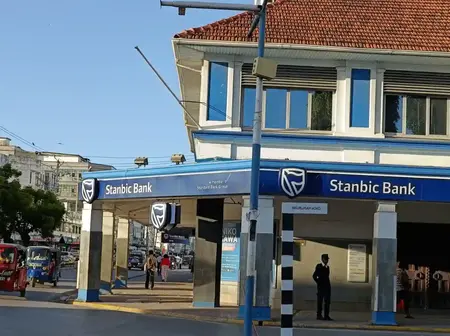
Stanbic Bank Kenya reported profit after tax of KES 10.3 billion for the nine months ended 30 September 2026, representing 10.1% year-on-year growth, supported by strong balance-sheet expansion, higher net interest income and lower credit impairment charges. Profit before tax increased 12.6% to KES 14.5 billion.
As world leaders, climate negotiators and business stakeholders gather in Antalya, Türkiye, for the COP31 climate summit to push for accelerated climate action and a transition to cleaner energy, a homegrown innovation in Kenya is offering a practical response to one of Africa’s persistent environmental challenges, reliance on charcoal and firewood for cooking.
Two strategic mineral projects in Tana River and Embu counties have failed to attract qualifying bids in the government’s competitive tendering process, raising questions about investor interest and the next phase of Kenya’s mineral commercialisation programme.
The announcement came as Joho named successful bidders for three other strategic mineral projects in Kwale, Samburu and Tharaka Nithi counties.
In a statement issued on Thursday, November 19, 2026, the Cabinet Secretary said the two unsuccessful projects would be addressed separately in accordance with the law.
However, the Ministry did not explain why the bids failed to meet the requirements, disclose how many investors participated in the two tenders or indicate when another procurement process could be launched.
The Lali Hills project targets manganese deposits in Tana River County, while Kiritiri in Embu County was included in the government’s coltan development programme.
Both minerals form part of Kenya’s wider strategic mineral initiative, which also covers niobium, rare earth elements, chromite and copper.
The tendering process was designed to assess prospective investors on legal compliance, technical expertise, financial capacity, environmental safeguards and commitments to local employment and in-country mineral processing.
Joho said the government intended to attract investors capable of meeting both the technical and financial demands of developing the deposits.
“Our commitment from the outset was to ensure that Kenya attracts only world class, technically capable, and financially sound partners who share our vision for in-country value addition, environmental stewardship, and shared prosperity,” he said.
The absence of qualifying bids for Lali Hills and Kiritiri leaves the two projects outside the latest round of intended awards. It does not, however, establish that the deposits lack commercial potential.
While the two projects await a separate process, the Ministry issued Notices of Intention to Award for three other mineral deposits.
Frontier Minerals Consortium, comprising Frontier Minerals LLC, Bunker Hill Mining Corp, ReElement Technologies and American Resources Corporation, was selected for the Mrima Hill niobium and rare earth elements project in Kwale County.
Fangda Special Steel Technology Co. Ltd and Sinohydro Corporation Joint Venture were selected for the Kang’ura chromite project in Samburu County and the Kamacabi copper project in Tharaka Nithi County.
The intended awards are not final prospecting licences. The successful bidders must first engage host communities, landowners and county leadership, obtain the required consents and apply for prospecting licences through the Online Mining Cadastre.
Joho said local participation and community approval would remain central to the process.
“Host communities deserve to know exactly who is coming to their locality, what their technical track record looks like, and whether they possess the real financial muscle to honor commitments on environmental safety, cultural heritage, local jobs, and community development,” he said.
He added: “No prospecting operation can proceed without the social licence and formal consents of the people on the ground.”
The key questions are whether the Lali Hills and Kiritiri tenders attracted investor interest, what prevented the submitted bids from qualifying and whether the Ministry will revise the tender conditions before inviting fresh applications.
The answers will be important in determining how quickly the two deposits can return to the development pipeline. For now, the government has announced no timeline for a fresh tender, leaving the future of the Lali Hills manganese and Kiritiri coltan projects dependent on the separate process Joho says will be undertaken in accordance with the law.
Aging often brings gradual changes that families don’t immediately recognize. A parent might start avoiding certain rooms, struggle with everyday household tasks, or become less confident moving around familiar spaces. These changes don’t necessarily mean an older adult needs to give up their independence, but they can signal that their living environment needs attention.