Category: Economy&Finance

  • Kalasinga Challenges Kasongo’s Claims, Says Rising Fuel Costs Are Hurting Farmers

    Kalasinga Challenges Kasongo’s Claims, Says Rising Fuel Costs Are Hurting Farmers

    In his criticism of the President's speech, Kalasinga argued that celebrating cheaper fertiliser without addressing the rising cost of fuel paints an incomplete picture of the challenges facing agricultural producers.

    The legislator pointed to the government's claim that fertiliser prices had dropped from approximately KSh7,000 to KSh2,000 per bag, arguing that farmers continue to face significant expenses when preparing their land for planting.

    According to Kalasinga, the increase in the fuel tax burden has complicated the situation, particularly for farmers who depend on tractors and other fuel-powered machinery.

    He questioned how farmers could fully benefit from cheaper agricultural inputs when the cost of ploughing their farms and transporting their produce remained a major concern.

    "Kasongo’s speech was below par. He claims to have reduced fertiliser prices from KSh7,000 to KSh2,000, yet fuel costs have increased from 8% to 16%. This effectively doubles the fuel burden on farmers, increasing ploughing expenses and overall production costs," Kalasinga argued.

    His criticism touches on an important economic question: does reducing the price of one farming input automatically make agricultural production affordable?

    For many small-scale farmers, fertiliser is only one part of the production process. They must also pay for land preparation, seeds, labour, machinery, transportation and harvesting.

    When fuel becomes more expensive, tractor owners and agricultural service providers may pass additional operating expenses to farmers.

    This can make it difficult for farmers to enjoy the full benefits of subsidised fertiliser, even when the government makes the input available at a significantly reduced price.

    Kenya has previously experienced similar concerns over the relationship between agricultural subsidies and fuel prices.

    An Africa Check investigation into claims about fertiliser prices found that a 50-kilogram bag had sold at different retail prices before the current administration, with some varieties reaching KSh7,000 and above. The investigation also examined the government's subsidised pricing claims.

    The wider issue has also featured in parliamentary debates, with lawmakers arguing that cheaper fertiliser alone cannot guarantee lower food prices when land preparation and transportation remain expensive.

    Kalasinga's criticism therefore places renewed attention on whether the government's agricultural interventions are addressing the entire production chain rather than concentrating on one input.

    Source:https://x.com/MutembeiTV/status/2123328793154920743?a=NrRjLOhv9STLsAlGtYg&s=19
  • US-Backed Consortium Secures Major Deal to Exploit Ksh8 Trillion Mineral Deposits in Kwale

    US-Backed Consortium Secures Major Deal to Exploit Ksh8 Trillion Mineral Deposits in Kwale

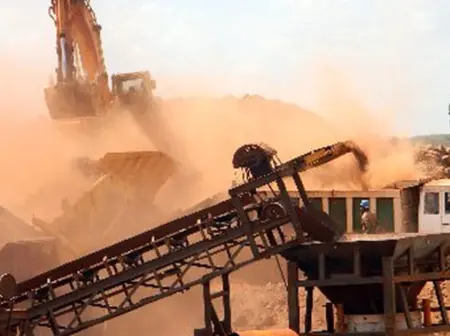
    Mining Cabinet Secretary Hassan Joho announced on Thursday, November 19, that the government had issued a Notice of Intention to Award the lucrative project to Frontier Minerals Consortium.

    The consortium brings together four companies: Frontier Minerals LLC, Bunker Hill Mining Corp, ReElement Technologies and American Resources Corporation.

    The mineral deposits at Mrima Hill are estimated to be worth approximately Ksh8 trillion, making the project one of the most significant mining opportunities currently under consideration in Kenya.

    However, the successful investors will have to meet several conditions before beginning operations.

    Joho explained that the consortium must first consult residents, landowners, county officials and other stakeholders in the affected areas. The investors will also be required to obtain all legally required approvals and community consent before undertaking prospecting activities.

    The companies must subsequently submit applications for prospecting licences through the Ministry of Mining's Online Mining Cadastre platform. The Mineral Rights Board will examine the applications before any licences are issued.

    The project has attracted international attention because Mrima Hill contains valuable deposits of niobium and rare earth elements, minerals widely used in modern manufacturing, including electronics, electric vehicles and aerospace technology.

    Competition for the mining opportunity intensified amid growing rivalry between Washington and Beijing over access to strategic minerals.

    Two Chinese bidders, Hunan Research Institute for Nonferrous Metals and Jinan Yuxiao Group, withdrew from the process in October. An Australian consortium involving RareX and Iluka Resources was also among the interested investors.

    The proposed development has, however, faced resistance from sections of the local community over fears of environmental destruction, displacement and interference with ancestral burial sites and sacred areas.

    Meanwhile, Joho announced that a Chinese partnership involving Fangda Special Steel Technology and Sinohydro Corporation had been selected for chromite and copper mining projects in Samburu and Tharaka Nithi counties.

    The government received no qualifying bids for the Lali Hills manganese deposits in Tana River and the Kiritiri coltan project in Embu.

    https://www.kenyans.co.ke/news/129514-us-linked-firm-wins-tender-ksh8-trillion-mrima-hill-mining-project

  • Sidian Bank Deal Puts Sakaja on the Spot Over Nairobi’s Sh1.5 Billion Monthly Borrowing

    Sidian Bank Deal Puts Sakaja on the Spot Over Nairobi’s Sh1.5 Billion Monthly Borrowing

    The arrangement has attracted the attention of Controller of Budget Margaret Nyakang’o, who has questioned why the county continues seeking financial assistance from the bank despite receiving its allocations from the national government on schedule.

    A report presented before the Senate Committee on Information and Communication Technology revealed that Nairobi borrowed Sh1.56 billion in September 2026 and another Sh1.49 billion in October.

    In a letter dated November 16, 2026, Nairobi County Finance Executive Ibrahim Nyangoya Auma confirmed that the county had entered into an agreement with Sidian Bank to facilitate salary payments.

    He explained that the arrangement was designed to address immediate payroll challenges as the county worked towards improving revenue collection and strengthening its financial management systems.

    However, concerns have also emerged over employees' statutory deductions, with millions of shillings reportedly remaining unpaid to pension schemes, savings and credit cooperative organisations (SACCOs) and other financial institutions.

    According to the report, Sh249.3 million deducted from employees in August remained unpaid in September. A further Sh254.5 million collected in September had also not been remitted by October.

    Nyakang’o questioned the need for the borrowing, observing that Nairobi had already received its national government transfers, including its November allocation.

    She further demanded an explanation of the interest charges associated with the banking arrangement, raising questions about the financial implications for taxpayers.

    Another issue concerns the decision to process salaries outside the Human Resource Information System (HRIS), which ordinarily coordinates payroll payments and statutory deductions.

    The Controller warned that bypassing the system could allow employees to receive their salaries while pension contributions, SACCO savings and loan repayments remain outstanding.

    She cautioned that the situation could develop into a serious financial problem for county workers if the deductions are not forwarded to the respective institutions.

    Link;

    Serikali ya Sakaja yamulikwa kwa kukopa Sh1.5 bilioni kutoka Sidian Bank kila mwezi

  • Joho unveils 3 firms to develop strategic mineral deposits in 3 counties

    Joho unveils 3 firms to develop strategic mineral deposits in 3 counties

    Joho unveils 3 firms to develop strategic mineral deposits in 3 counties

    Mining Cabinet Secretary Hassan Joho has named three companies selected to develop strategic mineral deposits in Kwale, Samburu and Tharaka Nithi counties following the conclusion of a competitive tendering process.

    The announcement marks a major step towards commercialising the country’s strategic mineral deposits, although the successful bidders must first obtain community consent and prospecting licences before undertaking exploration activities.

    In a statement issued on Thursday, November 19, 2026, Joho said the evaluation process was designed to identify investors with the technical expertise and financial capacity to develop the deposits while supporting local communities.

    “Our commitment from the outset was to ensure that Kenya attracts only world class, technically capable, and financially sound partners who share our vision for in-country value addition, environmental stewardship, and shared prosperity,” Joho said.

    Statement by Mining Cabinet Secretary Hassan Joho announcing the outcome of the competitive tendering process for Kenya’s strategic mineral deposits on Thursday, November 19, 2026. PHOTO/@HassanAliJoho/X

    The consortium comprises Frontier Minerals LLC, Bunker Hill Mining Corp, ReElement Technologies and American Resources Corporation.

    In Samburu County, Fangda Special Steel Technology Co. Ltd and Sinohydro Corporation Joint Venture emerged as the successful bidders for the Kang’ura Chromite Development Project.

    The same joint venture was selected for the Kamacabi Copper Development Project in Tharaka Nithi County.

    However, the tendering process did not produce qualifying bids for the Lali Hills Manganese Project in Tana River County and the Kiritiri Coltan Project in Embu County.

    Joho said the two projects would be addressed separately in accordance with the law.

    Statement by Mining Cabinet Secretary Hassan Joho announcing the outcome of the competitive tendering process for Kenya’s strategic mineral deposits on Thursday, November 19, 2026. PHOTO/@HassanAliJoho/X

    Despite being selected through the tendering process, the three successful bidders cannot immediately begin prospecting.

    Joho said the government deliberately identified technically and financially capable investors before initiating formal community engagement, arguing that residents should know the companies seeking to operate in their areas and their capacity to meet environmental and development commitments.

    “Host communities deserve to know exactly who is coming to their locality, what their technical track record looks like, and whether they possess the real financial muscle to honor commitments on environmental safety, cultural heritage, local jobs, and community development,” he said.

    Statement by Mining Cabinet Secretary Hassan Joho announcing the outcome of the competitive tendering process for Kenya’s strategic mineral deposits on Thursday, November 19, 2026. PHOTO/@HassanAliJoho/X

    The firms must now engage host communities, landowners, county leadership and other local stakeholders and obtain the requisite statutory consents.

    Joho said no prospecting could begin before the required community approvals and legal procedures were completed.

    “No prospecting operation can proceed without the social licence and formal consents of the people on the ground,” he stated.

    The companies will subsequently be required to submit applications for prospecting licences through the Ministry’s Online Mining Cadastre portal, accompanied by the necessary documentation and prescribed fees.

    The applications will then be reviewed by the Mineral Rights Board, which will make recommendations before the Cabinet Secretary can grant the licences.

    Joho emphasised that selection through the tendering process does not amount to authorisation to begin prospecting.

    “An award at the end of a tender process is not a licence to immediately break ground; rather, it is the gateway to meaningful local partnership and strict regulatory compliance,” he said.

    The government says the commercialisation programme is intended to promote local employment, in-country mineral processing, environmental protection and economic benefits for communities hosting the deposits.

    The next stage will therefore determine how the selected investors engage local residents and meet the legal requirements before prospecting can begin.

  • American consortium wins the Sh8 trillion Mrima Hills project

    American consortium wins the Sh8 trillion Mrima Hills project

    A consortium of four American firms has won the long-awaited, fiercely contested tender to develop high-grade mineral and niobium deposits at Mrima Hill in Kwale County used in defence and electronics sector.

    Mining Cabinet Secretary Hassan Joho announced Frontier Minerals Consortium as the successful bidder for the multi-billion project, in a closely watched contest that gives the US a strategic foothold in Kenya’s critical minerals sector amid its rivalry with China.

  • Kindiki Commissions KSh25.2 Million Electricity Projects Set to Benefit 248 Homes in Siaya

    Kindiki Commissions KSh25.2 Million Electricity Projects Set to Benefit 248 Homes in Siaya

    (Photo courtesy)

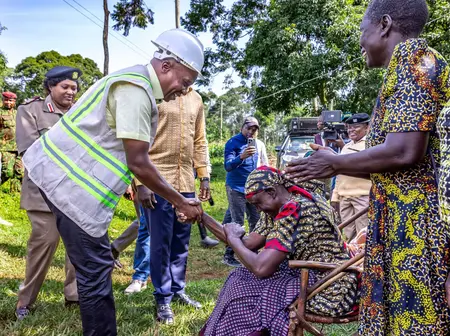
    Kenya's Deputy President Kithure Kindiki has commissioned two electricity projects in Ugenya Constituency, Siaya County, which will connect 248 homes and other beneficiaries to the national power grid.

    The projects, located in the Bar Ober area, were completed at a combined cost of KSh25.2 million.

    In a statement shared on his official X account on Thursday, November 19, 2026, Kindiki said the Usinda A and B Village project would connect 162 homes, businesses and public institutions to electricity. The project cost KSh12.9 million.

    Among those set to benefit is the home of Mama Arnolda Oduya.

    The second project, Samayeye-Ndusye, was completed at a cost of KSh12.3 million and will supply electricity to 86 beneficiaries.

    Kindiki also highlighted the country's progress in electricity connectivity, revealing that 68 per cent of Kenyan households are now connected to electricity.

    "Kenya is now among the most advanced African countries in matters electricity connectivity, with 68% of the households connected and universal power supply set to be achieved by 2030," he stated.

    The Deputy President said the government was targeting universal electricity access by 2030.

    He was accompanied by Ugenya MP David Ochieng, Bondo MP Gideon Ochanda, Taveta MP John Bwire, MCAs and other grassroots leaders during the commissioning exercise.

    https://x.com/_KithureKindiki/status/2123335815371592100?a=wESM8vdA5rKU5ftk4G4&s=19

  • Energy PS Alex Wachira tops 10 best-performing Principal Secretaries

    Energy PS Alex Wachira tops 10 best-performing Principal Secretaries

    thumbnail

    Principal Secretary for Energy Alex Wachira has emerged as Kenya’s top-performing Principal Secretary in the November 2026 assessment by Trends and Insights for Africa (TIFA) Research, ahead of Ephantus Kimotho of Irrigation and Juma Mukhwana of Industry, who occupy the second and third positions, respectively.

  • Business Leaders in Kenya Push for Inclusive Workplaces as Harassment Costs Firms Sh95.5 Billion Annually

    Business Leaders in Kenya Push for Inclusive Workplaces as Harassment Costs Firms Sh95.5 Billion Annually

    thumbnail

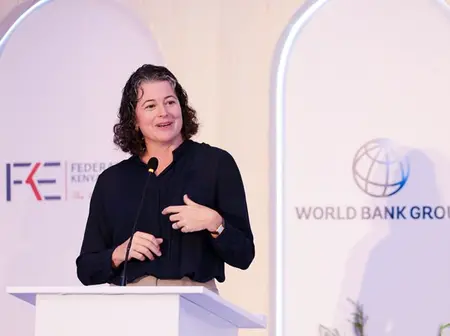
    Business leaders in Kenya met in Nairobi on Thursday for a CEO Roundtable on Advancing Inclusive Workplaces, convened by the World Bank Group, Federation of Kenya Employers (FKE) and Kenya Private Sector Alliance (KEPSA), to identify practical actions businesses can take to attract, retain and advance women in the workplace amid an estimated Sh95.5 billion in annual harassment-related costs to businesses.

  • National Treasury Releases KSh4 Billion to SHA to Clear Health Facility Payment Delays

    National Treasury Releases KSh4 Billion to SHA to Clear Health Facility Payment Delays

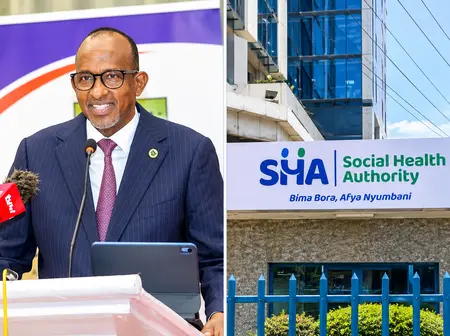
    The National Treasury has released KSh4 billion to the Social Health Authority (SHA) to facilitate payments to health facilities under the Primary Healthcare Fund following months of delays that have affected service delivery across the country.

    The funding is expected to ease financial pressure on healthcare providers, some of whom have reportedly gone for four months without receiving payments for services offered to patients under the government-supported healthcare programme.

    The delays had raised concerns among health facility managers, who rely on timely reimbursements to maintain daily operations, purchase medical supplies and ensure uninterrupted treatment for patients.

    The release of the funds is expected to help SHA address outstanding payments and restore confidence among healthcare providers participating in the primary healthcare programme.

    The Primary Healthcare Fund is a key component of the government's efforts to strengthen access to essential medical services, particularly at the community and primary healthcare levels.

    Through the programme, Kenyans are expected to access basic healthcare services without facing unnecessary financial barriers. Health facilities provide services and seek reimbursement through SHA under the established payment arrangements.

    However, delayed disbursements have presented challenges for some providers, with concerns emerging over their ability to sustain operations while waiting for payments.

    The latest Treasury allocation comes amid continued efforts to improve the implementation of the Social Health Authority and address concerns surrounding the country's new healthcare financing system.

    Healthcare stakeholders have repeatedly called for timely payments, arguing that delays affect the ability of facilities to provide quality services and meet operational expenses.

    With the KSh4 billion now released, attention will turn to how quickly SHA processes the outstanding claims and distributes the funds to eligible healthcare facilities.

    The move is expected to provide relief to affected providers while supporting the government's broader objective of improving access to affordable healthcare services.

  • Spending on development projects (Sh bn)

    Spending on development projects (Sh bn)

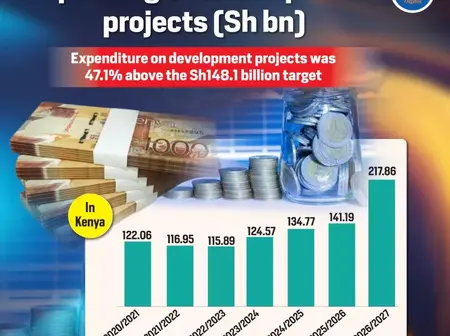
    Spending on development projects in Kenya surged to Sh217.86 billion in the first quarter of the 2026/2027 financial year, exceeding its target by 47.1 per cent.

    According to figures from the Treasury, the expenditure surpassed the set target of Sh148.1 billion.

    The Q1 2026/2027 outlay marks a sharp increase compared to previous financial years recorded over a seven-year period. In the 2020/2021 financial year, development spending stood at Sh122.06 billion.

    It subsequently dipped over the next two cycles, falling to Sh116.95 billion in 2021/2022 before reaching a low of Sh115.89 billion in 2022/2023.

    Following that decline, expenditure began a steady upward trajectory. Spending rose to Sh124.57 billion in the 2023/2024 financial year.

    The upward trend continued into the 2024/2025 cycle, where development expenditure reached Sh134.77 billion, and climbed further to Sh141.19 billion in 2025/2026.

    The jump to Sh217.86 billion in the first quarter of 2026/2027 represents the highest figure across all the recorded periods.

    While annual totals from 2020/2021 through 2025/2026 remained between Sh115.89 billion and Sh141.19 billion, the opening quarter of the 2026/2027 financial year alone eclipsed every full-year expenditure listed in the preceding six financial cycles.