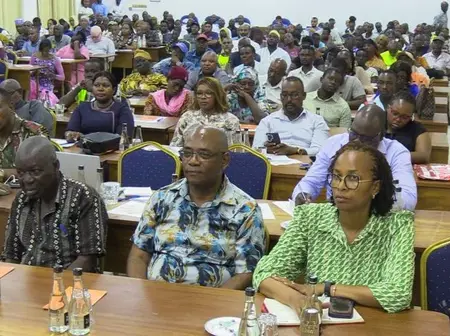
Listen to articleKwiji said the national government was exploring additional incentives to support businesses in the sector but noted that some operators were not meeting the requirements for accessing available funds.Tourism businesses in Malindi risk losing access to government grants and loans because many operators lack proper financial records and have not organised themselves into registered groups.
Category: Economy&Finance
-

Africa’s Stablecoin Opportunity Comes Into Focus
The conversations unfolded against a backdrop of rapid growth in global stablecoin adoption. According to figures referenced from DefiLlama, the global stablecoin market has expanded from approximately USD 5 billion in 2020 to around USD 290 billion, with US dollar-denominated stablecoins accounting for approximately 99% of the market.
-

Kenya Picks US Investors for Ksh8 Trillion Rare Earth Deposits in Kwale
Mining Cabinet Secretary Hassan Joho announced on Thursday, November 19An American consortium has been selected to develop Kenya’s mineral-rich Mrima Hill deposits in Kwale County, opening the door to a major investment in rare earth minerals and niobium used in defence, electronics and advanced manufacturing.
-
SCBK Q3 Net Profit Rises 7.39% to KSh 10.51 Billion
SCBK (Standard Chartered Bank Kenya), a UK-based corporate player in Kenya’s banking business saw its nine months’ net earnings for the period ended 30th September rose 7.39% to KSh 10.51 billion. This is as the lender struggles with payment of pension to its retired employees following a court ruling.
-

Pit latrine, septic tank or biodigester: What to know before buying a plot
Landing that plot of land is a massive win. But once the excitement of holding the title deed settles, a very unglamorous reality hits: where does the waste go?Since municipal sewer lines are still a myth in most upcoming suburbs, you may discover handling your property’s sanitation is entirely on you.
-
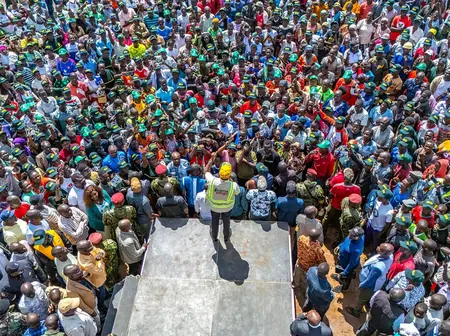
Kindiki Responds to Calls for Street Lighting and Financial Support in Ugenya
Deputy President Kithure Kindiki has outlined a series of major government development projects in Siaya County, announcing significant investments in housing, electricity, markets and fisheries as the government seeks to promote equitable development across the country.
Speaking on Thursday, November 19, 2026, during a meeting with residents of Bar Ober in Ugenya Constituency, Kindiki said the government was committed to ensuring that all Kenyans benefit equally from national development programmes regardless of their geographical location.
The Deputy President revealed that 21 markets are currently under construction across Siaya County, alongside housing projects and student accommodation facilities supported by a total investment of Sh15 billion through the Housing Fund.
He also announced that last-mile electricity connection projects worth Sh2 billion were underway, targeting an additional 19,000 households across the county.
On fisheries development, Kindiki disclosed that the government had deployed Sh6 billion towards improving infrastructure and supporting fishing communities along the Lake Victoria region.
The investment covers the construction of 18 fish landing sites, piers, search and rescue centres, procurement of rescue boats, grants to beach management units and support for cage fish farming.
He confirmed that the Sh135 million Luanda Kotieno fish landing site had been completed and handed over to the beneficiaries.
Meanwhile, construction works at Wichlum and Asembo Bay fish landing sites had reached 50 per cent completion, with a combined investment of Sh300 million.
Kindiki further announced that the Sh1.3 billion Kabonyo Centre of Excellence for Aquaculture was expected to be completed in February 2027.
The facility will support fisherfolk from Busia, Siaya, Kisumu, Homa Bay and Migori through training, fingerlings and other capacity-building programmes.
During the engagement, residents presented several requests, including street lighting at Bar Ober Centre, financial support for traders, particularly mama mboga operating in the newly constructed markets, and assistance to the local boda boda group.
The boda boda operators requested 10 shared motorcycles to strengthen their businesses and improve their livelihoods.
Kindiki was accompanied by Ugenya MP David Ochieng, Ugunja MP Moses Omondi, Bondo MP Gideon Ochanda, Taveta MP John Bwire, MCAs and other local leaders.
The meeting provided an opportunity for the government to update residents on ongoing projects while receiving feedback on additional development priorities.
Sources;
https://www.facebook.com/share/p/1FMe5uy46B/
-
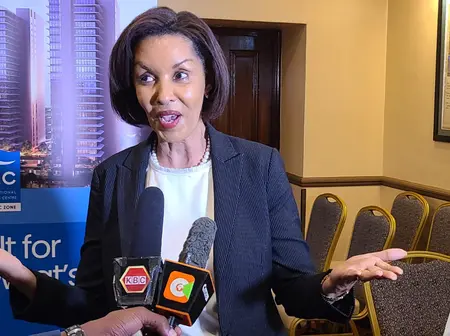
Kenya’s property investment market has room to grow, but capital remains a hurdle
Kenya’s property investment market has attracted subscriptions above fundraising targets for some new real estate investment trusts, but the country still has one of Africa’s smallest listed REIT markets. The gap between initial fundraising and the development of a deeper market is becoming an important consideration as the Capital Markets Authority (CMA) pursues changes to investment rules and financing structures.
The listed Kenyan REIT market had a capitalisation of $247.6 million, according to the African market comparison supplied by Fortren & Company. South Africa’s market was valued at $18.9 billion, followed by Morocco at $667.4 million and Zimbabwe at $270.9 million. Kenya therefore trails Zimbabwe despite introducing its REIT framework in the same year as South Africa, while Morocco and Zimbabwe established their markets in 2018 and 2019 respectively.
The figures point to a market development problem that cannot be explained by the availability of property investment opportunities alone. Kenya has attracted money into individual REIT offerings, yet institutional allocations, the number of listed vehicles and the ability to trade their units remain important constraints.
The TRIFIC Green USD I-REIT illustrates the difference between fundraising interest and the scale of the overall market. Its June 2026 offer attracted approximately $30.82 million against a target of $29.83 million, equivalent to subscriptions of about 103.3 percent. The REIT is backed by the North Tower at Two Rivers International Finance and Innovation Centre, with Nabo Capital as fund manager, NCBA Bank as trustee and Broll as property manager.
TechTrendsKE reported that the offering targeted an annual yield of 8 percent and included a market-making arrangement intended to support trading after its listing. ALP Investment REIT also attracted subscriptions equivalent to 115 percent of its target, according to the publication’s September reporting.
These offers demonstrate that particular property-backed products can attract investor commitments. They do not, however, establish that the market has sufficient secondary-market liquidity or that investors will maintain their holdings over longer periods. The distinction is relevant to Kenya’s experience with listed REITs, where fundraising has not consistently translated into sustained trading activity.
Institutional participation is one of the clearest differences between Kenya and the larger South African market. Fortren & Company reported that Kenyan pension funds had allocated approximately $100 million to REITs as of 2025, compared with more than $11.3 billion allocated by South African pension funds.
South African pension fund investments account for more than 60 percent of that country’s REIT market capitalisation, according to the research firm. South Africa also has 36 listed REITs, including three from foreign markets, compared with six listed REITs in Kenya in the original market comparison.
The difference is particularly notable given the two countries’ shared 2013 starting point for introducing REIT frameworks. Kenya’s first REIT instrument, ILAM Fahari I-REIT, was launched in October 2015, according to TechTrendsKE’s earlier reporting.
Fortren & Company identifies the returns available from government securities as one reason investors have been reluctant to commit more capital to REITs. Its figures put Kenya’s average REIT return at 6.7 percent in 2025, against approximately 13 percent from Treasury bonds.
That return comparison offers an explanation for the competition REIT managers face when approaching institutional investors. Pension funds must assess income, capital preservation, liquidity and investment risk across different asset classes. Property investments therefore need to offer a sufficiently attractive proposition to compete with government debt.
Kenya’s wider pooled investment industry also provides an indication of the capital available across the financial market. CMA figures reported by TechTrendsKE put collective investment scheme assets under management at KSh948.7 billion as of June 30, 2026. Money market funds accounted for 49 percent, special funds 27 percent and fixed-income funds 24 percent.
The expansion of these investment structures shows that Kenyans have access to a wider range of pooled products. REITs, however, must compete for capital within an industry where investors can choose instruments with different liquidity arrangements, risk profiles and expected returns.
The regulatory debate has extended beyond lowering the amount individuals need to invest. CMA has proposed changes intended to make REIT structures more practical for large investors, developers and property managers.
One proposal would reduce the minimum public ownership requirement from 25 percent to 15 percent. The regulator has argued that pension funds and insurers can prefer larger ownership positions because they allow greater control and investment efficiency. Under the existing requirement, large investors may have to sell portions of their holdings to satisfy public ownership rules, even when they have no intention of reducing their investment.
CMA said the requirement could result in ownership dilution and weaker decision-making where large investors are compelled to adjust their holdings solely to comply with the rule.
The proposed change would give major investors more room to retain larger stakes while maintaining a public ownership requirement. Its effect will depend on how the revised framework is implemented and whether institutional investors respond with additional commitments.
CMA has also proposed reducing the minimum REIT subscription amount from KSh5 million to KSh100,000 for the structures covered by the proposed changes. The reduction would substantially lower the entry barrier for eligible investors, although unrestricted I-REITs already operate without a regulatory minimum investment amount.
Other proposed changes include reducing REIT conversion fees from KSh7.5 million to KSh150,000 and allowing REIT managers to provide loan guarantees for associated projects or special-purpose vehicles.
The conversion proposal is relevant to developers using Development REITs to raise capital for construction before moving completed, income-generating properties into Income REIT structures. Lower conversion costs could reduce the expense of moving between the two stages of property investment.
Permission to provide loan guarantees would also give REIT managers another financing mechanism for associated projects. The proposal addresses access to project financing rather than investor subscriptions alone.
The reforms follow earlier industry calls for a more flexible regulatory framework. In September 2026, Peter Waiyaki of Mboya Wangong’u & Waiyaki Advocates called for changes to the treatment of eligible REIT assets, qualifying-income requirements and public ownership rules.
Waiyaki also proposed allowing infrastructure assets such as telecommunications towers, fibre facilities and data centres to qualify for REIT investment structures. Such a change could widen the range of assets available to property investors, particularly as digital infrastructure requires substantial capital expenditure and long-term commercial arrangements.
These remain proposals and industry recommendations, rather than established changes to the regulatory framework.
The experience of ILAM Fahari I-REIT illustrates some of the difficulties involved in sustaining conventional exchange-listed REIT structures. The vehicle delisted from the NSE in 2024 and relaunched as a restricted REIT on the Unquoted Securities Platform.
Acorn REIT has also operated with a restricted investment structure, with a KSh5 million minimum entry requirement aimed at high-net-worth individuals and professional investors.
These arrangements provide alternative ways of accessing property-backed investments, but they also illustrate the different investor bases and liquidity conditions across the market. A restricted REIT serving professional investors does not offer the same access or trading environment as a publicly listed vehicle.
The distinction is important when assessing market capitalisation. Fundraising through restricted structures can attract capital into property investment without necessarily expanding the value or trading activity of REITs listed on the NSE.
Kenya’s securities market is developing distribution channels that could support wider participation in regulated investment products. Safaricom’s Ziidi Trader offers an example of how mobile platforms can connect retail investors with exchange-traded securities.
TechTrendsKE reported that Ziidi Trader accounted for approximately 60 percent of applications in Quickmart’s KSh15 billion initial public offering. The platform also processed 268,936 of the NSE’s 433,498 share-purchase orders between February 5 and March 10, 2026, with an average purchase value of KSh2,621.
Those figures concern equity trading rather than REIT subscriptions, but they demonstrate the reach that digital investment distribution can achieve. A lower REIT entry threshold could make property-backed securities accessible to a wider group of investors if suitable distribution and trading arrangements are available.
The challenge for Kenya’s REIT market is therefore not confined to getting more people to subscribe to individual offers. The industry needs investment structures that appeal to pension funds, insurers and retail investors, alongside a trading environment capable of supporting continued participation after fundraising closes.
CMA’s proposed changes address several of these requirements, from ownership limits and conversion costs to project financing and minimum investment amounts. Their eventual effect will be measured by whether more capital enters REITs and remains invested in vehicles capable of financing and managing income-generating property assets.
-

The Aviator Predictor Craze: What Kenyans Are Searching For
Online interest in tools promising to forecast outcomes of the popular Aviator betting game is surging across the continent, according to the November 2026 CrashEdge Africa Aviator Search Study.
The data reveals that 10 out of 15 African countries recorded more searches for "Aviator Predictor" than for the "Aviator Game" itself.
Across Africa, there are an estimated 43,000 monthly searches for these predictors. ,
Kenya alone accounts for roughly 4,900 monthly searches, while South Africa leads significantly with 18,000.
Overall, 12 African nations registered between 1,000 and 10,000 monthly predictor searches, highlighting a widespread appetite for betting shortcuts among online gamers.
-
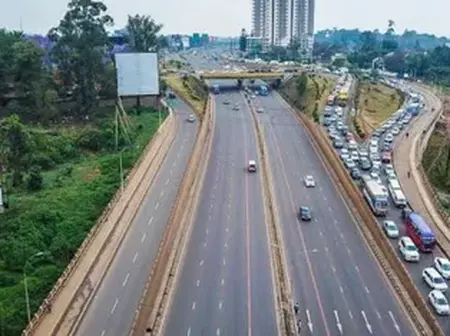
Nairobi-Thika Road Among Highways Set for Toll Charges Under New Treasury Plan
The National Treasury has identified the Nairobi-Thika Highway, Nairobi Southern Bypass and Mombasa Northern Bypass as three major roads being considered for the tolling programme beginning in the next financial year.
The proposal is outlined in the Treasury's 2027 Budget Policy Statement, which indicates that the government intends to use Public-Private Partnerships (PPPs) to finance, operate and maintain major road infrastructure.
Under the arrangement, private investors would take responsibility for managing the selected roads and recover their investments through payments collected from motorists.
The Nairobi-Thika Highway project is among the largest proposals, with an estimated investment of Ksh100 billion and a projected contract period of 30 years.
The planned tolling corridor is expected to extend beyond Thika through Juja, Kenol, Sagana and Marua. The project is expected to reach financial closure during the 2028/29 financial year.
The Nairobi Southern Bypass is also being considered for a similar arrangement covering its operation, maintenance and toll collection. The project has an estimated value of Ksh12.265 billion and a proposed duration of 25 years.
Meanwhile, the Mombasa Northern Bypass project is valued at approximately Ksh30 billion, with a 30-year contract period. Its financial closure is also anticipated in the 2028/29 financial year.
The Treasury has additionally identified the Rironi-Mau Summit and Mau Summit-Malaba highways for tolling after the ongoing expansion works are completed.
However, the three newly proposed projects remain subject to approval by relevant government agencies before implementation can proceed.
The Treasury has not announced how much motorists will pay or identified the exact toll collection points.
If implemented, the proposals could increase transport expenses for commuters, private vehicle owners and businesses that regularly use the affected highways.
The government is increasingly relying on private-sector financing to support major infrastructure developments without depending entirely on direct public funding.
https://www.kenyans.co.ke/news/129520-treasury-proposes-toll-fees-nairobi-thika-road-among-other-major-highways
-
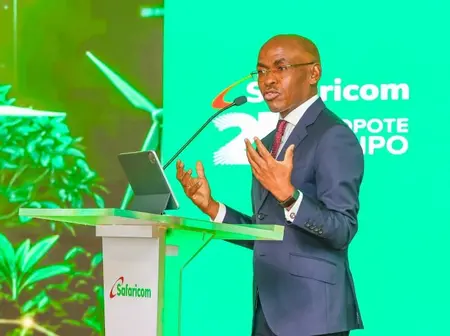
Navigating Mobile Money Glitches: Official Troubleshooting Tips for Delayed Pochi la Biashara Message
Responding to customer concerns over missing transaction alerts, the telecommunications firm emphasized that a delayed message does not necessarily mean a payment failed, outlining clear steps traders can take to confirm receipts immediately and avoid checkout disputes.
First, Safaricom advises users to inspect their mobile device’s messaging settings and third-party caller identification applications. In many instances, automated spam filters in default SMS apps or platforms such as Truecaller divert official M-Pesa alerts into blocked or screened folders.
Merchants should open their messaging app, navigate to the "Spam and Blocked" section, and unblock Safaricom or M-Pesa sender IDs, while also ensuring sufficient phone storage and stable network reception.
Second, rather than relying solely on waiting for an SMS or trusting screenshots shown by customers, business owners are urged to verify transactions directly through official self-service channels.
Traders can dial, select Pochi la Biashara, go to My Account, and choose Check Balance or Mini Statement—requiring their M-Pesa PIN—to confirm whether the funds have settled.
Alternatively, merchants can log into the MySafaricom App or M-Pesa App to view real-time Pochi wallet balances and transaction histories. If discrepancies persist after checking statements, Safaricom recommends contacting M-Pesa support via, official social media handles, or visiting a Safaricom retail shop without ever sharing their PIN.
What are your thoughts about this article? Share your reactions in the comment section and don't forget to share and follow for more updates.
https://peopledaily.digital/business/safaricom-explains-what-to-do-when-pochi-payment-notifications-fail