Category: Economy&Finance

  • Ruto: Nzoia sugarcane farmers to get Sh1.2bn bonus next week

    Ruto: Nzoia sugarcane farmers to get Sh1.2bn bonus next week

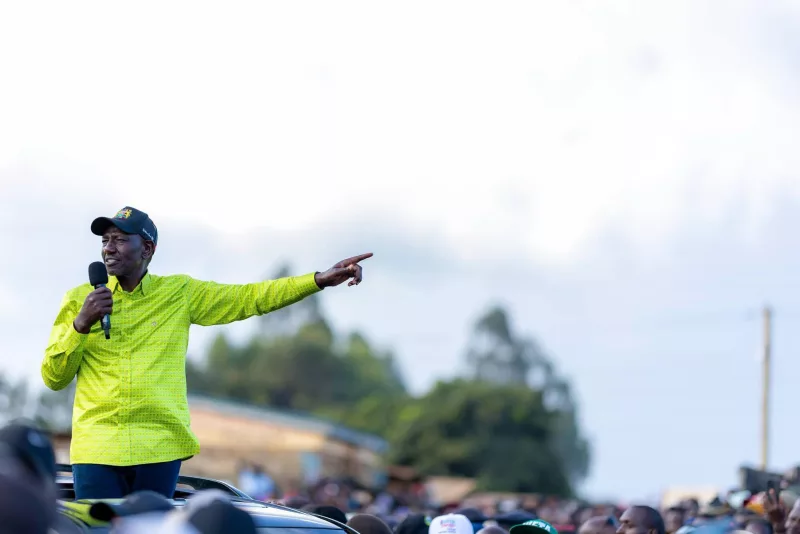
    President William Ruto has announced a Sh1.2 billion bonus for sugarcane farmers supplying Nzoia Sugar Company, with payments expected to begin next week.

    Ruto said the payout would mark the first time farmers supplying the Bungoma-based mill receive bonuses, as the government moves to extend benefits traditionally enjoyed by tea and coffee farmers to sugarcane growers.

    Speaking to residents in Naitiri, Bungoma County, on Thursday during the first day of his Western Kenya development tour, the President said the money was ready for disbursement.

    “Tuko na pesa yenu, Sh1.2 billion ya wakulima wa miwa, na tunakuja kulipa hapa Nzoia next week,” he said.

    Ruto said the planned payment was part of reforms he had promised farmers during an earlier visit to Naitiri, including measures to address exploitation by middlemen and improve earnings from sugarcane farming.

    “Mimi nilisimama hapa Naitiri nikawaambia mambo ya kilimo nitapanga sawasawa, nitawamalizia hata wale wakora middlemen wanahangaisha wakulima,” he said.

    He cited the reduction in fertiliser prices from Sh7,000 to Sh2,000 per 50-kilogramme bag as one of the interventions aimed at lowering production costs.

    The President also said the government had addressed longstanding challenges at Nzoia Sugar, including delayed payments to farmers and irregular salaries for factory workers.

    He said farmers previously waited up to seven months to receive payment after delivering their cane, but the period had now been reduced to one week.

    “Nzoia ilikuwa inachukua miwa inalipa baada ya sijui miezi saba. Leo hii saa hii ukipeleka miwa yako unalipwa baada ya wiki moja,” he said.

    Ruto added that factory workers, who previously went for months without receiving their salaries, were now paid monthly.

    He described the bonus as another milestone in efforts to improve the livelihoods of sugarcane-growing communities, saying farmers deserved to enjoy benefits similar to those received by tea and coffee growers.

    “Nyinyi mumewahi sikia bonus ya miwa? Si tulikuwa tunasikia tu bonus ya chai na coffee?” he asked residents.

    The President said the government wanted sugarcane farmers to benefit from the same incentives enjoyed by growers in other agricultural sectors.

    “Tumesema Usawa ni Sawa, na hiyo ndiyo tunataka. Kama wakulima wa chai, coffee wanalipwa, si hata nyinyi mulipwe?” he said.

    The announcement came a day after Ruto told Parliament during his State of the Nation Address that the government would begin disbursing a Sh1.2 billion bonus package to sugarcane farmers next week.

    The payment is part of efforts to ensure growers benefit from the recovery of the sugar industry.

    Ruto began a multi-day tour of Western Kenya on Thursday, covering Busia, Bungoma, Kakamega and Vihiga counties.

    In Bungoma, he launched road projects and commissioned Naitiri Modern Market, among other development activities.

    The tour comes amid intensifying political competition in the region ahead of the 2027 General Election, with Ruto using development projects and agricultural reforms to make his case to residents.

  • The world economy in 2040

    The world economy in 2040

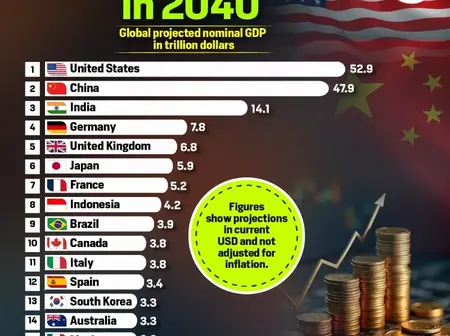
    The United States and China are projected to remain the world’s two largest economies by 2040, according to the Centre for Economics and Business Research (Cebr) World Economic League Table 2026.

    Based on unadjusted nominal GDP projections, the US is expected to lead at $52.9 trillion, closely followed by China at $47.9 trillion. India ranks third at $14.1 trillion, ahead of Germany ($7.8 trillion) and the United Kingdom ($6.8 trillion).

    Japan ($5.9 trillion), France ($5.2 trillion), and Indonesia ($4.2 trillion) follow, while Brazil ($3.9 trillion), Canada ($3.8 trillion), and Italy ($3.8 trillion) round out the top eleven economic powerhouses

  • “Farming is not for the faint-hearted”: Women face the El Niño gamble

    “Farming is not for the faint-hearted”: Women face the El Niño gamble

    thumbnail

    What you need to know:Janet Omollo knows what too much rain can do to a farm. In 2023, heavy rains kept combine harvesters out of her rice fields in Migori, and she lost 10 per cent of her crop. So, when the weatherman announced this year's El Niño, she did not wait to see what would happen.

  • Inside the sovereign bond records that landed CS Mbadi, AG Dorcas Oduor in trouble

    Inside the sovereign bond records that landed CS Mbadi, AG Dorcas Oduor in trouble

    Inside the sovereign bond records that landed CS Mbadi, AG Dorcas Oduor in trouble

    Treasury Cabinet Secretary John Mbadi and Attorney General Dorcas Oduor are under pressure to disclose details of Kenya’s sovereign bond agreements and explain how billions of shillings raised through the debt instruments were spent.

    The two government officials were on Thursday, November 19, 2026, found in contempt after failing to comply with orders requiring the National Treasury to release the agreements and provide details of how the borrowed funds were utilised.

    The judge directed the officials to immediately comply with the disclosure requirements and ordered them to personally meet the costs of the contempt application.

    The court also indicated that sanctions, including fines and committal to civil jail, could be imposed. Mbadi and Oduor are expected to appear before the court on November 27, 2026, at noon for mitigation and sentencing.

    The dispute began with a constitutional petition filed by the Kenya Human Rights Commission (KHRC) and activist Wanjiru Gikonyo after the National Treasury declined to provide information about Kenya’s sovereign borrowing.

    In 2022, the petitioners wrote to the Treasury seeking copies of sovereign bond agreements entered into by the government over a nine-year period.

    They wanted access to the terms and conditions governing the bonds, including provisions outlining what would happen if Kenya defaulted on its repayment obligations.

    The request also covered information on how the borrowed money had been spent, as well as related financing agreements entered into with foreign governments, international financial institutions and corporations.

    The State responded that the information was already available in the public domain. However, the petitioners maintained that the response did not satisfy their constitutional right to access information.

    The Attorney General Dorcus Oduor during swearing in ceremony to become a member of Judicial Service Commission. PHOTO/@AGDorcas_Oduor/X

    Justice Lawrence Mugambi heard the original petition and delivered a judgment in December 2024, finding that the government’s refusal to provide the requested information was unlawful.

    He ordered the Cabinet Secretary for the National Treasury to release the documents within 45 days.

    The orders covered sovereign bond agreements containing default clauses, alongside related treaties, contracts and other financing instruments entered into by the government.

    The petitioners later returned to court over what they considered incomplete compliance with the disclosure requirements.

    Justice Nyaundi subsequently found that Mbadi and Oduor had deliberately failed to implement the orders issued on February 27, 2025.

    In her ruling, the judge stated that the court “is pleased to cite the Cabinet Secretary, the National Treasury and the Attorney General for contempt of court or wilful and deliberate disobedience.”

    Sovereign bonds are debt instruments through which governments borrow money from investors, usually in international financial markets, and commit to repaying the funds with interest within agreed periods.

    The agreements contain details of the borrowing, including repayment conditions, interest rates, maturity dates and provisions that may apply if a government defaults.

    For Kenya, the disclosure sought by the petitioners would provide information about the terms governing the country’s sovereign borrowing and how the proceeds were allocated and spent.

    The records would also give the public access to information about the government’s obligations to international investors and other lenders.

    The Treasury and the Attorney General’s office are central to the matter because the requested documents concern government borrowing arrangements and the legal agreements underpinning them.

    Mbadi and Oduor have been directed to provide the outstanding information immediately. Their appearance on November 27 will determine the sanctions imposed following the contempt finding.

  • CBK backs Treasury bid to take control of county bank accounts

    CBK backs Treasury bid to take control of county bank accounts

    thumbnail

    Central Bank of Kenya (CBK) Governor Kamau Thugge has backed a National Treasury proposal to move county governments’ funds into a single account at the Central Bank, saying the change would give the government a clearer view of public money and save taxpayers avoidable interest costs.

  • David Ndii explains why some govt affordable houses cost more than private apartments

    David Ndii explains why some govt affordable houses cost more than private apartments

    David Ndii explains why some govt affordable houses cost more than private apartments

    President William Ruto’s economic adviser David Ndii has responded to questions over the pricing of government affordable housing units after a Kenyan raised concerns about the cost difference between public housing projects and privately developed apartments.

    The debate was triggered on Thursday, November 19, 2026, by an X user, @Kamugenius, who questioned why a two-bedroom apartment under the government’s Affordable Housing Programme costs Ksh3.6 million, compared to Ksh3 million for a similar unit at Greatwall Apartments in Mlolongo.

    The user argued that government housing should cost less because it is being developed on public land using taxpayers’ money.

    “Explain to us how housing built on free government land using our taxes cost more than housing built for profit by private investors. Two Bedroom ‘Affordable Housing’ units costs 3.6 million while a similar one built by Chinese at Greatwall Apartments in Mlolongo costs 3 Million,” the user wrote.

    Ndii responded briefly, suggesting that the difference in prices was explained by the location of the developments.

    “Location, location, location,” he replied.

    His response points to the influence of geographical positioning on property prices, including access to transport networks, employment centres, social amenities, and infrastructure.

    However, Ndii did not provide a detailed breakdown of the two projects’ construction costs or explain how much the location factor accounts for in the reported Ksh600,000 difference.

    The exchange comes shortly after the government revised the prices of houses under the Affordable Housing Programme.

    The revised rates, which took effect on October 1, 2026, increased affordable housing unit prices by 20 per cent and market-rate units by 10 per cent, according to an announcement by the State Department for Housing.

    Under the revised structure, two-bedroom affordable housing units increased from Ksh3 million to Ksh3.6 million.

    President William Ruto at the Pioneer Affordable Housing Project in Eldoret

    The adjustment added Ksh600,000 to the purchase price of the affected units, matching the difference highlighted by the X user.

    The government said the revised prices applied to new applications submitted from October 1, while applicants who had registered before the deadline would retain their earlier prices.

    The adjustment placed the two-bedroom affordable housing category at Ksh3.6 million, the same figure cited in the online exchange.

    The government has previously argued that using public land is one of the strategies intended to reduce the cost of affordable housing.

    Affordable Housing Board’s acting Chief Executive Officer, Sheila Waweru, said government projects were being developed on national or county government land, which was treated as zero-rated for the purpose of the programme.

    She explained that the government had standardised construction costs per square metre across its projects, meaning the cost of constructing a particular category of house was generally similar across different locations.

    Kapsuswa Affordable Housing Project. PHOTO/https://www.facebook.com/drrayomollo

    Waweru also said the government negotiated with major manufacturers of construction materials, including cement and steel producers, to secure favourable prices for contractors involved in the programme.

    She argued that bulk procurement and standardised construction were intended to bring down the cost of delivering the units.

    Her explanation, however, also acknowledged that the final price of a house was influenced by factors beyond the cost of building materials.

    The Affordable Housing Programme is funded through the Affordable Housing Fund, which receives money from the housing levy and other sources provided for under the law.

    The Affordable Housing Act, 2024 defines affordable housing in relation to the cost of acquiring or renting a home, which should not exceed 30 per cent of a person’s monthly income.

    The programme also has different categories, including social housing for lower-income households, affordable housing and market-rate units.

    This distinction is important because a unit described as affordable under the programme is not necessarily the cheapest available house in the wider property market.

    Government listings show that prices vary according to the housing category, project and unit type. For example, a Boma Yangu project listing currently displays a two-bedroom affordable unit at Ksh2.4 million, alongside other categories and prices.

    Ndii’s response has consequently placed renewed attention on how the government determines the selling prices of its housing units, particularly when public land and money collected from Kenyans are involved.

    While location may explain part of the difference, the exchange has left a wider question for the government: how does it demonstrate that the final prices offer value for money compared with comparable homes built by private developers?

  • KRA Introduces New Phone App That Will Change How Importers Track Their Goods

    KRA Introduces New Phone App That Will Change How Importers Track Their Goods

    The application, known as eCustoms, allows traders to check the progress of their customs declarations directly from their smartphones, providing updates as their imports undergo the required clearance procedures.

    KRA announced the launch on Thursday, November 19, through its official customer support account on X, urging importers to download the application from Google Play Store or Apple's App Store.

    The authority explained that the platform would give users convenient access to information about their customs declarations, helping them follow the importation process and plan their business activities.

    The launch comes as KRA records improved performance in revenue collection, particularly through its Customs and Border Control department.

    Customs Revenue Hits New Record

    In October 2026, the department collected KSh94.793 billion, surpassing its previous monthly record of KSh92.527 billion achieved in July.

    The latest figure represented an 11.3 per cent increase compared to October 2025 and exceeded the monthly target of KSh93.784 billion by approximately KSh1 billion.

    Non-oil taxes contributed significantly to the performance, generating an additional KSh7.243 billion above the targeted amount.

    September had also registered positive results, with customs collections reaching KSh90.053 billion against a target of KSh89.088 billion.

    KRA Surpasses Monthly Revenue Target

    The authority's overall collections also exceeded expectations in October, reaching KSh260.63 billion against a target of KSh258.304 billion.

    Domestic revenue accounted for KSh165.447 billion, marking an 18.1 per cent improvement compared to the corresponding period in the previous year.

    Corporation Tax collections stood at KSh23.932 billion, representing a 31.6 per cent annual increase.

    By the end of October, KRA's cumulative revenue collections had crossed KSh1 trillion, reaching KSh1.010 trillion.

    The authority is targeting KSh3.268 trillion in total revenue during the 2026/27 financial year, following collections of KSh2.844 trillion in the previous financial year.

    https://peopledaily.digital/news/kra-unveils-ecustoms-app-to-simplify-import-tracking

  • Glovo Launches New Centre to Support Delivery Riders in Nairobi

    Glovo Launches New Centre to Support Delivery Riders in Nairobi

    Glovo Kenya has opened a new rider support centre in Westlands, Nairobi, providing couriers with a permanent location to seek assistance, attend training and raise concerns about their work.

    The facility, located on the first floor of Almont Park along Church Road, was launched on Thursday, November 19. It will serve as a central hub for rider onboarding, training, app-related support and engagement.

    Speaking during the launch, Glovo co-founder Sacha Michaud said the centre was established to improve the company's relationship with couriers while supporting their safety and professional growth.

    Michaud revealed that approximately 12,000 couriers had worked with Glovo in Kenya since the company entered the market in 2020.

    He said the company wanted to make it easier for riders to access assistance, particularly when experiencing difficulties with the application. The facility will also provide road safety training and opportunities for couriers to develop their careers and businesses.

    Michaud further explained that the company's signature yellow colour was deliberately selected to make riders more visible to other road users.

    "The yellow bags and the colour of Glovo are not by accident. We put this colour because it's much more visible in the street, not for you, but for other cars, so they see you quicker," he said.

    Glovo Kenya Head of Operations Liz Wambua said the centre would bring several rider services together under one roof, reducing the need for couriers to seek assistance through different channels.

    "With our own permanent home now, we are bringing everything under one roof. So rider onboarding, rider training, rider support, and rider engagement, all of it in our very own home, and our very own roof," Wambua said.

    The centre is part of the company's wider efforts to improve rider support and welfare through more direct engagement with its courier network.

    Its opening also provides riders with a physical place where they can raise concerns and receive guidance on issues affecting their work.

    Calvin Sokunu, chairperson of the Digital Border Drivers and Deliveries Association of Kenya, welcomed the development, saying the facility would address a challenge faced by some couriers.

    He noted that having a dedicated location would be particularly useful for riders dealing with account-related problems, which can sometimes be difficult to resolve through online support channels.

    The new facility is expected to provide a more accessible point of contact between Glovo and the couriers who deliver orders across Nairobi and other parts of the country.

    LINK: https://www.kenyans.co.ke/featured/129515-glovo-kenya-opens-new-rider-support-centre-westlands-nairobi?fbclid=IwZXh0bgNhZW0CMTEAcGRvZgRzcnRjBmFwcF9pZA80MDk5NjI2MjMwODU2MDkAAR9onIVDHeAad1j4gBJkBPFDJpzbc6jqzM9uRx9ol_7JUku8If4o3zNglhg-ig_aem_lTSNhO7su8JjxIitfzacDQ

  • 600,000 Kenyan learners get whole-grain meals as nutrition drive gathers pace

    600,000 Kenyan learners get whole-grain meals as nutrition drive gathers pace

    thumbnail

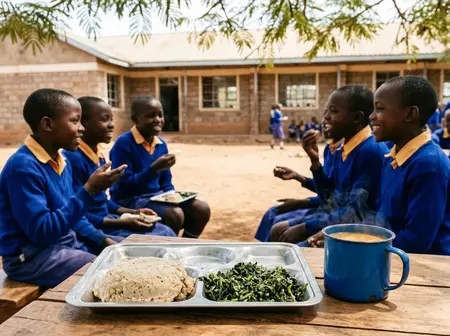
    About 600,000 schoolchildren across Kenya are consuming fortified whole-grain maize meal as part of efforts to improve nutrition through school feeding programmes.The initiative, which provides maize meal for preparing porridge and ugali, is part of a wider push to increase access to nutritious foods while using existing school feeding systems to support local agriculture and food processing.

  • KRA unveils eCustoms app to simplify import tracking

    KRA unveils eCustoms app to simplify import tracking

    KRA unveils eCustoms app to simplify import tracking

    The Kenya Revenue Authority (KRA) has launched a mobile application that will allow importers and traders to track the progress of their customs declarations using their smartphones.

    The eCustoms App is designed to help users monitor their import processes without having to make repeated inquiries, giving traders access to updates on their declarations while their goods go through customs procedures.

    KRA announced the launch on Thursday, November 19, 2026, through its official KRA Care account on X, encouraging importers to download the application from the Google Play Store and Apple App Store.

    “With the eCustoms App, you can conveniently track the status of your Customs declarations right from your phone, helping you stay informed and manage your import processes with greater ease. No more unnecessary guesswork. Stay updated and keep your biashara moving!” KRA stated in the post.

    The application provides traders with a mobile channel to follow their customs declarations and keep track of their import processes.

    The launch comes as the tax authority reports an increase in revenue collected through its Customs and Border Control department, which recorded its highest monthly collections in October 2026.

    The October collections represented an 11.3 per cent increase compared to the same period in 2025. They also exceeded the monthly target of Ksh93.784 billion by Ksh1.009 billion, representing a performance rate of 101.1 per cent.

    Non-oil taxes contributed significantly to the growth, generating a surplus of Ksh7.243 billion and recording a 26 per cent increase.

    The department had also exceeded its target in September, collecting Ksh90.053 billion against a target of Ksh89.088 billion. The performance was supported partly by a 25.6 per cent increase in the value of imports during the period.

    The customs performance contributed to KRA’s overall revenue collection of Ksh260.63 billion in October 2026, against a target of Ksh258.304 billion.

    The authority exceeded its monthly target by Ksh2.327 billion, achieving a performance rate of 100.9 per cent.

    The collections represented a 15.5 per cent increase compared to October 2025, when revenue growth stood at 8 per cent. In October 2024, the authority recorded growth of 6.5 per cent.

    Domestic revenue collections also increased by 18.1 per cent to Ksh165.447 billion, exceeding the target by Ksh1.337 billion.

    Corporation Tax contributed Ksh23.932 billion, representing 119.2 per cent of its target and a 31.6 per cent increase compared to the corresponding period in the previous year. Domestic Excise Duty also recorded growth of 54.1 per cent.

    By the end of October 2026, KRA’s cumulative collections had reached Ksh1.010 trillion, crossing the Ksh1 trillion mark a month earlier than in previous financial years.

    The October performance followed the authority’s collection of Ksh2.844 trillion in the 2025/26 financial year. KRA is targeting Ksh3.268 trillion in revenue during the 2026/27 financial year.