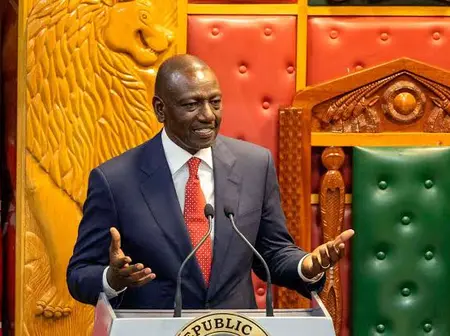
President William Ruto announced the milestone during his State of the Nation address in Parliament, attributing the rapid expansion to pension reforms implemented over the past three years.
He emphasized that strengthening mandatory retirement savings fulfils constitutional guarantees under Article 43 while building a reliable pool of domestic capital.
Outlining how the accumulated funds will be utilized, the Head of State explained that the government intends to channel the growing pension pool into domestic financing for major infrastructure projects and productive enterprises.
By investing workers' savings locally rather than relying heavily on expensive external borrowing, the administration argues it can accelerate national development while generating sustainable returns for retirees.
However, this strategy has ignited intense political scrutiny from critics and opposition figures who warn that deploying vast public funds into visible mega-projects shortly before an election cycle could serve as an indirect campaign advantage ahead of the August 2027 General Election.
For Kenyan workers whose monthly payslips have absorbed higher statutory deductions, the debate centers on governance, transparency, and long-term financial security.
Skeptics caution that without ironclad safeguards, the line between prudent national investment and pre-election political expediency risks becoming blurred.
Ultimately, the Ksh.850 billion NSSF milestone stands as both a major economic talking point for the ruling administration and a flashpoint in the intensifying race toward 2027.
As President Ruto points to the growing fund as proof of structural economic transformation, political rivals are determined to frame the debate around protecting workers' hard-earned savings from political interference.
How transparently the fund's investment decisions are managed over the coming months will heavily influence public trust among millions of contributors.
The debate emerged on Thursday, November 19, after an X user compared a two-bedroom unit under the Affordable Housing Programme, priced at KSh3.6 million, with a similar apartment at Greatwall Apartments in Mlolongo going for KSh3 million.
The user argued that government housing should be cheaper because the projects benefit from public land and taxpayer funding, unlike private developments established for commercial returns.
Responding to the concerns, Ndii offered a brief explanation, pointing to the location of the properties.
“Location, location, location,” he wrote.
His response suggested that differences in geographical positioning could account for variations in property prices. Factors such as proximity to roads, workplaces, transport services and social amenities often influence the value of residential developments.
However, Ndii did not provide figures showing how much location contributed to the KSh600,000 price difference or offer a detailed comparison of the two projects.
The exchange comes weeks after the government increased prices for houses under its Affordable Housing Programme.
The revised rates, which came into effect on October 1, 2026, raised prices for affordable units by 20 per cent and market-rate houses by 10 per cent.
Consequently, the price of a two-bedroom affordable unit rose from KSh3 million to KSh3.6 million. Applicants who had registered before the new rates took effect were allowed to retain the previous prices.
Government officials have previously defended the programme's pricing by pointing to measures intended to control construction expenses.
Affordable Housing Board Acting Chief Executive Officer Sheila Waweru said public land was treated as zero-rated for the programme. She also cited standardised construction costs and negotiations with manufacturers of materials such as cement and steel.
Despite these measures, questions persist over the final selling prices.
Under the Affordable Housing Act, 2024, housing is considered affordable when the cost of acquiring or renting it does not exceed 30 per cent of a household's monthly income.
The latest debate has renewed calls for greater transparency in explaining how housing prices are calculated and whether the final costs offer value to buyers.
The Farm to Market Alliance (FtMA) on Thursday, November 19 released the findings of a nine-year Endline Evaluation, showing that women smallholders in its network earn more per hectare than men, despite working smaller plots with fewer machines and less access to capital.Women farmers also hold the highest level of trust in rural agricultural hubs, at 52%, yet gaps in equipment, credit and market access still limit how much of that progress translates into income.
Interior Principal Secretary Raymond Omollo announced the latest milestone on Thursday, November 19, 2026, noting that the elevated link is designed to create a faster, more direct connection across notoriously congested junctions.
Implemented by the Kenya Urban Roads Authority (KURA) under a contract worth roughly Ksh2.99 billion (often rounded to Ksh3 billion) with China Road & Bridge Corporation (CRBC), the elevated structure forms the centerpiece of a broader urban road package spanning about six kilometres and incorporating pedestrian walkways and cycling facilities.
Once complete, the viaduct will carry traffic above busy intersections along Processional Way, Mamlaka Road, and Nyerere Road past All Saints’ Cathedral before linking toward Jakaya Kikwete Road, Ngong Road, and Valley Road.
For commuters, public service drivers, and business travelers moving between Upper Hill’s offices, the CBD, and surrounding neighbourhoods, bypassing those traffic lights promises predictable travel times during peak hours.
While officials have previously pointed to late-2026 and 2027 completion windows, lane restrictions and junction works have tested commuters’ patience along adjacent routes. Advancing into this next construction stage moves Nairobi closer to a grade-separated shortcut provided steady funding and disciplined execution carry the project through to opening day.
Industrial workplaces operate under constant pressure to meet production targets, fulfill orders, and maintain demanding schedules. When deadlines tighten, workers may feel tempted to skip inspections, shorten procedures, or complete familiar tasks without their usual attention to detail.These decisions can appear harmless in the moment, especially when employees have performed the same responsibilities hundreds of times.
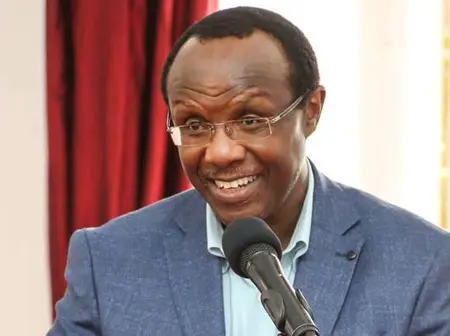
President William Ruto’s economic adviser David Ndii has sparked fresh debate over the pricing of government-built homes after responding to a Kenyan who questioned why affordable housing units cost more than comparable apartments in the private market.
The exchange took place on Thursday, November 19, on X, where a user identified as @Kamugenius questioned the price of a two-bedroom unit under the Affordable Housing Programme.
The user compared the government unit, priced at KSh3.6 million, with a reportedly similar apartment at Greatwall Apartments in Mlolongo, which they said costs KSh3 million.
They argued that government housing should be cheaper because the projects are developed on public land and supported by taxpayers’ money.
Ndii responded with just three words: “Location, location, location.”
He did not provide a detailed breakdown of the two projects or explain how location accounted for the reported KSh600,000 price difference. The Greatwall Apartments price comparison was made by the X user and has not been independently verified.
The KSh3.6 million figure follows a recent adjustment to housing prices. The State Department for Housing announced that, effective October 1, 2026, prices for affordable housing units would increase by 20 per cent, while market-rate units would rise by 10 per cent.
Under the revised rates, a two-bedroom affordable unit increased from KSh3 million to KSh3.6 million. Applicants who registered before the stated deadline were allowed to retain the earlier prices, while new applicants became subject to the revised rates.
The government has previously defended the pricing structure. Affordable Housing Board acting Chief Executive Sheila Waweru has said projects are developed on national or county government land treated as zero-rated, while construction costs per square metre are standardised across different sites.
She has also pointed to bulk procurement arrangements with cement and steel manufacturers as measures intended to reduce building costs. However, she acknowledged that the final price of a housing unit is influenced by more than the cost of construction materials.
The definition of affordable housing is also central to the debate. The Affordable Housing Act, 2024, links affordability to housing costs that do not exceed 30 per cent of a household's monthly income. The programme categorises homes into social, affordable and market-rate housing, with prices varying according to the category, project and size of the unit.
Government listings on the Boma Yangu platform have also shown two-bedroom affordable units priced at KSh2.4 million, illustrating the differences in pricing across projects and categories.
National Treasury Cabinet Secretary John Mbadi and Attorney-General Dorcas Oduor are facing potential sentencing on November 27 after High Court Judge Patricia Nyaundi found them guilty of contempt of court over withheld sovereign debt and borrowing records.
At the center of the dispute is a 2022 petition by the Kenya Human Rights Commission (KHRC) and Wanjiru Gikonyo, who demanded copies of sovereign bond agreements entered into over a nine-year period.
Petitioners sought bondholder lists, beneficial ownership details of issuing entities, default terms and conditions, and records showing how borrowed funds were spent.
In December 2024, Justice Lawrence Mugambi ruled that withholding the information violated the constitutional right of access to information and public finance accountability, ordering the state to release the records within 45 days.
Government officials argued the data was already in the public domain or reflected in budget policy papers a defense courts rejected after finding those documents offered projections and proposals rather than full contracted loan terms.
With sentencing set for November 27, the ruling tests whether statutory secrecy claims and bureaucratic inertia can withstand enforcement of constitutional transparency rules. Either the state produces the long-sought records or Mbadi and Oduor confront formal judicial sanctions for defying the court.
One of the most notable announcements was the proposal to reduce taxes for low-income earners. This move was welcomed by many as an effort to ease financial pressure on ordinary households struggling with rising living costs. By allowing workers to retain more of their earnings, the government hopes to stimulate spending, improve household welfare, and boost economic activity.
The President also highlighted signs of economic recovery, pointing to improvements in key sectors and increased investor confidence. According to his address, Kenya’s economy is gradually strengthening after facing global and domestic challenges in recent years. He emphasised that ongoing reforms are designed to create a more favourable environment for businesses, encourage investment, and generate employment opportunities for the growing youth population.
In addition to economic matters, the address touched on several pressing national concerns. President Ruto reiterated his administration’s commitment to tackling corruption, strengthening public institutions, and improving service delivery. He stressed the importance of accountability and transparency in government operations, noting that sustainable development depends on responsible leadership and effective use of public resources.
Infrastructure development, agriculture, healthcare, and education also featured prominently in the speech. The President underscored the need to modernise these sectors to improve the quality of life for citizens and support long-term national growth. He encouraged collaboration between government, the private sector, and the public to achieve these goals.
The State of the Nation Address painted an optimistic picture of Kenya’s future while acknowledging the challenges that remain. President Ruto’s message centred on economic recovery, relief for low-income earners, and continued reforms to create a more inclusive and prosperous nation. Whether these promises translate into tangible improvements will depend on effective implementation, but the speech has undoubtedly set the tone for important national conversations in the months ahead.
Kenya’s capital markets are adding another route into African agribusiness and a new option for investors seeking dividend income, following two approvals by the Capital Markets Authority (CMA) involving the Nairobi Securities Exchange (NSE).
Mauritius-based Africa Eats Ltd has received clearance to cross-list on the NSE, while Tradiam Asset Managers has been authorised to establish and list the Leo Dividend Exchange Traded Fund (ETF). The developments introduce different investment propositions: exposure to businesses operating across agricultural value chains and a fund tracking companies with a record of paying dividends.
Neither approval immediately puts the securities into trading. Africa Eats will enter through a listing by introduction, without issuing additional shares or raising fresh capital, while the Leo ETF’s commencement date has not been announced.
The approvals come as Kenya’s market for professionally managed investments and listed securities expands. The NSE had 2.36 million investors in September 2026, up from 2.027 million at the beginning of the year, according to figures reported by TechTrendsKE.
The collective investment schemes market has also grown substantially. The CMA reported assets under management of KSh948.7 billion at June 30, 2026, across 66 approved schemes and 320 funds, with approximately 4.14 million investors.
The figures cover different investment categories and should not be treated as a combined count of unique investors. They nevertheless provide context for the growing market for products that allow people to access diversified portfolios without independently selecting every underlying asset.
The Leo ETF enters a segment where the NSE has already seen efforts to establish locally domiciled index-based funds. Wall Street Africa’s WSA Banking Index ETF received CMA approval in July 2026 and conditional NSE approval in September, according to previous reporting. Its investment strategy focuses on listed banking stocks, whereas Leo will track dividend-paying companies across the exchange.
Other products available to Kenyan investors include the Absa NewGold ETF and Satrix MSCI World Feeder ETF, which provide exposure to international underlying assets. Leo therefore adds another investment strategy to an existing range rather than introducing the ETF structure to the Kenyan market for the first time.
Africa Eats provides a different proposition from a conventional operating company seeking admission to the exchange. The Mauritius-based investment company holds minority equity stakes in agricultural businesses, with investments covering production, aggregation, processing and distribution.
Its portfolio includes businesses dealing in fruits, vegetables, grains, honey and livestock. The companies also target small and medium-sized enterprises linked to smallholder farmers across East Africa.
The company is already listed on the High-Growth Segment of the Stock Exchange of Mauritius. Its proposed admission to the NSE’s Main Investment Market Segment is intended to widen its investor base, improve liquidity and deepen its presence in East African capital markets, according to Capital FM’s reporting.
The financial position of the investment company also deserves attention. The Kenyan Wall Street reported that Africa Eats’ portfolio was valued at US$34.45 million at the end of September 2026. Its nine-month net profit declined by 70.9% to US$1.27 million.
The profit decline provides an important financial consideration for investors assessing the company. Its portfolio valuation represents the value of its underlying investments, not necessarily the market value of Africa Eats itself.
Because the NSE admission is a listing by introduction, existing shares will be admitted without a fresh share offer. The transaction therefore provides another market for the company’s securities but does not constitute a new capital raise for its agricultural investments.
Tradiam’s Leo Dividend ETF is designed around income from listed equities rather than exposure to one particular industry. The passively managed fund will track the Tradiam NSE Dividend Leaders Index, which comprises NSE-listed companies with a consistent record of paying dividends, according to Capital FM.
Investors will be able to obtain exposure to the underlying basket through one listed investment product instead of purchasing each constituent company’s shares individually. Dividends received from the underlying investments will be distributed to unitholders quarterly.
This structure gives the fund an income-oriented strategy, although quarterly distributions should not be interpreted as guaranteed returns. The amounts available to investors will depend on dividends received from the underlying holdings.
The index methodology will be important in understanding how the fund selects companies and determines their weightings. Its eventual constituents will also indicate which sectors and listed businesses account for most of the exposure.
Tradiam’s involvement in both the Leo and WSA ETF projects also gives the approvals a common institutional connection. The two products nevertheless have different investment objectives, with one concentrating on banking shares and the other targeting dividend-paying equities.
The development of new investment products comes as digital platforms make participation in the Kenyan equities market more accessible.
Safaricom’s Ziidi Trader handled approximately 60% of applications during Quickmart’s KSh15 billion share offer, according to TechTrendsKE’s November 18 reporting. The platform also processed 268,936 of the 433,498 NSE share-purchase orders recorded between February 5 and March 10, 2026.
These figures illustrate the role mobile distribution is playing in connecting retail investors to listed securities. They do not establish that the Leo ETF will be offered through Ziidi Trader, but they provide relevant context for the channels through which new exchange-traded products could reach investors.
The CMA has also been working on stronger oversight of investment products and their managers. In October 2026, TechTrendsKE reported on proposed fund and manager ratings covering areas such as underlying assets, liquidity, foreign-exchange exposure and investment risk.
For investors considering products such as Leo, the ability to access a fund is only one consideration. Its underlying holdings, management costs, liquidity and distribution arrangements will also influence its suitability.
Africa Eats’ proposed cross-listing comes during a period of closer institutional engagement between African securities exchanges.
Nigerian Exchange Group acquired a 10% stake in the NSE in November 2026, extending its regional investments after taking a similar stake in Ethiopia’s exchange in 2024. TechTrendsKE reported that the transaction forms part of NGX’s expansion across African capital markets.
The investment is separate from Africa Eats’ cross-listing, but both developments provide examples of growing connections between exchanges and investment markets in the region.
For the NSE, admitting a company already traded in Mauritius adds another cross-border security to its market. For investors, the potential benefit is access to an investment company whose underlying interests span agricultural businesses rather than a single Kenyan operating enterprise.
The two CMA approvals therefore extend the types of exposure available through the local exchange. Their eventual contribution to trading activity and investor participation will depend on the securities’ market entry, liquidity and the investment demand they attract.
Unveiled earlier in late August alongside pledges covering 2,000 affordable housing units and supporting amenities, the project is pitched as a catalyst to modernize Malaba, ease cross-border trade pressures, and attract commercial investment along a vital Northern Corridor gateway.
Proponents argue that structured urban planning and housing at a busy frontier town can create jobs, formalize trade spaces, and unlock local business growth.
Yet skepticism inevitably follows high-price-tag announcements made in the heat of political mobilization. When Ruto first floated the Ksh4 billion figure, it came during engagements aimed at consolidating political alignment with the Iteso community and broadening support ahead of the 2027 General Election.
For residents and policy watchers, setting a launch date is one thing; proving that money is ring-fenced, disbursed, and ready to flow to contractors is another.
Across Kenya’s infrastructure and urban development drive, grand announcements frequently outpace budget execution, procurement timelines, and public-private financing closures.
With the 2027 election cycle drawing closer, border towns like Malaba carry outsized strategic and economic value. Voters will be watching closely beyond the launch ceremony itself.
Clear disclosures on budget allocations, contracted builders, land readiness, and construction milestones over the coming months will determine whether the Ksh4 billion Malaba Smart City becomes a lasting commercial hub or just another political promise waiting on cash.