Co-operative Bank of Kenya has organized a free training for young people on how to turn coffee farming into a source of wealth.
The training is titled 'From Farm to Fortune: Unlocking Wealth Opportunities in Coffee Farming and Cooperatives.' It aims to show youth that farming, especially coffee farming, is not only for old people but can be a good business that creates jobs and income.
Many young people in Kenya do not have jobs, yet agriculture has many opportunities. Through this training, Co-op Bank wants to help youth understand the whole coffee value chain, from planting, harvesting, processing, marketing, and selling coffee. The youth will also learn how cooperatives work and how they can join and benefit from them.
The free training will be held on Friday, 20th November 2026 from 11am. It will be live on Zoom and on Co-op Bank's official social media pages, so anyone from any part of the country can join.
Youth who are interested are encouraged to register early through the link provided by Co-op Bank. This is a great chance for young people who want to start farming, grow their business, or learn new ways of making money from agriculture.
Co-op Bank continues to support youth empowerment through education, farming, and financial inclusion.
Funding for Kenyan tech startups fell $543 million (Sh70.6 billion) in the nine months to September 2026 as foreign investors lost billions of shillings after a number of high-profile firms collapsed.
Kenyan ventures raised $201 million (Sh26.1 billion) compared with $744 million (Sh96.7 billion) a year earlier, says startup funding tracker Africa: The Big Deal.
Wairimu is based in the UKA Kenyan entrepreneur based in the United Kingdom is encouraging young people and aspiring business owners to explore financial markets, embrace financial literacy and take a more active role in wealth creation.Esther Wairimu says her experience in investment and entrepreneurship has strengthened her belief that access to capital, financial education and responsible investment decisions can help individuals achieve financial independence.
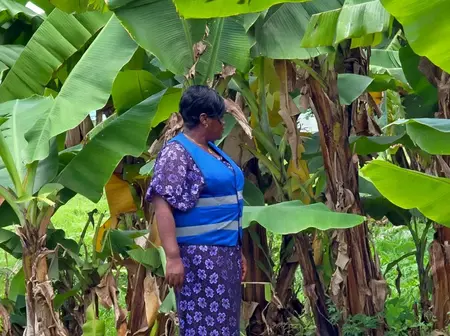
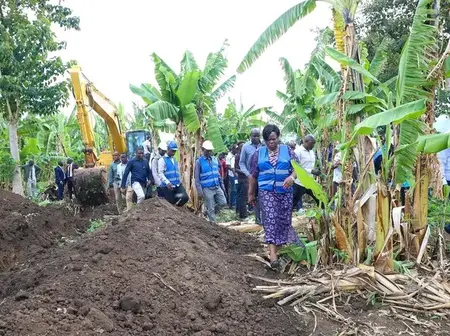
Homa Bay Governor Gladys Wanga has given Kenyans a glimpse of her farming activities after sharing a video showcasing an expansive banana plantation filled with healthy green plants and mature bunches of matoke.
The governor recently posted the footage on social media, taking her followers through different sections of the farm and offering a look at what keeps her occupied outside her political responsibilities.
In the video, Wanga is seen walking through the plantation as she showcases several banana plants carrying sizeable bunches of fruits. Some of the bananas appear ready for harvesting, creating an impressive view across the agricultural land.
The plantation features numerous rows of banana plants, with their broad green leaves and heavy bunches attracting attention from viewers.
Wanga appeared relaxed during the farm visit, giving Kenyans an opportunity to see another side of her life beyond county government activities and political engagements.
The footage has since attracted reactions from social media users, with several viewers commenting on the condition and appearance of the plantation.
Some praised the healthy-looking banana plants and the abundance of fruits, while others made lighthearted remarks about the governor's appearance during the farm tour.
One social media user suggested that Wanga should consider wearing gumboots when visiting the plantation to make walking around the farm more comfortable.
Others focused on the mature matoke bunches, expressing admiration for the agricultural work showcased in the video.
Banana farming remains an important economic activity in different parts of Kenya, providing households with food and an additional source of income.
Wanga's video has therefore drawn interest from Kenyans familiar with agricultural activities, particularly those who engage in crop farming.
The farm tour has also offered her followers a rare glimpse into her personal interests away from public leadership, with the governor showcasing an activity that connects with the country's strong agricultural culture.
Africa processed 71.4 billion instant payment transactions worth $1.8 trillion in 2025, but the infrastructure behind those payments serves different purposes across the financial system. Mobile money accounts for most transactions, cross-domain networks move the largest share of value, and bank-based instant payment systems are recording the fastest growth.
The findings come from the 2026 State of Inclusive Instant Payment Systems in Africa (SIIPS) report, published on November 19 by AfricaNenda Foundation, the United Nations Economic Commission for Africa and the World Bank Group. The fifth edition tracks the development of instant payment systems across the continent and examines their contribution to financial inclusion.
Transaction volumes have grown at an average annual rate of 28% since 2021, bringing the 2025 total to almost three times its level four years earlier. The report also finds that 89% of African adults live in countries with access to instant payment systems, although access to infrastructure does not necessarily translate into regular use.
Mobile money systems accounted for 73% of instant payment transaction volumes in 2025, reinforcing their position in everyday digital payments across African markets. Their role extends across a diverse provider landscape that includes MTN MoMo, Vodacom M-Pesa, M-PESA Ethiopia, Airtel Money, Orange Money and Safaricom’s M-PESA, among other services.
Mobile money’s dominance by transaction count does not mean it handles the largest share of money transferred. Cross-domain systems, which connect different categories of financial institutions and payment providers, accounted for 67% of instant payment transaction value.
The average value of an instant payment across the systems covered by the report was $26 in 2025, down from $43 in 2022. For mobile money systems, the average transaction value was considerably lower at $9.
These figures point to different uses of the infrastructure. Mobile money systems support a large volume of relatively small transactions, while cross-domain networks carry a greater share of value between different parts of the financial system.
Bank instant payment systems recorded 42% year-on-year growth in transaction volumes in 2025. Mobile money system volumes grew by 7%, while cross-domain systems registered 21% growth. The different growth rates show that the expansion of instant payments is taking place across several parts of the market rather than through one dominant model.
The growth of instant payments also presents a commercial challenge for banks. As payment networks become more accessible and the cost of transfers falls, financial institutions may have to rely less on transaction charges and develop other services around their payment infrastructure.
Sitoyo Lopokoiyit, Absa Group’s Chief Executive of Personal and Private Banking and a former M-Pesa Africa executive, made that argument during a fireside chat at the Africa Tech Festival 2026 in Cape Town.
He said payments would remain essential to financial services, but banks could not depend on them as a lasting source of revenue. He pointed to embedded lending, insurance, buy now pay later and services built around customers’ salaries and merchant relationships as potential sources of value.
Lopokoiyit estimated that about 60% of transactions in markets outside South Africa are already free. He also praised reforms in South Africa that are reducing payment costs and opening national payment switches to more participants, including fintechs.
His comments provide a commercial perspective on the infrastructure changes tracked by SIIPS. As instant payment networks connect more institutions and make transfers easier, banks may need to develop services that generate revenue from the financial relationships created through those networks.
That could also make partnerships between banks and fintechs more important. Lopokoiyit said financial institutions need to find ways to open their infrastructure, products and services to fintech distributors, although procurement, compliance requirements and return-on-investment concerns can slow such arrangements.
He cited Absa’s approximately 15 million customers across markets with a combined population of around 400 million as an indication of how much room remains to extend financial services to more people. He argued that institutions also need to understand customers in the informal economy if they are to expand their reach.
Kenya offers examples of how financial institutions are extending access to existing payment networks.
In November, Airtel Money integrated with PesaLink, allowing its customers to transfer money across a network connecting banks, SACCOs and other financial institutions. The integration gives Airtel Money customers access to a wider pool of institutions beyond the mobile money platform itself.
Postbank also opened more than 600 agent and branch points to customers of other banks through PesaLink, initially enabling cash deposits. Both developments show how institutions can use shared payment infrastructure to extend the reach of their services without each provider having to build an entirely separate network.
The examples also connect with Lopokoiyit’s argument about banks working with fintechs and other providers. Interoperability can expand the number of institutions and customers a payment network serves, while giving financial providers more opportunities to distribute services through partners.
However, wider connectivity does not by itself resolve the cost, reliability and consumer protection issues that affect digital payments.
The SIIPS report’s survey of 1,403 digital payment users across 15 African markets found that more than half had experienced payment problems. These included transaction delays and transfers sent to the wrong recipient.
One in three respondents who experienced problems had never reported them, largely because they did not know how to do so. The report also found that 55% of surveyed digital payment users still relied on cash for about half of their transactions.
The findings point to a gap between the availability of digital payment services and the confidence users have in them. A payment system can process transactions at scale, but delays, failed transfers and poor complaint resolution can discourage people from relying on it for everyday financial activity.
The consequences can extend beyond individual transactions. According to the report, 43% of users who lost money reduced their use of digital payments. Users who received refunds were more likely to increase their usage.
AfricaNenda Deputy CEO Sabine F. Mensah said the industry’s priorities need to move beyond expanding access towards building trust. She identified reliable transaction completion, safeguards such as recipient-name validation, real-time confirmation and timely resolution of failed transactions as important elements.
The report also examines the use of artificial intelligence in fraud prevention. Payment service providers are adopting AI-based fraud tools faster than instant payment system operators, while users remain concerned about the risks associated with the technology, including deepfakes.
Instant payment systems could also contribute to financial inclusion beyond transfers and merchant payments. Digital transaction records can provide information about the cash flows of individuals and businesses, potentially helping financial institutions assess customers who lack conventional credit histories.
This opportunity connects with the commercial direction outlined by Lopokoiyit. Banks looking to build lending and other services around payment infrastructure could use transaction activity to understand customer behaviour and develop products for people and businesses that remain underserved by traditional banking.
The potential is not automatic. Financial institutions would still need appropriate data protections, responsible lending practices and systems for assessing customers fairly. The quality and reliability of payment records would also influence how useful they are for financial decisions.
The SIIPS report found that countries with instant payment systems had active account usage approximately seven percentage points higher than countries without them. That association offers an indication of how payment infrastructure can support participation in formal financial services, although it does not establish that the systems alone caused the difference.
The report counted 39 live instant payment systems across Africa as of July 2026: 35 domestic systems operating across 29 countries and four regional systems. A total of 43 countries had instant payment capabilities through domestic or regional platforms.
Four domestic systems were added over the previous year in Liberia, Burundi, Guinea and Mauritania. A new regional system also serves eight countries in the West African Economic and Monetary Union, while another 17 countries have projects underway.
AfricaNenda CEO Robert Ochola said the next five years should focus on affordability, safety and sustainability, with greater emphasis on infrastructure developed by African engineers and designers.
The expansion creates opportunities for banks, mobile money operators and fintechs, but the commercial and inclusion benefits will depend on how effectively those networks serve users. Lower transfer costs can make digital payments more accessible, while interoperability can widen the number of institutions people can reach through a single payment system.
For banks, the challenge will be to develop services around that infrastructure as transaction fees come under pressure. For users, the priority remains dependable payments, affordable access and a clear route to resolving problems when transfers go wrong.
Africa’s instant payment systems have reached considerable scale. The next stage will depend on whether that scale can support sustainable business models and more useful financial services without weakening the reliability and trust on which digital payments depend.
In the latest images shared, Wanga displayed lush green matoke banana plants carrying well-developed bunches of bananas. The farm appeared productive, with healthy-looking plants and mature banana fruits attracting attention.
The pictures offered a glimpse into a different side of the county boss, away from her usual political engagements and public appearances.
Wanga has been a prominent figure in Kenyan politics, particularly in the Nyanza region, where she serves as the governor of Homa Bay County. Her political responsibilities have often placed her in the public spotlight.
However, the farm pictures shifted attention to agriculture, an important economic activity for many Kenyan households.
Matoke bananas are widely grown and consumed in different parts of the country. They are used in various meals and provide a source of income for farmers who sell their produce in local markets.
The sight of mature banana bunches on Wanga's farm has also drawn interest from Kenyans curious about her activities outside public office.
The images have provided an opportunity for the governor to share a glimpse of her agricultural interests, while highlighting the potential of farming as an economic activity.
Italy is offering an unusual opportunity for people dreaming of owning a home in Europe, with selected abandoned houses going for as little as €1 (approximately Ksh143 or Ksh 150 when rounded.The initiative, popularly known as the “€1 house” programme, gives buyers a chance to acquire properties in Italian towns at a symbolic price while helping restore neglected buildings.
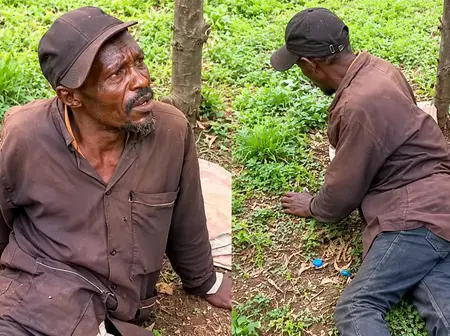
George Macharia once ran a thriving hotel and butchery along Ngong Road in Nairobi, but a series of events eventually left him without his business, family and home.
The 52-year-old’s troubles reportedly began after a night out with his in-laws, which set off a chain of events that changed the direction of his life.
Macharia, who owned GM Hotel and Butchery, gradually lost the stability he had built through his business. His marriage also fell apart, leaving him struggling to find his footing.
With no home to return to, he eventually left Ngong Road and began walking towards Murang’a. The long journey marked the start of his life on the streets.
For someone who had once managed his own business and employed himself, the change was difficult. He went from running a hotel and butchery to depending on the streets for survival.
His circumstances remained difficult until a rescue team came across him and took time to listen to his story.
After hearing what had happened, the team decided to help him trace his relatives and find a way to restore his life.
Their efforts led them to family members in Nyeri, where Macharia’s relatives were reportedly located.
The rescue team is now making arrangements to travel and facilitate a reunion between the 52-year-old and his family.
The planned reunion could mark an important step as he begins the process of rebuilding his life after years away from a stable home.
The team is also seeking to help establish a place where he can settle as he works towards getting back on his feet.
Macharia’s story highlights the difficult circumstances that can leave people disconnected from their families and livelihoods. For now, the focus is on reconnecting him with his relatives and helping him find a stable place to begin again.
Mining, Blue Economy and Maritime Affairs Cabinet Secretary Hassan Ali Joho announced the selection on Thursday, November 19, 2026, saying the government had completed the evaluation and statutory procurement reviews before issuing Notices of Intention to Award.
The successful bidder, Frontier Minerals Consortium, comprises four companies: Frontier Minerals LLC, Bunker Hill Mining Corporation, ReElement Technologies and American Resources Corporation.
According to the Ministry of Mining, the consortium emerged as the highest-scoring responsive bidder for the Mrima Hill Niobium, Rare Earth Elements and Other Minerals Project.
The tender attracted seven shortlisted groups, including two Chinese companies, two American consortia, an Australian consortium and a Kenyan-British joint venture. However, the two Chinese companies subsequently withdrew from the competition, according to earlier reports by Reuters.
The deposits at Mrima Hill are estimated to contain billions of dollars' worth of rare earth minerals and niobium, a valuable metal used in aerospace manufacturing, defence technology and advanced industrial applications.
The American consortium has indicated that it intends to establish mineral processing and refining facilities in Kenya, supporting the government's objective of ensuring more economic value is retained locally rather than exporting raw mineral resources.
He cautioned that winning the tender does not automatically authorise the company to begin exploration or mining activities.
The project has attracted concerns from sections of the local community over possible environmental damage, land rights and the protection of Mrima Hill's cultural heritage, particularly its significance as a sacred site for the Digo community.
The selection also comes amid growing international competition for critical minerals, with the United States seeking to diversify supply chains currently dominated by China.
Kenya hopes the project will attract investment, create employment opportunities and strengthen its mining industry through domestic mineral processing. https://www.facebook.com/share/p/1KiKNiBZUH/
Malaba could soon look very different, and President William Ruto has now revealed when the long-awaited transformation is expected to begin.
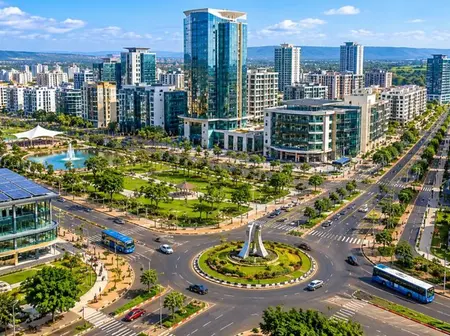
Residents of the busy Kenya-Uganda border town have something significant to look forward to after the President announced plans to return to the area next week for the official launch of the Ksh4 billion Malaba Smart City project.
Ruto made the announcement on Thursday, November 19, 2026, during his development tour of Busia County.
The proposed project is expected to introduce modern residential buildings, better infrastructure and other facilities aimed at changing the face of Malaba.
But what caught the attention of many was the President's comparison of the border town with major urban centres such as Nairobi, Kisumu and Eldoret.
Ruto questioned why Malaba should remain behind while other towns continued embracing modern developments.
He challenged residents to consider the possibility of having 15-storey buildings in their town, asking whether such developments would cause any harm.
It was a clear message that his administration wants Malaba to move beyond its traditional identity as a busy border crossing and become a modern urban centre.
The Ksh4 billion project was first announced in August 2026. According to the plans, it will include approximately 2,000 affordable housing units alongside supporting infrastructure.
If successfully implemented, the development could open new opportunities for residents, particularly through employment, housing and increased commercial activities.
For a town that handles considerable cross-border trade, the proposed transformation could also attract new businesses and investors.
However, residents will now be watching closely as the President prepares to return next week for the project's launch.
Ruto also used his Busia tour to announce several other major financial commitments targeting different sectors of the county.
He revealed that his administration had allocated Ksh18 billion towards affordable housing, modern markets and student hostels.
Road infrastructure also featured prominently in his announcement, with the President disclosing that Ksh15 billion had been set aside for road construction and rehabilitation across the county.
The investment is expected to improve transport connections and make movement easier for residents and businesses.
Electricity access was another key issue addressed during the tour.
Ruto announced that Ksh1.3 billion had been allocated to connect an additional 10,016 households to the national electricity grid.
The planned connections are expected to benefit families and businesses by expanding access to reliable electricity.
He urged Busia residents to support the implementation of the announced projects, pointing to investments in housing, roads, schools, markets and electricity as part of his government's development agenda.
With billions of shillings earmarked for different projects and the Malaba Smart City launch approaching, attention will now turn to whether these promises will translate into visible changes on the ground.