Three companies and joint ventures have been picked to develop strategic mineral deposits in Kwale Samburu and Tharaka Nithi counties. Mining CS Hassan Joho announced the winners on Thursday after a competitive bidding process.
The projects cover niobium and rare earth elements. They also include chromite and copper. The government says the move will help commercialise the country's mineral wealth.
Frontier Minerals Consortium won the Mrima Hill project in Kwale County. The group includes Frontier Minerals LLC and Bunker Hill Mining Corp. ReElement Technologies and American Resources Corporation are also part of it.
Fangda Special Steel Technology and Sinohydro Corporation formed a joint venture that won two projects. These are the Kang'ura Chromite project in Samburu and the Kamacabi Copper project in Tharaka Nithi.
Two other tenders did not attract qualifying bids. These are the Lali Hills Manganese project in Tana River and the Kiritiri Coltan project in Embu. Joho said they will be handled separately under the law.
Winning the tender does not mean mining can start. Joho made it clear that the companies must first talk to host communities and landowners. They must also meet county leaders and get all the consents required by law.
He said no prospecting can go on without the social licence of the people on the ground. He asked the investors to engage residents with humility and respect.
After the consents the firms will apply for prospecting licences through the online mining cadastre. The Mineral Rights Board will then review each application. Joho will grant licences only after receiving its recommendations.
The process began in March 2026 and bids were opened on October 21. Joho urged residents in the three counties to take part in the consultations.
Rock Investment Bank and its consortium partners have been contracted as transaction advisors, the report said. They will turn rented and underused diplomatic sites into Public-Private Partnership (PPP) projects.
Rent across Kenya’s missions costs about Ksh.3 billion a year, roughly 15 per cent of the Foreign Affairs ministry’s recurrent budget, according to the report. It said much of the rent is paid in US dollars.
The first phase covers six missions: Cairo, Lusaka, Harare, Bujumbura, Juba and Kinshasa, the report said. Nation Africa reported earlier this year that private investors would build, rehabilitate and maintain properties in the same six cities.
Under the model, a private partner raises the capital and is paid over time from existing rental spend and potential revenue streams, according to Citizen Digital.
Wagunda said government-owned land abroad is sitting idle or run down and would be put to use, the report said.
The advisor will deliver a feasibility study for each property within agreed timelines, according to the report. The process began in January with due diligence visits by a joint team from the State Department for Foreign Affairs and the PPP Directorate, followed by approved concept notes.
Wagunda said the advisor was picked through an open competitive process, as Article 227 of the Constitution requires, Citizen Digital reported.
The six pilots are meant to set a template for a wider portfolio of more than 62 properties, according to the report.
Prime Cabinet Secretary Musalia Mudavadi and Foreign Affairs PS Korir Sing’oei attended the ceremony, the report said.
The report did not state construction costs or start dates.https://www.facebook.com/share/p/1DdAWh6E7A/
In a statement defending a broader assessment of the President's record, Oketch argued that judging Ruto solely by the economic challenges facing Kenyans today would not provide a complete picture of his performance.
He insisted that citizens should consider the country's economic position before Ruto assumed power and compare it with the developments recorded since he became President.
"If you want to measure President Ruto's success, don't judge him solely by what he is doing right now. Instead, compare Kenya's economic performance before he took power with its performance after he took office," Oketch stated.
His remarks come amid continuing national discussions about the cost of living, taxation, employment opportunities, government spending and the general direction of Kenya's economy.
Since taking office in September 2022, Ruto has repeatedly defended his administration's economic policies, arguing that difficult decisions were necessary to stabilise the country's finances and create a foundation for long-term growth.
However, his economic record remains a subject of disagreement between government supporters and critics, particularly over whether improvements in national economic indicators have translated into better living conditions for ordinary households.
Available economic figures provide important context to the debate.
According to the Kenya National Bureau of Statistics (KNBS), the country's real Gross Domestic Product grew by 4.6 per cent in 2025, compared with 4.7 per cent in 2024. This shows that the economy continued expanding, although growth moderated slightly.
Inflation also declined from 7.7 per cent in 2023 to 4.1 per cent in 2025, according to the same statistical agency.
The Kenya shilling also strengthened from an average exchange rate of KSh139.8 against the US dollar in 2023 to KSh129.3 in 2025.
These figures offer some support for arguments that certain economic indicators have improved since Ruto assumed office.
Nevertheless, the wider picture remains complicated. The World Bank has highlighted persistent challenges involving public debt, poverty, weak formal job creation and the difficulty of translating economic growth into improved household welfare.
This is why Oketch's remarks are likely to generate different reactions among Kenyans.
Kenya Railways is targeting early 2027 to finalise funding arrangements for the KSh30 billion, Nairobi Railway City project and formally begin construction.
The Corporation’s Managing Director, Philip Mainga, announced the timeline on Thursday, November 19, following a meeting with United Kingdom officials to discuss financing and the implementation of the project.
Mainga said Kenya Railways was working closely with the National Treasury and other relevant government agencies to complete the funding arrangements ahead of the planned construction.
The project is expected to transform the area around Nairobi Central Station through the development of modern transport and commercial facilities.
The managing director also confirmed that the corporation had completed the procurement process for the contractor and supervising engineer who will oversee the multi-billion-shilling development.
He said the immediate focus was securing the required financing to allow work on Nairobi Central Station to begin.
"Our immediate priority is to conclude the financing arrangements for Nairobi Central Station and move into construction," Mainga said during the meeting.
Apart from the main railway station development, Kenya Railways is also preparing to begin construction of a dedicated zone for Meetings, Incentives, Conferences and Exhibitions (MICE) in the coming weeks.
The MICE Core will feature a modern multipurpose arena alongside supporting commercial facilities.
According to Mainga, the development is expected to strengthen Nairobi’s position as a regional destination for conferences, exhibitions, sports and entertainment.
The facilities are intended to provide space for major events while supporting commercial activities within the wider Nairobi Railway City project.
The discussions with UK officials focused on financing and the steps required to move the project into its implementation phase.
Kenya Railways said it was coordinating with government agencies, to ensure the funding process is completed before construction starts.
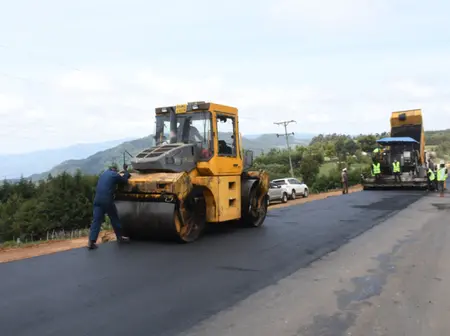
The National Treasury has included several major road projects in its budget policy plans under the Public-Private Partnership (PPP) model. Under this arrangement, private companies provide money to develop roads and recover their investment by collecting fees from motorists.
This means drivers may soon be required to pay to use some highways that have traditionally been funded through public resources.
One of the proposed projects is the Nairobi–Thika–Juja–Kenol–Sagana–Marua highway, which has an estimated cost of Sh100 billion. The project is expected to operate under a 30-year user-pay agreement, although the toll rates and exact starting date have not yet been announced.
Other roads being considered for toll-related arrangements include the Mombasa Northern Bypass and the Nairobi Southern Bypass. The government says private investment can help finance major infrastructure projects without placing the full cost on the national budget. <Cite refs={["turn513962search1","turn513962search2"]}/>
However, the plans face a legal challenge following a High Court ruling delivered in September 2026.
The court declared parts of the Public-Private Partnerships Act unconstitutional because they allowed some projects involving government spending, borrowing, guarantees and other financial obligations to proceed without parliamentary approval.
The ruling means that PPP projects creating financial responsibilities for the government must receive parliamentary oversight. It does not mean that every privately funded toll road automatically requires Parliament to approve it. <Cite refs={["turn677776search7","turn677776search8","turn677776search12"]}/>
The decision has raised questions about how future road projects will be approved and how the government will work with private investors.
The proposed toll charges have also raised concerns among motorists, matatu operators and business owners. Many fear that extra road charges could increase transport costs and make life more expensive for ordinary Kenyans.
For now, the projects remain subject to the required approvals and other legal processes. Kenyans will be waiting to see which roads will eventually introduce toll charges and how much motorists will be expected to pay.
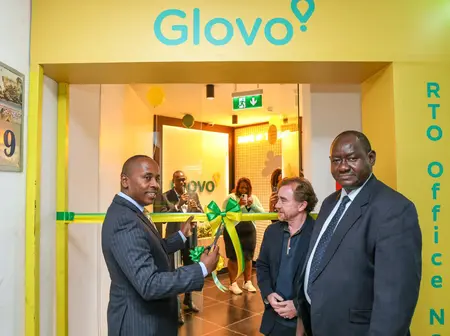
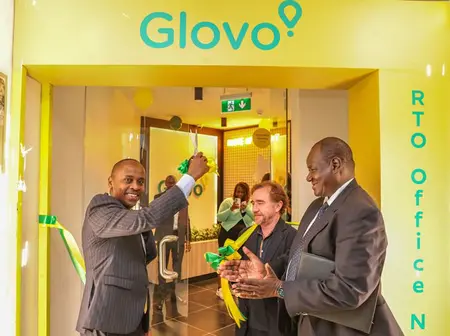
Glovo, a leading technology platform operating across Europe, Central Asia and Africa, has opened two new facilities in Nairobi as part of its KSh10 billion investment commitment in Kenya, reinforcing its focus on creating meaningful employment and income-generating opportunities for young Kenyans.The new Real Time Operations (RTO) office and Glovo Centre mark another step in the company’s expansion in Kenya, following the opening of its regional office in Nairobi in May 2026, where Glovo announced plans to invest an additional KSh 10 billion in the country by 2030.
The National Land Commission (NLC) has outlined the progress made in land valuation and compensation for the Horn of Africa Gateway Development Project following concerns by the World Bank over delays threatening to increase construction costs by about Ksh1.2 billion every month.
In a statement dated November 18, 2026, NLC Chairman Abdillahi Saggaf Alawy said the commission had made progress in identifying affected landowners, verifying assets, conducting valuations and preparing compensation awards along different sections of the 740-kilometre Isiolo-Mandera highway.
“The National Land Commission (NLC) wishes to clarify media reports regarding concerns raised by the World Bank over alleged delays in land valuation and compensation of Project Affected Persons (PAPs) under the Horn of Africa Gateway Development Project (HoAGDP),” read the notice in part.
Alawy clarified that the commission’s responsibility ends with valuation and preparation of compensation schedules, while the Kenya National Highways Authority (KeNHA) is responsible for processing payments and disbursing funds to Project Affected Persons (PAPs).
Under Package 1, covering the Isiolo-Kulamawe-Modogashe section, NLC said compensation payments were ongoing. KeNHA was awaiting World Bank no-objection approval for payments to 1,280 PAPs valued at Ksh554,969,790.
A further 111 affected persons had been forwarded for payment, while the commission had completed a compensation schedule addressing grievances involving 255 PAPs.
For Package 2, covering the 119-kilometre Wajir-Kotulo section, NLC said it had approved compensation awards for 1,619 PAPs amounting to KSh824,846,737.
The affected areas include Wajir, Lafaley, Tarbaj, Hungai, Wargadud, Kotulo Wajir and Kotulo Mandera. The approved compensation schedules had been forwarded to KeNHA for payment.
In Package 3, covering the Dimu-El Wak section, the commission conducted disclosure and asset validation between October 12 and 23, 2026. The exercise covered more than 1,105 PAPs across seven settlements, including Majani, Dimu, Garsesala, Dabacity, Kobo, Borehole 11 and El Wak Town.
NLC said valuation for the section was expected to be completed by the end of November 2026.
Separately, the commission had approved initial compensation awards for 296 PAPs along the Isiolo-Kachuru section, amounting to KSh497,072,500. The payments were awaiting the deposit of funds by KeNHA.
Work on the Modogashe-Samatar-Wajir section, however, was awaiting fresh facilitation from the highways authority.
The World Bank had earlier warned that restricted access to construction sites across six active contracts could result in recurring monthly costs of about KSh1 billion.
The additional expenditure covers supervision, security, idle equipment and price escalation. The bank also estimated that demobilisation and remobilisation could cost another KSh207.5 million, bringing the total financial exposure to approximately Ksh1.2 billion.
World Bank Division Director for Kenya Qimiao Fan noted that compensation funds had been available since 2024, but the process only began in November 2025.
He said implementation remained largely limited to the Isiolo-Modogashe section, where 1,281 of 1,669 eligible people had received Ksh456 million in compensation.
The concerns have placed the land acquisition process under scrutiny as construction continues along the major transport corridor linking northern Kenya to the border with Somalia.
In its response, NLC said land acquisition and compensation involved several agencies and required statutory approvals, availability of funds, resolution of grievances and clearances from development partners.
The commission identified several outstanding issues affecting the process, including litigation at the Garissa Magistrates Court over responsibility for compensation payments.
Other challenges include insecurity, particularly along the Wajir Town-El Wak corridor, speculative developments by affected landowners, missing persons and compensation awards that have not been collected.
The commission also cited unresolved succession cases involving deceased PAPs, which have complicated the release of compensation to beneficiaries.
NLC said it remained committed to working with KeNHA, the World Bank and other stakeholders to address the outstanding issues, speed up compensation and safeguard the rights of affected landowners.
The Horn of Africa Gateway Development Project is a major infrastructure investment valued at about KSh168 billion, which the World Bank has described as its largest single-sector investment in Kenya.
The project seeks to upgrade roads, improve digital connectivity and strengthen cross-border trade. Construction is reported to be about 60 per cent complete, with completion targeted for around June 2030.
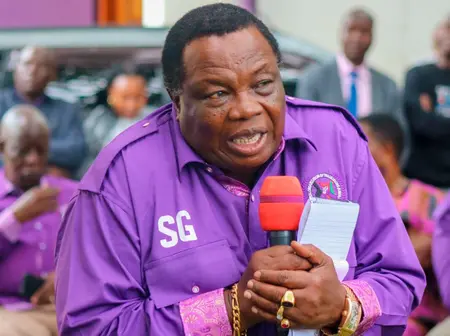
COTU Secretary General Francis Atwoli has triggered widespread reactions among Kenyans after drawing attention to the cost of purchasing one litre of petrol in Egypt, prompting fresh discussions about fuel prices and the rising cost of living in Kenya.
According to Atwoli the cost of 1 Litre of Petrol in Egypt stands at Kshs 1,081. His sentiments elicited mixed reactions on the Internet.
Atwoli's remarks come at a time when many Kenyans are struggling with expensive fuel, which has continued to affect transportation, businesses and the prices of essential commodities.
The comparison has attracted considerable attention, with some Kenyans questioning why motorists in the country continue to face significant fuel expenses while other countries have different pricing structures.
In Egypt, the cost of petrol varies depending on the grade. Available pricing information indicates that 80-octane petrol sells at approximately 20.75 Egyptian pounds per litre, while 92-octane and 95-octane cost about 22.25 and 24 Egyptian pounds respectively.
Meanwhile, motorists in Kenya continue to contend with relatively high pump prices. Nairobi's super petrol price stands at KSh226.96 per litre, while diesel retails at KSh227.76 under the November 2026 pricing review by the Energy and Petroleum Regulatory Authority (EPRA).
The latest comparison has reignited conversations about government taxation, petroleum importation expenses and the measures available to cushion ordinary citizens from the increasing cost of living.
Some Kenyans have supported Atwoli's remarks, arguing that the government should examine policies that could make fuel more affordable. They believe that reducing the financial burden on motorists would also help lower transportation and commodity costs.
However, others have maintained that comparing fuel prices between countries requires a closer examination of factors such as exchange rates, government subsidies, taxation and the cost of importing petroleum products.
Atwoli, who has been vocal about issues affecting Kenyan workers, has once again brought attention to the economic pressures facing ordinary households.
Fuel remains a critical component of Kenya's economy because changes in petroleum prices often influence the cost of public transport, agricultural production and the distribution of goods across the country.
The latest debate comes amid growing public expectations for the government to introduce sustainable economic measures that can ease the financial pressure facing citizens.
As reactions continue to emerge, Atwoli's comparison has once again placed Kenya's fuel pricing policies under public scrutiny, with many Kenyans demanding more affordable energy costs.
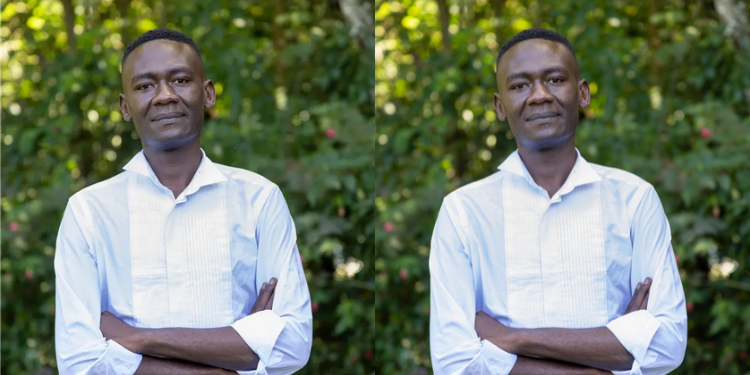
Through ELF-Africa’s VirtueLEAD Fellowship, community organiser Samuel Omare is rethinking what it means to lead, moving beyond achieving results to examining the values and behaviours that shape how those results are achieved.Tearing down a drainage system he had helped build was not a decision Samuel Omare wanted to make.
Glovo, a leading technology platform operating across Europe, Central Asia and Africa, has opened two new facilities in Nairobi as part of its KES 10 billion investment commitment in Kenya, reinforcing its focus on creating meaningful employment and income-generating opportunities for young Kenyans.The new Real Time Operations (RTO) office and Glovo Centre mark another step in the company’s expansion in Kenya, following the opening of its regional office in Nairobi in May 2026, where Glovo announced plans to invest an additional KES 10 billion in the country by 2030.