Kenya is taking important steps to transform its electricity sector by allowing greater participation from private companies. The reforms are expected to give eligible consumers and licensed businesses access to the country's transmission and distribution networks under regulated conditions.
Electricity plays an important role in the daily lives of Kenyans. Families depend on it for lighting and other household activities, while businesses need a reliable supply to operate smoothly. Any changes in the electricity sector could therefore have a significant impact on consumers and the economy.
Under the new regulations, eligible consumers and licensed entities will be allowed to access existing electricity networks on regulated terms. This marks a major step towards creating a more open electricity market where different players can participate.
The reforms are also expected to create opportunities for private investors and encourage competition. Allowing qualified companies to use existing networks could give consumers more choices and improve services. Increased private sector involvement may also attract investment, introduce fresh ideas and support the development of the energy sector.
However, opening the electricity market will require proper planning and strong supervision. Authorities must ensure that the regulations are implemented fairly and that all participants follow the established guidelines. Reliable infrastructure and effective coordination will also be necessary to maintain a stable electricity supply.
For ordinary Kenyans, the biggest concern is whether these changes will translate into better services and affordable electricity. Consumers will want to see improvements that make electricity more accessible and reliable for homes and businesses.
The government and relevant regulators will therefore have an important responsibility to ensure that the reforms achieve their intended goals.
Kenya's decision to open its electricity market represents an important move towards modernising the energy sector. If properly implemented, the changes could encourage investment, strengthen competition and create a more efficient electricity market for the country.
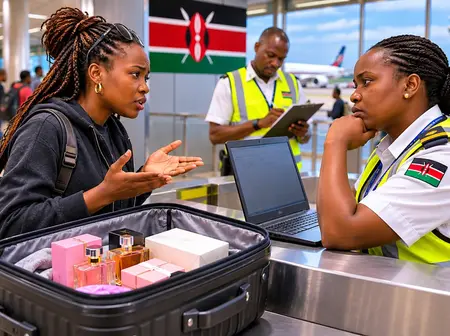
Returning Kenyan Diaspora: Know Your Customs Rights Before Paying Duty at JKIAFor thousands of Kenyans living abroad, returning home is an exciting opportunity to reconnect with family, visit loved ones and enjoy the warmth of their motherland. However, for some returning Kenyan diaspora members, encounters with customs officers at Kenyan airports have become a source of frustration and distress.
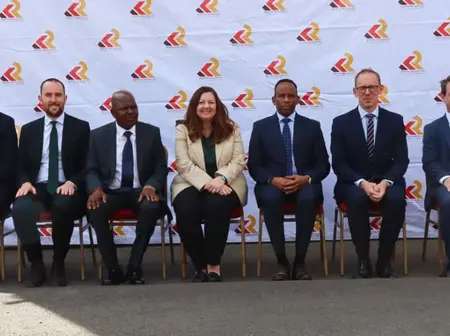
The engagement provided an opportunity to review progress on the programmeKenya Railways and the United Kingdom have held high-level discussions on advancing Nairobi Railway City, with a focus on concluding key financing arrangements and transitioning the flagship development programme into implementation.The discussions took place during a visit to Kenya Railways by Kirsty McNeill MP, UK Minister of State for International Development and Africa, accompanied by the British High Commissioner to Kenya, H.E.
President William Ruto has announced significant growth in the National Social Security Fund (NSSF), saying its asset base has risen to Sh850 billion from Sh288 billion in 2022.The President said the government expects the fund’s assets to reach Sh1 trillion by June 2027, attributing the expansion to increased contributions from employees and employers.
Equity Group Holdings on Wednesday reported a 32 percent growth in profit after tax for the nine months to September to Sh68.7 billion, driven by a jump in non-interest income.
The group’s chief executive officer, James Mwangi, spoke on the lender’s dividend policy, growth prospects amid cyber security threats and the turbo charged profits.
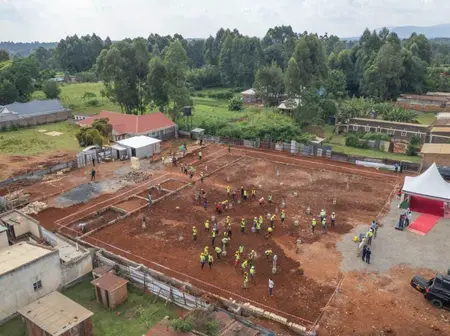
President William Ruto has laid the foundation stone for the construction of Bokoli Modern Market in Webuye West Constituency, Bungoma County, as the government steps up efforts to improve trading infrastructure and support small-scale entrepreneurs.
The market is expected to accommodate approximately 200 traders, including Mama Mboga and other small-scale business operators, providing them with a more organised and conducive environment to conduct their businesses.
Speaking during his development tour at Bokoli market in Webuye West constituency on Thursday, November 19, 2026, President Ruto announced that the government had set aside KSh1.8 billion for the construction of 17 modern markets across Bungoma County.
He noted that the investment forms part of the government's nationwide programme targeting the construction of 600 modern markets at a cost of KSh57 billion.
According to the President, the initiative is aimed at creating economic opportunities, improving trading facilities and promoting equitable development across the country.
The Bokoli Modern Market is expected to provide traders with improved working spaces while boosting commercial activities in Webuye West and neighbouring areas.
The government says the markets programme is part of its broader strategy to strengthen the informal sector, support small businesses and improve the livelihoods of traders across the country.
Gen Z entrepreneur and digital creator Goliath Bradley has publicly accused Meta of withholding $2,779 (approximately KSh 360,000) in earnings generated through its platforms, claiming the money has remained unpaid for the past three months.
Bradley, who has built a growing online presence through content creation and digital marketing, expressed frustration over the delayed payment. He said that despite making several attempts to seek clarification from Meta, he has received little assistance in resolving the issue.
According to Bradley, the earnings were generated through monetisation programmes available on Meta-owned platforms, including Facebook and Instagram. He claims that although he met all the required monetisation conditions, the expected payout has not been deposited into his account.
“The money represents months of hard work and dedication to content creation,” Bradley said, noting that the delay has affected some of his planned projects and business operations.
His allegations have sparked conversations among fellow content creators, many of whom rely on social media monetisation as a key source of income. While some creators shared similar experiences with delayed payments, others pointed out that payout issues can sometimes arise due to account verification requirements, banking information discrepancies, tax documentation concerns, or ongoing account reviews.
Meta offers several monetisation opportunities that allow eligible creators to earn revenue through advertisements, subscriptions, bonuses, and audience engagement. To receive payments, creators must comply with the company's policies and maintain accurate payment and tax information.
At the time of publishing, Meta had not publicly responded to Bradley's claims. It remains unclear whether the disputed funds are under review, awaiting verification, or being affected by another administrative process.
The situation highlights ongoing concerns among digital creators who depend on major technology platforms for income. Many have called for greater transparency, improved communication, and faster resolution of payment-related disputes.
Despite the setback, Bradley says he remains determined to pursue answers and secure the release of the funds he believes he rightfully earned.
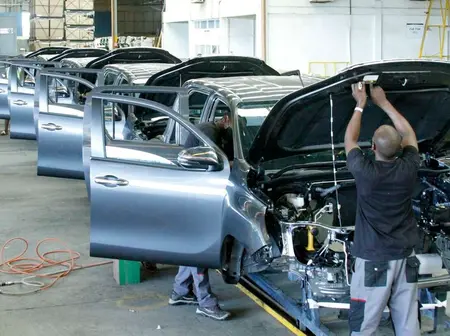
Simba Corp plans to cut prices of Morris Garages (MG) cars by up to 20 percent through local assembly as the vehicle dealer seeks to tap tax incentives for locally manufactured units.
The group will begin assembling the Chinese-owned British car brand locally from next year at its Associated Vehicle Assemblers (AVA) plant in Mombasa.
Speaking during his development tour of Busia County on Thursday, November 19, the Head of State told residents that preparations for the ambitious urban development initiative would move to the next stage with the planned launch.
Ruto said Malaba deserved modern infrastructure and high-rise buildings just like other major urban centres, including Nairobi, Kisumu and Eldoret.
He challenged residents to embrace the idea of constructing modern buildings in the border town, questioning why developments taking place in other cities could not be replicated in Malaba.
The proposed project was previously announced in August 2026 and is valued at approximately Ksh4 billion. It is expected to include 2,000 affordable housing units alongside supporting facilities intended to improve the town's residential and commercial environment.
The government anticipates that the development will generate employment, attract investment and strengthen Malaba's position as an important trading hub along the Kenya-Uganda border.
During his Busia tour, Ruto also outlined other development commitments covering housing, transport infrastructure, electricity connectivity and market construction.
He said the government had allocated Ksh18 billion towards affordable housing projects, markets and student hostels across the county.
Additionally, Ksh15 billion has been set aside for road development, while Ksh1.3 billion will support the connection of 10,016 additional households to the national electricity grid.
The President said the investments were intended to improve living standards and expand access to essential services across Busia.
He urged residents to support the government's development agenda, pointing to planned improvements in roads, schools, electricity supply, markets and housing.
The planned launch next week will mark a key step towards the implementation of the Malaba Smart City proposal, although the government is yet to provide a detailed construction timetable in the announcement.
An Australian mining company has challenged Kenya’s proposed award of the Mrima Hill niobium and rare earths project in Kwale County to a US-led consortium, claiming the successful bidder failed to meet the tender requirements.
RareX Limited, which partnered with Iluka Resources in a consortium that ranked second in the competition, says it will file a formal procurement complaint seeking to overturn the proposed award to Frontier Minerals LLC and its partners.
In an announcement released on Thursday, November 19, RareX said it had received a Notification of Intention to Award from the Ministry of Mining, Blue Economy and Maritime Affairs. The company has until December 10, 2026, to challenge the decision.
The dispute comes after Mining Cabinet Secretary Hassan Joho announced the outcome of a competitive tender for several strategic mineral deposits across the country.
The Frontier Minerals Consortium comprises Frontier Minerals LLC, Bunker Hill Corporation, ReElement Technologies LLC and American Resources Corporation. It was named the successful bidder for the Mrima Hill project, with RareX–Iluka finishing second among three shortlisted consortia.
RareX maintains that Frontier Minerals failed to submit its Expression of Interest within the deadline stipulated in Gazette Notice No. 4263, issued on March 24, 2026.
The company argues that the late submission made the US-led consortium ineligible to receive the award. It intends to ask the government to recognise RareX–Iluka as the highest-scoring eligible bidder.
In a joint statement, RareX Managing Director and CEO James Durrant and Chairman Jeremy Robinson said: “We believe the RareX–Iluka Consortium offers Kenya the strongest technical solution for Mrima Hill, and a partnership that sits comfortably alongside Kenya’s relationships with all of its international partners.”
They added: “Kenya has run a serious, competitive tender, and we respect the rigour the Ministry has brought to the evaluation. We do not take this step lightly, but every bidder should have met the same entry conditions… The Frontier Consortium did not. They missed the deadline by a significant number of days.”
The company described the admission of Frontier’s bid as a “serious administrative irregularity”. It said it would pursue the complaint through the procurement dispute mechanism provided by the government.
Joho said the tender process was intended to attract investors with the technical and financial capacity to develop the country’s mineral resources while supporting local communities and value addition.
He said the selected firms would be expected to comply with environmental requirements and establish partnerships with host communities.
“An award at the end of a tender process is not a licence to immediately break ground; rather, it is the gateway to meaningful local partnership and strict regulatory compliance,” he said.
Joho added that successful bidders must obtain community consent, landowner agreements and prospecting licences before undertaking field activities.
“No prospecting operation can proceed without the social licence and formal consents of the people on the ground,” he said, noting that host communities “deserve to know exactly who is coming to their locality.”
The same tender selected a Chinese-led joint venture involving Fangda Special Steel Technology and Sinohydro for the Kang’ura chromite project in Samburu and the Kamacabi copper project in Tharaka Nithi. No qualifying bids were received for the Lali Hills manganese and Kiritiri coltan deposits.
RareX’s proposal includes mineral beneficiation in Kwale, followed by refining at a planned facility in the Dongo Kundu Special Economic Zone near Mombasa.
The resulting mixed rare earth carbonate would then be separated into individual rare earth oxides at Iluka’s Eneabba refinery in Western Australia. The consortium also proposed exploring further downstream processing in Kenya.
Its plan includes a 10 per cent free-carried interest for the National Mining Corporation.
RareX will also request a debriefing on its tender evaluation by November 26 as it works with Kenyan legal advisers to finalise its complaint.
The company said it remained committed to developing Mrima Hill in partnership with Kenya. However, it acknowledged that there was no certainty its complaint would succeed or that the project would eventually be awarded to its consortium.