Shimanyula's journey to wealth is a story of determination, persistence and humble beginnings. Interestingly, his educational background remains largely unknown. However, in a past interview with a local daily newspaper, the businessman disclosed that he never completed his basic education.
His entrepreneurial journey dates back to the early 1990s when he worked as a tout and car cleaner at the Kakamega main bus stage. Despite earning a modest income, he remained determined to improve his financial situation.
His father later played an important role in his journey by helping him acquire an old saloon car, which he converted into a taxi. Shimanyula operated the vehicle for more than 10 years, gradually building his experience and resources in the transport industry.
Through years of hard work, he eventually expanded his business interests, establishing Homeboyz buses, which became a familiar name in the public transport sector.
Beyond transportation, Shimanyula ventured into football by establishing Homeboyz Football Club, which has grown into one of the recognised teams in Kenyan football. The club has participated in the top-flight league, attracting attention from football enthusiasts across the country.
Politically, Shimanyula has also been associated with former Kakamega Governor Wycliffe Oparanya. He has been described as one of Oparanya's key financiers, with claims that his political connections helped him secure lucrative government tenders during the former governor's administration.
Today, Shimanyula's rise from a tout and car cleaner to a prominent businessman remains an example of how humble beginnings can develop into significant entrepreneurial success.
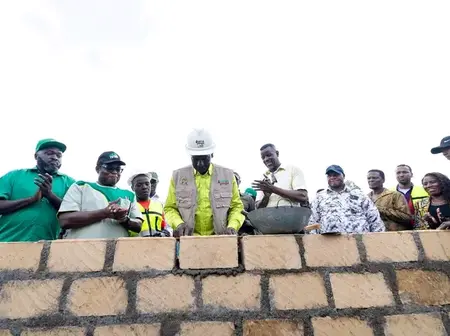
The proposed market is expected to accommodate approximately 200 traders, including Mama Mboga and other small-scale business owners. The project is part of the government's wider efforts to improve trading facilities and create better economic opportunities for ordinary Kenyans.
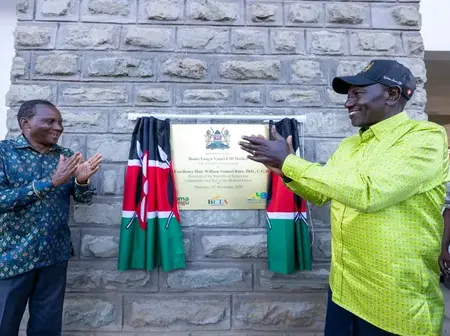
In a statement shared after the foundation stone-laying ceremony, President Ruto revealed that the government is investing KSh1.8 billion in the construction of 17 modern markets across Bungoma County.
The investment forms part of a nationwide development programme targeting the construction of 600 modern markets. The initiative is intended to provide traders with improved business environments while supporting the growth of small enterprises in different parts of the country.
Modern markets are important to local economies because they bring together buyers and sellers, improve access to trading spaces and create opportunities for small businesses to expand. They can also contribute to economic activities within surrounding communities.
The investment in Bungoma also highlights the government's intention to distribute development projects across different regions rather than concentrating them in major urban centres.
As construction progresses, attention will remain on how the 17 planned markets will improve business opportunities across Bungoma County.
What is your opinion about the construction of Bokoli Modern Market and the government's KSh1.8 billion investment in Bungoma? Share your views, remarks and comments in the comment section below.
Visa has appointed Esther Waititu as Senior Vice President and Group Country Manager for Southern and Eastern Africa, where she will oversee the company’s operations across 24 markets in the region.Based in Johannesburg, South Africa, Waititu will lead Visa’s engagement with clients, business partners, governments and internal teams, focusing on expanding digital payments and strengthening the regional payments ecosystem.
The market, valued at KSh118 million, is expected to accommodate approximately 150 traders, providing them with a more organised space to conduct their businesses. The project is part of the government's broader efforts to improve infrastructure for traders and strengthen economic activities at the grassroots level.
The new facility is expected to offer traders a better working environment compared to operating in congested and less organised trading spaces. Markets remain important centres of economic activity in many parts of Kenya, supporting families through businesses involving fresh produce, household goods, clothing and other essential commodities.
For residents of Tongaren and neighbouring areas, the completion of Naitiri ESP Market could provide an opportunity to improve the trading experience for both sellers and customers. A properly organised market can make it easier for traders to display their goods, attract customers and conduct business in a more comfortable environment.
The development comes at a time when many small-scale traders continue to face challenges associated with limited business space, weather exposure and inadequate market facilities. Modern markets are expected to address some of these difficulties by providing improved structures and more organised trading spaces.
However, the impact of such projects will ultimately depend on how effectively the facilities are managed, maintained and utilised by the traders. Access to the markets, proper sanitation, security and fair allocation of trading spaces will remain important factors in ensuring that the investments deliver lasting benefits to local communities.
The handover of Naitiri ESP Market therefore marks another development in efforts to improve trading infrastructure in Bungoma County, with attention now turning to how the facility will support traders and stimulate local economic activity.
What is your opinion on the construction of modern markets across Bungoma County, and do you think such projects can significantly improve the livelihoods of small-scale traders? Share your views in the comment section.
In a statement released on Thursday, November 19, the Australian firm claimed the winning consortium submitted its Expression of Interest after the deadline set by the Ministry of Mining, making it legally ineligible to receive the proposed award.
The company argued that despite missing the submission deadline, the US-led consortium was still allowed to participate in the competitive tender process. It has now threatened legal action to challenge the government's decision.
Ranked second among three shortlisted bidders, the Australian firm intends to file a procurement-related complaint before December 10, 2026, seeking to overturn the proposed award and have its consortium considered.
The company maintains that its consortium should receive the opportunity because it emerged as the highest-scoring eligible bidder that satisfied the tender requirements. It has also requested a formal debriefing from the ministry by November 26.
The dispute follows a notification issued by the State Department for Mining on November 19, triggering a standstill period during which unsuccessful bidders can challenge the proposed award before the process proceeds.
The proposed exploration licence covers niobium, rare earth elements and other minerals at Mrima Hill in Kwale County. However, it does not permit actual mining, which would require separate licences, environmental approvals and community consultations.
The latest dispute comes hours after Mining Cabinet Secretary Ali Hassan Joho announced that two other mineral projects, Lali Hills manganese in Tana River and Kiritiri coltan in Embu, had failed to attract qualifying bids.
Joho also announced proposed awards for Kang’ura chromite in Samburu and Kamacabi copper in Tharaka Nithi, subject to local consents. The Mrima Hill dispute now threatens to complicate the government's efforts to advance its mineral exploration programme.
Kang’e Saiti has come full circle. Thirty years after walking through PwC’s doors, he now sits at the top of its Eastern African operations, having risen through the ranks to become Regional Senior Partner and Country Senior Partner for PwC Kenya. “I remember the senior partner who welcomed us then,” he says. “I said to myself that maybe in 22 years, I wouldn't mind doing what he's doing.”
Taxis will pay up to Sh250 to access Kenya airports, introducing an additional fee that will increase fares charged by cabs and ride-hailing firms.
The Kenya Airports Authority (KAA) is proposing airport ‘access fees’ for taxis and ‘ground transport permits’ for other public service vehicles like tour vans and staff transport vehicles to boost its revenue collections.
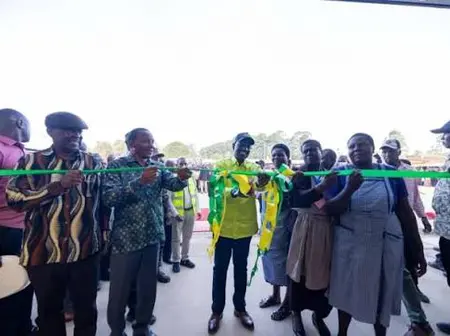
President William Ruto has commissioned the Naitiri Modern Market in Tongaren Constituency, Bungoma County, marking an important development for traders and residents of the area.
The President visited Naitiri on Thursday, November 19, 2026, as part of his development tour of Western Kenya. The new market is expected to improve the working environment for small-scale traders and create better opportunities for local businesses.
The modern facility is designed to provide traders with organised selling spaces and improved services. It includes modern stalls, a cold storage facility, a childcare room, an ICT hub and a food court.
The market is expected to benefit traders who have faced challenges operating in open spaces, especially during rainy and sunny weather. It will also help create a more organised trading environment for people selling agricultural produce and other goods.
During the same visit, President Ruto also launched the construction of the Mfupi-Mukuyuni-Naitiri Road, which is expected to improve transport and movement within the area.
The projects are part of the government's efforts to support small businesses, improve infrastructure and strengthen economic activities in rural communities.
For Naitiri residents, the modern market represents an important opportunity to grow businesses, attract customers and improve their livelihoods. Read more on: https://www.google.com/url?sa=t&source=web&rct=j&opi=89978449&url=https://www.the-star.co.ke/counties/western/2026-11-19-president-ruto-opens-naitiri-market-launches-bokoli-project-to-boost-trade-and-jobs-in-bungoma&ved=2ahUKEwil05y-xpSYAxVylP0HHethO3sQFnoECCcQAQ&usg=AOvVaw0EkkO8mnL1oGvzTGvB5vTG
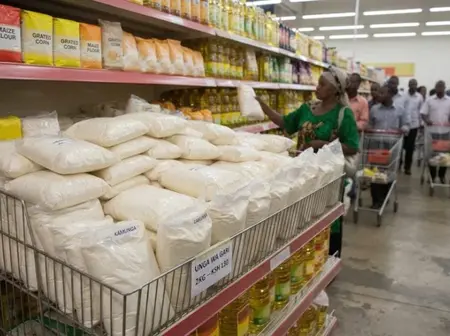
Conducted on Thursday, November 19, 2026, the enforcement exercise forms part of an intensified nationwide crackdown aimed at protecting consumers from hazardous, counterfeit, and unapproved merchandise entering local supply chains.
Inspectors swept through wholesale stores, supermarkets, and neighbourhood retail outlets, impounding products that lacked valid Standardization Marks or failed to meet mandatory Kenyan safety and quality specifications.
According to the standards regulator, uncertified maize meal poses serious health risks, including potential exposure to elevated aflatoxin levels and poor fortification, while banned cosmetic products often contain prohibited bleaching agents such as hydroquinone and mercury that cause severe skin and organ damage.
Similarly, non-compliant electrical accessories expose households and commercial premises to fire and electrocution hazards.
The operation follows recent regional assurances by KEBS South Rift officials that the agency is working closely with manufacturers and county authorities to weed out rogue traders, alongside parallel seizures of unlicensed maize flour consignments in other parts of the country.
KEBS has urged consumers to remain vigilant by verifying product certification marks via its official SMS verification platform or mobile application before making purchases, warning that attractive packaging alone does not guarantee safety.
Traders found stocking unapproved goods risk prosecution, heavy fines, and revocation of operating licences.
Sustained market surveillance, strict enforcement of the Standards Act, and proactive consumer verification remain vital to safeguarding public health and promoting fair trade across Kenya.
What are your thoughts about this articles? Share your reactions in the comment section and don't forget to share and follow for more updates.
Sugarcane farmers across Kenya will start receiving bonus payments next week following President William Ruto’s announcement of an annual Ksh1.2 billion allocation for growers supplying five state-owned sugar factories leased to private investors.
Speaking during a development tour of Busia County on Thursday, November 19, 2026, Ruto said the payments would give sugarcane farmers benefits similar to those enjoyed by tea and coffee growers, who receive annual bonuses.
“We also want cane farmers, like the tea and coffee farmers, to enjoy the benefits that come with toiling in the sugarcane farms,” he said.
The President urged farmers to increase sugarcane production, promising to maintain the price of subsidised fertiliser at Ksh2,000 per bag while exploring cheaper options to reduce the cost of farm inputs.
The bonus programme follows the government’s decision to lease five state-owned sugar factories, Nzoia, Mumias, Chemelil, Muhoroni and Sony Sugar, to private investors for 20 years.
The arrangement is part of efforts to revive an industry that has struggled with mounting debts, outdated machinery, poor management and delayed payments to farmers.
Before the leasing agreements were signed, the government wrote off Ksh117 billion in historical debts that had affected the operations of the five mills.
Under the lease agreements, private investors have undertaken to improve factory operations, including replacing old machinery and upgrading equipment to increase sugarcane processing capacity.
The changes have helped improve milling operations, with farmers now receiving payments for delivered cane every two weeks. In some cases, growers receive their money within a week of delivering their harvest.
Kenya Sugar Board Chief Executive Officer Jude Chesire said the changes had also enabled the government to clear most of the more than Ksh5 billion owed to sugar factory workers in salary arrears.
The remaining balance of approximately Ksh1 billion is expected to be settled by the end of 2026 or early 2027.
“The factories are now vibrant, and we are happy they are able to help us process farmers’ bonuses,” Chesire said.
He confirmed that the board would oversee the disbursement of the bonuses beginning next week, with payments determined by the amount of sugarcane delivered to the factories since the leasing agreements took effect.
Kenya Sugar Board Director of Regulatory Affairs Samwel Kemboi said the regulator had completed the verification of beneficiaries using delivery records submitted by the respective factories.
The records will be used to establish eligible farmers and guide the distribution of the annual allocation.
The announcement received support from labour unions and sugarcane farmers’ organisations, with representatives welcoming the planned payments and the progress made in clearing workers’ salary arrears.
Kenya Union of Sugar Plantation and Allied Workers Secretary-General Francis Wangara thanked the government for its intervention in the sector, particularly the bonuses and efforts to settle outstanding employee payments.
“We owe you a debt of gratitude,” Wangara said.
Officials from the sugarcane farmers’ federation, led by Ezra Okoth, also welcomed the improved payment arrangements, noting that farmers were now receiving money for delivered cane more frequently.
The representatives urged Ruto to continue with the reforms, saying the changes in factory operations and the introduction of bonuses would benefit growers who had experienced years of delayed payments.
Okoth also pledged political support for the President, saying sugarcane farmers would reciprocate the government’s interventions at the ballot.
“We will also do good to you at the ballot,” he said.
The five factories serve thousands of sugarcane growers, particularly in Western Kenya and parts of the Rift Valley.
The planned bonuses will provide eligible farmers with an additional payment alongside the proceeds from cane deliveries, with the Kenya Sugar Board expected to coordinate the first disbursements next week.