Category: Economy&Finance

  • KRA’s expanding digital tax trail is changing what businesses must prove when an audit begins

    KRA’s expanding digital tax trail is changing what businesses must prove when an audit begins

    iTax portal downtime

    A business can receive payments through its bank account, record sales in its books and file its tax returns, yet still face questions from the Kenya Revenue Authority (KRA) when those figures do not match information held elsewhere in the tax system.

    The growing use of electronic invoicing and transaction records has given the authority more information to compare against taxpayer declarations. For businesses facing a KRA tax audit, that means being able to explain how figures in their returns connect to invoices, bank entries, accounting records and the underlying transactions.

    Jilna Shah, Tax Director at RSM Eastern Africa, says the authority is using information available through electronic systems to identify discrepancies and select areas for verification. She discussed the audit process, the records taxpayers should maintain and the options available when they disagree with an assessment.

    KRA operates a self-assessment system in which taxpayers declare their income, expenses and tax liabilities through iTax. The authority subsequently verifies those declarations against information available to it, including records relating to transactions and tax filings.

    Shah identifies persistent losses, refund claims, fluctuations in profitability and discrepancies involving related parties among the issues that can attract scrutiny. Differences between turnover reported in VAT returns and sales recorded in audited financial statements are another common starting point.

    The expansion of electronic tax administration gives KRA additional ways to identify inconsistencies before or during an audit.

    In April 2026, TechTrendsKE reported on KRA’s move towards early VAT compliance alerts, using eTIMS transaction information to identify discrepancies between recorded activity and submitted returns. The system was intended to give taxpayers an opportunity to address certain differences before filing.

    A separate report in October examined KRA’s discussions with Safaricom over a proposed arrangement to generate eTIMS invoices for merchants receiving payments through M-Pesa tills and PayBills. The proposal would give the authority another potential source of information about merchant transactions and declared income.

    These developments provide context for Shah’s observation that VAT turnover and sales reported in audited financial statements frequently form part of the initial reconciliation exercise. She says eTIMS information is giving KRA more visibility into accounting figures, with enquiries extending across different tax heads.

    Shah describes three broad forms of audit activity. Desk-based verification involves KRA examining information already available to it and asking taxpayers to clarify discrepancies. A comprehensive audit involves a wider examination of a business’s records, while specific enquiries may focus on particular areas such as capital gains tax, VAT or eTIMS declarations.

    For comprehensive audits, the initial information request commonly includes audited accounts, detailed ledgers, trial balances, filed returns and tax computations. Shah says KRA can examine a period of up to five years and that seven days is a common response period in its initial requests. She emphasises that the seven-day period is an administrative practice rather than a statutory deadline, and taxpayers can request additional time.

    She also refers to eTIMS verification enquiries covering 2025 declarations where invoices were not generated through the electronic invoicing system. In such cases, taxpayers may be asked to provide reconciliations and supporting documents, including invoices for imported services.

    Shah’s examples show how auditors can examine the relationship between a company’s operational activity and its financial records.

    For manufacturers, one area is the reconciliation between raw materials purchased and finished products recorded. KRA may examine production volumes, inputs, outputs and reasonable allowances for waste, using industry benchmarks to assess whether the figures are consistent.

    Bank reconciliations present a different challenge. Shah says KRA may initially treat credits appearing in a business’s bank records as sales, requiring the taxpayer to identify receipts that have a different accounting treatment.

    These can include intercompany transfers, third-party loans, interest income and other receipts. A loan received by a business, for example, would ordinarily be recorded as a liability rather than revenue because the amount is owed back to the lender.

    Shah recommends keeping personal and business bank accounts separate. Where a business receives funds that are not sales, its records should establish the source and nature of those funds.

    Other reconciliations include comparing VAT sales figures with turnover in audited financial statements, and checking purchases against withholding tax certificates. The latter can help establish whether the amounts recorded as purchases correspond with transactions for which withholding tax was deducted.

    The October reporting on M-Pesa-linked invoicing adds another dimension to this exercise. If KRA has access to additional information about merchant payments, businesses may need to explain how those receipts correspond with their sales records and tax declarations.

    Providing figures without showing how they were calculated can leave an auditor unable to verify the taxpayer’s explanation.

    Shah says businesses should make their reconciliations understandable to someone who is unfamiliar with their operations. Each figure should be traceable to supporting records, including invoices, ledger entries, contracts and other documents relevant to the transaction.

    She recommends arranging supporting information so that an auditor can follow the figures from the reconciliation to the underlying source documents. Where a business identifies a difference, its explanation should show how the amount was derived and why it has been treated in a particular way.

    The documentation requirement also extends beyond electronic invoices. Shah says businesses should retain contracts and evidence that services were actually delivered. An invoice alone may be insufficient to establish that an expense was genuine, particularly where the service cannot be demonstrated or the expenditure was personal rather than business-related.

    A TechTrendsKE report in August 2026 examined the integration of eTIMS with the government’s Integrated Financial Management Information System (IFMIS). Under the arrangement, suppliers dealing with government entities were required to generate valid eTIMS invoices before submitting supplies for payment processing. The report also discussed difficulties where businesses had incurred genuine expenses but lacked electronic invoices from the government entities involved.

    The issue illustrates why businesses need to retain records that establish the underlying transaction, including where an electronic invoice is unavailable. Shah’s advice is to maintain documentation that demonstrates what was purchased, who supplied it and whether the service or goods were received.

    An audit can progress through preliminary findings, further information requests and a pre-assessment before KRA issues a formal assessment.

    Shah advises taxpayers to respond at each stage, supplying additional explanations and records where necessary. A pre-assessment gives the taxpayer another opportunity to address the authority’s findings before the final assessment is issued, although she notes that the process can vary between audit teams.

    Once an assessment is issued, the taxpayer must decide which findings to accept and which to challenge. Shah says disagreements can be addressed item by item, allowing a taxpayer to concede to some issues while disputing others.

    She describes the objection process as requiring a detailed response supported by relevant appendices. Where the disagreement involves interpretation of tax law, the taxpayer may also need to explain the legal basis for the treatment adopted.

    Shah says taxpayers should ensure that supporting documents are properly organised and that the figures in their reconciliations can be traced to source records. A response that refers to information without attaching or clearly identifying the supporting evidence may leave the authority without a sufficient basis to assess the taxpayer’s position.

    She also advises businesses to review material before submitting it. In her experience, some taxpayers send information that was not requested, provide inconsistent figures or submit ledgers that have not been reconciled. The resulting discrepancies can complicate the audit response.

    The formal objection is lodged through iTax. Shah says the process also involves submitting supporting material electronically, including through email or a link where the documentation is too extensive for the portal.

    The procedural importance of electronic filing was also examined in a November 2025 TechTrendsKE report on a High Court ruling concerning the filing of a tax objection. The case turned on the date an objection was properly lodged through iTax, reinforcing the importance of retaining formal filing records and timestamps.

    Shah says the Independent Review of Objections team has 60 days to review the taxpayer’s objection and issue a decision. If the taxpayer remains dissatisfied, the next recourse she describes is the Tax Appeals Tribunal.

    She outlines a further process involving a notice of appeal, followed by a memorandum of appeal and statement of facts. She also identifies alternative dispute resolution as an option once an appeal has been lodged.

    Under ADR, a separate team brings the taxpayer and KRA representatives together to examine the disputed issues. Shah says the process can help resolve disagreements without taking every matter through a full court hearing.

    The possibility of resolving disputes through ADR is particularly relevant to her criticism of assessments that, in her experience, are issued without adequate consideration of the information supplied by taxpayers.

    Shah says her firm encounters cases where KRA raises assessments despite receiving extensive documentation and explanations. She attributes some of these cases to the volume of information handled by the authority and the capacity available to review it. She estimates that information supplied by taxpayers is not properly reviewed in 80% of the cases she encounters.

    Her concern is that disputes which could have been resolved during the audit or objection process end up consuming additional time and money at later stages.

    A tax dispute can also affect a business’s banking arrangements and relationships with customers.

    Shah says her firm has encountered cases where KRA’s debt collection team issues agency notices without recognising that a taxpayer has lodged an objection or appeal. She attributes some of these cases to communication gaps between departments within the authority.

    An agency notice can be sent to banks and, in some cases, a taxpayer’s customers. Shah says the resulting restrictions on bank accounts can take time to resolve, while notices sent to customers can create reputational problems for the business.

    She also says businesses may have to provide evidence that an objection or appeal has been lodged when seeking the lifting of an agency notice.

    In June 2026, TechTrendsKE reported that Parliament rejected proposals in the Finance Bill 2026 that would have weakened protections for taxpayers challenging assessments, including proposals relating to the attachment of bank accounts while appeals were pending.

    For businesses, Shah’s central advice is to maintain reconciliations and supporting documents before an audit begins, and have the records reviewed by someone familiar with tax and accounting requirements. The work involved in defending a tax position can extend well beyond responding to the first notice, particularly where the assessment develops into a formal dispute.
  • How Much More You Could Pay to Park at JKIA Under Proposed KAA Rates

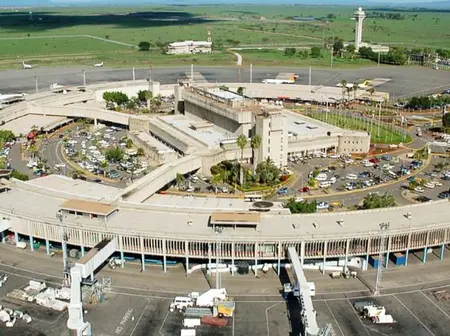
    How Much More You Could Pay to Park at JKIA Under Proposed KAA Rates

    Published in the draft KAA PLC Commercial Charges Order, 2026, the revised schedule sets higher tariffs for short- and long-stay parking, commercial transport services, and seasonal tenant permits.

    Motorists using the parking silo at Jomo Kenyatta International Airport (JKIA) face across-the-board rate increases under the draft rules:

    KAA also plans to bill ride-hailing apps and taxi operators for every completed trip inside airport precincts, tiered by airport category:

    Jomo Kenyatta International Airport (JKIA): Ksh150 to Ksh250 per completed trip

    Moi International Airport (Mombasa): Ksh150 per completed trip

    Wilson, Kisumu, and Eldoret Airports: Ksh100 per completed trip

    Smaller Airports and Airstrips (including Kakamega, Kitale, Garissa, and Mandera): Ksh25 per completed trip

    Regular staff, airport tenants, and commercial fleet operators in the Band E category also face sharp jumps in six-month seasonal parking permits:

    Saloon cars and SUVs: Rising from Ksh9,000 to Ksh15,000

    Pickups, vans, and minibuses: Increasing from Ksh12,608 to Ksh20,000

    Trucks, lorries, and buses: Climbing from Ksh15,132 to Ksh25,000

    Articulated trailers: Nearly doubling from Ksh20,176 to Ksh40,000

    Beyond the initial tariff hikes, the draft order introduces a 5 percent annual escalation on rent, minimum annual guarantees, and other applicable commercial charges once the revised rates take effect.

    The proposed fees have not yet taken effect. Under the draft order, KAA must formally approve and announce the tariffs before enforcement begins, while existing commercial agreements will continue under their current contract terms unless lawfully amended.

  • Kenya’s Turkana oil drilling begins amid disagreement over 4 proposed trade names

    Kenya’s Turkana oil drilling begins amid disagreement over 4 proposed trade names

    Kenya’s Turkana oil drilling begins amid disagreement over 4 proposed trade names

    Kenya is racing against time to establish a commercial identity for its crude oil as the government prepares to begin production in Turkana County, with Energy Cabinet Secretary Opiyo Wandayi revealing four names shortlisted for the country’s petroleum exports.

    The government has narrowed the search for an official trading name to Great Rift Light, Great Rift Intermediate, Great Rift Blend and Great Rift Sweet, ahead of the planned commencement of commercial production on December 1, 2026.

    Opiyo Wandayi during the meeting in Kisumu. PHOTO/@OpiyoWandayi/X

    Wandayi, while speaking to the media on Wednesday, November 17, 2026, said the selected name would be unveiled by President William Ruto during the flag-off of the first consignment of crude oil from South Lokichar, marking Kenya’s entry into the international petroleum market.

    “We are going to pick from four names, and the one we settle on will be unveiled on December 1 during the flag-off of the first oil caravan by President William Ruto,” Wandayi said.

    The naming exercise is part of the government’s efforts to establish a recognisable identity for Kenyan crude oil as the country prepares to compete with established petroleum exporters.

    “Kenya’s crude name will be the country’s commercial identity in the global oil market. It will carry Kenya’s story to the buyers globally,” Wandayi said.

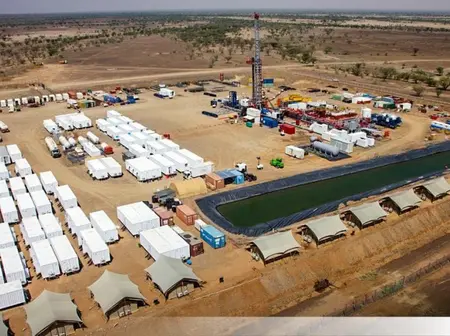
    Turkana Oil Fields in South Lokichar. PHOTO/@komu_wairagu/X

    Crude oil traded internationally is identified by distinct commercial names that help buyers, refiners and traders distinguish different petroleum grades.

    Some of the established names include Brent crude, associated with oil produced in the United Kingdom and Norway, Murban from the United Arab Emirates and Bonny Light from Nigeria.

    Uganda has also named its crude oil Pearl Sweet, with the name reflecting its identity as the Pearl of Africa and the low sulphur content of its petroleum.

    Kenya’s proposed names are expected to give the country’s crude a similar identity when it enters international markets.

    The naming process follows a public participation exercise conducted by the Ministry of Energy and Petroleum in October, which invited Kenyans to submit proposals for the country’s crude oil trading name.

    The selected name will be used in identifying Kenyan petroleum in international trade as the country seeks to establish its position among oil-producing nations.

    The naming exercise comes as Kenya prepares to activate drilling operations in the South Lokichar Basin in Turkana County.

    Wandayi disclosed that the drilling rig would be switched on on Friday, November 20, 2026, with the first production expected on December 1, 2026.

    “We are switching on the drilling rigs on Friday, and the first production date of December 1 still remains as scheduled. Everything is set,” Wandayi said.

    He also confirmed that the drilling rig had been assembled ahead of the planned commencement of operations.

    “The rig has been assembled, and I will switch it on on Friday,” Wandayi said.

    The project is being undertaken by Gulf Energy, which is targeting an initial production of 20,000 barrels per day during the first phase running from 2026 to 2032.

    Production from Blocks T6 and T7 in South Lokichar is expected to increase to 50,000 barrels per day from the end of 2032.

    The Turkana crude oil will initially be transported by road to the Port of Mombasa for export to international markets for refining.

    The government plans to introduce rail transportation during the second phase of the project as production volumes increase.

    The development is expected to diversify Kenya’s foreign exchange earnings and position the country alongside Uganda and South Sudan as East African oil exporters.

    President Ruto is expected to preside over the first oil consignment flag-off on December 1, when the country’s official crude oil trading name will also be unveiled.

  • 2 state departments face Ksh11.6B budget shortfall in 2027/28

    2 state departments face Ksh11.6B budget shortfall in 2027/28

    2 state departments face Ksh11.6B budget shortfall in 2027/28

    Two government departments responsible for public works, housing and urban development have raised concerns over funding shortages in the proposed 2027/28 Budget Policy Statement (BPS), warning that inadequate allocations could delay infrastructure projects, disrupt service delivery and increase pending bills.

    The State Department for Public Works and the State Department for Housing and Urban Development told Parliament that their proposed allocations fall short of the amounts required to implement planned programmes and meet operational obligations.

    The departments made the submissions on Thursday, November 19, 2026, before the National Assembly’s Departmental Committee on Housing, Urban Planning and Public Works, seeking parliamentary intervention to address the funding gaps.

    The concerns come as government departments prepare their spending priorities for the 2027/28 financial year, with the Treasury’s proposed ceilings expected to determine how much money each department can access.

    Principal Secretary for Public Works Joel Arumonyang told the committee that the department had received a proposed allocation of Ksh5.277 billion against its budget requirement of Ksh11.413 billion.

    This leaves the department with a funding gap of approximately Ksh6.137 billion, meaning it has been allocated less than half of the amount it says is necessary to execute its planned activities.

    Arumonyang warned that the shortfall could affect the maintenance of government infrastructure, supervision of construction projects and the department’s ability to monitor the quality of buildings across the country.

    He also linked inadequate funding to the growing accumulation of pending bills, which currently stand at Ksh1.521 billion.

    “Pending bills are a moving target caused by insufficient budgetary provision relative to contract values. So far, the department has an accumulated pending bill of Ksh. 1.521billion,” he said.

    The PS further warned that inadequate funding could undermine building inspections, audits and technical supervision, noting that the department lacks essential testing equipment required to effectively carry out its responsibilities.

    The State Department for Housing and Urban Development has also raised concerns over its proposed allocation, reporting a funding shortfall of Ksh5.464 billion.

    Senior Chief Finance Officer Alexius Njue told the committee that the department had received a Treasury ceiling of Ksh132.166 billion against its budget requirement of Ksh137.629 billion.

    The department is seeking an additional Ksh2.839 billion for recurrent expenditure and Ksh2.624 billion for development expenditure.

    Recurrent expenditure covers the day-to-day running of government operations, including salaries, administration and other operational costs.

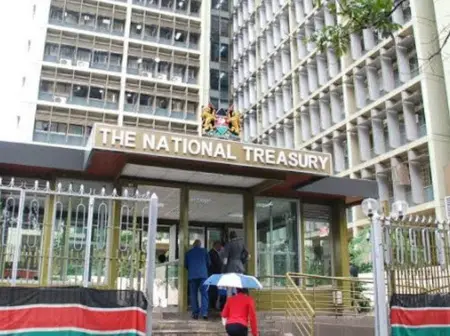
    Cabinet Secretary John Mbadi lifts the budget briefcase at the National Treasury ahead of the Budget2026/27 Statement in Parliament. PHOTO/@https://web.facebook.com/DMarigiri

    Development expenditure, on the other hand, finances projects and investments such as housing construction, infrastructure development and other long-term programmes.

    Njue warned that failure to bridge the funding gaps could affect the implementation of priority programmes, potentially slowing down projects planned for the 2027/28 financial year.W

    Budget shortfalls occur when the money allocated to a government department is lower than what it requires to implement its planned programmes and meet its financial obligations.

    In this case, the two departments say the proposed allocations could create several challenges.

    First, infrastructure projects could experience delays if departments lack sufficient funds to supervise, inspect and maintain construction works.

    Second, pending bills could continue accumulating where government agencies are unable to settle payments for completed works and services.

    Third, inadequate funding for recurrent expenditure could affect the day-to-day operations of departments, while reduced development funding could slow down planned projects.

    For Public Works, the shortage could particularly affect building inspections and quality assurance, raising concerns about the oversight of construction projects across the country.

    Parliament in session. PHOTO/@kipmurkomen/X

    The Departmental Committee on Housing, Urban Planning and Public Works has pledged to push for increased allocations to the two departments.

    Committee Chairperson Joseph Tonui said Parliament would use its oversight and budgetary powers to advocate for higher Treasury ceilings through a report to the Budget and Appropriations Committee.

    “We have listened to both State Departments and it is clear they are being asked to deliver much more with far less. The Committee will use Parliament’s powers to push for substantial ceiling enhancements to ensure that critical programmes are not stalled,” Tonui said.

    The committee is expected to submit its recommendations to the Budget and Appropriations Committee, which will consider them during the budget-making process.

    The proposed increases, however, are not yet guaranteed, as the final allocations will depend on the outcome of parliamentary consideration and the overall budget priorities for the 2027/28 financial year.

    Rono is a digital journalist with a proven track record in newsroom leadership and content creation. Currently a Digital Writer for People Daily Digital, Emmanuel’s career is rooted in a lifelong passion for storytelling. Let's talk here: emmanuel.rono@mediamax.ke or ronoemmanuel685@gmail.com

  • Absa Seeds New Multi-asset Special Fund With Sh230 Million

    Absa Seeds New Multi-asset Special Fund With Sh230 Million

    thumbnail

    Absa Asset Management Limited (AAML), the asset management wing of Absa Bank Kenya, has committed Ksh230 million in seed capital to launch a new multi-asset special fund for investors.Available in both Kenya shillings and US dollars, the fund spreads across equities, bonds, cash, commodities, precious metals, and fixed deposits through a single investment vehicle.

  • Milk shortage: Farmers point finger at livestock diseases

    Milk shortage: Farmers point finger at livestock diseases

    thumbnail

    A Foot-and-Mouth Disease (FMD) outbreak in major milk-producing regions has been linked with low production, cattle deaths and high maintenance costs, contributing to an unprecedented shortage of milk in the country that has lasted months, the Nation has established.While the government has attributed the supply constraints largely to prolonged drought and inadequate animal feeds, farmers in Kiambu, Nandi, Uasin Gishu and Trans Nzoia counties say disease outbreaks have compounded the crisis, leaving dairy enterprises struggling to recover.

  • Trucks to transport crude oil from Turkana to Mombasa for export

    Trucks to transport crude oil from Turkana to Mombasa for export

    Some 600 trucks will be contracted to transport crude oil from South Lokichar Basin in Turkana to Mombasa for export.

    Of the 600 trucks, 400 have been reserved for transporters in the local communities, where oil production is taking place.

    Speaking during a media engagement forum in Amosing, Gulf Energy Country Manager Frankline Juma said the first shipment of crude oil will be exported on March 1, 2027.

    Juma said the company, established in 2005, had put in place measures to ensure production of first oil from Amosing well site,starts on December 1,  2026 as scheduled.

    Production is expected to start at 20,000 barrels per day which will be escalated to 50,000 barrels per day before reaching the target of 120,000 barrels per day.

    At its peak, transport will shift from road to pipeline from South Lokichar Basin to Mombasa.

    The National Land Commission is working on compensation for land, which will be done through community land management committees.

    Juma said Gulf Energy is a 100 per cent Kenyan owned and that president William Ruto does not own any shares in the company, contrary to claims made by some politicians.

    With regards to local content, 599 out of 716 jobs are held by Kenyans with 61 per cent hailing from Turkana county.

    Juma said expatriate jobs were dominated by foreigners due to the sector being new in the country, hence gaps in expertise.

    Gulf Energy social performance manager Eris Lothike cited political alignment, industry volatility and infrastructure gaps as some of the challenges facing the project.

    Meanwhile, the Turkana business community, through the Kenya National Chamber of Commerce and Industry, Turkana Chapter, has secured the support of Governor Jeremiah Lomorukai and county commissioner Julius Kavita for a two-day Business Dialogue Forum between December 8 and 8, 2026.

    The governor pledged county government support towards the forum, which will address regulatory, operational and policy challenges affecting businesses across the county.

    The initiative is part of the ILO PROSPECTS project, Strengthening Sustainable Enterprises and Decent Work for Refugees and Host Communities in Turkana County, and seeks to strengthen private sector representation and improve public-private sector engagement.

    The forum will bring together business representatives, government departments, regulatory agencies and security organs to discuss barriers to business growth, clarify compliance requirements and identify practical solutions. Key issues will include taxation, business regulations, trade standards and operational challenges affecting enterprises.

    The initiative also aligns with Turkana's development priorities under Agenda 7 (Trade and Enterprise Development) and Agenda 8 (Wealth Creation and County Revenue Enhancement).

    Lomorukai commended the business community for its unity under the Turkana Chamber of Commerce, noting that collective representation provides an effective platform for engaging government and addressing business challenges.

    Kavita welcomed the initiative and urged business operators to observe regulatory requirements while embracing cooperation.

    Speaking during the engagement, Edward Okumu, vice chairman of the Turkana Chamber of Commerce, appreciated the support from the two government leaders and reaffirmed their commitment to advocating for an enabling business environment that promotes enterprise growth and investment.

    The December dialogue is expected to strengthen collaboration between businesses and government, promote compliance, minimise operational disruptions and create greater opportunities for trade, investment and employment.

  • Charlene Ruto’s Husband Isaya Yunge Shares Five Principles for Success and Personal Growth

    Charlene Ruto’s Husband Isaya Yunge Shares Five Principles for Success and Personal Growth

    Tanzanian technology entrepreneur Isaya Yunge, the husband of President William Ruto’s daughter, Charlene Ruto, has shared five life principles he believes can help people overcome challenges, achieve success and leave a lasting impact on society.

    In a message shared on Instagram on Thursday, November 19, 2026, Yunge encouraged his followers to stand up for themselves, reject disrespect and remain resilient when confronted with difficult circumstances.

    He cautioned against allowing others to intimidate or silence them, using the metaphor of a caged bird to emphasise the importance of courage and perseverance.

    “Do not accept to be a caged bird, and if you find yourself caged, sing until the heavens ascend to your vindication tune,” he wrote.

    The message was accompanied by a video compilation featuring different moments from his life, including scenes of him engaging in farming activities and meeting the late Queen Elizabeth II.

    Yunge received the Queen’s Young Leaders Award from the late British monarch at Buckingham Palace in June 2018 in recognition of his efforts to empower communities through technology and education.

    In his message, Yunge drew inspiration from the biblical instruction to have dominion, highlighting five principles he believes individuals should embrace: being fruitful, multiplying, replenishing, subduing and having dominion.

    He explained that being fruitful involves remaining productive and creating valuable things that can benefit others.

    On multiplying, the entrepreneur pointed to reproduction and expanding what one has created, while replenishing involves distributing the fruits of one’s efforts.

    He described subduing as taking control of one’s market and having dominion as making a meaningful difference in one’s surroundings.

    Yunge challenged people to use their abilities and opportunities to influence the world positively rather than live without leaving a lasting legacy.

    “Don’t just pass like a shadow,” he wrote.

    Beyond productivity, entrepreneurship and personal development, Yunge encouraged his followers to remain focused on their goals and persevere even when faced with setbacks.

    He also emphasised the importance of placing their faith in Jesus Christ rather than depending entirely on other people.

    “Be encouraged today, never give up, keep going and fix your eyes to the KING OF KINGS, JESUS CHRIST, not mere mortals,” he wrote.

  • Women’s progress must go beyond numbers

    Women’s progress must go beyond numbers

    thumbnail

    In 2018, Rolly Atieno, a sorghum aggregator from Kisumu, began working with Kenya Breweries Limited (KBL) and about 50 farmers. Today, she works with more than 1,850 farmers, most of them women. Her journey demonstrates what economic inclusion can achieve when women have access to markets, resources and opportunities.

  • KCB-Equity merger: What combining Kenya’s banking giants would mean for customers, investors and the industry

    KCB-Equity merger: What combining Kenya’s banking giants would mean for customers, investors and the industry

    KCB-Equity merger: What combining Kenya’s banking giants would mean for customers, investors and the industry

    A proposed merger between Equity Group Holdings and KCB Group could fundamentally reshape Kenya’s banking industry, creating a financial institution with greater capital, a wider regional footprint and the capacity to compete with Africa’s biggest lenders.

    The proposal, floated by Kiharu MP Ndindi Nyoro, comes as the two banks report strong earnings and deepen their presence across African markets.

    Nyoro believes combining the two lenders would create a financial powerhouse capable of competing with established continental players such as Standard Bank, FirstRand, National Bank of Egypt, Nedbank and Morocco’s Attijariwafa Bank.

    “Merging the two to create Equity KCB Group should not be far-fetched. It remains a viable idea,” Nyoro said in his assessment of Kenya’s listed banking sector on Thursday, November 19, 2026.

    Kiharu MP Ndindi Nyoro during a meeting to plan 92 school projects. PHOTO/@NdindiNyoro/X

    But beyond the prospect of creating a bigger bank, such a transaction would raise important questions for millions of customers, shareholders, employees, businesses and regulators.

    Would Kenyans benefit from a stronger bank through cheaper loans and better services, or could reduced competition eventually leave customers with fewer choices?

    The answer would depend on how the merger is structured, the extent to which competition is preserved and whether the combined institution passes the benefits of its increased scale to customers.

    The most immediate impact would be the creation of one of the largest financial institutions in Africa, measured by assets, deposits, lending capacity and profitability.

    The two groups are already major players in Kenya’s financial system.

    Equity Group reported total assets of Ksh2.15 trillion in September 2026, while KCB Group’s assets stood at approximately Ksh2.4 trillion. Combined, their balance sheets would amount to approximately Ksh4.55 trillion.

    Their combined earnings would also be substantial.

    Equity reported a nine-month profit after tax of Ksh71.5 billion, while KCB posted Ksh58.6 billion over the same period. Together, that represents Ksh130.1 billion in profit after tax for the nine months to September 2026.

    Equity bank. PHOTO/@Equitybank/X

    Such a balance sheet would give the merged institution greater capacity to finance large infrastructure projects, businesses, manufacturers, exporters and government-backed development programmes.

    It could also improve its ability to raise funds from international financial markets and attract institutional investors seeking exposure to Africa’s banking sector.

    For Kenya, the creation of a bank of this scale could strengthen Nairobi’s position as a regional financial centre.

    However, a bigger balance sheet does not automatically translate into better banking services. The critical question would be whether the combined institution uses its increased financial muscle to expand lending and improve access to credit.

    For ordinary Kenyans, the biggest concern would be the cost and accessibility of banking services.

    Equity and KCB have built extensive distribution networks, serving millions of individuals, small businesses and large corporations.

    KCB reports approximately 44 million customers across its regional operations, while Equity serves more than 24 million. Their networks include hundreds of branches, ATMs, agents and digital banking platforms.

    A KCB banking hall with customer service counters and a bank agent section pictured during operations. PHOTOhttpswww.facebook.comKCB Group

    A merger could allow the two institutions to combine their technology platforms, agency networks and service infrastructure.

    Customers could potentially benefit from a wider network of branches, agents and ATMs, improved digital banking services and faster transactions, greater capacity to finance mortgages, businesses and personal loans, more financial products under one institution and expanded access to banking services across African markets.

    The combined bank could also reduce duplicated administrative and operational costs, potentially creating room to offer more competitive products.

    But there is another side to the equation.

    If two major competitors become one institution, customers could lose some of the bargaining power that comes from having alternative lenders competing for their deposits and loan business.

    A merged bank with significant market power could have less incentive to compete aggressively on interest rates, transaction fees and customer service.

    For borrowers, the concern would be whether competition keeps loan pricing favourable. For savers, it would be whether the institution continues offering competitive deposit rates.

    The merger would therefore need to demonstrate that operational efficiencies translate into tangible benefits for customers rather than simply improving shareholder returns.

    One of the biggest expectations surrounding a potential merger would be the possibility of cheaper credit.

    A combined Equity-KCB would have a significantly larger deposit base and lending capacity, potentially enabling it to finance larger projects and spread operational costs across a wider customer base.

    Small and medium-sized enterprises could benefit if the institution expands lending to businesses that struggle to access affordable credit.

    However, there is no guarantee that a merger would automatically reduce interest rates.

    Bank lending rates depend on several factors, including the cost of deposits, the cost of borrowing, credit risk, operating expenses, capital requirements and the prevailing monetary policy environment.

    A larger bank could enjoy economies of scale, but reduced competition could also weaken the pressure to lower lending rates.

    This creates a major dilemma for regulators: allowing the formation of a stronger institution without undermining competition in the credit market.

    For Kenyans, the real measure of success would not be the size of the merged bank but whether households and businesses can borrow more affordably.

    The merger’s most difficult hurdle could be convincing regulators that combining the two largest banking groups would not weaken competition.

    Equity and KCB are not just major lenders. They compete across retail banking, corporate financing, mortgages, digital financial services, asset financing, trade finance and payments.

    Combining their operations would concentrate a substantial amount of financial power under one corporate structure.

    The Competition Authority of Kenya (CAK) would therefore have to examine how the transaction affects competition, consumers and the wider economy.

    The authority says it assesses merger applications to determine their impact on competition and public interest. It can approve transactions, impose conditions or reject them.

    The Central Bank of Kenya (CBK) would also have a critical supervisory role, particularly regarding financial stability, capital adequacy, governance, risk management and continuity of banking services.

    One possible outcome would be regulatory approval subject to conditions designed to protect consumers and preserve competition.

    These could include safeguards around pricing, access to essential banking services and the treatment of existing customers.

    The regulator would also need to consider whether the merged institution would become so large that its financial difficulties could pose a systemic risk to Kenya’s banking industry.

    In other words, a bank that becomes too important to fail could create additional challenges for the country’s financial stability.

    A merger would also have significant implications for thousands of employees working across the two banking groups.

    Both institutions have invested heavily in technology, digital banking and alternative distribution channels, meaning there could be opportunities to eliminate duplicated operations and improve efficiency.

    However, overlapping departments, management structures, branches and support functions could create pressure to restructure the workforce.

    Some positions could become redundant as the merged institution seeks to reduce operating costs.

    Branch rationalisation could also become a consideration, particularly in locations where both banks operate within close proximity.

    For customers, this could mean fewer physical branches in some areas, even as digital services become more integrated.

    The challenge would be balancing efficiency with financial inclusion, especially for customers who depend on physical branches, cash services and relationship banking.

    A merger that results in substantial job losses or reduced access to banking services could face public resistance, even if it creates a more profitable institution.

    For investors, a merger could create significant opportunities as well as risks.

    Equity and KCB are both listed on the Nairobi Securities Exchange (NSE), meaning any proposed combination would require careful consideration of their respective valuations and shareholder interests.

    One of the biggest questions would be the exchange ratio: how much of the new company would existing Equity and KCB shareholders own?

    The two institutions have different asset sizes, profitability levels, capital structures and market valuations.

    Equity reported Ksh71.5 billion in nine-month profits, compared with KCB’s Ksh58.6 billion. However, KCB’s total assets were larger at approximately Ksh2.4 trillion against Equity’s Ksh2.15 trillion.

    This means determining the value of each institution would require more than simply comparing their profits.

    Shareholders would have to consider earnings, assets, liabilities, capital strength, future growth prospects and the value of their respective regional subsidiaries.

    A successful merger could create a more attractive investment proposition, particularly if the combined institution achieves stronger earnings, improved operational efficiency and greater regional influence.

    However, disagreements over valuation, ownership and management control could complicate negotiations.

    The leadership question would also be important. Equity is led by Dr James Mwangi, while KCB is headed by Paul Russo.

    Deciding who leads the merged institution and how governance responsibilities are distributed could become one of the most sensitive aspects of any transaction.

    Nyoro’s proposal goes beyond combining two Kenyan banks. His broader argument is that Kenyan financial institutions should expand their influence across Africa.

    He pointed out that Equity operates in approximately six countries and has built a profitable regional business, with 42 per cent of its profits coming from subsidiaries outside Kenya.

    KCB’s international subsidiaries contributed 33.4 per cent of its profits, according to the figures cited by the MP.

    He argued that the two banks should use their established regional experience to pursue opportunities in West and Southern Africa.

    “Going forward, the financial giants must spread to West and Southern Africa and hunt for more money to bring back home,” Nyoro said.

    He also cited Nigeria’s Access Bank, which operates in approximately 20 economies, as an example of the scale Kenyan banks should seek to achieve.

    A combined Equity-KCB could have the financial resources to acquire established lenders in new markets rather than relying entirely on organic expansion.

    Such a strategy could diversify revenue sources, reduce dependence on Kenya’s economy and create opportunities to finance trade between African countries.

    It could also strengthen Nairobi’s influence in cross-border financial transactions.

    However, international acquisitions carry risks, including currency volatility,  political instability, regulatory differences and the challenge of integrating different banking systems.

    The success of the proposed strategy would depend on the quality of acquisitions rather than simply the number of countries in which the bank operates.

    Even as Nyoro advocates regional expansion and consolidation, he has identified Kenya’s public debt as a major threat to the banking sector.

    He argued that the country’s financial institutions remain exposed to domestic economic conditions and that a sovereign debt default could wipe out many of the advantages banks have built through strong earnings and regional expansion.

    “The only risk lies in how the country manages the public debt. A default would erode all the advantages,” he said.

    This warning is particularly relevant because both Equity and KCB have substantial exposure to the Kenyan economy through government securities, corporate lending and domestic financial transactions.

    A deterioration in the government’s ability to meet its obligations could affect banks’ balance sheets, investor confidence, liquidity and the wider economy.

    A merged institution would have greater financial resources, but it would not be immune to sovereign risk.

    Nyoro’s argument for geographic diversification is therefore also an argument for reducing the concentration of financial risks within Kenya.

    The proposed merger presents an interesting opportunity, but translating the idea into an actual transaction would be a complicated process.

    It would require agreement between the two banks’ boards, shareholders and other stakeholders, alongside regulatory approvals and detailed negotiations over valuation, ownership and management.

    The institutions would also have to determine how to integrate their technology platforms, subsidiaries, employees, customer accounts and risk management systems.

    There would be significant costs associated with the integration, and the benefits might take several years to materialise.

    Importantly, neither Equity nor KCB has announced a formal merger agreement. Nyoro’s proposal remains a suggestion rather than an ongoing transaction.

    The broader question is whether Kenya needs two strong competing banking groups or one significantly larger institution capable of challenging Africa’s established financial giants.

    A merger could produce economies of scale, stronger regional competitiveness and greater financing capacity. Maintaining two independent institutions, on the other hand, preserves competition and gives customers more choices.

    Francis Muli is an editor and passionate digital journalist with extensive experience in crafting compelling stories across various platforms. His major focus is in business, politics and current affairs. He has a keen eye for detail and a commitment to uncovering the truth. He has contributed to leading publications across the country. When not chasing stories, you can find Muli exploring new technologies, attending local events, or reading fiction. Connect with Francis Muli on X @FMuliKE and Facebook (Francis Muli) to follow his latest stories and insights.