Passengers travelling aboard the Madaraka Express Standard Gauge Railway (SGR) risk losing up to 30 per cent of their ticket fare when cancelling their bookings, following a clarification by Kenya Railways on its refund policy.
In a statement issued on Tuesday, November 24, the corporation outlined the conditions passengers must fulfil to qualify for refunds when cancelling their Economy and First Class tickets.
According to the clarification, travellers seeking refunds are required to visit the ticketing counter at any Madaraka Express station at least 48 hours before their scheduled departure.
The requirement means passengers who fail to observe the stipulated notice period risk losing a significant portion of the money paid for their tickets.
Kenya Railways explained that the refund policy is intended to guide passengers on the proper procedures for cancelling their bookings and obtaining refunds.
The corporation's clarification comes as travellers continue using the SGR service, which connects Nairobi and Mombasa, as well as other destinations along the railway line.
Passengers have therefore been encouraged to familiarise themselves with the cancellation requirements before making changes to their travel plans to avoid unnecessary financial losses.
The 48-hour requirement is particularly important for travellers who may experience unexpected changes in their schedules and wish to recover part of the money paid for their journeys.
Kenya Railways' announcement serves as a reminder that purchasing an SGR ticket comes with specific terms and conditions that passengers must observe.
Travellers have been urged to make cancellation requests within the required timeframe and through the designated station counters to ensure their refund applications are handled in accordance with the corporation's policy.
Rachel Mbugua, popularly known as Shiko, originally from Kiambu County, moved to the US hoping to establish a better life. However, settling into her new environment came with challenges, particularly finding reliable transport.
One of her biggest obstacles was her limited credit history, which made it difficult to qualify for a conventional car loan. Without a dependable vehicle, she struggled to move around and relied on alternative means of transport.
Rachel said the experience exposed her to difficulties that many Africans encounter when relocating to the US, especially those who arrive without an established credit record.
"I struggled a lot when I came due to a lack of means of transport. I didn't have a good credit score to buy myself a decent car," she explained.
At the time, she had been living in America for about three years and was still figuring out how to navigate the country's vehicle financing system.
How Rachel Mbugua Started Her Car Business
Instead of allowing the challenge to derail her plans, Rachel and her fiancé, Sam, began exploring alternative ways of purchasing vehicles without relying entirely on traditional car financing.
Their search led them to vehicle auctions, where cars could be purchased at relatively lower prices than those available through some conventional dealerships.
Rachel explained that some vehicles at the auctions could cost as little as $2,000, depending on their condition and other factors.
The discovery opened their eyes to a business opportunity. They realised that other African immigrants could benefit from understanding how vehicle auctions work and how to access affordable cars.
This eventually led to the establishment of Pro Elite Motors LLC, a car dealership founded by Rachel and her fiancé.
The business was designed to help customers, particularly members of the African community, navigate the process of finding and purchasing vehicles.
Rather than focusing solely on selling cars, the couple also wanted to educate prospective buyers about vehicle auctions and the available opportunities.
Couple Moves From Shared Premises to Their Own Dealership
Building the business was not an easy undertaking. In its early stages, Rachel and Sam operated from premises shared with other car dealers.
Although the arrangement allowed them to establish their operations, it came with limitations, particularly regarding independence, working space and opportunities for expansion.
However, the couple remained committed to growing their enterprise.
Their persistence eventually paid off when they secured their own dealership premises in Washington, marking a significant milestone in their entrepreneurial journey.
According to Rachel, the new facility features a spacious office and a car yard capable of accommodating more than 100 vehicles.
The development gives Pro Elite Motors greater room to expand its operations, serve additional customers and potentially create more employment opportunities.
For Rachel, securing an independent dealership represents a remarkable change from the difficulties she experienced when she first arrived in America without a reliable vehicle.
Rachel Mbugua's Plans for Pro Elite Motors
As the dealership continues to grow, Rachel says the business is committed to providing customers with clean vehicles and maintaining high standards of quality.
She is also grateful that the venture has created opportunities to support other people through employment.
"We are also grateful that we can offer employment opportunities," she said.
The entrepreneur hopes to build a dealership that African immigrants and other customers can trust when searching for affordable and reliable vehicles.
Her experience has also given her a better understanding of the challenges newcomers face when trying to establish themselves in a foreign country.
Through Pro Elite Motors LLC, she and her fiancé are now working to make the vehicle-buying process easier for other people who may be facing the same difficulties she once encountered.
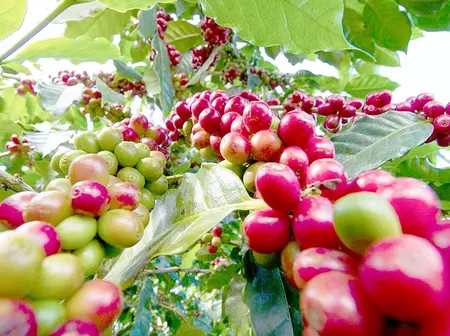
Kenyan coffee exporters are eyeing a share of China’s Ksh1 trillion coffee market through direct export opportunities following a trade engagement between the Kenya National Chamber of Commerce and Industry (KNCCI) and a Chinese delegation seeking to establish supply partnerships.
In a post shared on its X account on Tuesday, November 24, 2026, KNCCI said it had hosted officials from China’s Xiamen Municipal Bureau of Commerce and representatives of green coffee importer Xiamen C&D Merchandise Co. Ltd.
The engagement seeks to connect Kenyan coffee exporters, cooperatives and processors with Chinese buyers, opening opportunities for direct sales, long-term supply agreements and participation in international trade exhibitions.
KNCCI said it would identify credible local suppliers to connect with Xiamen C&D Merchandise, which would provide specific procurement requirements to guide potential partnerships.
“Both parties will establish a regular market-intelligence mechanism,” the chamber said, outlining plans to strengthen information-sharing between Kenyan suppliers and the Chinese market.
The chamber also plans to mobilise its members to showcase their products at the Xiamen International Coffee Industry Expo scheduled for November 2027.
The proposed participation could give Kenyan businesses an opportunity to establish commercial relationships with international buyers and explore alternative markets for their coffee.
The Chinese delegation included officials from the Xiamen Municipal Bureau of Commerce, the Xiamen Pilot Free Trade Zone Committee and the coffee procurement department of Xiamen C&D Merchandise.
The KNCCI team was led by Cynthia, National Director and Chair of the Economic Diplomacy Committee, alongside Head of Trade Simon Ndungu, Head of Partnership Saum and chamber member and coffee exporter Ronald Kimutai.
The initiative comes as Kenya implements reforms intended to improve farmers’ earnings and expand marketing options under the Coffee Act 2026.
Coffee Board Chairman Henry Kinyua said the legislation provides four avenues for selling Kenyan coffee: the Nairobi Coffee Exchange, direct sales, an international exchange and other methods prescribed by the Cabinet Secretary responsible for the sector.
“We are here to ensure everybody is clear where we are on the coffee sector and on the government’s commitment that the Kenyan gold continues being the gold that it has been, not only for the country but for the farmers themselves,” Kinyua said during International Coffee Day celebrations in Kirinyaga on October 1.
The reforms are intended to strengthen the sector by improving market access and payment efficiency.
Kinyua said payments made through the Direct Settlement System reach coffee growers within five days, while the government has established the Coffee Cherry Advance Revolving Fund through the New Kenya Planters’ Cooperative Union to support farmers financially.
Direct export opportunities could complement these domestic reforms by giving Kenyan suppliers additional routes to international buyers.
However, the proposed Chinese partnerships will depend on supplier requirements, commercial agreements and the ability of Kenyan producers to meet demand consistently.
The National Infrastructure Fund (NIF) is seeking partnerships with pension schemes to mobilise long-term domestic savings for investment in commercially viable infrastructure projects.
The move is aimed at reducing reliance on public borrowing and expanding investment opportunities for institutional investors.
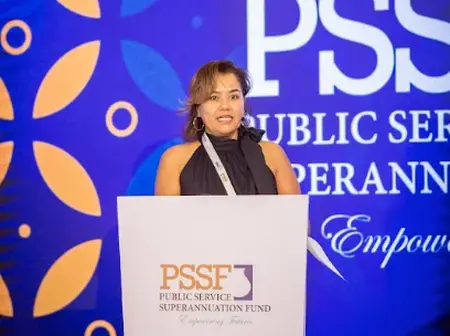
Presenting the fund’s investment approach at the Second PSSF Pan-African
Pensions Conference in Mombasa, NIF independent director Fahima Zein, said domestic pension funds would be important partners in financing infrastructure development.
Established under the National Infrastructure Fund Act, No 4 of 2026, the fund has been capitalised with Sh340 billion raised through the sale of 65 per cent of the
Government’s holding in Kenya Pipeline Company and 15 per cent of its stake in
Safaricom.
“NIF is designed to invest in projects rather than construct or operate them,” Zein explained.
Its mandate includes mobilising private capital, including domestic pension funds and collective investment schemes, to support infrastructure development while easing pressure on public finances.
Zein said Kenya requires an estimated USD12 billion (Sh1.5 trillion) annually in infrastructure investment up to 2040, while constrained public finances limit the government’s capacity to meet the funding gap through the national budget alone.
Under the proposed partnership model, pension schemes could invest alongside NIF at two stages; when a project reaches financial close, after its financial model and risks have been substantially assessed, or later, when infrastructure has been completed and is generating predictable income.
The second option, involving mature and operational assets, is expected to be particularly suitable for pension schemes seeking long-term investments with relatively lower project risk and predictable cash flows.
The Fund also intends to sell its interests in completed and operational projects, allowing it to recover capital and reinvest in new infrastructure.
According to Zein, pension schemes could participate by acquiring these assets through investment instruments such as infrastructure vehicles, asset-backed securities, listed or unlisted instruments and direct ownership.
These are proposed investment routes, not products currently available in the market.
Zein said the opportunity was significant given the size of Kenya’s pension industry, which held assets worth Sh3.17 trillion as at June 2026.
She observed that although existing investment regulations allow pension schemes to allocate funds to infrastructure, uptake remains limited, partly because of concerns around project pipelines, pricing transparency and governance.
NIF plans to engage pension schemes, trustees, fund managers and the Kenya
Pension Funds Investment Consortium (KEPFIC) on the design of investment products that respond to the industry’s needs, including risk appetite, returns, investment duration and liquidity requirements.
The Fund emphasised that it was not seeking immediate investment commitments but wanted to initiate structured engagement with the industry, including through quarterly consultations.
The proposed collaboration offers an opportunity to connect Kenya’s substantial pool of long-term retirement savings with infrastructure investments that can generate sustainable returns while supporting national development.
The Kenya Bureau of Standards (KEBS) has announced new restrictions on the importation of used vehicles, barring cars first registered before January 1, 2020, from entering the country from January 1, 2027.
In a notice issued on Tuesday, November 24, the standards agency said only right-hand-drive vehicles first registered on or after January 1, 2020, would be allowed into Kenya under the new directive.
The restriction means vehicles first registered in 2019 or earlier will no longer qualify for importation once the new rules take effect. Importers have until the end of December 2026 to bring in vehicles that meet the existing age requirements.
KEBS said the decision was based on the eight-year age limit provided under KS 1515:2000, which sets standards for the inspection of imported motor vehicles.
The notice applies to all importers of used and second-hand vehicles, including returning residents, diplomatic staff and members of the general public.
“Only Right Hand Drive (RHD) motor vehicles whose Year of First Registration is 1st January 2020 or later shall be allowed into the country effective 1st January 2027,” KEBS stated.
The agency said the directive was issued under the Verification of Conformity to Kenya Standards of Imports Order. It urged vehicle importers to take note of the deadline when sourcing cars from overseas markets.
Kenyans importing used vehicles from countries such as Japan, the United Arab Emirates, the United Kingdom, Thailand and South Africa are also required to obtain roadworthiness certificates before shipping them to Kenya.
The certificates are issued by Quality Inspection Services Inc. Japan (QISJ), which operates designated inspection centres in the listed countries on behalf of KEBS.
Under the new arrangement, certificates covering vehicles first registered in 2019 will expire on December 31, 2026.
Importers planning to ship vehicles to Kenya will therefore need to confirm their first registration dates and ensure they meet the revised requirements before making purchases or arranging shipment.
The changes are expected to affect buyers and dealers, who rely on older second-hand vehicles from international markets.
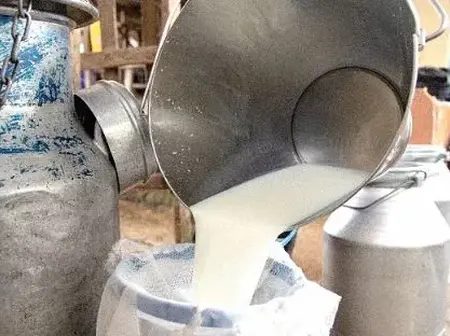
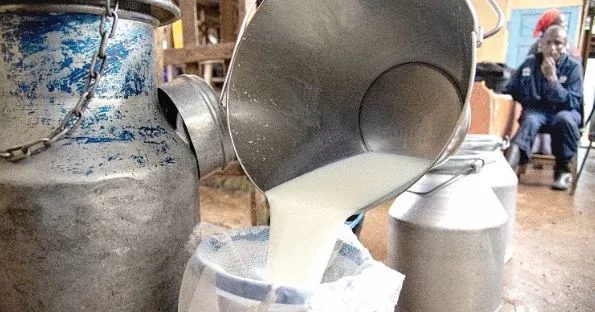
The government is seeking to introduce milk testing equipment at 250 sites across the country as part of efforts to expand a payment system that rewards dairy farmers based on the quality of their produce.
The Ministry of Agriculture and Livestock Development, through the State Department for Livestock Development, has invited bids from companies to supply and deliver the milk analysers under the Livestock Value Chain Support Project.
According to a tender notice, the equipment will support dairy producer organisations in adopting a quality-based payment system, under which the quality of milk supplied by farmers will inform how much they earn.
The proposed approach is intended to move beyond a system that largely rewards farmers according to the quantity of milk delivered, by giving them an incentive to improve its quality.
Milk quality can be assessed through parameters such as butterfat and protein content, bacterial levels, hygiene and the presence of adulterants. However, the tender notice does not specify the exact tests the equipment will conduct or the standards that will determine farmers' payments.
Kenya has previously explored quality-based milk payments. A 2023 study published in the NJAS: Impact in Agricultural and Life Sciences examined a pilot involving a dairy processor in Nakuru County, where farmers received different prices depending on the quality grades of their milk.
Under that pilot, farmers supplying higher-grade milk received additional payments, while the assessment considered factors including bacterial contamination, antibiotic residues, added water, total solids, fat and protein content.
The approach is also supported by existing regulations. The Dairy Industry (Pricing of Dairy Produce) Regulations, 2020 provide for milk quality to be considered when determining prices, alongside production costs, seasonal changes and other factors affecting the dairy sector.
Separately, the Dairy Industry (Dairy Produce Safety) Regulations, 2020 require dairy business operators to examine, test and grade milk before accepting it.
The push for improved testing comes amid concerns about milk safety and handling practices.
A study on milk quality in Kenya's dairy value chains, published in 2021, found contamination in samples collected from different points in the supply chain, including farms, collection centres and retail outlets.
The researchers reported that some samples contained added water, while others showed bacterial contamination, highlighting the importance of stronger quality controls throughout the dairy chain.
The latest procurement is therefore expected to provide dairy producer organisations with equipment to assess milk quality more consistently and support the implementation of quality-based payments.
The tender, listed under reference number SDFD/736/0091/2026-2027, has a security requirement of Sh1 million.
The procurement will be conducted through open national competitive bidding, with interested firms required to submit their applications electronically through the government's e-GP platform.
Bids are due by December 9, 2026, at 11 am. Companies seeking to participate must register on the platform through egpkenya.go.ke to access the tender documents.
The State Department has advised bidders experiencing difficulties accessing or uploading documents to seek assistance from the e-GP Help Desk at KISM Towers.
Listen to articleMAK argued that the country had the financial and technical capacity to expand the highway through public funding but instead prioritised plans to hand it over to private investors who would recover their costs through toll charges.The Motorists Association of Kenya (MAK) has accused the government of deliberately delaying the expansion of the Mombasa-Nairobi Highway for more than 20 years to pave the way for a private toll-road arrangement, claiming the delay has contributed to preventable road deaths and billions of shillings in economic losses.
Stakeholders in Kenya's hospitality, entertainment, labour and transport sectors have raised concerns over the proposed Alcoholic Drinks and Drugs Control Laws (Amendment) Bill, 2026, warning that some of its provisions could trigger widespread job losses, business closures and a shift by consumers towards illicit alcohol.
The groups made their submissions on the proposed legislation to Members of Parliament, voicing opposition to several of its key provisions.
They also object to proposed restrictions on alcohol sales in restaurants and hospitality establishments. Operators in the sector say such limits would hurt legitimate businesses that already operate under licence, and could force some to scale back or close altogether.
A third area of concern is the effect of the Bill on people who depend on the transportation and distribution of alcoholic drinks for their livelihoods. The stakeholders say provisions they consider adverse to the sector could put the incomes of drivers, loaders, distributors and their families at risk.
Central to the groups' warning is the fear that tighter rules could backfire. They say that pushing consumers away from licensed outlets risks driving them towards illicit alcohol, which sits outside regulation and quality controls. That, they argue, would undermine the very goals the Bill is meant to achieve.
The stakeholders were careful to say they are not opposed to regulation as such. They called on Members of Parliament to reconsider the contentious provisions and adopt a regulatory framework that protects young people, strengthens the fight against illicit alcohol and promotes responsible consumption, without undermining legitimate businesses and employment.
The submissions reflect the wide range of interests touched by the proposed amendments, from hotels and restaurants to entertainment venues, workers' representatives and transporters. The debate pits public health and youth protection concerns against the economic weight of a sector that supports many jobs across the country.
As the legislative process continues, lawmakers will have to weigh those competing arguments. Whether they amend the Bill, retain the proposals or adopt a middle path on points such as the drinking age and restrictions on restaurant sales will determine how the final law affects both consumers and the businesses that serve them.
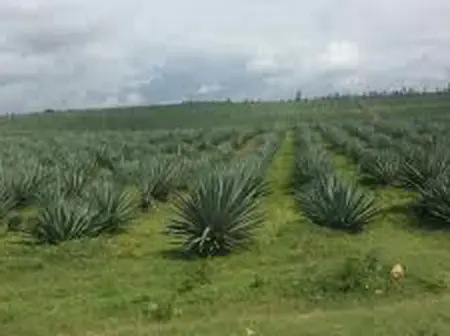
The Ministry of Agriculture and Livestock Development, acting through the Agriculture and Food Authority (AFA), has unveiled sweeping regulatory reforms introducing mandatory registration and updated licensing protocols for growers, dealers, and processors of scheduled crops across Kenya. Anchored under the Crops Act (Cap. 318) and newly gazetted subsidiary regulations—including the Crops (Fibre Crops) Regulations, 2026, and proposed revisions to the Horticultural Crops Regulations—the directive aims to strengthen farm-to-market traceability, curb produce poaching, and protect Kenya’s lucrative export markets.
Under the new statutory framework, smallholder and commercial farmers cultivating targeted cash crops—such as cotton, sisal, pyrethrum, and export-grade horticultural produce—must register with their respective county governments or accredited grower associations. Registration captures vital baseline data, including farm acreage, crop varieties, and geographical coordinates, ensuring seamless integration into the National Horticulture Traceability System. While primary registration for smallholder growers remains free to encourage compliance, commercial aggregators, nursery operators, and exporters must obtain annual operating licenses and movement permits before handling or transporting produce.
For millions of Kenyan farmers, these rules represent a vital step toward fairer pricing, structured contract farming, and reliable access to government-subsidized inputs and extension services. By eliminating unlicensed middlemen and side-selling, the state seeks to guarantee consistent quality that meets stringent international phytosanitary standards.
Industry stakeholders and exporters operating without valid statutory documentation face stiff penalties, including license revocation, hefty fines, or imprisonment upon conviction. Farmers and cooperatives are urged to visit their county agricultural offices or access the Agriculture and Food Authority’s digital portal to complete their registration ahead of upcoming enforcement deadlines.
Kenyan content creator Faustine Lipuku, widely known as Baba Talisha, has received an overwhelming show of solidarity from fellow TikTokers and well-wishers after an online fundraising drive raised Ksh2.19 million within just five hours to support his upcoming eye treatment in India.
In an emotional statement shared on Instagram on Tuesday, November 24, 2026, Baba Talisha expressed deep gratitude to fellow creators, corporate partners, brands, and the local TikTok organizing team for rallying behind him during his medical ordeal. The funds collected surpassed his original Ksh1.6 million medical appeal by Ksh590,000, with two pending pledges expected to push the total TikTok contribution to Ksh2.3 million.
“Within just 5 HOURS, we managed to achieve so much. This is not ordinary love. This is God’s goodness expressed through people. May God remember every hand that gave, every heart that prayed and everyone who stood with me during this difficult season,” he wrote.
Baba Talisha is preparing to travel to India for specialized care after losing vision in his left eye due to Acanthamoeba Keratitis, a rare and aggressive corneal infection. Prior to his recent local cornea transplant, the content creator underwent over 14 diagnostic tests as specialists worked to contain the infection and map out a long-term recovery plan.
His wife, businesswoman Miss Wanjey, had earlier explained that while their medical insurance covered his hospitalization and emergency surgery in Kenya, the policy limit was exhausted, prompting the public appeal to fund his specialized post-operative care abroad. Optimistic about regaining his sight, Baba Talisha thanked everyone who donated, prayed, and amplified his appeal, expressing faith that he will return from India with a testimony of full healing.