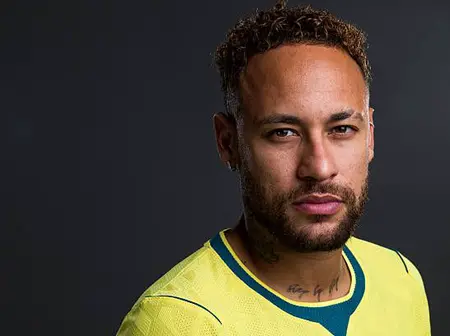
Brazilian football superstar Neymar Jr has expanded his luxury real estate portfolio with the acquisition of a lavish penthouse in Dubai valued at AED 200 million (approximately KSh 7.1 billion).
Located within the exclusive Bugatti Residences development—a flagship collaboration between Emirati property developer Binghatti and French luxury automaker Bugatti—the Sky Mansion penthouse boasts an extraordinary automotive feature: a private car elevator. Rather than using a conventional parking garage, Neymar can transport his prized vehicles directly from the building's entrance into his residence, delivering them straight to his doorstep.
Beyond the custom car lift, the sky-high residence offers a private swimming pool and sweeping panoramic views of Downtown Dubai. The broader development comprises 182 individually designed units tailored for ultra-high-net-worth buyers seeking maximum privacy. Residents also gain access to world-class amenities, including a French Riviera-inspired private beach, a luxury spa, a fitness club, a private members' club, and dedicated concierge and chauffeur services.
The luxury tower is scheduled for completion in 2027, making the purchase a high-profile off-plan investment. Neymar’s Dubai acquisition follows closely on the heels of his reported $26 million (KSh 3.3 billion) purchase of prime waterfront land in Miami, underscoring both his extravagant off-pitch lifestyle and Dubai’s enduring appeal as a premier destination for global celebrity property investors.
Michael Joseph was appointed Safaricom's founding CEO in July 2000. When he took over, the company had a relatively small subscriber base and was still establishing itself in Kenya's telecommunications market. During his decade-long leadership, he expanded the company's customer base and strengthened its position as a market leader.
One of his biggest achievements was overseeing the launch of M-PESA in March 2007. The mobile money service revolutionised financial transactions in Kenya, allowing millions of people to send, receive and store money using their mobile phones. Safaricom was also listed on the Nairobi Securities Exchange in 2008 under his leadership.
Bob Collymore succeeded Michael Joseph in November 2010. He focused on expanding Safaricom's services beyond traditional telecommunications. During his tenure, the company introduced and expanded products such as M-Shwari, Lipa na M-PESA and Fuliza, strengthening its position in Kenya's financial technology sector.
Collymore also championed corporate social responsibility and community development initiatives. He remained CEO until his death on July 1, 2019.
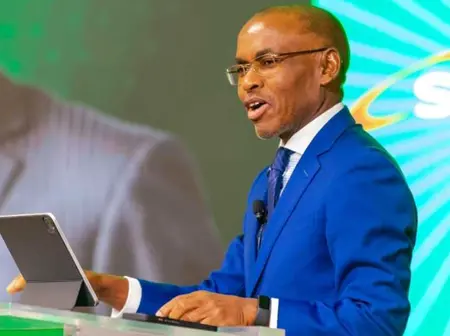
Peter Ndegwa took over on April 1, 2020, becoming the first Kenyan to lead Safaricom. Previously associated with multinational beverage company Diageo, he assumed leadership during the COVID-19 pandemic.
His administration has focused on digital transformation, financial services, business diversification and regional expansion. A major milestone has been Safaricom's entry into Ethiopia, marking an important step towards establishing the company as a major telecommunications player across Africa.
Together, the three executives represent different chapters of Safaricom's journey: Joseph built the foundation, Collymore expanded innovation, while Ndegwa is pursuing regional growth and digital transformation.
The product, known as Tuunza Mapato, is offered through Safaricom Insurance Agency Limited and underwritten by Turaco Microinsurance Limited.
It targets individuals and families seeking financial assistance when unexpected hospitalisation or the death of a covered family member creates additional expenses.
Customers can choose between two packages, Msingi and Bora, depending on the amount they can afford and the level of protection they need.
Under the Msingi package, an individual pays KSh 60 every week. The plan provides KSh 1,000 for every eligible night spent in hospital, subject to an annual maximum of KSh 30,000.
It also provides funeral cover of KSh 100,000 for each covered person, subject to the policy conditions.
The higher Bora package costs KSh 100 weekly for an individual. It increases the hospital cash benefit to KSh 2,000 per eligible night, with an annual limit of KSh 60,000.
Customers on Bora also qualify for funeral cover of up to KSh 200,000.
Families can also register under either package, with coverage extending to a maximum of five people, comprising the principal member and four dependants.
A family subscribing to Msingi pays KSh 240 weekly, while the Bora family package costs KSh 400 per week.
The product is available to registered and active M-Pesa customers aged 18 and above who reside in Kenya.
Eligible dependants include spouses aged between 18 and 75 and biological or legally adopted children aged between one month and 25 years, provided they live in Kenya.
However, the hospital cash benefit should not be confused with comprehensive medical insurance.
Instead of paying hospital bills directly, the product provides a fixed cash benefit after an eligible hospital admission. Customers can use the money to meet expenses such as transport, household needs and income lost while recovering.
The hospital benefit applies to qualifying admissions at Ministry of Health-registered Level 3, Level 4 and Level 5 hospitals.
Customers can claim for a maximum of 30 hospital nights within a policy year, subject to the applicable limits and conditions.
Safaricom has also introduced a cashback incentive to encourage customers to maintain their weekly payments.
Subscribers who make uninterrupted premium payments for six months without submitting a claim qualify for cashback equivalent to 15% of the premiums paid during the qualifying period.
The money is credited directly to their M-Pesa wallets.
For instance, an individual paying KSh 60 every week for 26 weeks contributes KSh 1,560. If they meet the cashback conditions, they receive KSh 234 back.
However, missing a premium payment or making a claim resets the six-month qualification period.
New customers also receive two weeks of complimentary cover. Accident-related claims are the only ones eligible during the free period and the applicable two-week waiting period.
The cover is designed for registered M-Pesa users who meet the eligibility requirements, with customers required to understand the waiting periods and exclusions before signing up.
Kenyans interested in the product can register by dialling *334# and following the insurance service prompts on their phones.
Alternatively, they can access Tuunza Mapato through the Financial Services section of the Safaricom OneApp.
Registration requires an active M-Pesa-enabled SIM card. Once the process is completed, customers receive a confirmation SMS and a welcome call from Turaco.
Weekly premiums are collected through M-Pesa after customers authorise the payment arrangement.
Customers should also pay attention to the renewal conditions and ensure their weekly payments remain uninterrupted to maintain eligibility for benefits.
For hospitalisation claims, policyholders are required to notify Turaco within one month of admission.
The documents required include a valid identification document, a stamped hospital discharge summary, a hospital invoice and a screenshot of the Social Health Authority confirmation SMS.
For funeral claims, beneficiaries must provide identification documents, proof of death and other applicable supporting records.
According to the published product information, verified claims are settled within three business days after the insurer receives all the required documentation.
Customers seeking assistance can contact Turaco through its toll-free number, 0800 720 348, or WhatsApp on 0768 387 245.
The helpline operates from Monday to Friday between 8am and 7pm and on Saturdays between 8am and 1pm, excluding public holidays.
Those who no longer wish to continue with the product can cancel through the Opt-Out option available in the Tuunza Mapato menu on M-Pesa.
The arrangement gives Safaricom customers an additional way of accessing basic financial protection without committing to a large monthly insurance premium.
Tuunza Mapato is therefore an additional financial safety net rather than a replacement for comprehensive medical insurance.
According to Business Insider Africa in a report published on November 24, 2026, the court declined to fast-track a petition challenging the acquisition of a 24.76 per cent stake in the strategically important petroleum transportation company.
The petition was filed by human rights activist Francis Awino, who wants the court to examine how public institutions and pension funds acquired, held and eventually sold their shares in KPC.
However, Justice Patricia Nyaundi Mande declined to grant emergency orders without first allowing the affected parties an opportunity to respond. The court's decision did not determine the legality of the disputed share transactions.
That distinction matters.
Dangote acquired approximately 4.5 billion KPC shares through his investment vehicle, Greenview Oil Trading Corp, in a transaction valued at about KSh42.5 billion. The purchase made him the company's second-largest shareholder, behind the Kenyan government, which retained a 35 per cent stake.
Business Daily reported that the shares were acquired from eight institutional investors, including the National Social Security Fund (NSSF), Public Service Superannuation Fund, County Pension Fund, Lapfund and Laptrust.
Awino is seeking disclosure of the institutions involved, the quantities of shares sold, the money received and the approvals obtained before the transactions were completed.
He also wants access to investment appraisals, board resolutions, transaction agreements and payment records. The court directed the respondents to file their responses by November 27, with the matter scheduled for further directions on November 30.
Meanwhile, Dangote's investment forms part of a wider ambition to expand his presence in Africa's energy industry.
Business Insider Africa reports that the billionaire plans to invest approximately $1.5 billion in upgrading and expanding KPC's pipeline network, which transports petroleum products from Mombasa to Nairobi and other parts of the country.
The proposed expansion is linked to his wider plans for a 700,000-barrel-per-day refinery in Lamu, which is expected to include supporting energy and industrial infrastructure.
KPC's existing network also supplies neighbouring countries, including Uganda, Rwanda, South Sudan and the Democratic Republic of Congo.
With the December 2 shareholder meeting approaching, attention now turns to the court proceedings and the company's ownership structure.
Should major strategic infrastructure companies in Kenya have more public scrutiny over transactions involving pension fund investments?
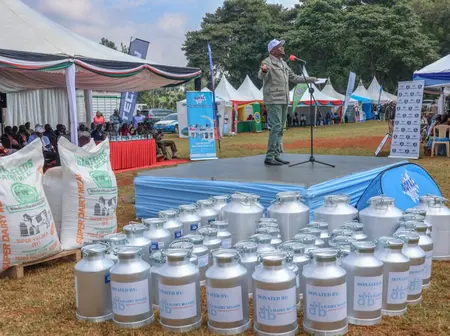
The initiative will involve supplying milk analysers to 250 sites across the country to help dairy producer organisations assess the quality of milk before determining payments to farmers.
The State Department for Livestock Development announced the planned procurement in a tender notice issued on Tuesday, November 24, 2026, through the Ministry of Agriculture and Livestock Development's Livestock Value Chain Support Project.
According to the notice, the equipment will support dairy producer organisations in implementing a quality-based payment system, under which milk quality assessments will inform the amount paid to individual farmers.
Under the proposed arrangement, milk delivered by farmers will undergo testing using specialised analysers. The results will provide a basis for determining payments, potentially rewarding producers who supply higher-quality milk.
The government has invited eligible companies to submit bids for the supply and delivery of the equipment.
Interested bidders are required to submit their applications through the electronic government procurement system by December 9, 2026, at 11am.
The procurement comes amid growing attention to the earnings of dairy farmers and the need to improve the relationship between milk producers and processors.
In October 2026, President William Ruto announced that farmers would receive KSh65 for every litre of milk delivered, alongside a quarterly bonus of KSh2 per litre.
The latest initiative could introduce another dimension to dairy payments by linking farmers' earnings to the quality of their produce rather than relying solely on the volume delivered.
It also comes at a time when Kenya's formal dairy sector is experiencing declining milk deliveries to processors despite growth in overall national milk production.
Data from the Kenya National Bureau of Statistics (KNBS) shows that milk intake by processors fell from 79.1 million litres in August 2026 to 74.8 million litres in September.
This represented a reduction of 4.3 million litres within one month.
Cumulative milk deliveries to processors between January and September 2026 also declined by two per cent to 750.2 million litres, compared with the corresponding period in 2025.
One of the factors associated with the decline is the growing preference among some farmers to sell milk directly to consumers in search of better returns.
The shift has affected supplies to formal processors, with reduced deliveries contributing to shortages of milk products in some retail outlets.
The tender marks another step in efforts to improve the dairy value chain, although the notice does not specify when the analysers will be delivered or when the new payment system will become operational.
In a statement shared online, the businessman said his vision was simple: “unlock opportunity, support enterprise and make Kenya work for those willing to work.” The message puts jobs, business growth and the ability of ordinary Kenyans to earn a living in the spotlight.
At a time when many households are concerned about the cost of living and the struggle to find income, the words may resonate with people hoping for better opportunities. For young Kenyans trying to enter the job market, small business owners battling rising expenses and workers seeking fair chances, an economy that rewards effort carries real weight.
Wanjigi's remarks also raise an important question: what would it take to turn such a vision into reality? Unlocking opportunity may require easier access to capital, fair competition, dependable infrastructure and policies that allow businesses to grow. Supporting enterprise also means paying attention to small traders and entrepreneurs who create livelihoods across the country.
However, Kenyans will want more than inspiring words. They will be looking for clear proposals, practical plans and evidence that opportunity can reach people beyond connected circles. Many people were left talking about the message, while the incident sparked reactions online as citizens considered what a working economy should deliver.
Supporters appeared divided on what the statement could mean, with some welcoming its focus on enterprise while others may demand details on implementation. What happened next surprised many: the short message opened a wider conversation about work, opportunity and accountability.
Do you believe this vision can help make Kenya work for ordinary citizens, or should Wanjigi explain the specific steps behind it? Share your thoughts in the comments.
What you need to know:Raisa Aoko Ochola uses data, targeted digital marketing and online logistics to bring international travellers to Kenya, all from Lamu Island.The 36-year-old, a former IT programmer, built her business on technology in an industry historically dominated by brick-and-mortar giants and foreign agencies.
The corporation has outlined the cancellation requirements, the documents passengers must provide and the period they should expect to wait before receiving approved refunds.
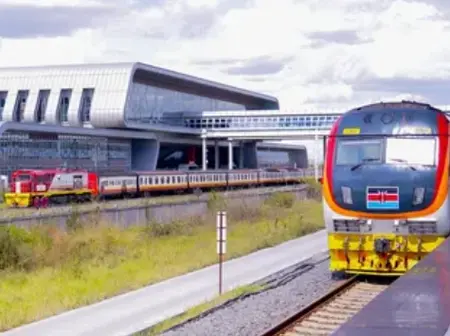
In a statement issued on Tuesday, November 24, Kenya Railways said passengers travelling in Economy and First Class must cancel their tickets at least 48 hours before the scheduled departure time.
The cancellation must be completed physically over the counter at any Madaraka Express passenger station. This means passengers cannot simply wait until departure day and expect to receive a refund under the stated conditions.
Travellers seeking cancellation must present their original national identity cards, copies of the documents used during booking and their ticket details.
Kenya Railways explained that the 48-hour requirement applies to both Economy and First Class passengers.
The corporation also cautioned travellers about the financial implications of cancelling their bookings, with passengers losing up to 30 per cent of the amount paid.
For those whose refund requests are approved, the money is processed and issued within 14 working days.
This means passengers should plan ahead before cancelling their journeys, particularly during the busy festive season when securing alternative travel arrangements may be difficult.
The clarification comes as demand for SGR services is expected to increase ahead of Christmas and New Year celebrations, with many Kenyans travelling between Nairobi and Mombasa.
To accommodate the anticipated increase in passenger numbers, Kenya Railways has also announced additional Madaraka Express passenger services during the holiday period.
The extra services will operate from Tuesday, December 1, 2026, to Monday, January 4, 2027, giving travellers more opportunities to travel between the capital and the Coast.
According to the published timetable, the additional train departing from Nairobi will leave at 9:40am and head towards Mombasa, with a scheduled stop in Voi.
It will arrive in Voi at 1:35pm and depart five minutes later at 1:40pm before continuing to Mombasa, where it is expected to arrive at 3:35pm.
Passengers travelling from Mombasa to Nairobi will have a separate afternoon departure.
The train will leave Mombasa at 4:30pm and arrive in Voi at 6:15pm. It will depart the station at 6:20pm before proceeding to Nairobi, where it is scheduled to arrive at 10:55pm.
With the increased travel demand, passengers are being encouraged to pay attention to their booking details and cancellation conditions to avoid unnecessary financial losses.
Listen to articleThe judge awarded him 12 months’ salary as compensation, citing his 31 years of service, seniority, limited prospects of securing comparable employment and the premature termination of his five-year contract.The Kenya Revenue Authority (KRA) has been ordered to pay former Commissioner for Investigations and Enforcement Dr Edward Kinyua Karanja Sh12 million after the court found that his employment was unlawfully and unfairly terminated.
Farmers who deliver milk to collection points may soon be paid based on its quality, not just how much they bring.The State Department for Livestock Development issued a tender notice on Tuesday, November 24, seeking suppliers of milk analysers for 250 sites nationwide.The purchase falls under the Livestock Value Chain Support Project and is meant to help dairy producer organisations move to quality-based payment.