Category: Economy&Finance

  • Ruto Unveils Major Hustler Fund Changes, 1.5 Million Kenyans Set to Benefit From Higher Loans

    Ruto Unveils Major Hustler Fund Changes, 1.5 Million Kenyans Set to Benefit From Higher Loans

    Speaking at State House, Nairobi, on Tuesday, November 24, the President said his administration had injected additional capital into the programme to increase the amount of money available to borrowers.

    He explained that the funding would strengthen the facility and enable more Kenyans to access loans to support their businesses and other economic activities.

    In another major announcement, Ruto revealed that 1.5 million regular Hustler Fund borrowers had been approved for higher borrowing limits.

    The beneficiaries will also qualify for the facility's bridge loan product, which allows eligible individuals to borrow amounts of up to KSh150,000.

    The changes are part of the government's efforts to widen financial access, particularly among small-scale traders and entrepreneurs who depend on affordable credit to sustain their businesses.

    The President also directed Micro, Small and Medium Enterprises Development Principal Secretary Susan Mang'eni to coordinate the development of a new lending product targeting women entrepreneurs.

    Under the proposed arrangement, women operating individually or through organised groups will be able to access funds collectively before distributing the money among individual members for their business activities.

    Ruto said the government wanted to create financing opportunities that would enable women to expand their enterprises and improve their economic independence.

    He also used the occasion to highlight progress under the National Youth Opportunities Towards Advancement (NYOTA) programme, which combines financial assistance with business training and mentorship.

    The Head of State disclosed that preparations were underway for the second phase of the initiative, which is expected to bring more young entrepreneurs into the programme.

    The government has also announced plans to extend NYOTA support to another 200,000 young people, with each selected beneficiary expected to receive a KSh50,000 start-up grant.

    During his State of the Nation Address, Ruto reported that more than 133,000 young entrepreneurs had already received training, mentorship and financial support through the initiative.

    https://nairobileo.co.ke/news/article/31670/ruto-announces-ksh5-billion-hustler-fund-financing

  • Inside Family Bank’s Ownership: Meet Seven Major Individual Shareholders

    Inside Family Bank’s Ownership: Meet Seven Major Individual Shareholders

    thumbnail

    In this storyFamily Bank shareholders have gained Sh13.63 billion since the lender listed on the Nairobi Securities Exchange (NSE) on June 23, 2026.The bank’s share price has also increased from Sh18 at listing to Sh26.20, increasing its market valuation from Sh29.92 billion to Sh43.56 billion.

  • Infrastructure fund eyes NSE vehicle to crowd-in local capital

    Infrastructure fund eyes NSE vehicle to crowd-in local capital

    The National Infrastructure Fund (NIF) plans to raise additional capital from investors through the Nairobi bourse to finance infrastructure projects.

    The money will be raised through a development real estate investment trust (D-REIT), a vehicle that currently funds only real estate projects.

  • Kenya Power Announces 8-Hour Electricity Shutdown in These Areas

    Kenya Power Announces 8-Hour Electricity Shutdown in These Areas

    Kenya Power has lined up scheduled electricity interruptions across nine counties on Wednesday, November 25, to allow technicians to carry out routine maintenance, line upgrades, new customer hookups, and infrastructure adjustments linked to road works.

    The utility released the notice on Tuesday, November 24, invoking Rule 27 of the Electric Power Rules, which permits temporary disconnections when system maintenance or network modifications are required. While most affected locations will experience power cuts from 9am to 5pm, select pockets will see shorter windows or earlier start times beginning at 8am. Residents and businesses in the impacted zones have been urged to plan ahead and make necessary arrangements before the interruptions begin.

    In Kwale County, supply will be off from 9am to 5pm around Tiwi Beach and parts of Tiwi, covering Tiwi Beach, Tiwi KD, Amani Tiwi, Ras Kadini, BAT, Jacks Place, Twiga Lodge, Marijani, Clifftop, Hillpark, Tiwi Maweni, Old Kwale Road, Mnyenzeni, Chikola, Tiwi Baptist, Bixa Plant, Chai Primary, and Tiwi Water Boreholes C, E, and 8.

    Kisii County will see interruptions between 9am and 5pm across Nyabururu, Embassy, Nyamataro, Nyakoe, Mosocho, Matieko, Rugaquarry, Siara, Keore, Kioge, Irianyi, Riotero, Rera, Nyando, Quarry, Sombogo Factory, Gesoni, Gesabakwa, Nyagesai, Kiareni, Gesangora, Marani Market, and Rioma.

    In Migori County, outages are set for 9am to 5pm in Awendo Town and Ranen, affecting Sony Sugar Company, the whole of Awendo Town, Ranen, Kokuro, Dede, Nyakuru, Ombasa, Chamgi Wadu, Kanyimach, Siany, Rabuor, Saka, Aora Jope, Ngonga, Rinya, Manyatta, and Komolorume.

    Nyeri County faces an earlier start from 8am to 5pm around Ndima-Ini Market, impacting Kiangogoyo, Karindundu Coffee Factory, Kiahiti, Kirimara High School, Iruruma, Muchohi, Mutoi, Ndima-ini Market, Ndima-ini Coffee Factory, Kahuta-ini, Muhaka-ini, Njororoma, Safaricom boosters, and Airtel boosters.

    Nairobi County will experience two separate 9am to 5pm windows. In Kitisuru, power will be out along Tate Close, Kitisuru Road, and Forward Close, while in Ruaraka it will affect Garden City Mall, KBL Corporate Offices, Cabro City, GSU, and Qwetu Hostels.

    In Trans Nzoia County, interruptions will run from 9am to 5pm across Suam Orchard, GSU, and Suam Border, including Chepchoina, Molem, Kimondo, Soko Mjinga, GSU, Suam Orchard, and Suam Border.

    Uasin Gishu County has a shorter two-hour window from 10am to 12pm covering Munyaka and Hawai.

    Machakos County will see outages from 9am to 5pm around Wote, affecting parts of Kathonzweni Market, Mulili, Mbuvo, Kiangini, Kalii, Kitise, Kithuki, Kalawa, Miangeni, Miseke, Nthia, Thavu, Mavindini Kavingo, Tamu Tamu, Mau Eli, Kathamboni, Yemulwa, and Yikiuki.

    Finally, Kiambu County will experience interruptions from 9am to 5pm across Kimende, Soko Mjinga, and Escarpment, reaching Mathore, Escarpment, Kongo Thiria, Rukuma, Kimende, Maingi, Magina, Kinale, Soko Mjinga, Kirasha, Kwa Edward, and Sulmac.

    https://www.facebook.com/100067867727102/posts/1530042365934673/?app=fbl

  • 5 Everyday Electrical Secrets Every Kenyan Homeowner Should Know

    5 Everyday Electrical Secrets Every Kenyan Homeowner Should Know

    Every time a socket sparks or a circuit breaker trips, most people immediately panic and call a technician often spending thousands of shillings on a problem that takes two minutes to understand.

    Whether you are living in a busy apartment in Nairobi or building a home upcountry, knowing the basics of how electricity works in your house does more than just save you money; it keeps your family safe from electrical fires and damaged appliances.

    Here are five essential electrical truths that will make you smarter about your home's power today:

    1. Why Your Fridge Guard Could Be Lying to You

    Many households rely on fridge guards and TV guards to protect expensive electronics from KPLC power surges. However, a guard is only as good as the socket it is plugged into. If your wall socket has a loose neutral wire or poor earthing, the guard cannot safely redirect excess voltage.

    The Fix: If your guard keeps clicking off even when the neighborhood power is stable, the issue is likely your internal house wiring, not the grid.

    2. The Danger of "Overloading" Extension Cables

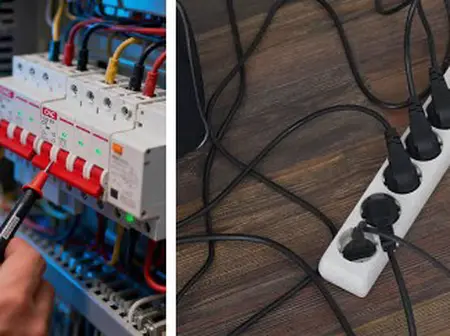
    Using one multi-plug extension to run a microwave, an electric kettle, and a toaster at the same time is a recipe for disaster. Heating appliances draw massive amounts of current (measured in Amperes).

    The Rule of Thumb: Never plug high-heat appliances into cheap extensions. Always plug kettles, irons, and heaters directly into a dedicated wall socket.

    3. Why Your Electricity Tokens Disappear Too Fast

    Do you feel like your tokens vanish faster than usual? Sometimes it is not a tariff hike—it is phantom load or a hidden earth leakage. Old water heaters with faulty thermostats or worn-out insulation on hidden wires can quietly drain units 24 hours a day.

    Quick Check: Turn off every switch and unplug all appliances in your house. Check your meter. If the red impulse light is still blinking rapidly, you have a power leak that needs immediate professional inspection.

    4. Understanding the Three Wires (And Why Colors Matter)

    If you ever look inside a plug, you will see three wires: Brown (Live), Blue (Neutral), and Green/Yellow (Earth).

    The Live wire brings the power in.

    The Neutral takes it back out.

    The Earth wire is your lifesaver—it sends stray electricity safely into the ground if an appliance faults, preventing you from getting electrocuted when you touch a metal fridge or washing machine.

    5. Why "Jua Kali" Shortcuts Cost More in the Long Run

    Hiring an unqualified person to do your wiring might seem cheap today, but using undersized cables (like using lighting cables for power sockets) causes wires to overheat inside your walls. Over time, the plastic insulation melts, leading to short circuits and costly re-wiring.

    Want to Master Electrical & Electronic Skills Yourself?

    Understanding electricity is no longer just for engineers—it is a high-income skill and a vital life safety tool. Whether you want to start a career in electrical installation, learn how to repair everyday electronics, or simply understand how to troubleshoot your own home safely, proper hands-on training makes all the difference.

    As an Electrical and Electronic Trainer, I break down complex technical concepts into simple, practical lessons anyone can master—even with zero prior experience.

    Ready to learn or need professional guidance on a project?

    Drop a comment below with your biggest electrical question, or send a direct message to connect for training sessions, practical workshops, and consultations!

    https://kplc.co.ke/news/electricity-safety-awareness

  • Kenya Power Announces Wednesday Blackout in 9 Counties: Check If Your Area Is Affected

    Kenya Power Announces Wednesday Blackout in 9 Counties: Check If Your Area Is Affected

    Electricity supply across nine Kenyan counties will be temporarily disrupted on Wednesday, November 25, as Kenya Power engineers undertake scheduled system upgrades, equipment servicing, new customer connections, and line relocations tied to ongoing road works.

    The utility announced the planned shutdowns on Tuesday, November 24, noting that the exercise falls under Rule 27 of the Electric Power Rules, which authorizes temporary blackouts to facilitate essential network improvements. Most listed neighborhoods will go without power for eight hours starting at 9am until 5pm, though a few areas face either an earlier 8am cutoff or a brief two-hour interruption. Customers within the designated zones have been advised to prepare accordingly ahead of the outages.

    Across the coastal region, Kwale County will experience a blackout from 9am to 5pm covering Tiwi Beach, Tiwi KD, Amani Tiwi, Ras Kadini, BAT, Jacks Place, Twiga Lodge, Marijani, Clifftop, Hillpark, Tiwi Maweni, Old Kwale Road, Mnyenzeni, Chikola, Tiwi Baptist, Bixa Plant, Chai Primary, and Tiwi Water Boreholes C, E, and 8.

    In Nyanza, Kisii County residents in Nyabururu, Embassy, Nyamataro, Nyakoe, Mosocho, Matieko, Rugaquarry, Siara, Keore, Kioge, Irianyi, Riotero, Rera, Nyando, Quarry, Sombogo Factory, Gesoni, Gesabakwa, Nyagesai, Kiareni, Gesangora, Marani Market, and Rioma will be off supply between 9am and 5pm. Neighboring Migori County will have a simultaneous 9am to 5pm interruption in Awendo Town and Ranen, impacting Sony Sugar Company, the entire Awendo Town, Ranen, Kokuro, Dede, Nyakuru, Ombasa, Chamgi Wadu, Kanyimach, Siany, Rabuor, Saka, Aora Jope, Ngonga, Rinya, Manyatta, and Komolorume.

    Central Kenya will see an extended nine-hour shutdown in Nyeri County from 8am to 5pm around Ndima-Ini Market, affecting Kiangogoyo, Karindundu Coffee Factory, Kiahiti, Kirimara High School, Iruruma, Muchohi, Mutoi, Ndima-ini Market, Ndima-ini Coffee Factory, Kahuta-ini, Muhaka-ini, Njororoma, as well as Safaricom and Airtel boosters.

    Within Nairobi County, two zones will lose power from 9am to 5pm. The Kitisuru interruption covers Tate Close, Kitisuru Road, and Forward Close, while the Ruaraka outage affects Garden City Mall, KBL Corporate Offices, Cabro City, GSU, and Qwetu Hostels. Nearby Kiambu County will also be affected from 9am to 5pm across Kimende, Soko Mjinga, and Escarpment, including Mathore, Escarpment, Kongo Thiria, Rukuma, Kimende, Maingi, Magina, Kinale, Soko Mjinga, Kirasha, Kwa Edward, and Sulmac.

    In the Rift Valley, Trans Nzoia County will experience an outage from 9am to 5pm around Suam Orchard, GSU, and Suam Border, reaching Chepchoina, Molem, Kimondo, Soko Mjinga, GSU, Suam Orchard, and Suam Border. Meanwhile, Uasin Gishu County faces a much shorter blackout from 10am to 12pm in Munyaka and Hawai.

    In Eastern Kenya, Machakos County will have a 9am to 5pm disruption around Wote, affecting parts of Kathonzweni Market, Mulili, Mbuvo, Kiangini, Kalii, Kitise, Kithuki, Kalawa, Miangeni, Miseke, Nthia, Thavu, Mavindini Kavingo, Tamu Tamu, Mau Eli, Kathamboni, Yemulwa, and Yikiuki.

    https://www.facebook.com/100067867727102/posts/1530042365934673/?app=fbl

  • Court rejects flower growers’ bid to halt new Kebs levy

    Court rejects flower growers’ bid to halt new Kebs levy

    DNKsmKEBS1106(8)

    Flower growers have lost a bid to stop the Kenya Bureau of Standards (Kebs) from collecting a new 0.2 percent levy on their monthly turnover pending hearing of a suit challenging the charge.

    The High Court has declined to suspend the charge imposed on growers, processors and exporters, ruling that the financial losses cited by the industry could be quantified and compensated through refunds if the levy is eventually declared unlawful.

  • Inside Bamburi Cement’s Ksh32B investment set to transform Kenya’s cement industry

    Inside Bamburi Cement’s Ksh32B investment set to transform Kenya’s cement industry

    Inside Bamburi Cement’s Ksh32B investment set to transform Kenya’s cement industry

    President William Ruto on Tuesday, November 24, 2026, witnessed the groundbreaking of Bamburi Cement’s Ksh32 billion clinker manufacturing plant in Matuga, Kwale County, in a major investment aimed at expanding local production of construction materials.

    The project involves a $250 million (approximately Ksh32 billion) investment by Bamburi Cement, which signed an engineering, procurement and construction (EPC) agreement with China’s Sinoma CBMI Construction Co. Ltd in December 2025.

    The new factory will have the capacity to manufacture 1.6 million tonnes of clinker annually, providing Bamburi with additional supplies of the key material used in cement production.

    The investment is expected to more than double the company’s annual clinker production capacity from one million tonnes to 2.6 million tonnes. Its cement manufacturing capacity is also projected to increase from 1.8 million tonnes to four million tonnes.

    Clinker is an essential intermediate material in cement manufacturing. It is produced by heating limestone and other raw materials at high temperatures before being ground with gypsum and other additives to produce cement.

    Kenya’s dependence on imported clinker exposes local manufacturers to international prices, shipping expenses and foreign exchange fluctuations.

    Increasing domestic production could help reduce these costs, improve the reliability of raw material supplies and strengthen the country’s cement manufacturing industry.

    Speaking during the December 2025 contract signing, Bamburi Cement Chief Executive Officer Mohit Kapoor explained the importance of the investment.

    “The new clinker line will greatly reduce reliance on imported clinker, improving quality production consistency and securing supply for the domestic market. This will save Forex resources, stabilise pricing, enhance production planning, and ensure Bamburi continues to meet rising cement demand driven by national infrastructure programmes and private sector development,” Kapoor said.

    The additional capacity will also position Bamburi to supply more cement for construction projects, including housing, roads, railways, ports and other infrastructure developments.

    However, increased production does not automatically mean lower retail cement prices, which are also influenced by energy, transport, distribution and other operating costs.

    Workers operating cement packaging machinery at a Bamburi Cement production facility. PHOTO/Screengrab by PD Digital/

    Amsons Group Managing Director Edha Nahdi said the investment was part of the conglomerate’s commitment to supporting Kenya’s infrastructure development and industrialisation.

    “Amsons Group stands ready to make its contribution to support President Ruto’s 10-year roadmap on road, rail, ports, airports, and oil pipeline infrastructure development and expansion,” Nahdi said.

    “By signing this Clinkerisation Plant development EPC contract, Amsons Group is putting its money where its mouth is, to power Kenya’s national development and economic transformation.”

    Nahdi added that the availability of locally manufactured cement and concrete products would be important in delivering the government’s infrastructure ambitions.

    The Ksh32 billion project is also expected to support President Ruto’s proposed Ksh5 trillion, 10-year national development roadmap, which includes major investments in transport infrastructure and other strategic sectors.

    Beyond increasing production, the Matuga project is expected to create employment during construction and subsequent operations.

    Local businesses are also expected to benefit from opportunities in transport, construction supplies, logistics, maintenance and other services required by the factory.

    The plant will incorporate a six-stage precalciner system and technologies designed to improve energy efficiency and reduce emissions associated with cement manufacturing.

    Bamburi has also identified alternative fuels and raw materials, including coconut husks, cashew nut shells and municipal solid waste, as part of its plans for cleaner production.

    The use of these materials could create additional demand for agricultural waste and other locally available resources in the Coastal region.

    President Ruto, who witnessed the EPC agreement signing in December 2025, said strengthening clinker production was important for the country’s industrial competitiveness.

    “By combining Bamburi Cement’s deep local market presence and operational experience with SINOMA–CBMI’s global technical expertise in cement engineering and construction, this partnership will significantly strengthen domestic clinker production capacity, reduce reliance on imports, and enhance the competitiveness and resilience of Kenya’s cement industry,” Ruto said.

    The project will be constructed by Sinoma CBMI, a Chinese engineering company specialising in cement plant development.

    For Bamburi, the investment marks a major expansion under the Amsons Group, which acquired control of the cement manufacturer in 2024, while giving Kenya additional capacity to produce an important material for its construction industry.

  • Government Breaks Silence After Viral Video of Watermelons Sprayed With Unknown Substance

    Government Breaks Silence After Viral Video of Watermelons Sprayed With Unknown Substance

    The footage, which has been widely shared on social media, has raised questions among Kenyans about the safety of fruits being sold and consumed in the country.

    The Pest Control Products Board (PCPB) acknowledged receiving concerns from members of the public over the incident, particularly regarding possible implications for food safety and human health.

    The Board said it had partnered with relevant government agencies to establish what happened and determine the circumstances surrounding the incident.

    Investigators are expected to identify the substance used, trace its origin and establish the person responsible for applying it to the harvested watermelons.

    Authorities will also examine the reasons behind the spraying and determine whether the substance or the practice could expose consumers to health risks.

    The PCPB warned that practices involving the application of potentially harmful substances to food products would not be tolerated.

    It further stated that individuals found to have violated the law could face legal consequences once investigations establish their involvement.

    The regulator reiterated that protecting consumers from exposure to unsafe substances remained a priority, adding that appropriate corrective measures would be taken in accordance with existing laws.

    The Board urged Kenyans not to draw conclusions before the investigations are completed.

    It asked members of the public to avoid spreading unverified claims and instead follow official communication channels for updates on the matter.

    The incident has renewed attention on food safety and the handling of agricultural produce, with consumers seeking assurances about the quality of food available in the market.

    The investigation is expected to shed light on the substance captured in the video and whether its application to harvested watermelons breached any existing regulations.

    https://www.facebook.com/100040319114203/posts/2068456821174935/?app=fbl

  • Inside SRC’s plan to reward high-performing govt employees

    Inside SRC’s plan to reward high-performing govt employees

    Inside SRC’s plan to reward high-performing govt employees

    The Salaries and Remuneration Commission (SRC) has outlined a five-year strategy to introduce productivity-linked rewards and recognition mechanisms across Kenya’s public service as part of efforts to improve employee performance and service delivery.

    In its Strategic Plan 2025/2026–2029/2030, the commission identifies productivity and performance as one of its key result areas, proposing measures to strengthen the recognition of employees’ contributions and link remuneration more closely to productivity.

    SRC targets increasing the number of public-sector institutions implementing productivity and performance-linked rewards from 22 to 1,009 by the end of the five-year plan.

    The commission says the strategy is intended to promote a more productive public service while ensuring that remuneration decisions reflect performance, fairness and the country’s economic realities.

    Under its first key result area, SRC identifies strengthening the recognition of productivity and performance as a priority.

    The commission also proposes implementing productivity-linked reward and recognition mechanisms and promoting national productivity dialogue to build capacity in measuring productivity.

    It further identifies the need to strengthen institutional capacity in productivity measurement to ensure public-sector organisations can assess and recognise performance.

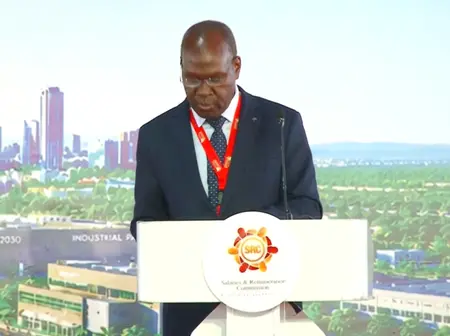
    SRC CEO Ali Abdullahi during the swearing in at Judiciary.PHOTO /screengrab by People Daily Digital/@Kenyajudiciary/X

    SRC’s strategy also seeks to improve the relationship between remuneration and employee output, addressing one of the challenges identified in its assessment of public-sector pay.

    Beyond performance-based rewards, SRC has outlined plans to progressively harmonise remuneration structures across the public service.

    In the strategic plan, the commission identifies historical disparities in remuneration as one of the challenges affecting public-sector pay.

    It targets increasing harmonised public-service salary structures from 14 per cent to 44 per cent by the end of the plan period.

    SRC also proposes regularly reviewing salary structures and developing wage-bill forecasting and analytics to improve the management of public-sector remuneration.

    The commission targets to increase compliance with its remuneration guidelines from 86 per cent to 95 per cent by 2030.

    The strategic plan also identifies employee satisfaction as an important component of improving productivity and institutional performance.

    SRC targets increasing employee satisfaction from 61.8 per cent to 85 per cent during the five-year implementation period.

    The commission further proposes developing staff and succession-management systems, aligning organisational structures with strategic objectives and implementing performance management as part of its institutional strengthening agenda.

    On public finances, SRC targets reducing or maintaining the wage-bill-to-ordinary-revenue ratio at 35 per cent by the end of the plan.

    The commission’s broader objective is to promote fair and equitable remuneration while ensuring that public-sector pay remains fiscally sustainable.

    The five-year strategy runs from 2025/2026 to 2029/2030 and provides the roadmap through which SRC intends to strengthen remuneration management, productivity and performance across the public service.