The governor revealed that key facilities, including warehouses and cold storage units, were nearing completion, bringing the project closer to becoming operational.
She noted that the facility would provide farmers in Njoro Ward and neighbouring areas with opportunities to preserve their produce, embrace value addition and access better markets.
According to Kihika, farmers have for years struggled with post-harvest losses and exploitation by middlemen, challenges that have continued to reduce the financial benefits of their hard work.
She explained that the modern agricultural hub would address some of these difficulties by offering temperature-controlled storage facilities designed to maintain the quality of harvested produce and extend its shelf life.
Kihika added that the project would also enable farmers to access organised markets, negotiate competitive prices and reduce their dependence on brokers.
The project is part of Nakuru County's efforts to promote agriculture as a sustainable economic activity while creating better opportunities for local farming communities.
Kihika said the county would continue supporting initiatives aimed at improving livelihoods and driving economic growth through agriculture.
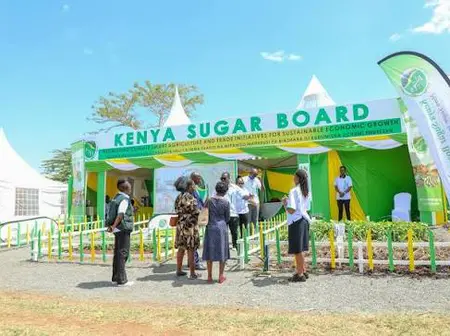
The platform is designed to provide regular updates on voter participation and provisional results as the elections progress.
The board has announced that users can view details about national voter turnout, highlighting how many growers have taken part in the voting process so far.
They also offer a breakdown of participation by the country’s five sugarcane-growing regions, allowing farmers to track how each area is performing in terms of voter engagement.
Moreover, the online portal includes provisional results for candidates running for the Grower Representatives positions. These figures will be updated in real-time as the counting and reporting continue.
The board is urging growers to use this platform for the latest information about the election, rather than just relying on updates from other sources.
This initiative aims to make election information more accessible to sugarcane farmers, especially those unable to visit polling stations.
You can check out the live results by heading to the official Mkulima OnBoard website at https://mkulimaonboard.go.ke/live-elections.
This announcement coincides with the Kenya Sugar Board's ongoing efforts to enhance grower representation in the sugar sector.
With this digital platform, stakeholders can keep up with the election process and get updates on voter participation and the provisional performance of candidates from various regions across the country.
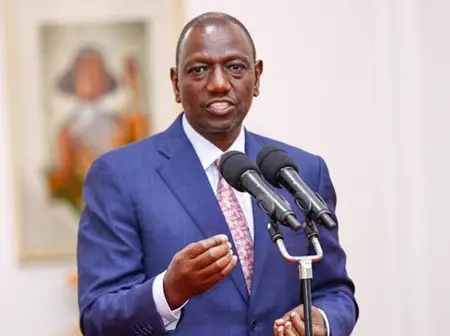
Speaking during an announcement on the fund, Ruto said the government was injecting the additional money to strengthen access to affordable financing.
"We are injecting an additional KSh5 billion into the Hustler Fund to make more affordable credit readily available to borrowers," Ruto said.
The announcement comes alongside plans to enhance borrowing limits for approximately 4.5 million regular borrowers.
Under the proposed changes, eligible individuals could access loans of up to KSh150,000, representing an expansion of the credit available through the programme.
The adjustments are intended to benefit borrowers who have consistently used the fund and demonstrated a repayment history.
The Hustler Fund was introduced by the government to provide affordable credit to individuals and small businesses, particularly those who may struggle to access loans from conventional financial institutions.
Through the programme, borrowers can access credit using digital platforms, with loan limits determined by factors including repayment behavior and borrowing history.
The government has presented the fund as part of its broader efforts to improve financial inclusion and support small-scale economic activities.
The additional KSh5 billion is expected to increase the resources available for lending as the programme seeks to reach more Kenyans.
However, details on the timeline for releasing the additional funds, the implementation of the new borrowing limits and the specific eligibility requirements for loans of up to KSh150,000 were not provided in the information available.
Borrowers are therefore expected to rely on official Hustler Fund communication for further guidance on the changes and how they will affect individual loan limits.
The announcement signals the government's intention to expand the program's lending capacity and increase access to credit for regular borrowers.https://www.facebook.com/share/p/1EGtHnpNdn/
Millions of Kenyans who rely on the Hustler Fund for quick mobile credit have received major financial relief after President William Ruto announced higher borrowing limits alongside a fresh KSh 5 billion capital boost for the programme.
Speaking during a Hustler Fund anniversary event in Nairobi on Tuesday, November 24, 2026, President Ruto revealed that roughly 4.5 million consistent borrowers currently stuck on standard personal loans are being upgraded to the Bridge Loan tier.
According to The Kenya Times and Capital FM, the adjustment raises maximum individual borrowing limits up to KSh 150,000.
The President noted that many small traders and hustlers had complained that their allocations remained stagnant at KSh 10,000 or KSh 20,000 despite requesting bigger amounts to expand their businesses.
Under the revised structure, disciplined borrowers who repay on time will now graduate seamlessly into higher credit brackets without needing traditional bank collateral.
To support the increased demand, the government is injecting an additional KSh 5 billion into the fund, expanding its lending capacity for both individual entrepreneurs and organized women’s groups across the country.
Since its rollout, more than 10 million Kenyans have become regular users of the mobile facility, accessing billions of shillings at affordable interest rates.
By unlocking bigger loan amounts and easing credit bottlenecks, the latest review gives small business owners fresh room to restock, grow their ventures, and build stronger savings.
For official loan terms, eligibility checks, and repayment guidelines, citizens can dial *254# or visit the Hustler Fund website.
The Blue Valley Affordable Housing Project comprises three residential blocks, each rising 11 floors. According to Interior Principal Secretary Raymond Omollo, all three buildings have completed their structural construction, with contractors now undertaking finishing works.
In an update issued on Tuesday, November 24, Omollo said the development was designed to respond to increasing demand for accommodation in Nyeri, particularly in Nyeri Town, which continues to attract residents because of its administrative and commercial activities.
The 381 apartments will be allocated across three categories: social housing, affordable housing and market-rate units, targeting households with different income levels.
Beyond residential accommodation, the project will include retail outlets, children's playgrounds, lifts and a central gas supply system. These facilities are intended to provide residents with additional services within the development.
Omollo noted that construction was already supporting the local economy by creating jobs and generating business opportunities for enterprises operating around the site.
The project is being implemented through cooperation between government agencies, with the State Department for Internal Security and National Administration handling local coordination, security and administrative support.
The development forms part of the government's wider affordable housing and urban renewal programme.
Meanwhile, the government is also undertaking a much larger housing transformation in Nairobi's Makongeni Estate, where 5,369 residential units are planned under two construction phases.
Phase 1A consists of eight twin blocks containing 2,258 apartments, while Phase 1B will comprise 19 blocks with another 3,111 units.
The Makongeni development will also incorporate community facilities, including daycare centres, early childhood development facilities, a swimming pool, basketball court, clubhouse, community centre, health facilities and landscaped recreational spaces.
The projects are part of government efforts to expand access to housing while upgrading urban neighbourhoods and supporting economic activity.
President William Ruto has announced an additional Ksh5 billion allocation to the Hustler Fund, alongside higher borrowing limits for millions of regular users as the government moves to expand access to affordable credit.
The president said the additional funding would increase the facility’s lending capacity, while 4.5 million regular borrowers would benefit from enhanced limits of up to Ksh150,000 through the bridge loan facility.
“We are injecting an additional Ksh5 billion into the Hustler Fund to make more affordable credit readily available to borrowers. Additionally, we are enhancing borrowing limits for 4.5 million regular borrowers, through the bridge loan facility, offering individual loans of up to Ksh150,000,” Ruto noted.
In a further expansion of the programme, Ruto has directed the Hustler Fund management to develop a group financing product that will allow associations and organised groups to borrow money and distribute it among their members.
The announcements build on commitments made during Mashujaa Day celebrations in Eldoret on October 20, 2026, when Ruto pledged to inject an additional Ksh5 billion into the fund before the end of the year.
At the time, he said the facility had disbursed Ksh98 billion in collateral-free loans to more than 10 million regular borrowers.
The revised borrowing limits target 4.5 million regular borrowers who will access higher amounts through the bridge loan facility.
Under the arrangement, individual borrowers can access loans of up to Ksh150,000, although the actual amount available will depend on their eligibility and borrowing limits.
The bridge loan facility is intended to provide additional credit to borrowers who have established a repayment record with the fund.
Ruto has also ordered the development of a group-based lending product. Unlike the individual facility, the proposed arrangement will allow groups to access funds and decide how to lend the money to their members.
The new product is expected to widen access to credit among organised groups, including associations and other collectives whose members may need financing for business activities.
Launched in November 2022 as the Financial Inclusion Fund, the Hustler Fund was established to provide affordable credit to individuals and small businesses that often struggle to qualify for conventional bank loans.
Ruto said the facility had disbursed Ksh98 billion to more than 10 million regular borrowers by October 2026.
Principal Secretary for Internal Security Raymond Omollo, speaking in Busia County on November 13, 2026, said more than 25 million Kenyans access the fund daily to obtain credit for running and expanding businesses.
He also encouraged borrowers to take advantage of the fund’s savings component, which automatically directs five per cent of every approved loan towards short-term and long-term savings, while the remaining 95 per cent is sent to borrowers through mobile money.
The savings arrangement is intended to encourage financial discipline while helping borrowers build retirement savings alongside accessing credit.
The Ksh5 billion allocation and higher borrowing limits are part of the government’s wider financial inclusion agenda, which targets small traders, entrepreneurs and other borrowers who have limited access to formal credit.
Ruto has linked the programme to efforts to support micro, small and medium enterprises and expand economic opportunities.
During his Mashujaa Day address, he also reported that the value of Kenya’s stock market had increased from Ksh2 trillion in 2022 to Ksh4.2 trillion. Foreign direct investment, he said, had risen from Ksh194 billion in 2022 to Ksh413 billion in 2025.
However, the expanded lending programme will also need to demonstrate that increased access to credit translates into sustainable businesses, employment opportunities and improved household incomes.
Safaricom’s Shiriki Pay service has attracted more than 3.7 million customer opt-ins, offering families, households and businesses a controlled way to share access to M-PESA wallets without transferring money between accounts.Safaricom has announced that more than 3.7 million customers have opted into its Shiriki Pay service, highlighting growing demand for flexible ways to manage shared financial responsibilities through M-PESA.
The announcement could bring relief to small-scale traders, entrepreneurs and other borrowers who have previously complained about the relatively low amounts available through the government-backed lending programme.
Speaking at State House, Nairobi, during the 17th anniversary celebrations of the Joyful Women Organisation (JOYWO) on Tuesday, November 24, Ruto said the government intended to move more than 4.5 million borrowers to the Hustler Fund's bridge loan category.
Under the proposed changes, eligible borrowers could access loans of up to KSh150,000, depending on their borrowing and repayment records.
The president specifically addressed Kenyans whose borrowing limits had remained at KSh10,000 despite repeatedly using the facility.
"If you have been borrowing from the Hustler Fund and your limit was stuck at KSh10,000, we will be increasing your limit. This is as long as you can borrow and repay," Ruto stated.
The additional KSh5 billion allocation is expected to strengthen the fund's capacity to serve borrowers seeking money to expand businesses, support household needs and meet other financial obligations.
Beyond individual borrowers, the government is also planning to introduce a special lending product targeting organised groups.
Ruto directed State Department for Micro, Small and Medium Enterprises Principal Secretary Susan Mang'eni to oversee the development of the product, which will allow groups to access loans and determine how to distribute the money among their members.
The arrangement is expected to give organised groups greater flexibility in managing borrowed funds and supporting members with different financial needs.
The president also announced a separate KSh300 million credit facility targeting women's groups across the country.
The proposed product will be developed under the Hustler Fund framework and is intended to expand access to affordable financing for women involved in business and other income-generating activities.
The announcement was made during an event celebrating JOYWO, a nationwide grassroots organisation founded by First Lady Rachel Ruto. The organisation promotes women's economic empowerment through its table banking model, which enables members to pool savings and access financial support.
Ruto said the planned funding would help improve women's access to affordable credit and strengthen their participation in economic activities.
He also highlighted the government's NYOTA programme, which provides business grants of up to KSh50,000 to eligible young entrepreneurs.
According to the president, the second phase of the programme will target 200,000 young people, with an equal distribution between men and women.
He further announced that women in business aged 30 years and below would be included in the second phase.
For Kenyans already using the Hustler Fund, the proposed increase in borrowing limits could create an opportunity to access larger amounts, although individual eligibility will continue to depend on the applicable lending and repayment requirements.
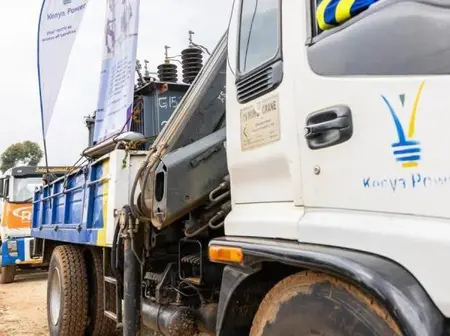
OutagesKenya Power has announced scheduled electricity interruptions in eight counties, including Nairobi and Kiambu, on Wednesday.Kenya Power has announced scheduled electricity interruptions in eight counties across the country on Wednesday, November 25.In a notice on Tuesday, November 24, the company said the planned power outages will affect parts of Nairobi, Machakos, Trans Nzoia, Uasin Gishu, Kiambu, Kisii, Migori and Kwale counties.
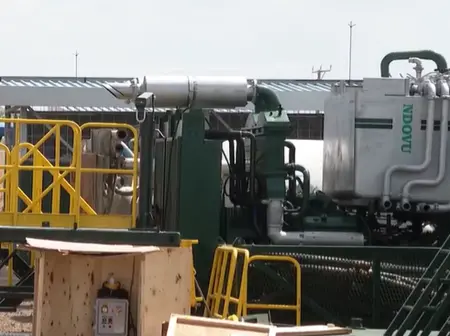
Kenya’s planned commercial oil production in Turkana is opening up employment and business opportunities for local residents, with 600 trucks expected to transport crude from the South Lokichar Basin to the Port of Mombasa ahead of the country’s first exports in March 2027.
The transportation arrangement is expected to create hundreds of jobs, with 400 of the trucks reserved for transporters from communities where oil production is taking place.
The development comes as local drivers and transport businesses begin engaging logistics companies involved in the project to secure a share of the emerging petroleum industry.
In an earlier interview, OML Africa Logistics Director James Mbote said the company would prioritise Turkana residents when recruiting drivers and logistics officers to support the transportation operation.
Mbote said local drivers would be given the first opportunity before recruitment is extended to applicants from other regions.
“Nafasi za kazi za kwanza zitapatiwa madereva kutoka Turkana. Pia tumewahakikishia kwamba wataweza kuelimishwa ambapo kuna mbinu nyingi za kuendesha matrela ya mafuta,” he said.
The company also plans to train selected residents in fuel tanker handling and transportation operations, particularly those without the necessary experience to operate oil tankers safely.
According to a November 24, 2026 report by MyGov, 600 trucks will be contracted to transport crude oil from Turkana to Mombasa, with 400 reserved for transporters from local communities.
The arrangement is expected to create opportunities for truck owners, drivers, logistics officers and other businesses supporting the transportation chain.
Turkana Drivers Association Chairperson Ronald Maxwell said the association had begun discussions with the logistics company over truck hire charges, driver payments and opportunities for local transport operators.
The talks are intended to establish arrangements that allow drivers and businesses to benefit from the transportation contracts.
The opportunities come as Gulf Energy, the company undertaking the South Lokichar oil project, reports significant local participation in its workforce.
Gulf Energy Country Manager Frankline Juma said 599 of the 716 jobs created so far had been filled by Kenyans, with residents of Turkana County accounting for 61 per cent of the workforce.
He noted that some specialised positions were still held by expatriates because of limited local expertise in Kenya’s relatively new petroleum industry.
The company is targeting initial production of 20,000 barrels of oil per day, which will subsequently increase to 50,000 barrels before reaching a projected 120,000 barrels daily.
Production at the Amosing well site in Turkana is scheduled to begin on December 1, 2026, with the first shipment of Kenyan crude oil expected to leave the country on March 1, 2027.
The project will initially rely on road transport, with a dedicated pipeline linking the South Lokichar Basin to Mombasa planned for the future.
According to Juma, transportation will eventually shift from trucks to the pipeline as production increases.
The emerging oil industry is therefore expected to create opportunities beyond extraction, particularly in transport, logistics and other support services, as Kenya prepares to enter the international crude oil market.