According to the Presidential Communication Service, the enhanced limits will be introduced through the Hustler Fund's Bridge Loan facility, allowing eligible individual borrowers to access loans of up to KSh150,000.
Ruto said the decision was intended to address concerns from borrowers whose existing credit limits had remained low despite their consistent use of the platform.
The announcement is expected to benefit millions of Kenyans who rely on the government-backed financial inclusion programme to finance personal needs and small businesses.
In addition to increasing borrowing limits, the Head of State announced that the government would inject an additional KSh5 billion into the Hustler Fund to expand the amount of money available to borrowers.
He said the additional funding would help address the shortage of resources on the platform and improve access to credit.
The President also directed the Hustler Fund management to develop a KSh300 million lending product targeting organised groups.
Under the proposed arrangement, groups would access funds and determine how to distribute loans among their members.
The announcement comes as the government continues to promote financial inclusion through affordable lending facilities targeting individuals and small enterprises.
According to the official Hustler Fund website, the programme was established to improve access to responsible financial services, particularly for Kenyans who have traditionally faced difficulties accessing formal credit.
The latest changes are expected to expand borrowing opportunities, although individual access to the maximum loan amount will depend on the applicable eligibility and lending requirements. https://www.facebook.com/share/p/1CsL8FS2MD/
President William Ruto has announced an additional KSh5 billion allocation to the Hustler Fund, promising to increase borrowing limits for millions of Kenyans using the government-backed loan facility.
Speaking during the Joyful Women Organisation’s 17th anniversary celebrations at State House, Nairobi, Ruto said more than 4.5 million borrowers would be moved to the bridge loan category, allowing them to access loans of up to KSh150,000.
The president acknowledged complaints from Kenyans whose borrowing limits had remained low despite using the platform regularly. He said the government was working to improve access to credit for borrowers who demonstrate the ability to repay their loans.
“If you have been borrowing from the Hustler Fund and your limit was stuck at KSh10,000, we will be increasing your limit. This is as long as you can borrow and repay,” Ruto said.
He added that the improved facility would help individuals access money to support their businesses and meet other financial needs.
Ruto also directed State Department for Micro, Small and Medium Enterprises Principal Secretary Susan Mang’eni to oversee the development of a new Hustler Fund product targeting organised groups.
Under the proposed arrangement, groups will receive loans and decide among themselves how to distribute or lend the money to individual members.
The president further announced plans for a KSh300 million loan product targeting women's groups across the country. The initiative is expected to expand access to affordable credit for women involved in business and other income-generating activities.
The announcement came as JOYWO marked its 17th anniversary. The nationwide grassroots organisation, founded by Mama Rachel Ruto, promotes women's economic empowerment through its table banking model.
Ruto also highlighted the government's NYOTA programme, which provides grants of up to KSh50,000 to young people seeking to grow their businesses.
He announced that the second phase would include women in business aged 30 and below. The programme is expected to benefit 200,000 young people, with an equal allocation between men and women.
The latest announcements form part of the government's plans to widen access to financial support for small businesses, women and young entrepreneurs.
Identified as Njeri, the former Emirates Airlines cabin crew member resigned in August 2024 after approximately 13 years of service. She subsequently returned to Kenya with plans to settle in the wilderness rather than resume life in a busy city.
Njeri's new venture, known as Nanare, is located in the Amboseli ecosystem in Kajiado County. She started construction in October 2024, with work on the property beginning the following month.
Her decision followed years of travelling and exploring different opportunities. Before joining the aviation industry, she engaged in business at Nairobi's Gikomba Market before travelling to South Sudan, where she traded in Kitenge fabrics and volunteered as a teacher.
After spending years working internationally, she eventually decided to return home and establish a place that reflected her interest in nature, organic farming and sustainable living.
Finding suitable land was not an easy process. Njeri reportedly made several trips to Nanyuki in search of a property that could accommodate her plans, but the available plots did not meet her expectations.
She later explored the Amboseli area, where she found land through connections with the local Maasai community. The arrangement allowed her to acquire the space she needed while respecting the condition that the property would not be subdivided.
Construction came with several challenges, including difficult roads during rainy weather, delays in the delivery of building materials and increasing expenses.
At some point, she had to spend nights sleeping in her vehicle at the construction site. She also helped prepare meals for the workers whenever necessary. Despite the difficulties, she continued working towards completing the project.
Nanare operates primarily on solar energy, with a backup generator and a borehole providing water for the property.
The retreat also incorporates farming into its operations. Njeri reportedly produces approximately 80 per cent of the vegetables used at the facility, while indigenous chickens provide eggs.
Goat meat is also prepared for special occasions, while produce that cannot be obtained from her farm is purchased from women farmers within the surrounding community.
The accommodation units feature glass walls and skylights designed to allow visitors to enjoy views of the surrounding landscape, including sunrise, sunset and the night sky.
Interestingly, the rooms do not have Wi-Fi, a decision that reflects her preference for a quieter environment away from constant digital connectivity.
Beyond establishing the retreat, Njeri has planted more than 5,000 trees across the property as part of her environmental vision.
Her approach to designing Nanare was also influenced by research visits to farms in Cape Town and the Karoo region of South Africa before leaving her Emirates job.
For Njeri, the project represents more than a business venture. It is an opportunity to create a home that reflects her personal values while offering visitors an opportunity to experience a different way of living.
She described the property as a place where she feels comfortable and hopes to welcome others who appreciate nature and peaceful surroundings.
Her transition from an international aviation career to sustainable living in Amboseli marks a significant change in direction after 13 years in the industry.
Liberty Life Kenya has introduced a digital insurance portal allowing customers and business partners to purchase travel and marine cargo insurance, obtain quotations and download policy documents without visiting an insurance office.The new platform is expected to simplify the process of obtaining insurance, particularly for importers and exporters who need marine cargo cover before their goods can proceed through customs clearance.
Speaking on Tuesday, November 24, 2026, during the 17th anniversary celebrations of the Joyful Women Organisation (JOYWO), the First Lady emphasized that women should not be viewed merely as victims or passive beneficiaries of climate action.
Instead, she noted that women across the country are proving to be the most effective drivers of climate adaptation through daily conservation work, agroforestry, and climate-smart agriculture.
The event, graced by President William Ruto and Deputy President Kithure Kindiki, brought together thousands of grassroots women leaders, development partners, and senior government officials.
During her address, Mama Rachel Ruto revealed that women within the Joyful Women network have already planted more than 50 million trees nationwide.
Notably, roughly 70 percent of those trees are fruit-bearing varieties, a deliberate strategy designed to restore degraded ecosystems while directly improving family nutrition and farm incomes.
Founded in 2009 to promote financial inclusion through table banking, JOYWO has expanded into a movement of over 300,000 members across 45 counties, revolving more than KSh 4 billion to support small enterprises.
Under the newly launched climate resilience campaign and JOYWO’s expanded empowerment framework, several key groups stand to benefit directly:
• Grassroots Women Farmers and Nursery Operators: Women involved in tree planting, commercial seedling nurseries, and agroforestry will receive targeted capacity building, market linkages, and support to scale fruit and food crop production.
• Small-Scale Traders and Table Banking Groups: Micro-entrepreneurs gain access to revolving table banking credit, digital marketing training, and structured connections to state-backed financing facilities such as the Hustler Fund and the NYOTA programme.
• Working Mothers in Public Markets: Traders operating in newly constructed modern markets will benefit from integrated childcare facilities, enabling mothers to run their businesses safely while raising young children.
• Rural and Peri-Urban Households: Families stand to gain improved food security, healthier diets from fruit farming, and stronger financial buffers against droughts and erratic weather patterns.
Mama Rachel Ruto explained that linking women’s economic empowerment with environmental stewardship ensures that conservation projects remain practical and profitable for ordinary households.
By pairing grassroots table banking with climate-smart agriculture and public-private partnerships, the State House launch sets a clear roadmap for turning local women’s groups into pillars of Kenya’s green economy.
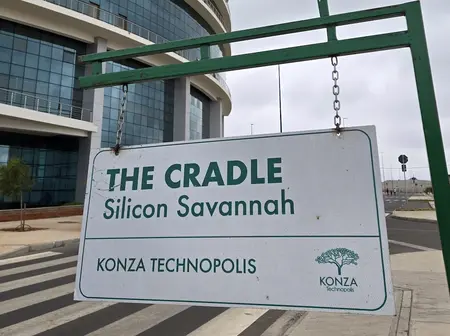
The Kenya Revenue Authority (KRA) has gazetted Konza Technopolis as a customs area and allocated it a customs code. The move brings the smart city closer to operating fully as a special economic zone (SEZ).
The designation is expected to simplify customs procedures and make it easier to move goods into and out of the Technopolis. That matters most for companies in manufacturing, technology development and other industries that rely on imported equipment and materials.
The customs code puts in place a key part of the regulatory framework needed for businesses to operate under SEZ rules. These typically allow qualifying firms to import goods under customs control and benefit from tax incentives.
“The gazettement of Konza Technopolis as a Customs Area and the allocation of a customs code is a significant step towards making our Special Economic Zone fully operational,” said John Paul Okwiri, CEO of the Konza Technopolis Development Authority.
“It will facilitate the movement of goods, simplify customs processes and create a more enabling environment for investors seeking to establish and expand their operations at Konza Technopolis.”
Okwiri said the milestone complements ongoing work to equip the Technopolis with the infrastructure, services and regulatory support needed to attract investment. He credited KRA and the Special Economic Zones Authority (SEZA) for their support.
Konza was designated an SEZ in July 2019, with the aim of making it a hub for technology, innovation, industrial development and investment.
The project is a flagship of Kenya’s Vision 2030 development blueprint. It is located about 60km south-east of Nairobi along the Nairobi–Mombasa highway, on 5,000 acres.
Since its launch more than a decade ago, the government has been building roads, utilities and institutions at the site. These include the Konza National Data Centre and the Kenya Advanced Institute of Science and Technology. However, the project has faced long delays and criticism over the slow pace of private investment.
The authority said the customs designation is expected to make Konza more attractive to local and international investors, particularly in technology-driven industries and manufacturing.
Fully operational SEZ status is part of Kenya’s broader strategy to attract investment, expand industrial activity and move towards a knowledge-based economy.
Even after registering with the Social Health Authority (SHA), members may find that some of their personal information or contribution records need updating.
For example, eligible dependants may be missing from the family record, contribution details may require verification, or employers may need to review how they process employee contributions.
Checking these details early can help identify and resolve issues before members need healthcare services.
Between November 16 and December 15, 2026, SHA is conducting a nationwide community walkabout. The exercise gives members an opportunity to review their membership information and seek assistance with correcting any discrepancies.
Members should ensure that all eligible family members are correctly listed under their SHA membership.
This is particularly important for those who have recently added a child or spouse to their list of dependants.
During the community walkabout, SHA teams will assist members with dependant registration and reviewing existing membership information.
This gives families an opportunity to identify missing details early rather than discovering registration problems when seeking healthcare services.
Employees whose health contributions are deducted from their salaries should check the relevant details on their payslips.
They may also compare this information with the contribution records reflected in their SHA accounts.
Reviewing and reconciling contribution information is among the services being offered during the community walkabout.
Where members identify inconsistencies, they can seek guidance from the officers on the steps required to address them.
Members who experience difficulties making regular contributions can use the exercise to learn more about the available payment arrangements.
One option they may wish to explore is Lipa SHA Pole Pole, which allows contributions to be made through smaller instalments.
However, members should first establish which payment arrangement is appropriate for their circumstances. An outstanding contribution balance should not be assumed to have been automatically cleared.
SHA teams will provide guidance on contribution requirements and the available payment options during the exercise.
Employees should also understand how their employers handle health insurance contributions.
Some of the important areas to check include:
Where an employee has concerns about deductions appearing on their payslip, checking their SHA contribution records can help establish whether further clarification is necessary.
SHA has also indicated that its teams will engage employers on registration and contribution compliance during the nationwide exercise.
Members who need additional assistance can contact SHA through its toll-free number, 147, or visit the authority's official website.
Speaking at State House, Nairobi, on Tuesday, November 24, 2026, during the 17th anniversary celebrations of the Joyful Women Organisation, the Head of State addressed concerns from traders and farmers who felt their loan allocations had stagnated.
According to President Ruto, roughly 4.5 million Kenyans currently operating under the standard Personal Loan tier will be upgraded to the Bridge Loan category.
Under this expanded facility, qualifying borrowers will be able to access collateral-free credit of up to KSh 150,000 to grow their businesses or handle urgent financial needs.
The President also reassured borrowers whose credit ceilings had remained capped at lower brackets—such as KSh 10,000 or KSh 20,000—that their limits will be adjusted upward.
He explained that the extra KSh 5 billion allocation is specifically designed to expand liquidity within the fund so that hardworking entrepreneurs can access meaningful capital without relying on predatory lenders.
Who Qualifies for the New Higher Limit?
Qualification for the upgraded KSh 150,000 Bridge Loan and revised credit limits is tied strictly to an individual's borrowing track record:
• Consistent Repayment History: Borrowers must demonstrate that they regularly take loans and repay them on time. President Ruto emphasized that upward reviews apply to citizens who consistently service their facilities.
• Strong Credit Rating: According to Hustler Fund guidelines, borrowers need a clean repayment record—typically rated Grade A or B—to graduate from the standard Personal Loan (which caps at KSh 50,000) into the Bridge Loan tier.
• Zero Overdue Balances: Subscribers with defaulted or overdue facilities must first clear their outstanding balances and rebuild their credit score before qualifying for higher limits.
How to Check Your Status and New Limit
Kenyans registered on Safaricom, Airtel, or Telkom can check their current credit grade, savings balance, and updated borrowing limit directly on their mobile phones:
1. Dial *254# on your mobile line, or open the Hustler Fund mini-app inside your mobile money platform.
2. Select the option to Check Loan Limit or Loan Status from the menu.
3. Enter your mobile money PIN if prompted to view your current eligible amount and credit rating.
By linking higher credit ceilings to disciplined borrowing, the government aims to reward reliable micro-entrepreneurs while keeping the state-backed fund sustainable for millions of households nationwide.
Digital banking has transformed how Kenyans save, pay, borrow and manage money. But as financial services become more connected, fraud attempts have also become more sophisticated.
Scammers are no longer relying only on obvious fake messages or suspicious links. Increasingly, they use social engineering, impersonation, fake marketplaces, manipulated calls and emerging AI-assisted techniques to create convincing situations that pressure customers into making quick decisions.
Equity Bank’s Hakikisha initiative addresses this changing threat landscape by combining customer awareness, stronger digital controls and continuous security education. The campaign, built around messages such as #UsikubaliKuchezwa, #KaaChonjo and #KataaUtapeli, focuses on helping customers recognise risks before they become losses.
The approach reflects a broader reality in modern banking: security is no longer only about protecting systems. It is also about helping customers make safer decisions every time they transact.
Traditional fraud often relied on obvious warning signs. Today, criminals increasingly imitate trusted institutions, create believable conversations and use urgency to influence customer behaviour.
Common tactics include impersonation calls from individuals pretending to be bank representatives, as well as phishing messages requesting sensitive information. Furthermore, criminals often utilize fake investment opportunities promising quick returns, fraudulent online sellers, and deceptive marketplace accounts. Additionally, users are frequently targeted by social engineering attempts conducted through WhatsApp, SMS, and email.
The challenge is that these scams often appear legitimate. A fake seller may have positive reviews. A fraudulent caller may already know basic customer information. A message may look similar to official communication.
This is why Hakikisha emphasises verification before action.
Technology plays a critical role in protecting financial systems, but customer behaviour remains one of the most important security layers.
Equity’s guidance continues to remind customers that the bank will never request confidential information such as PINs, passwords, OTPs or card details through calls, SMS or messages.
Simple habits can significantly reduce exposure:
Pause before responding: Fraudsters often create urgency by claiming an account is at risk or an offer will disappear soon. Taking time to verify the request can prevent costly mistakes.
Protect personal credentials: PINs, passwords and OTPs should remain private. No legitimate banking process requires customers to share them.
Verify before paying: Customers should confirm recipient details before completing transactions, especially when dealing with online sellers or unfamiliar contacts.
Use official channels: If a communication appears suspicious, customers should end the conversation and contact Equity directly through official support channels.
As more customers move their banking activities online, financial institutions must continue strengthening the security architecture behind digital services.
Equity’s digital ecosystem includes security measures designed to protect transactions and give customers greater control.
These include authentication processes for digital transactions, transaction confirmation steps, and device and access management tools. Additionally, organizations rely on monitoring systems designed to identify unusual activity, alongside card controls and reporting mechanisms.
For customers using Equity Mobile and Equity Online, these protections work alongside responsible digital behaviour to create a safer banking experience.
Secure banking is not only a personal concern. Businesses face increasingly complex risks as they manage payroll, supplier payments and high-value transactions digitally.
SMEs and corporates are particularly vulnerable because fraud attempts can target employees, finance teams and payment processes.
Practices such as approval workflows, user access controls, transaction monitoring and regular account reviews help businesses reduce exposure.
For organisations with multiple users accessing banking platforms, security depends on both technology and internal processes.
Employees need to understand how fraud attempts work, who has authority to approve transactions and how suspicious activity should be reported.
Kenya’s digital financial ecosystem continues to expand, with millions of customers using mobile and online channels every day.
That growth creates opportunities for convenience and financial inclusion, but it also requires stronger awareness around digital safety.
Equity’s Hakikisha approach reflects this changing environment by treating security as a shared responsibility between the bank and its customers.
The bank provides secure platforms and protection measures. Customers strengthen that protection by verifying information, protecting credentials and questioning unusual requests.
The future of banking will depend not only on faster transactions and smarter digital services but also on customer confidence.
As financial services become increasingly digital, trust becomes one of the most valuable assets a bank can build.
Hakikisha represents Equity’s effort to ensure that convenience does not come at the expense of security. By combining technology, customer education and stronger controls, the initiative helps customers and businesses navigate a more complex digital environment.
In a world where fraud attempts continue to evolve, the safest transaction remains one that is verified before it is completed.
More than 3.7 million M-PESA customers have so far signed up for Safaricom’s Shiriki Pay.The Safaricom service lets you give people you trust controlled access to your M-PESA wallet without sending them money first.The service addresses a familiar Kenyan problem of the steady stream of small transfers to a househelp buying groceries, a child at college, a parent upcountry or a staff member running errands.