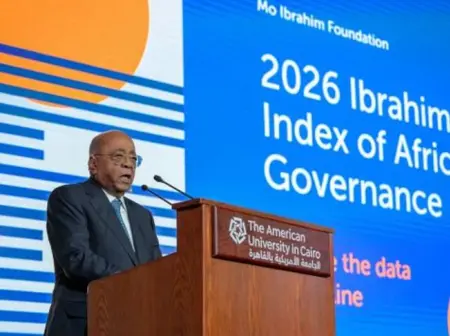
The Mo Ibrahim Foundation released the report on October 31, 2026. Kenya scored above the continental average of 50.1 and Eastern Africa’s regional average of 47.5.
Kenya’s overall score rose by 0.9 points between 2016 and 2025. Its strongest improvement came in Foundations for Economic Opportunity, which gained 4.1 points to reach 65.3. Participation, Rights, and Inclusion scored 62.4, while Human Development reached 62.3.
Security and Rule of Law was the country’s biggest concern. Its score fell by 4.2 points to 54, making it the only one of the index’s four main categories to decline.
The assessment also identified weaknesses in public procurement. Kenya scored 29.7 in that area after losing 36.4 points over the review period. Other indicators that declined included public perceptions of the rule of law, which fell to 37.3; media freedom, at 56.6; and public perceptions of anti-corruption efforts, at 27.9.
Kenya improved in several other areas, including protection against discrimination, internet and energy access, and education completion.
Seychelles led the continental rankings, followed by Mauritius, Cabo Verde, Botswana, and South Africa. Namibia, Morocco, Senegal, and Ghana joined Kenya in the top 10.
The index assesses governance in 54 African countries using 96 indicators drawn from 51 independent data sources. It covers four areas: Security and Rule of Law; Participation, Rights and Inclusion; Foundations for Economic Opportunity; and Human Development.
South Sudan ranked last at 54th, behind Somalia, Sudan, Eritrea, the Central African Republic, Niger, the Democratic Republic of Congo, Chad, Libya, and Guinea-Bissau.
The World Bank details these findings in its November 2026 Kenya Economic Update, which examines how governance weaknesses affect public spending, economic growth, and job creation.
“With the same cost metric as the Tanzanian line, Kenya could have saved up to US$900 million in initial construction costs,” the report states.
The World Bank estimates that governance issues, including non-competitive contracting, land speculation, and fraudulent land titles, valuations, and compensation payments, account for at least 30 percent of the potential savings. The report clarifies that this figure represents estimated potential savings rather than definitive proof of stolen or recoverable funds.
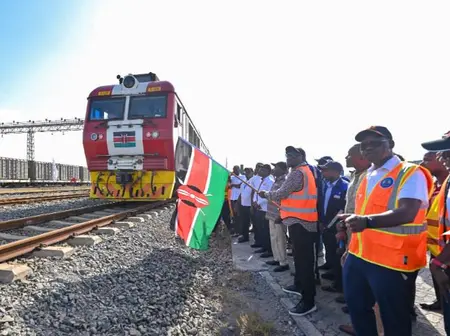
The report puts construction costs at US$7.6 million per kilometre for Kenya’s Mombasa–Nairobi railway, compared with US$5.7 million for Tanzania’s Dar es Salaam–Dodoma line and US$5.3 million for the Djibouti–Addis Ababa railway.
Kenya spent about Ksh247 million more per kilometre than Tanzania – a 33 per cent premium over the Tanzanian benchmark, and Ksh299 million more per kilometre than the Djibouti–Addis Ababa line. Applying Tanzania’s rate per kilometre to the Mombasa–Nairobi route shows potential savings of US$900 million, or roughly Ksh116 billion to Ksh117 billion.
The World Bank says governance weaknesses account for at least 30 percent of that estimated potential saving. It cites direct contracting rather than competitive tendering, land speculation, and suspected fraud related to land titling, valuation, and compensation.
The lender warns that limited competition can weaken scrutiny of contract prices and create opportunities for inflated costs.
“Once contracts are awarded to connected companies, this also raises the likelihood of further collusion and cost markups during project execution,” the report states.
The comparison has limits. Kenya’s SGR is diesel-powered, while the Tanzania and Djibouti–Addis Ababa lines are electrified, which requires additional infrastructure. The projects also differ in specifications, construction periods, terrain, and other physical conditions.
All three are single-track railways. The Djibouti–Addis Ababa line was built between 2011 and 2016 and has an elevation gain of about 2,300 metres. Kenya’s Mombasa–Nairobi line was constructed between 2014 and 2017, with an elevation gain of about 1,600 metres. Tanzania’s Dar es Salaam–Dodoma line was built between 2017 and 2024, with an elevation gain of approximately 1,060 metres.
The Ethiopian line therefore crosses more mountainous terrain and has a greater elevation gain than Kenya’s railway. The World Bank also acknowledges that land acquisition costs were significantly higher in Kenya but says they do not fully explain the cost difference. Tanzania’s railway was built later and to a higher specification, including electrification.
The report does not conclude that every additional shilling spent on Kenya’s SGR resulted from corruption. Rather, it identifies governance weaknesses as one explanation for part of the estimated potential savings.
The findings echo Transparency International Kenya’s June 2026 Corruption Risk Assessment of Infrastructure Projects, which examined vulnerabilities in major public investments, including the SGR. The World Bank cites the assessment’s findings on risks involving procurement transparency, public participation, oversight, and access to project information.
The concerns are particularly significant for infrastructure financed through public borrowing, as construction costs affect taxpayers through debt repayments and other fiscal commitments.
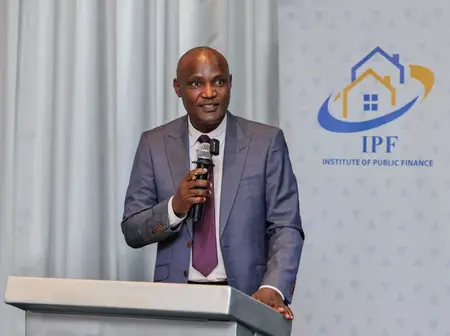
The government awarded contracts worth Sh19 billion in the first quarter of the current financial year through the electronic government procurement (e-GP) system, according to National Treasury Cabinet Secretary John Mbadi.
This he said, surpasses the value of tenders processed for the entire previous financial year.
The National Treasury says the platform is gaining traction following its nationwide rollout in July 2025, with 4,950 contracts awarded in the first three months compared with about 4,000 contracts worth Sh18.2 billion recorded in the whole of the 2025/26 financial year.
The growing uptake comes amidst increased resistance from individuals’ national treasury says are cartels
The e-GP system project manager for the e-GP system, Lawrence Kanyinyi, said the platform was recording increased activity, with between 700 and 900 tender notices available to suppliers on a daily basis.
“We are looking at having 4,950 contracts currently after our first quarter, and in terms of the amount, we are looking at approximately Sh19 billion,” Kanyinyi said.
The system, which became mandatory for government procuring entities from July 1, 2025, digitises the procurement process from supplier registration and tender advertising to bidding, evaluation, contract awards and contract management.
Treasury cabinet secretary John Mbadi said so far they have registered approximately 50,000 suppliers and is targeting 100,000 by the beginning of the next financial year, in a move expected to widen participation in government tenders.
“I am encouraged by the strong progress recorded, with overall system adoption standing at 78.8 per cent as at 31st July 2026. The respective adoption rates across institutions are Ministries, Departments and Agencies (MDAs) are at 96.75 per cent, County Governments have adopted 100,” said Mbadi.
He added that State Corporations, SAGAs and Funds are at 94 adoption and TVETs, Tertiary Institutions and TTCs are at 81.9per cent
However, the CS noted that government is still working to address technical and institutional challenges, including integrating the platform with the Integrated Financial Management Information System (IFMIS).
Kanyinyi said development and testing of the integration had been undertaken, with the remaining step being deployment within the IFMIS environment.
The integration is expected to link procurement plans with approved budgets, reserve funds before procurement begins and connect purchase orders, invoicing and asset management to government financial records.
The Treasury has partnered with the Institute of Public Finance (IPF) through a memorandum of understanding to strengthen implementation, capacity building and resource mobilisation for the digital procurement reforms.
IPF chief executive Daniel Ndirangu said the success of the platform should not be measured solely by the number of suppliers registered or contracts processed, but by whether it delivers better value for public money.
“The second one is that there's value for money through stronger competition, lower cost and fewer opportunities for inflated prices, collusion or waste,” Ndirangu said.
Ndirangu said IPF would support the Treasury through institutional capacity building, supplier sensitisation, procurement governance research and technical assistance.
Mbadi said the government was working with development partners to address weaknesses that could undermine the system's effectiveness, including cybersecurity, data integrity, system reliability and inadequate capacity in some public institutions.
“Procurement information must be accurate, must be secure, and must be accessible to authorised users only, with appropriate safeguards for confidential information,” Mbadi said.
He noted that some county governments faced staffing and technical capacity constraints, which had affected the onboarding of personnel responsible for operating the platform.
The government is seeking technical assistance in cybersecurity, systems integration, data quality and performance monitoring, alongside training for procurement professionals, accounting officers, county officials and suppliers.
Mbadi also acknowledged resistance to the transition from the manual procurement system, saying some individuals who benefited from the old arrangement were still attempting to frustrate implementation.
He said some public entities had continued seeking exemptions from procurement requirements, particularly as the country approaches an election period, when pressure to fast-track spending could increase.
The government is also developing a second phase of the platform that will introduce electronic auctions, e-catalogues, an e-marketplace and performance ratings for suppliers and procuring entities.
You are likely to make more money running a business in Tana River, West Pokot, Kajiado or Mandera, a new survey on the status of family businesses shows.Ranking counties by the proportion of household businesses that make over Sh50,000 monthly, the survey by the Kenya National Bureau of Statistics (KNBS) lists the Nairobi Metropolitan, parts of the Coast, Rift Valley and Northern Kenya at the very top, revealing parts of the country where enterprises flourish.
M-Pesa has been ranked Kenya's strongest brand for 2026, ahead of its parent Safaricom and a field of global and local names, in a consumer study that shows trust is now a bigger driver of buying decisions than price.The Superbrands East Africa ranking, based on research by Kantar, gave the mobile money platform a score of 91.909.
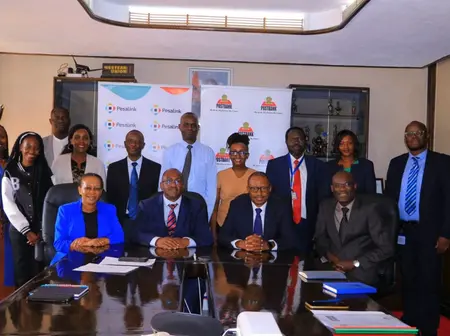
Pesalink and Postbank PLC have partnered to enable its agents to accept cash deposits from customers of participating banks through the Pesalink network. This collaboration will allow customers of participating financial institutions to deposit funds through any of Postbank’s over 600 agents and branch locations across Kenya, significantly expanding access points and enhancing financial convenience for millions of Kenyans.
Yellow Card, a leading global Stablecoin payments infrastructure provider, today announced that, in October, it completed the acquisition of GoMoney Sociedade Prestadora de Serviços de Ativos Virtuais Ltda. (GoMoney), a virtual asset service provider in Brazil.GoMoney has filed an application with the Banco Central do Brasil (BCB) for authorization to operate as a virtual asset service provider (sociedade prestadora de serviços de ativos virtuais) under Law No.
Kenyan business activity returned to growth in October as new orders increase sharply and expectations improved.Key findings of the Kenyan PMIOutput rises for first time in eight months amid sharp upturn in salesBusiness confidence strongest since early-2020Input cost inflation at near three-year highThe Stanbic Bank Kenya PMI signalled a renewed rise in business activity in October, the first for eight months, supported by stronger customer demand.
FanisiTech Implements Microsoft Dynamics 365 Business Central is the solution for Kenyan businesses looking for ERP Software. It is ideal for those businesses seeking to streamline operations, improve financial management and reduce administrative inefficiencies can benefit from integrated Enterprise Resource Planning (ERP) solutions.FanisiTech Limited is helping organisations achieve this through Microsoft Dynamics 365 Business Central, a business management platform that connects finance, inventory, procurement, sales and operations.
Kenyan exporters looking to expand beyond local markets, are finding reliable international buyers and distributors as one of the biggest challenges.Arikaart is helping make that process more informed by providing a platform that connects businesses with potential international trade partners, particularly across the Nordic and Baltic markets.