
NCE (Nairobi Coffee Exchange) trading session No.5, which took place this Tuesday, saw buyers pay US$ 6.70 Million (KSh 865 million) for 1,131,513 kilograms of coffee.This translates to an average of US$296 per 50kg bag, or roughly KSh 765 per kg of clean coffee, or about KSh 118 per kg of cherry, before milling, marketing and society deductions.
Category: Economy&Finance
-
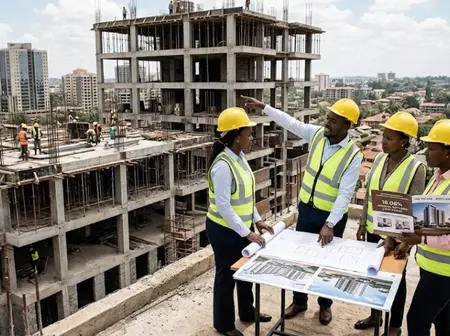
How Nairobi buyers are earning 18% a year from off-plan apartments
Kenyans buying apartments before construction begins are earning average annual investment returns of 18.06 per cent, outperforming property investors in several major international markets, according to a new HassConsult study.
The findings highlight the growing appeal of Nairobi’s off-plan property market, where buyers commit to apartments before completion, pay in instalments and potentially benefit from rising property values as construction progresses.
The report, International Investment Outperformance: The Kenyan Residential Property Market, examined eight Nairobi residential developments marketed between 2019 and 2023 and compared their performance with eight international markets, including the United States, Britain, France, Switzerland and Canada.
Its central finding is that Kenya’s off-plan buying model generates returns that conventional property price indexes may fail to capture.
Unlike traditional developments, where developers finance construction before selling completed units, Kenya’s off-plan model allows buyers to commit money before a project is finished.
Buyers typically pay deposits of between 10 and 30 per cent, followed by instalments linked to construction milestones.
This arrangement gives developers access to financing while allowing buyers to secure apartments at agreed prices before completion.
The study describes the approach as a “sell-to-build” model that establishes demand before and during construction.
It argues that this structure helps address one of the construction industry’s biggest challenges: cash-flow shortages.
“Construction and development have the highest bankruptcy rate of any sector, felled repeatedly on poor and delayed cashflow,” the report states.
For investors, the potential gains come from securing an early purchase price, benefiting from capital appreciation during construction and earning rental income after completion.
HassConsult found that one-bedroom apartments delivered the strongest capital appreciation among the units examined.
Across four developments purchased in 2019, one-bedroom apartments appreciated by an average of 47.25 per cent by the time of sale.
Two-bedroom units gained 33.2 per cent, while three-bedroom apartments appreciated by 25.9 per cent.
The gains compared with an 18.66 per cent increase in prices across the wider completed-apartment market over the same period.
Escada, located on Rhapta Road in Westlands, recorded particularly strong performance, with one-bedroom apartments appreciating by 78 per cent.
The findings suggest that smaller apartments offered stronger price growth in the selected developments, although performance varies depending on location, design and market demand.
Capital appreciation was only part of the investment equation.
Across five completed off-plan developments purchased in 2019 and 2020, unfurnished one-bedroom apartments generated annual rental yields ranging from 11 to 19 per cent, averaging 14 per cent.
That was almost double Kenya’s overall apartment rental yield of 7.28 per cent recorded over the 2019–2025 period.
Combining rental income with annualised capital appreciation, HassConsult calculated average annual investment returns of 18.06 per cent.
“Together, the unfurnished rental yields and annualised capital appreciation for these offplan investments amounts to an average return on investment of 18.06 per cent per year,” the study states.
The report says the performance exceeds returns in South Africa by 30 per cent and is two to three times those recorded in several other international property markets.
However, the 18.06 per cent figure should not be confused with a guaranteed return or the profit earned on a buyer’s initial deposit. Investors’ actual returns depend on the amount paid, financing costs, taxes, maintenance and rental occupancy.
The COVID-19 pandemic tested the resilience of Kenya’s property market as job losses, salary cuts and economic uncertainty affected household purchasing power.
Some prospective buyers reconsidered their commitments, while developers faced pressure to maintain construction schedules.
Nevertheless, HassConsult found that the market remained resilient, with buyers increasingly favouring developers with established track records and visible construction progress.
“Beyond the immediate shock caused by the pandemic, buyer defaults in Kenya’s offplan developments continue to be minimal,” the study states.
The report, however, warns that projects can still fail where developers underestimate demand or lack proper financial planning.
It notes that developments “can still founder where they are insufficiently anchored in strong demand studies and financial planning.”
The expansion of Kenya’s middle-income and high-income population has helped support demand for residential property.
According to Kenya National Bureau of Statistics data cited in the HassConsult study, the number of Kenyans earning more than Ksh100,000 monthly increased from fewer than 100,000 in 2016 to nearly 400,000 by 2023.
Bank employees were among the early buyers after lenders introduced staff mortgage schemes in 2012. Professionals in education, healthcare, trade and agriculture subsequently expanded the pool of potential buyers.
The report also points to the difference between renting larger homes and purchasing apartments.
Average monthly rent for detached houses stands at Ksh238,219, while apartments sell for between Ksh5 million and Ksh15 million.
For many salaried Kenyans, remaining in rented accommodation while paying for an apartment through instalments offers a route to property ownership without immediately purchasing a larger home.
Despite the attractive returns, buying off-plan apartments in Nairobi carries significant risks.
Construction delays, developer insolvency, title complications and weaker-than-expected rental demand can undermine projected profits.
The study’s findings are also based on eight selected developments and should not be treated as a guarantee of performance across the entire Nairobi real estate market.
Investors need to assess a developer’s track record, ownership documentation, project financing, location and potential rental demand before committing money.
HassConsult’s broader conclusion is that Kenyan residential property has delivered stronger returns and greater price resilience than several international markets.
For buyers, however, the opportunity is not simply about paying a deposit before construction begins. It is about identifying a credible developer and a property with sustainable demand.
-

Bamburi Cement pushes low-carbon products to drive Kenya’s green industrialisation
Bamburi Cement has called on the government and private sector to embrace low-carbon cement products in construction projects as Kenya steps up efforts to promote green industrialisation and sustainable infrastructure development.
The company says wider adoption of environmentally friendly cement could significantly reduce carbon emissions in the construction industry while supporting the country’s climate commitments.
Speaking during a Green Industrialisation and Manufacturing panel at the ongoing Kenya Industrialisation Summit 2026, Bamburi Cement Sustainability and Corporate Affairs Director Eng Jane Wangari said the manufacturer had already developed products designed to reduce the industry’s environmental footprint.
Wangari urged the government to introduce public procurement policies that give higher scores to construction materials with lower carbon emissions, arguing that such measures would encourage the uptake of locally manufactured green products.
She also proposed the inclusion of low-carbon cement in the Central Bank of Kenya’s Green Finance Taxonomy to promote sustainable construction practices.
Wangari highlighted Bamburi DuraCem Cement, a locally manufactured product designed for large-scale and marine construction projects, as an example of how the industry can transition towards greener production.
The 42.5-grade cement is formulated to resist sulphates and chlorides, making it suitable for demanding construction environments.
According to the company, its manufacturing process incorporates alternative fuels, including rice husks and waste tyres, helping reduce carbon dioxide emissions by 64 per cent compared to ordinary Portland cement.
“As cement manufacturers, we are actively playing our net-zero part to facilitate green manufacturing, affirming that it is no longer a pipe dream to deliver products with lower carbon dioxide emissions,” Wangari said.
She added that a 50-kilogramme bag of DuraCem saves approximately 25 kilogrammes of carbon dioxide emissions compared to ordinary Portland cement.
“That is roughly 25 kg of carbon dioxide saved per bag, about the same as burning 10 litres of petrol,” she said.
The company cited the construction of Makupa Bridge in Mombasa as an example of how low-carbon cement can support major infrastructure projects.
Wangari said the project had saved more than 10 million kilogrammes of carbon dioxide through the use of DuraCem, with the bridge also designed to withstand exposure to seawater.
Bamburi Cement is also advocating for the adoption of cement standards and verified Environmental Product Declarations (EPDs) to help consumers and construction stakeholders independently establish the environmental impact of building materials.
The company recently indicated that it was positioning itself to supply more than one million tonnes of cement for the project, including low-carbon DuraCem products.
Bamburi has also supplied cement and concrete solutions for several major national projects, including Talanta Sports Stadium, the Standard Gauge Railway, Rironi-Mau Summit Road, Dongo Kundu Highway, Mwache Dam and Thwake Dam.
The manufacturer is separately pursuing an expansion strategy aimed at increasing its production capacity to meet growing demand for construction materials.
-

The Shillings That Disappear Before They Reach the Classroom
A public budget looks impressive until you ask where the money finally lands. On paper, it can finance classrooms, medicine, road maintenance, and clean water. In practice, each inflated contract and rigged award leaves a smaller amount available for the very people who funded the budget through taxes.
-

Government awards Japanese firm Shs98.4 billion contract to build new Karuma Bridge, construction to take three years
Government has awarded a Shs98.4 billion (approximately $24 million) contract to Japan’s ZENITAKA Corporation to construct a new bridge at Karuma along the Kampala-Gulu highway.The project, being undertaken by the Ministry of Works and Transport, is expected to take three years to complete.
-
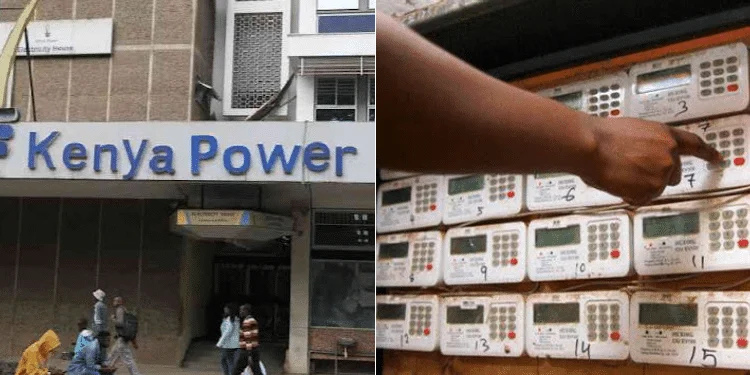
World Bank Lifts Lid on Deals Behind Kenya’s High Electricity Bills
The World Bank has exposed questionable electricity contracts, alleged bribery involving Kenya Power employees and undisclosed ownership of power generation companies, raising fresh concerns over the factors driving up electricity bills for Kenyan households and businesses.In its November 2026 Kenya Economic Update, the lender said Kenya’s electricity costs were significantly higher than those of several comparable economies, despite the country’s progress in expanding access to power and investing in renewable energy.
-

Safaricom M-PESA Revenue Surpasses KSh100 Billion as Digital Ecosystem Gathers Pace
Safaricom Half-Year 2027 financial results underscore the growing strength of its integrated telecommunications and financial services ecosystem, with M-PESA half-year revenue crossing the KSh100 billion mark for the first time.Group Financial Performance– Safaricom Shareholder profit increased 35.9% to KSh58.20Bn, exceeding analysts’ KSh54.32Bn forecast.
-

7 Nairobi Estates Where Landlords Have Lowered Rent for Tenants
A new property report reveals a mixed rental market in Nairobi, with some established suburbs seeing rising rents while several estates and satellite towns saw declines.According to the HassConsult House Price Index Quarter Three Report 2026, suburban rental asking-price growth accelerated to 2.7% from 1.4% in the previous quarter, approaching a three-year high.
-

Chivayo’s ex-wife strikes deal with his sister to manage late tycoon’s estate
The former wife of Zimbabwean businessman Wicknell Chivayo is set to take joint control of his estate alongside his sister, in a development that could reshape the handling of his multimillion-dollar fortune and an outstanding US$25 million (about Sh3.2 billion) matrimonial property dispute.Sonja Louise Madzikanda and Esther Chivayo reached an agreement to jointly manage the estate of the late businessman, who died in a helicopter crash alongside his wife, Lucy Muteke, in September.
-
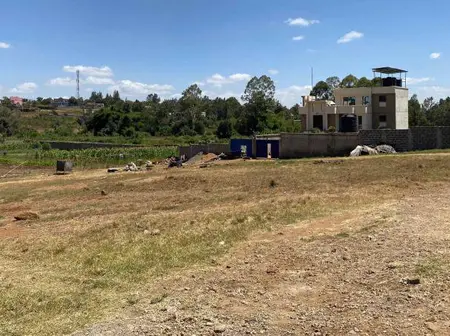
Ruiru, Thika and Ruaka Lead Nairobi Satellite Towns in Land Price Growth
GrowthRuiru, Thika and Ruaka were among the leading Nairobi satellite towns in annual land price appreciation in the third quarter of 2026, with Ruiru recording the highest.Ruiru, Thika and Ruaka were among the leading Nairobi satellite towns in annual land price appreciation in the third quarter of 2026, with Ruiru recording the highest yearly increase at 11.5 per cent.