
The listing promises passive income. The accounts reveal a business that depends on one search ranking, one affiliate programme, and an owner who has politely excluded half the work from the description.Buying an existing digital asset can be sensible. It may provide customers, code, content and earnings more quickly than starting from zero.
Category: Economy&Finance
-

Traders locked out of Kitale market as Ruto, Natembeya tensions spill over
The power struggle over control of Kitale's multi-million-shilling Masinde Muliro Modern Market escalated on Tuesday after heavily deployed police officers blocked traders allocated stalls by the Trans Nzoia County Government from accessing the facility.The standoff, which persisted on Wednesday, exposed deepening divisions between Governor George Natembeya's administration and the national government over the management and allocation of trading spaces at the market, which was commissioned by President William Ruto on October 16.
-

Recurring Revenue Is Wonderful Until the Customers Recurringly Leave
A subscription turns a sale into a continuing promise. The customer agrees to pay again because the business agrees to remain useful again. Calling ordinary repeat billing a recurring-revenue strategy does not change that bargain.The appeal is understandable: more predictable receipts can support staffing, inventory and investment.
-

Govt Announces KSh 10 Million Fine for Businesses With Unfair Terms for Suppliers
PAY ATTENTION: Mark TUKO.co.ke as a preferred source, and our content will appear higher in your Google feed!
Elijah Ntongai is an experienced editor at TUKO.co.ke, with more than four years in financial, business, labour and technology research and reporting. His work provides valuable insights into Kenyan, African, and global trends.
The Competition Authority of Kenya (CAK) has put retailers on notice over commercial practices that could amount to abuse of buyer power, warning that businesses found in violation of the Competition Act face fines of up to KSh 10 million, imprisonment of up to five years, or both.

Director-General David K. Kemei issued the cautionary notice on November 11, 2026, after the Authority's market surveillance identified a pattern of concerning conduct in Kenya's retail sector.

Qatar Law: Kenyans, other foreigners risk KSh 350k fine over reporting passports and permits
CAK flagged specific practices that retailers have been imposing on suppliers, including transfers of costs and risks, demands for promotional contributions and rebates, extended payment periods, and unfavourable terms buried in joint business plans.
The Authority noted that these arrangements, in many cases, appear to have been dictated rather than genuinely negotiated.
Under the Competition Act Cap 504, buyer power refers to the ability of a purchaser to extract more favourable terms from a supplier or impose disproportionate costs and risks on them.
The Act identifies several forms of conduct that may constitute abuse, including unilateral contract termination, refusal to receive goods without justification, and restrictions that prevent suppliers from selling to competing buyers.
CAK stated it is conducting ongoing market surveillance and will launch full investigations where there is sufficient evidence of a breach.
Where violations are confirmed, the Authority can pursue a criminal penalty of up to KSh 10 million, a prison term not exceeding five years, or both.

KRA proposes new monthly tax exemption for parents, guardians of PWDs
It may also impose an administrative financial penalty of up to 10% of the offending business's gross annual turnover for the preceding year.
Kemei stressed that the existence of a signed supply agreement does not automatically mean the terms were fairly negotiated or that the conduct is lawful.
The Authority also clarified that it has never issued a directive requiring suppliers to enter into joint business plans with buyers, and that such arrangements must remain voluntary.
Suppliers were urged to preserve records, including draft and final agreements, correspondence, and payment documentation.
Those who believe they are being subjected to unfair terms can file a complaint with CAK at complain@cak.go.ke or through the Authority's e-filing portal.
Retailers were directed to review their commercial practices and ensure all supply agreements are rooted in genuine, good-faith negotiation and full legal compliance.
In other news, the Kenya Revenue Authority (KRA) has directed multinational companies covered by the Minimum Top-Up Tax framework to declare their compliance status by November 30, 2026, warning that failure to meet the requirements could result in non-compliance.

Kenyan newspapers review: Govt unveils sweeping plan to curb alcohol crisis, drinking age is raised
Introduced through the Tax Laws (Amendment) Act, 2024, the tax was operationalised by regulations gazetted on September 18, 2026, under Legal Notice No. 189.
Affected companies must notify the Commissioner for Large and Medium Taxpayers through mttsupport@kra.go.ke, providing their group name, the country of their ultimate parent entity and details, including PINs, of all constituent entities operating in Kenya.
They must also file returns declaring any tax liability, settle amounts due within the stipulated timelines and comply with the international GloBE Information Exchange Agreement.
Source: TUKO.co.ke
-

The Blockchain Transfer Is Cheap Until the Money Has to Become Rent
A supplier cannot usually pay wages with a transaction hash. For a small exporter, a cross-border payment succeeds when usable funds arrive in the right account at a competitive total cost.That distinction matters in debates about decentralized finance. A stablecoin transfer, a decentralized lending pool and a smart contract are different services with different risks.
-

Profitability Is Becoming the Founder’s Most Persuasive Pitch
An investor can admire a growth curve and still decline to finance it. When external money is uncertain or expensive, founders need a second argument: customers pay enough to support the operation.Bootstrapping and venture capital solve different problems. A business with rapid product development, large upfront research costs and a scalable market may need equity long before it generates cash.
-

A Weak Currency Can Turn a Full Warehouse into a Margin Emergency
The importer agrees on a selling price in shillings and pays the supplier in dollars. Between the quotation and settlement, the exchange rate moves. Nothing changes inside the warehouse, yet part of the expected profit disappears.Take an illustrative order costing $10,000. At KSh130 per dollar, its purchase cost is KSh1.3 million.
-

KRA new tax deadline: How late filing could cost Kenyans Ksh2,000 or more
Kenyans who fail to submit their annual income tax returns by the revised April 30 deadline risk a minimum Ksh2,000 penalty, with those owing taxes facing additional charges and monthly interest as the Kenya Revenue Authority (KRA) tightens compliance requirements from 2027.
The change could catch taxpayers off guard, particularly those accustomed to submitting their returns before the traditional June 30 deadline.
Under the new arrangements introduced through the Finance Act 2026, individual taxpayers will have until April 30 to submit their annual income tax returns, replacing the previous June 30 deadline.
The revised timeline means individuals who fail to adjust their filing schedules could face financial penalties for submitting their returns late.
KRA’s penalty structure provides for a late filing fine of five per cent of the tax due or Ksh2,000, whichever is higher.
This means that taxpayers who owe no income tax can still face a Ksh2,000 penalty if they have an active Income Tax Obligation and fail to submit their required returns.
The amount charged depends on the taxpayer’s outstanding tax liability.
For individuals with no tax payable, the minimum late-filing penalty is Ksh2,000.
However, those with outstanding tax liabilities could pay considerably more because the penalty is calculated at five per cent of the tax due.
For instance, an individual with Ksh100,000 in tax due would face a Ksh5,000 late-filing penalty, while someone owing Ksh500,000 would face Ksh25,000.
The penalty is imposed for failing to submit returns within the statutory period, regardless of whether the taxpayer eventually files the declaration.
Apart from late filing penalties, taxpayers who fail to settle their tax bills on time face additional financial consequences.
KRA imposes a late-payment penalty of five per cent of the outstanding tax, alongside interest of one per cent per month until the amount is paid.
For example, a taxpayer with Ksh100,000 in unpaid tax could incur a Ksh5,000 late-payment penalty and Ksh1,000 in interest for every month the liability remains unpaid.
These charges are separate from the penalty for failing to file returns.
Consequently, taxpayers who both fail to file their returns and leave their tax liabilities unpaid could face multiple charges.
The revised tax arrangements also introduce a separate deadline for taxpayers submitting nil returns.
Under the announced changes, individuals required to file nil returns will have until January 31, 2027, to submit their declarations.
This is earlier than the April 30 deadline applicable to other individual taxpayers.
A nil return applies to individuals who have a filing obligation but report no taxable income for the relevant year.
Kenyans with active income tax obligations should therefore establish whether they are required to file a nil return rather than assume that having no salary or business income automatically removes their filing responsibility.
Meanwhile, taxpayers with outstanding historical tax liabilities have until December 31, 2026, to benefit from the ongoing tax amnesty programme.
The programme provides a 100 per cent waiver of qualifying penalties, interest and fines relating to tax liabilities accumulated up to December 31, 2025.
However, taxpayers with outstanding principal tax must settle the qualifying amount by the amnesty deadline to benefit.
Those with outstanding nil returns and no principal tax liability can also qualify for an automatic waiver of late-filing penalties after submitting all outstanding returns.
The programme allows taxpayers to regularise their tax records before the revised filing arrangements take effect.
KRA has encouraged taxpayers to familiarise themselves with the new filing schedule, check their outstanding obligations on iTax and submit their returns within the prescribed timelines to avoid additional costs.
-
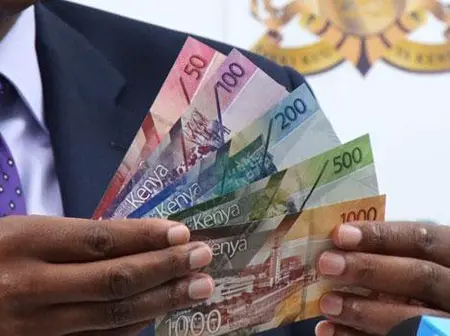
Gov’t Disburses Ksh1.69 Billion to 423,520 Households [Details]
DisbursedThe government has disbursed Ksh1.69 billion to 423,520 households under the Cash Transfer for Orphans and Vulnerable Children (CT-OVC) Programme, as part of its ongoing Inua Jamii initiative.The government has disbursed Ksh1.69 billion to 423,520 households under the Cash Transfer for Orphans and Vulnerable Children (CT-OVC) Programme, as part of its ongoing Inua Jamii initiative.
-

The Tax Bill That Arrives Before the Profit
A business can survive a demanding tax rate more easily than a tax system it cannot predict. Rates can be modelled. Unexpected assessments, overlapping charges and contradictory instructions turn the budget into a guessing competition with penalties.The sharpest distinction is between taxing turnover and taxing profit.