
The Retail Trade Association of Kenya (RETRAK) has called for a coordinated crackdown on illicit trade, urging enforcement agencies to target the supply networks behind smuggled, counterfeit and untaxed goods.The association wants the Kenya Revenue Authority (KRA), Anti-Counterfeit Authority (ACA), Kenya Bureau of Standards (KEBS) and National Police Service to establish a joint enforcement plan, identify a lead agency and provide timelines for reporting progress.
Category: Economy&Finance
-

RETRAK Urges Multi-Agency Crackdown on Illicit Trade Networks
The Retail Trade Association of Kenya (RETRAK) is calling for decisive, coordinated action against illicit trade, urging enforcement agencies to move beyond seizures at retail outlets and dismantle the supply networks behind smuggled, counterfeit and untaxed goods.RETRAK, whose members include, large and small retailers, is urging the Kenya Revenue Authority (KRA), Anti-Counterfeit Authority (ACA), Kenya Bureau of Standards (KEBS) and National Police Service to agree on a joint enforcement plan, identify the lead agency and publish a clear timeline for reporting progress.
-
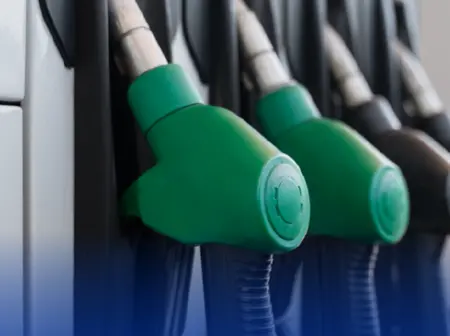
Oil prices fall, but will Kenyans get cheaper fuel? EPRA decision set for November 14
International oil prices have retreated sharply, but Kenyan motorists face a crucial question as the Energy and Petroleum Regulatory Authority (EPRA) prepares to announce new pump prices on November 14: will the decline translate into cheaper petrol, diesel and kerosene, or will other import costs eat into the expected relief?
With only three days remaining before the announcement, developments in the international petroleum market have raised hopes of a reversal of the October fuel price increases that pushed petrol in Nairobi to Ksh226.96 per litre and diesel to Ksh227.76.
The Central Bank of Kenya (CBK) recorded a significant decline in Murban crude oil prices, while the Kenyan shilling maintained its stability against the US dollar.
However, a fresh assessment of the international oil market by the United States Energy Information Administration (EIA) suggests that the improvement may not be enough to guarantee a substantial reduction at local filling stations.
The difference between falling crude prices and the actual cost of importing refined petroleum products could prove decisive in EPRA’s November 14 announcement.
According to the CBK’s Weekly Bulletin published on November 6, Murban crude oil prices declined from USD 110.46 per barrel on October 29 to USD 94.04 on November 5.
The USD 16.42 reduction represents a 14.86 per cent decline in seven days, offering a potentially favourable development for a country that relies heavily on imported petroleum products.
In its November 6 bulletin, the CBK attributed the movement to developments following the United States midterm elections and expectations of reduced risks of disruption to oil supplies from the Middle East.
“Murban crude oil prices declined to USD 94.04 per barrel on November 5, from USD 110.46 per barrel on October 29,” the regulator reported.
The decline is particularly significant because international petroleum costs are among the major components influencing the prices Kenyan consumers pay at filling stations.
However, another international market indicator provides a more complicated picture.
The EIA’s November 10 Short-Term Energy Outlook reported that Brent crude averaged USD 124 per barrel in October, its highest monthly average since July 2022.
Although Brent prices subsequently fell below USD 100 per barrel on November 4, the agency expects them to average approximately USD 100 in November and December.
The EIA attributed the continuing pressure to constrained oil flows, geopolitical risks and longer shipping routes.
The Brent and Murban figures represent different crude benchmarks and should not be treated as directly interchangeable. Nevertheless, together they illustrate how quickly international oil market conditions can change.
The international price decline comes at a critical point in Kenya’s monthly petroleum pricing calendar.
EPRA’s current prices, covering October 15 to November 14, pushed Nairobi’s maximum retail prices to Ksh226.96 for Super Petrol, Ksh227.76 for diesel and Ksh219.87 for kerosene.
The regulator increased petrol by Ksh12.93 per litre, diesel by Ksh9.90 and kerosene by Ksh28.49 in the October review.
But the latest fall in crude prices does not automatically translate into an equivalent reduction in Kenyan pump prices.
Under the Energy (Petroleum Pricing) Regulations, 2022, EPRA calculates the landed cost using the weighted average cost of qualifying imported petroleum cargoes discharged at the Port of Mombasa.
The relevant assessment period runs from the 10th day of the preceding month to the 9th day of the pricing month.
The regulator then factors in expenses such as port handling, storage, transportation, inventory financing, wholesale and retail margins, and applicable taxes.
This means the November review will reflect more than the latest international crude quotation.
In particular, the timing of imported cargoes, their actual acquisition costs and the exchange rate will determine how much of the international price decline can be reflected in domestic pump prices.
For motorists, this is an important distinction: a nearly 15% decline in Murban crude does not mean petrol prices will automatically fall by a similar percentage.
Currency movements provide another important consideration ahead of the announcement.
According to the CBK, the Kenyan shilling exchanged at Ksh129.96 against the US dollar on November 5, unchanged from October 29.
This stability could help prevent exchange-rate fluctuations from cancelling out some of the benefits of cheaper international petroleum imports.
The government’s proposed intervention through the Petroleum Development Levy stabilisation fund could also influence the final outcome.
Treasury Cabinet Secretary John Mbadi indicated that the government had deliberately avoided using the fund during the October review to preserve resources for the November pricing cycle.
Speaking during an interview with Ramogi FM on November 3, Mbadi said the government had anticipated higher international energy demand as European countries entered winter.
“So we projected that fuel prices in November might go up, so we did not use the funds last month so that we can use them this month to reduce the prices of fuel,” Mbadi said.
His remarks raised expectations that the government could deploy the available resources to cushion consumers during the November-December pricing cycle.
However, Mbadi did not disclose the amount available in the fund or how much would be allocated to each litre of petrol, diesel and kerosene.
The stabilisation intervention therefore remains an important variable rather than a confirmed reduction in pump prices.
The November 14 announcement will determine whether the recent international oil-price decline translates into tangible relief for Kenyan consumers.
Petrol motorists will be watching for a reversal of the October increase, while diesel users have additional reasons to follow the announcement.
Diesel is particularly important to Kenya’s transport and distribution networks, where fuel expenses influence the cost of moving agricultural produce, manufactured goods and other commodities.
Households using kerosene will also be watching closely following the substantial increase recorded in the previous review.
A reduction in petroleum prices could ease operating expenses for transporters and businesses. However, lower fuel prices would not automatically guarantee cheaper matatu fares, food or other household commodities.
For now, three developments offer some grounds for cautious optimism: the decline in Murban crude prices, the shilling’s stability and the government’s indication that it intends to use the stabilisation fund.
Against these is the uncertainty surrounding actual landed petroleum costs and continuing international supply pressures.
EPRA is expected to publish the new maximum retail prices on November 14, with the revised rates taking effect on November 15 for the next monthly pricing cycle.
The real test will be whether the international oil-price retreat is reflected in Kenya’s import costs strongly enough to bring down the record-high pump prices facing motorists.
-

Nigeria targets increased government financing for NTDs elimination in 2027 budgets
Nigeria’s national and state governments aim to enhance budget allocations for tackling neglected tropical diseases (NTDs) in their 2027 budget cycle, as part of the country’s ambition to generate sustainable, country-led funding models for NTD elimination.Following the annual High-Level Meeting on NTDs held in Abuja in late October, the Federal Ministry of Health reported that 23 states created dedicated budget lines for NTDs in 2026.
-

Vodacom gains Sh181bn from taking control of Safaricom
Vodacom Group Limited has booked a gain of Sh181.8 billion from taking control of Safaricom, highlighting the benefits to the South African multinational, which raised its ownership in the Kenyan telco to 55 percent from the previous 35 percent.
The multinational says the deal not only converted Safaricom from an associate to a subsidiary but also raised its effective ownership in the businesses held by the Nairobi Securities Exchange-listed firm including M-Pesa Africa.
-
Mutua Wants to Start a Digital Taxi Business: How Asset Financing Can Help Him Own His First Car
For Alex Mutua, owning a car has always meant more than achieving a personal milestone. His dream is to own a vehicle, use it to offer taxi services, earn a living, and gradually build his own business.After seeing the rising demand for digital taxi services in Kenya, Mutua believes he can turn his passion for driving into income.
-
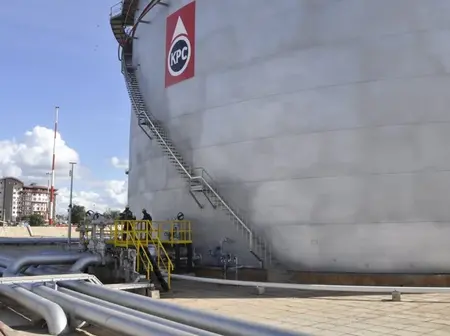
Court sets date to hear petition challenging Kenya Pipeline share sale to Dangote-linked firm
Listen to articleFrancis Awino is challenging the circumstances under which institutional investors and pension funds reportedly disposed of their shares in KPC to Dangote East Africa Petroleum Refinery and Petrochemicals SEZ.The High Court has given the government and other institutions involved in the reported sale of a 24.76 per cent stake in the Kenya Pipeline Company (KPC) to an entity linked to Nigerian billionaire Aliko Dangote 14 days to explain the transactions.
-
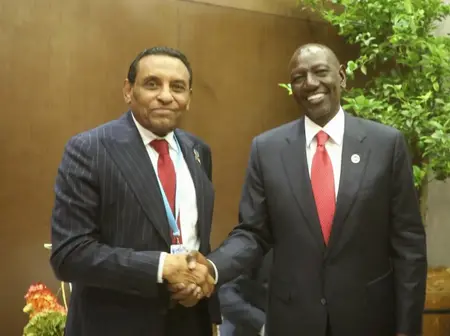
Kenya welcomes Sudan’s decision to lift 20-month ban on tea imports
Listen to articleRuto welcomed the move, saying it would restore access to an important destination for Kenyan tea and help exporters recover business opportunities lost during the restriction.Kenya has welcomed Sudan’s decision to lift a 20-month ban on Kenyan tea imports, ending a trade restriction that had cut off local exporters from one of their traditional markets and disrupted shipments worth billions of shillings.
-

How Fanikisha is supporting women in business with banking and insurance
Picture a woman who starts with a roadside kiosk or who opens a small roadside kiosk. Over the years the business is broken into once and loses stock, and a county clean-up exercise demolishes her stall.Each time her business is raided, she rebuilds. A decade on, she operates a regional distributor of fast-moving consumer goods, with a fleet of trucks, warehouses and dozens of employees.
-
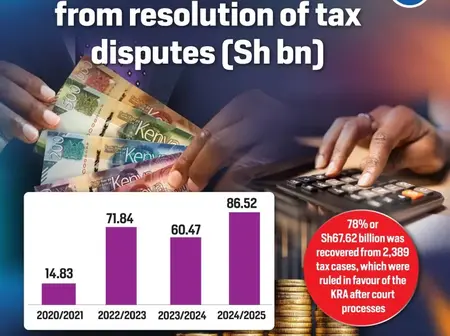
Amount recovered from resolution of tax disputes(Shbn)
The Kenya Revenue Authority (KRA) recovered Sh86.52 billion through tax dispute resolutions in the 2024/2025 financial year, reflecting a sharp increase in revenue collection efficiency.
According to data from KRA, 78% of the total revenue—amounting to Sh67.62 billion—was recovered after 2,389 tax cases were decided in favor of the tax collector through court processes.
The latest collection performance represents significant growth compared to previous fiscal years, rising from Sh14.83 billion in 2020/2021, Sh71.84 billion in 2022/2023, and Sh60.47 billion in 2023/2024.