Category: Economy&Finance

  • Govt extends Kenya’s petrol, diesel sulphur limit for 6 months amid Middle East crisis

    Govt extends Kenya’s petrol, diesel sulphur limit for 6 months amid Middle East crisis

    Govt extends Kenya’s petrol, diesel sulphur limit for 6 months amid Middle East crisis

    The Kenyan government has extended the temporary adjustment of sulphur limits in petrol and diesel for another six months, citing uncertainty in the Middle East and disruptions to global petroleum supply chains.

    The extension allows a maximum sulphur content of 50 milligrams per kilogram (50mg/kg) in both petrol and diesel under the applicable East African fuel standards.

    Investments, Trade and Industry Cabinet Secretary Lee Kinyanjui announced the decision on Wednesday, November 11, 2026, following a request from the Ministry of Energy and Petroleum and a recommendation by the National Standards Council.

    In a press statement, the ministry said the decision followed a technical assessment and monitoring of geopolitical developments in the Middle East, which have continued to affect international petroleum supply chains.

    The government specifically cited disruptions affecting the Strait of Hormuz, a strategic shipping route through which a significant share of the world’s seaborne oil trade passes.

    “The extension is intended to widen available sources of compliant fuel and safeguard Kenya against supply shortages,” the ministry stated.

    Why Kenya has extended the fuel sulphur limit

    The extension is intended to give Kenya greater flexibility in sourcing fuel that meets the temporarily adjusted specifications as international supply conditions remain uncertain.

    The Strait of Hormuz is particularly important to global energy markets because disruptions along the route can affect oil shipments, international supply availability and petroleum market stability.

    Kenya’s government says the temporary adjustment is necessary to maintain uninterrupted fuel availability and protect the economy from potential supply disruptions.

    “This is a temporary measure intended to maintain uninterrupted fuel availability and protect economic stability,” the ministry said.

    Under the extended arrangement, petrol and diesel will be subject to a maximum permitted sulphur content of 50mg/kg.

    The adjustment applies to two fuel standards:

    Sulphur content is an important fuel-quality parameter. Higher sulphur levels can contribute to air pollution and increase sulphur-related emissions from vehicle exhausts.

    The 50mg/kg threshold therefore defines the maximum sulphur content permitted under the temporary adjustment. It does not mean that all fuel supplied to Kenya will necessarily contain that amount of sulphur.

    How long will the temporary fuel adjustment last?

    The government has approved the extension for a further six months.

    However, the arrangement could be reviewed before that period expires if international petroleum supply conditions improve.

    The ministry said the decision would be reviewed “at the end of the six-month period or earlier should global supply conditions improve.”

    This means the government will continue monitoring international developments before determining whether the temporary adjustment should remain in place.

    Will the extension affect EPRA petrol and diesel prices?

    The announcement does not introduce a new petrol or diesel pump-price adjustment.

    The decision concerns the permitted sulphur content of fuel under the applicable standards, not the retail prices charged to motorists.

    The Energy and Petroleum Regulatory Authority (EPRA) remains responsible for announcing regulated monthly maximum retail petroleum prices in Kenya.

    Motorists should therefore distinguish between the government’s temporary fuel-quality adjustment and EPRA’s separate monthly pricing decisions.

    For now, the government says its priority is to protect the country’s petroleum supply from potential international disruptions and ensure uninterrupted fuel availability.


  • Gov’t Extends Temporary Adjustment of Fuel Sulphur Limits

    Gov’t Extends Temporary Adjustment of Fuel Sulphur Limits

    thumbnail

    ExtensionThe Ministry of Investments, Trade and Industry has extended the temporary adjustment of sulphur limits for petrol and diesel by a further six months.The Ministry of Investments, Trade and Industry has extended the temporary adjustment of sulphur limits for petrol and diesel by a further six months.

  • Inside B2BHint, the Moldova Company Holding Records of Over 400 Million Businesses

    Inside B2BHint, the Moldova Company Holding Records of Over 400 Million Businesses

    thumbnail

    B2BHint, a technology company based in Moldova, built a business intelligence platform that lets users access information on more than 400 million company records across 188 jurisdictions worldwide.The platform brings together company registration details, directors, financial reports, ownership information and legal records from government registers in different countries.

  • High Court upholds CMA order to Suntra on Safaricom shares

    High Court upholds CMA order to Suntra on Safaricom shares

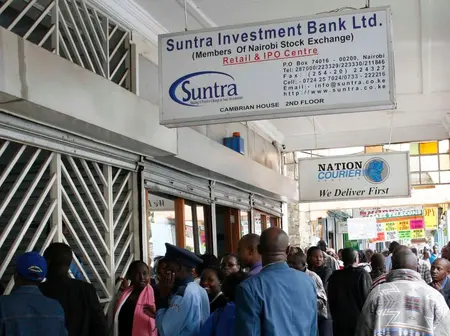
    The High Court has upheld a Capital Markets Authority (CMA) order directing stockbroker Suntra Investments to restore 212,500 Safaricom shares wrongly allocated to two individuals 18 years ago.

    The broker was also ordered to pay Sh2.4 million in accrued dividends to the rightful investor, Wanjugi Discount Stores Limited.

  • Co-op Bank Q3 net profit hits Sh27.4bn; interim dividend rises 50pc

    Co-op Bank Q3 net profit hits Sh27.4bn; interim dividend rises 50pc

    thumbnail

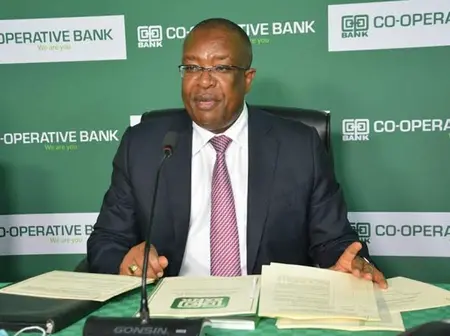
    Co-operative Bank of Kenya has reported a strong financial performance for the nine months ended September 30, 2026, with net profit rising by 27.2 per cent to KSh 27.4 billion, supported by increased lending, digital banking growth and improved asset quality.The Co-operative Bank has announced a profit after tax of Sh27.4 billion for the first nine months of the current financial year.

  • Co-op Bank Profit Jumps 27% to KSh 27.4 Billion as Assets Grow to KSh 907 Billion

    Co-op Bank Profit Jumps 27% to KSh 27.4 Billion as Assets Grow to KSh 907 Billion

    thumbnail

    Co-operative Bank of Kenya has reported a strong financial performance for the nine months ended September 30, 2026, with net profit rising by 27.2 per cent to KSh 27.4 billion, supported by increased lending, digital banking growth and improved asset quality.Co-op Bank profit after tax increased from KSh 21.6 billion recorded during the corresponding period in 2025 to KSh 27.4 billion in the first nine months of 2026.

  • Co-op interim dividend up 50pc as profit hits Sh27bn

    Co-op interim dividend up 50pc as profit hits Sh27bn

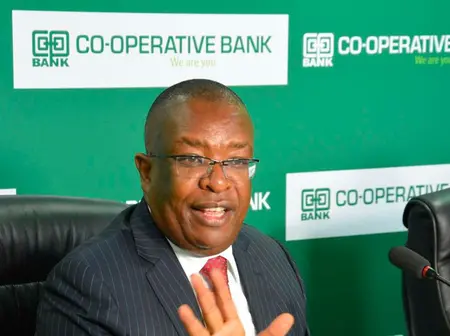
    Co-operative Bank of Kenya has raised its interim dividend by 50 percent to Sh1.50 per share after the lender’s net profit for the nine months ended September rose 27.2 percent to Sh27.43 billion.

    The net earnings grew from Sh21.56 billion posted in the third quarter ended September 2024 and came on the back of a rise in interest and non-interest income.

  • Failure Teaches Only When the Founder Opens the Books

    Failure Teaches Only When the Founder Opens the Books

    thumbnail

    There is nothing educational about losing money automatically. A collapsed business becomes useful experience only when someone identifies what failed, who bore the cost, and what the next venture will do differently.The romance of entrepreneurial failure can obscure unpaid workers, abandoned suppliers and personal guarantees.

  • How to leverage I&M Bank’s three-hour FX Flash Deal window twice a week

    How to leverage I&M Bank’s three-hour FX Flash Deal window twice a week

    thumbnail

    I&M Bank customers can buy foreign currency at preferential rates on the I&M OTG App every Tuesday and Friday from 10am to 1pm.The new campaign FX Flash Deal runs through November and targets the festive-season rush for foreign currency, households are paying school fees abroad and booking holiday travel, while businesses are settling supplier invoices before they restock.

  • Equity Cannot Pay This Month’s Rent but It Can Still Earn Loyalty

    Equity Cannot Pay This Month’s Rent but It Can Still Earn Loyalty

    thumbnail

    A founder short of cash may offer a talented recruit a small salary and a large future. The recruit is entitled to ask how large, how likely, and under what conditions that future becomes spendable.Employee equity can align incentives, but its value depends on much more than a percentage.