
Why Kenya’s AI ambitions now depend on new internet infrastructure: A planned $2 billion (Sh258 billion) subsea cable linking Africa directly to Asia is meant to open a new route across the Indian Ocean and carry the high-capacity traffic that AI needs, which today’s cables cannot.
Category: Technology
-

TikTok removes 750,000 videos in Kenya in Q2 as regulation looms
TikTok removed 750,185 videos in Kenya for violating its community guidelines in the second quarter of 2026, according to its latest Community Guidelines Enforcement Report.
About 99.8% of the videos were removed proactively, before any user reported them, and 93.8% were taken down within 24 hours of being posted.
The figure is down from 884,591 videos removed in Kenya in the first quarter.
TikTok also removed more than 46,000 accounts in Kenya suspected of belonging to users under 13, and more than 26 million such accounts globally.
The platform interrupted 80,640 TikTok LIVE rooms in Kenya for breaching its guidelines during the quarter.
Globally, TikTok removed about 188.3 million of the more than 42.2 billion videos posted in the second quarter, about 0.4% of the total. Of these, 99.5% were removed before being reported and 92.7% within 24 hours. Around 6.3 million videos were reinstated after successful appeals.
Automated systems, including trend models and AI moderation, accounted for 97.4% of global video removals, the highest share TikTok has recorded. The company also took action, including warnings and demonetisation, on more than 47 million LIVE sessions and 26.8 million LIVE creators for breaching its monetisation guidelines.
AI-generated content
In Kenya, TikTok removed nearly 11,000 videos under its policy on edited media and AI-generated content (AIGC). The platform requires creators to label realistic AI-generated material, and it uses automated detection and C2PA Content Credentials technology to help users identify content created or significantly altered with AI.
TikTok has also launched an in-app AI Literacy Hub in Kenya, with guidance on spotting AI-generated content and using AI tools responsibly. Users can find it by searching AI-related terms on the platform.
The report comes as Kenya moves to tighten oversight of social media platforms. Proposed amendments to the Kenya Information and Communications Act would require platforms including TikTok, Meta and X to register with the Communications Authority of Kenya and report illegal activity such as sexual exploitation, cyberbullying and impersonation.
A separate draft Online Safety Bill 2026 proposes fines of up to KES500 million (about US$3.9 million) or 10% of global turnover for platforms that fail in their duty of care.
Earlier this year, Parliament rejected calls for an outright TikTok ban in Kenya, opting instead for stronger regulation and user safeguards.
-

AI, Identity and Harm: When Image Editing Violates Identity
It started as a simple experiment.I uploaded a portrait of myself, professionally dressed and wearing a hijab, into Nano Banana, an artificial intelligence image generator. Then I typed a short instruction: “Remove the hijab.” Within seconds, the system produced a new version of the photograph.
-
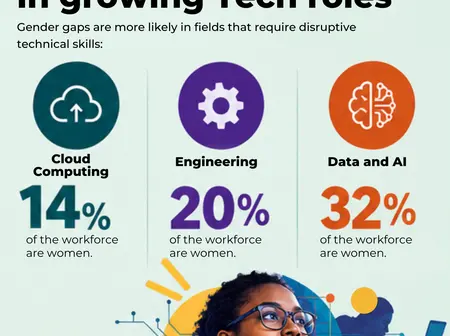
Digital Skills Programmes Are Opening Doors for Young Women, But Barriers Persist
Nairobi, Kenya: When 23-year-old Lucky Kitonyi joined the African Girls Can Code Initiative (AGCCI) in 2025, she was interested in technology but unsure about which path to pursue. She had explored cybersecurity, data analytics, blockchain and artificial intelligence (AI), but had not settled on a career.
-

Paratus takes its African connectivity expansion into Lesotho with Starlink-powered enterprise internet
Paratus Group has expanded its African operations into Lesotho, introducing high-speed internet services targeting businesses and organizations seeking reliable connectivity across Lesotho.
Through its new venture, Paratus Lesotho, the telecommunications group will provide enterprise internet services, combining Starlink satellite connectivity with its existing network solutions. The operation will also offer local customer service and technical support to businesses across the Kingdom of Lesotho.
The expansion is expected to address connectivity challenges in a country where mountainous terrain makes the deployment of conventional telecommunications infrastructure difficult, particularly in remote areas outside major urban centres.
As an authorized Starlink reseller, Paratus Lesotho will provide enterprise internet services powered by low Earth orbit (LEO) satellite technology. The technology delivers high-speed, low-latency connectivity to locations where fibre and other terrestrial networks are limited or unavailable.
The new operation will be supervised by Makali Lepholisa, Managing Director of Paratus Lesotho, a joint venture between Real Image Lesotho and Paratus Group.
Lepholisa brings more than 20 years of executive leadership experience spanning customs modernisation, trade facilitation, business strategy and stakeholder engagement. Her previous work includes contributing to trade facilitation and National Single Window programmes in several African countries, alongside regional initiatives involving the Southern African Development Community (SADC), the World Bank and the United Nations Development Programme (UNDP).
“Backed by the Paratus Group’s expertise and track record in other countries, I am very excited about the opportunities for Paratus Lesotho to support the country’s social and economic development through reliable and innovative technology solutions.” Said Lepholisa.
The company will also draw on Paratus Group’s wider technical expertise and network capabilities to support organisations operating in areas where access to dependable internet infrastructure remains a challenge.
Ultimately, the entry into Lesotho adds another market to Paratus Group’s growing African footprint as the company expands its telecommunications services and satellite connectivity offerings across the continent.
-

The world has 6.3 billion internet users, but connectivity remains out of reach for two billion people
An estimated two billion people remain offline globally despite internet adoption reaching 6.3 billion users in 2026, exposing persistent inequalities in connectivity, affordability and digital skills, according to the International Telecommunication Union (ITU).
The figure represents 76% of the world’s population, up from 6.1 billion people, or 74%, in 2025. However, the latest edition of the ITU’s Facts and Figures report shows that access to the internet remains heavily influenced by income levels, geographical location, gender and the availability of suitable infrastructure.
The differences are particularly pronounced between wealthy and poorer economies. Internet use stands at 93% in high-income countries, compared with 32% in low-income countries, while access to newer mobile networks remains heavily concentrated in wealthier markets.
ITU Secretary-General Doreen Bogdan-Martin said expanding connectivity and making it meaningful for everyone was becoming more important as artificial intelligence creates opportunities in areas such as education and employment. The figures highlight the challenge facing countries seeking to extend the benefits of digital services to populations that remain underserved.
The disparity in internet adoption is accompanied by substantial differences in mobile network coverage. Although 97% of the world’s population lives within reach of at least a 3G network, 5G coverage stands at 86% in high-income countries and just 4% in low-income countries.
The difference matters as newer mobile networks support higher speeds and greater capacity for data-intensive applications, including cloud services, video communications and artificial intelligence tools. Countries with limited 5G availability face additional infrastructure challenges as businesses and public institutions expand their use of advanced digital services.
The ITU’s findings also reveal differences in internet adoption across demographic groups. Globally, 79% of men use the internet, compared with 74% of women, while 86% of people aged 15 to 24 are online, against 74% among the rest of the population.
Geographical inequalities remain significant despite progress in connecting rural communities. Internet use stands at 82% among urban residents and 63% among rural populations, demonstrating the continuing difficulty of extending meaningful connectivity beyond major population centres.
The cost of devices and connectivity continues to influence who can participate in the digital economy. Mobile phone ownership among people aged 10 and above stands at 84% globally, but the figure ranges from more than 95% in high-income countries to just 57% in low-income economies.
Differences in data consumption also illustrate the unequal nature of internet access. Average monthly mobile broadband traffic per subscription reaches 20GB in high-income countries, almost six times the 3.4GB recorded in low-income countries.
The ITU’s affordability measurements show that the global median price of a data-only mobile broadband basket has fallen to 1.2% of gross national income per capita. Fixed broadband costs a median of 2.3%, although the cost burden remains substantially higher in poorer economies.
Landlocked developing countries and small island developing states met the widely recognised target of keeping mobile broadband costs below 2% of GNI per capita for the first time in 2026. Least developed countries, however, recorded a median mobile broadband cost of 6.1% of GNI per capita.
The ITU also found that three in 10 economies fail to meet the 2% affordability target for either fixed or mobile broadband. This leaves lower-income populations facing a greater financial burden when purchasing data, maintaining subscriptions and acquiring internet-enabled devices.
Africa’s connectivity challenges illustrate the distinction between infrastructure availability and actual internet adoption. The GSMA’s 2026 research estimates that only 36% of the continent’s population used mobile internet in 2025, leaving more than 900 million people offline.
The GSMA estimates that 63% of Africa’s population lives within mobile broadband coverage but does not use mobile internet, while 9% remains outside mobile broadband coverage. This makes the usage gap a major obstacle to expanding digital participation across the continent.
Smartphone affordability is a central part of the problem. The GSMA’s research found that an entry-level internet-enabled handset cost the poorest 20% of people in Sub-Saharan Africa an amount equivalent to 76% of their average monthly income at the end of 2025.
This creates a difficult situation for telecommunications operators and governments investing in network expansion. Even where mobile broadband coverage exists, households still need compatible devices and sufficient disposable income to purchase data and use online services regularly.
The issue also extends to digital skills. People need the ability to navigate online platforms, access digital financial services, use productivity tools and understand emerging technologies if connectivity is to translate into economic opportunities.
Kenya illustrates the complexity of expanding internet adoption in a market where telecommunications infrastructure and mobile subscriptions have grown substantially.
Data from the Communications Authority of Kenya reported by TechTrendsKE shows that the country had 52.26 million connected smartphones and 27.42 million feature phones by June 2026. Mobile broadband subscriptions reached 54.93 million, while total mobile data subscriptions stood at 64.26 million.
The country’s fixed internet market also recorded growth, with subscriptions reaching 2.84 million in June 2026, representing annual growth of 32.4%. Fibre accounted for approximately 1.57 million connections, reflecting the expanding role of fixed broadband alongside mobile internet.
However, these market figures sit alongside significant geographical differences in internet adoption. ITU country data for 2024 showed that 56.6% of individuals in urban Kenya used the internet, compared with 25% in rural areas. Household internet access stood at 81.6% in urban areas and 26% in rural locations.
The same ITU data placed individual internet usage at 37.8% among men and 32.2% among women. Kenya’s 4G population coverage stood at 97.3%, while 5G coverage reached 14% in the dataset.
The figures highlight the challenge of translating network availability into widespread usage. In its earlier reporting on Kenya’s last-mile connectivity, TechTrendsKE examined how remote counties such as Marsabit and Mandera face additional barriers linked to population density, device affordability, electricity access and the economics of network deployment.
Kenya’s satellite internet market also illustrates the different approaches being used to extend connectivity. Starlink had reached 27,616 subscriptions by June 2026, according to figures reported by TechTrendsKE, offering another option for customers in areas where conventional fixed broadband infrastructure is limited.
The expansion of fibre, mobile broadband and satellite services provides additional routes to internet access, but affordability and the availability of suitable devices remain important to adoption.
The ITU argues that expanding internet access must be accompanied by efforts to improve digital skills. Cosmas Luckyson Zavazava, director of the ITU’s Telecommunication Development Bureau, said people need the skills required to use online services and emerging technologies.
Several initiatives covered by TechTrendsKE illustrate how organisations are addressing this challenge in Kenya. Intel, the Kenya National Library Service and the Mandela AI Hub Foundation have partnered on AI training through public libraries and mobile library units, providing learning opportunities for people without technical backgrounds.
A separate digital skills programme in Garissa and Turkana enrolled more than 700 young people, targeting 1,700 participants from refugee and host communities. The programme covers areas including cloud computing, artificial intelligence, data analytics and professional certification.
Google has also introduced its Skilling Africa platform, targeting three million people across the continent by 2030. The initiative incorporates data-light learning, downloadable lessons and offline course access to accommodate users facing connectivity and data-cost constraints.
Electricity access is another consideration in the adoption of digital services. Kenya’s Commonwealth youth AI readiness assessment, reported by TechTrendsKE in November 2026, highlighted electricity access, internet reliability and digital infrastructure among the factors influencing the country’s ability to prepare young people for AI-related opportunities.
The ITU’s latest findings place these challenges within a wider global picture. With 6.3 billion people already using the internet, the remaining two billion represent a substantial population that still faces barriers to digital participation, even as governments, telecommunications operators and technology companies expand connectivity infrastructure.
-

Social media platforms face tougher child-protection rules under Kenya’s proposed Online Safety Bill
Social media companies operating in Kenya could face fines of up to KSh500 million or 10% of their annual global turnover for failing to meet proposed child-protection requirements. The penalty is part of the Kenya Online Safety Bill 2026, introduced by Embakasi West MP Mark Mwenje, which would require platforms to verify users’ ages and obtain parental consent before allowing children under 18 to access their services.
The proposed financial penalties also extend to company leadership. Senior executives involved in non-compliance could face fines of up to KSh10 million, imprisonment for up to five years, or both. The Communications Authority of Kenya (CA) would oversee enforcement, with providers entitled to notification and a hearing before civil penalties are imposed.
The Bill places Facebook, Instagram, WhatsApp, X and TikTok among the services covered by its proposed requirements. For these companies, compliance would involve establishing whether a user is below 18 and confirming that the person authorising access has parental responsibility.
Providers would have to deploy highly effective age verification or age estimation systems to determine whether someone using their services is a child. The Bill also proposes several methods for confirming parental responsibility, including credit card verification, cross-referencing a parent’s identity and decentralised digital identity verification. The CA could approve other verification methods.
This would make age assurance part of the process through which platforms grant access to accounts. A parent or guardian would be able to withdraw consent, after which the provider would have to restrict the child’s access within a prescribed period.
The proposed requirements come against a record of existing platform enforcement activity in Kenya. TikTok reported removing 884,591 videos in the country during the first quarter of 2026, with 99.7% removed proactively before users reported them. The company also reported taking down 48,739 accounts suspected of belonging to users under 13 and interrupting 103,847 LIVE rooms.
Those figures illustrate the scale of moderation and age-related enforcement activity reported by TikTok. The Online Safety Bill would add a distinct obligation by requiring platforms to obtain parental authorisation for users below 18, extending the proposed controls beyond the removal of accounts suspected of belonging to children under 13.
The proposal follows parliamentary scrutiny of TikTok. In February 2026, Parliament’s Public Petitions Committee recommended stronger regulation of the platform rather than an outright ban, calling for measures that included age verification, periodic compliance reviews by the CA and engagement between platforms and the Office of the Data Protection Commissioner.
In May 2026, ICT Cabinet Secretary William Kabogo also called on X to establish a local office in Kenya to support government engagement on harmful content and child protection. These developments have placed platform accountability and the ability of Kenyan authorities to engage technology companies within the country’s regulatory agenda.
Another legislative proposal addresses wider platform obligations. The Kenya Information and Communications Amendment Bill 2026 proposes requirements covering platform registration, reporting unlawful activity and remedial action, and establishing complaint-handling mechanisms. The Online Safety Bill is separate, concentrating on children’s access to social media and the authorisation required from parents or guardians.
A Kaspersky analysis covering the first eight months of 2026 identified YouTube, YouTube Kids and TikTok as prominent applications in children’s observed online activity in Kenya. The company’s figures put YouTube at 23.5% of observed application activity, while YouTube Kids and TikTok each accounted for 17%.
Kaspersky also identified grooming, phishing, cyberbullying and the manipulation of children’s images and videos using generative AI among the risks facing young internet users. The Bill addresses some of the content-related concerns by identifying pornography, material encouraging suicide or deliberate self-harm, eating disorders, dangerous stunts and online challenges as harmful to children.
Under the proposal, parents and guardians would be responsible for guiding children’s safe internet use and supervising their online activity according to age and maturity. They would also be expected to report suspected online abuse and exploitation to the relevant platform, the CA, the National Council for Children Services or the National Police Service.
The Bill would not make parents liable merely because a child accessed harmful content or participated in harmful online activity. Its proposed responsibilities instead focus on supervision, guidance and reporting, while the platform obligations centre on access controls and age verification.
The proposed Kenyan threshold is higher than the age limits cited in several European countries. France requires parental consent for children under 15, while Germany’s rules cover minors aged 13 to 16. Italy requires parental approval for children below 14.
Kenya’s proposal would apply parental consent requirements to everyone under 18 using the covered services. The Bill therefore places the responsibility for establishing a child’s age and obtaining authorisation on social media providers, with the CA responsible for enforcement.
The country’s earlier child-safety initiatives have also involved cooperation between regulators and industry. In 2021, the CA, Safaricom, Airtel, Telkom Kenya, Jamii Telecom and GSMA worked together on a portal providing online safety guidance for children. The proposed legislation would add statutory obligations for social media companies to that existing child-protection effort.
For platforms covered by the Bill, the proposed compliance framework would bring together age assessment, parental identity verification, consent management and restrictions on access after consent is withdrawn. Companies that fail to meet those requirements could face financial penalties, while executives involved in non-compliance could also face personal legal consequences.
-

Hans van Linschoten: One grid, many tenants
Over the past three weeks, this series has made an argument in three steps.
Africa does not have to buy the AI bubble: open models are close enough to the frontier for many practical workloads, and previous-generation hardware is capable enough, that the continent can build AI capacity without betting national balance sheets on hyperscale campuses.
The right shape for that capacity is a federated grid: many independently owned locations, one platform, shared capacity, built on the same roaming logic that made African mobile work.
And that grid is the best preparation for 6G, because the next network will need exactly this kind of distributed, locally owned compute.
Arguments are cheap. This final article asks the practical question: what does it look like on an ordinary Monday morning?
Here are four organisations, in four sectors, using the same grid in different ways.
The four organisations below are illustrative examples, not named customers. They show how the grid could work in practice.
A private clinic group runs twelve facilities across central Uganda. It needs three things: an electronic patient record that works when the connection drops, a clinical decision-support tool that helps nurses in remote clinics, and an appointment system patients can use from a basic phone.
On the grid, the clinic group does not buy servers or sign with a foreign cloud. It contracts with a local health-IT provider, which operates as a Virtual Cloud Operator on capacity from ABQ Cloud, the Ugandan Cloud Enabler.
Patient records live in a Ugandan location, supporting the clinic group’s data residency requirements and compliance with the country’s Data Protection and Privacy Act.
A nightly backup goes to a second, separately owned location inside Uganda, not because anyone remembered to configure it, but because backup is a platform policy, provided an eligible second location is available.
The decision-support tool runs on a small open medical model, a few billion parameters, sharing a sliced GPU with other tenants. Ugandan teams have already field-tested offline clinical decision-support tools built on small open medical models with health workers in rural districts.
At the facilities themselves, a lightweight local copy keeps working offline and synchronises when the line returns.
Increasingly, the clinic group’s operations manager will not even need the IT provider for small applications. She describes the booking system she needs to an AI assistant; the assistant writes it and, through a controlled interface to the platform, deploys it into the clinic group’s own environment, within her permissions, with every action logged, and with backup and the second site inherited automatically under the configured platform policies.
The model decides what to build. The grid guarantees where and how it runs.
A revenue authority in an East African country operates under a cloud policy that requires government data to be stored and processed inside the country. Its tax filing system, its taxpayer registry and its internal analytics must stay sovereign. Its public website and published statistics need not.
On the grid, the authority runs a sovereign location under a Build-Operate-Transfer arrangement.
For the first years, the platform is operated with the authority’s own engineers embedded in the team. At the end, operations, governance and a copy of the platform’s source code, with the agreed development and usage rights, pass to the public institution.
Classified workloads never leave that location. Disaster recovery runs at a second national location operated by another federation member under the same rules.
Non-sensitive workloads, including the public portal, open data and a chatbot answering taxpayers’ questions in Kiswahili and English, can use federated capacity elsewhere in the country when filing deadlines create peaks.
The point is not only cost. It is that the state could keep running the system if any supplier, including us, disappeared tomorrow.
A digital lender serves small traders in Uganda, Kenya and Rwanda.
It lives on mobile money rails, a market that processed more than $2 trillion in transactions globally in 2025, with sub-Saharan Africa accounting for the majority, according to the GSMA State of the Industry Report on Mobile Money 2026.
Its credit scoring and fraud detection depend on data subject to each country’s data protection and financial-sector requirements.
Today, that can mean a choice between three different hosting providers with three different platforms, or a hyperscaler region outside the continent and an uncomfortable conversation with three central banks.
On the grid, the lender keeps a single contract with its home provider in Kampala and deploys into federated locations in each of the three countries.
Each country’s customer data stays in that country. The applications, the security controls and the operations team are the same everywhere, because the platform is the same everywhere.
Its credit and fraud models are small, purpose-built and run next to the data, on shared accelerators. This is inference, not training, which is exactly the kind of workload previous-generation hardware can handle well.
When the lender expands to Tanzania, it does not start a new procurement. It deploys into the next federated location, if one exists and meets the applicable requirements. If it does not yet exist, the lender’s demand is precisely the signal a local operator needs to build one.
A university in Kampala wants three things that rarely fit one budget: a reliable learning platform for twenty thousand students, research compute for a team fine-tuning language models for Luganda and Runyankole, and a way to teach students on the infrastructure they will actually work with when they graduate.
On the grid, the university can be a tenant and a member at once.
Its learning platform runs on the grid, scaling up in examination weeks and down in the holidays. Its research team uses shared accelerators for fine-tuning runs, paying for hours rather than buying a cluster that sits idle between projects.
And if the university runs a small location of its own, a server room it already has, it can offer spare capacity back to the federation during the holidays, provided it meets the federation’s technical and operational requirements, turning an idle cost into a modest income.
Most valuable is the third need.
Part 3 of this series argued that Africa’s options in 6G will depend on engineers who can run and extend open platforms. A university whose students learn on the same federated platform that operators, ministries and banks run in production is not just a customer. It is the pipeline that makes the whole system sovereign in practice.
Put the four cases side by side and the same properties keep returning.
Data stays where the law says, workload by workload.
The clinic’s records stay in Uganda, the ministry’s in its country, and the lender’s in each of three. Residency is a rule the platform enforces according to the applicable requirements, not merely a promise in a contract.
Resilience comes from distribution.
None of these organisations built a second data centre. Each can get a second site because another member already has one, where suitable capacity is available.
Capacity follows demand.
Exam weeks, filing deadlines and month-end lending peaks draw on shared capacity instead of permanent over-provisioning. New locations appear where demand proves itself.
Ownership and jobs stay local.
The infrastructure belongs to Ugandan, Kenyan and Rwandan operators, ministries and universities. The margin, the skills and the operational knowledge can stay with them.
One contract, continental reach.
A provider in Kampala can serve a customer in Kigali or Dar es Salaam without building there, where federated locations are available. It is the practical, digital counterpart to the African Continental Free Trade Area.
And the grid is being prepared for its newest users.
AI agents will increasingly write and deploy software on behalf of people who are not engineers. That is a productivity gain Africa should welcome, but only if what the agents deploy lands somewhere with backup, isolation, monitoring, audit trails and a known jurisdiction.
A federated grid can give every agent a safe default destination inside the relevant border.
Honesty matters more at the end of a series than at the start.
Parts of what I have described run today, according to whitesky.cloud: federated locations in Europe and Africa, including a live location in Uganda; one contract across locations; built-in backup with restore in another location; and GPU slicing for shared accelerators.
Other parts are being built. The interface that lets AI agents deploy onto the platform is in validation with partners, finer-grained permissions for agents are next, and replication between locations is in development.
Most of the African locations this vision needs do not exist yet. And the federation still needs the rulebook any roaming system depends on: admission criteria, service levels and dispute resolution, written and governed in a way members trust.
None of that is a reason to wait. It is a description of the work.
This concludes the four-part series.
The case, in one paragraph: Africa should not borrow to buy hardware at the top of a cycle; open models and right-sized, previous-generation compute already serve many of the continent’s practical AI needs.
That compute belongs in a federated grid: independently owned, commonly operated, sovereign by rule rather than by building.
That grid is also Africa’s best seat at the 6G table.
And, as these four examples show, it is not an abstraction. It is a clinic, a ministry, a lender and a university, each keeping control of what is theirs while sharing what makes sense to share.
African mobile became a success because independent operators agreed to work together under common rules. The AI era offers the same opportunity.
Governments, enterprises and service providers that want to help build it, as anchor tenants, as Cloud Enablers or as operators serving their own customers, are welcome to join.
-

MPs warned against proposed internet law that could expose Kenyans’ browsing data
The National Youth Council (NYC) has warned Parliament against adopting proposed internet regulations that could expose Kenyans’ personal information, undermine online privacy, and make access to the internet more expensive.
The Council raised concerns over the Kenya Information and Communications (Amendment) Bill, 2025, which seeks to introduce consumption-based internet billing by requiring internet service providers (ISPs) to monitor customers’ usage, assign them unique meter numbers and generate invoices based on the amount of data consumed.
Appearing before the National Assembly Committee on Communication, Information and Innovation on Thursday, November 5, 2026, NYC Chief Executive Officer Gloria Wawira urged MPs to ensure the proposed law does not create opportunities for excessive collection of personal information or restrict Kenyans’ digital freedoms.
The Council said the Bill leaves important questions unanswered regarding the type of information internet providers would be required to collect, how long the records would be retained and what safeguards would prevent the data from being accessed or misused.
It warned that linking identifiable subscriber meter numbers to detailed internet usage records could expose personal information and discourage young people from freely researching, expressing opinions and participating in civic affairs.
“We support accountability in internet billing, but accountability must never become a platform for inordinate privacy intrusion. Consumers should be able to verify what they pay for without surrendering their privacy or having their browsing activities exposed,” Wawira told the committee.
The Council wants Parliament to restrict internet metering to the volume of data transferred for billing purposes, with an explicit prohibition on collecting browsing histories, search terms, communications, content viewed and destination-level information.
It argued that consumers should be able to confirm how much data they have used without having their online activities exposed through the billing system.
Beyond privacy concerns, the Council warned that mandatory consumption-based billing could increase the cost of internet access and make monthly expenditure less predictable for millions of users.
The proposed legislation seeks to require internet service providers to introduce systems capable of monitoring customer usage, converting the information into readable details and generating invoices based on consumption.
The Council cautioned that such a system could disadvantage students, freelancers, remote workers and digital content creators who depend on reliable internet connections for their studies and livelihoods.
It wants Parliament to retain existing prepaid bundles, capped packages and unlimited internet plans as available consumer choices.
Wawira said consumers should not be forced into one billing arrangement, proposing an opt-in system that would allow subscribers to choose packages according to their needs and financial circumstances.
“Our proposal is that we put in opt-in options so that we leave the consumer with a choice. In the interest of young people and their access to the internet, we believe an opt-in set-up is ideal,” she said.
The Council also proposed usage alerts, optional spending limits, transparent tariffs, itemised invoices and accessible mechanisms for resolving billing disputes.
It further called for an independent regulatory and human-rights impact assessment before the proposed changes are implemented, saying Parliament should establish their likely financial implications for different categories of internet users.
“The internet is no longer a luxury for young people. It is a classroom, an office, a marketplace and a gateway to opportunity. Any legislation that changes how Kenyans access or use the internet must protect these opportunities rather than restrict them,” Wawira said.
The concerns were raised as the National Assembly committee continued receiving submissions from stakeholders on the proposed legislation.
Mbooni MP Nzioka Kivasu said Parliament had a responsibility to protect consumers and would consider the Council’s recommendations alongside submissions from other stakeholders before making its final recommendation on the Bill.
“We are also here to protect the consumer. We have listened to a lot of submissions on this Bill, and we will consider your submission alongside the others before making our final recommendation,” Kivasu said.
The legislator also sought clarification on international best practices in internet billing, the performance of different billing models and the availability of fixed and non-fixed data packages.
Wawira maintained that consumers should retain the flexibility to choose between unlimited, weekly and monthly bundles rather than being compelled to adopt a consumption-based billing arrangement.
Isiolo South MP Tubi Mohamed also backed the need to recognise internet connectivity as an important platform for young people’s economic participation.
The Kenya Information and Communications (Amendment) Bill, 2025, also known as National Assembly Bill No. 9 of 2025, is sponsored by Aldai MP Marianne Kitany.
Its principal objective is to introduce metered internet billing based on consumption, with the stated intention of protecting consumers against exploitation and ensuring they receive value for the services they purchase.
Under the proposed framework, internet service providers would be required to develop systems capable of monitoring customer usage, assign subscribers unique meter numbers and issue consumption-based invoices.
The providers would also be required to submit information relating to their billing systems to the Communications Authority of Kenya (CA).
However, the proposal has attracted criticism from industry players and digital rights advocates, who have questioned its potential impact on privacy, affordability and consumer choice.
In October 2026, the Kenya Private Sector Alliance (KEPSA) urged Parliament to reject the Bill, arguing that mandatory metered billing could increase operational costs for internet providers and eventually push up prices for consumers.
The organisation also raised concerns over the collection and retention of identifiable subscriber usage records, warning that inadequate safeguards could expose sensitive information to misuse.
The Communications Authority also presented its position to the parliamentary committee on November 3, cautioning against making consumption-based billing mandatory across the sector.
The regulator argued that compulsory usage-based billing could undermine affordability, digital inclusion and consumer choice, particularly among low-income households, students, small businesses and communities in underserved areas.
Instead, it proposed measures such as mandatory usage alerts at 50, 80 and 100 per cent of consumption thresholds, free real-time usage dashboards, monthly expenditure caps and consumer-selected spending limits.
The Authority also recommended clearer itemised bills, independent audits of metering systems and affordable broadband packages for low-income households and students.
The Bill remains under consideration by Parliament and has not yet become law.
-

Treasury: e-Citizen to go offline twice in November for scheduled maintenance
Kenyans using the e-Citizen platform should brace for temporary service interruptions on two weekends in November as the government undertakes scheduled maintenance and system upgrades.
The National Treasury, through the Government Digital Payments Department, has announced that the platform will be unavailable or have limited access for seven hours on each of the two occasions.
In a public notice issued by Treasury Principal Secretary Chris Kiptoo, the first maintenance exercise will run from 10 pm on Saturday, November 7, to 5 am on Sunday, November 8.
The second interruption is scheduled for the same hours, from Saturday, November 14, to Sunday, November 15.
The Treasury said the exercise is intended to upgrade the system, improve performance and strengthen security while ensuring the continued reliability of government digital services.
“The National Treasury, through the Government Digital Payments Department, wishes to notify members of the public, stakeholders, and all system users that scheduled maintenance will be undertaken on the e-Citizen Platform to facilitate system upgrades, improve performance, enhance security, and ensure the continued reliability of services,” the notice stated.
During the maintenance windows, users may experience temporary service interruptions or limited access to the platform and its associated services.
The government has advised Kenyans to plan their transactions in advance, particularly those seeking urgent government services that require online payments or applications.
“Users are therefore advised to plan accordingly and, where possible, complete any urgent transactions before the commencement of the maintenance exercise,” the notice added.
The interruptions could affect members of the public seeking to access services hosted on the platform, including applications, renewals and payments processed through government agencies.
The e-Citizen platform serves as a central digital gateway through which Kenyans access and pay for a wide range of government services, reducing the need to visit physical offices.
The government has increasingly relied on the platform to digitise public services and centralise payments, with users required to make transactions through the approved digital payment system.
The Treasury said the maintenance was necessary to improve service delivery and strengthen the platform's reliability, amid growing dependence on digital channels for accessing government services.
“The National Treasury regret any inconvenience this interruption may cause and appreciates the public's patience and understanding as we undertake this exercise to improve service delivery,” Kiptoo said in the notice.
The department did not specify which individual government services would be affected during the maintenance periods or whether all services would be completely inaccessible.
Users who have pending applications or payments are therefore encouraged to complete them before the scheduled downtime rather than wait until the maintenance windows.
The Treasury said the exercise was part of efforts to ensure the platform continues to provide secure and reliable services to the public.