Blog

  • No taxpayer money for Bayern-Ajax match, government says

    No taxpayer money for Bayern-Ajax match, government says

    The government will not contribute public funds towards the highly anticipated Bayern Munich versus Ajax friendly match at the Raila Odinga International Stadium, Sports Principal Secretary Elijah Mwangi has said.

    ‎Mwangi said strategic partners had come on board to finance the event, with the government offering support in marketing Kenya as a sports and tourism destination.

    ‎He said the arrangement was expected to generate a surplus that would be channelled towards Kenya’s preparations for the 2027 Africa Cup of Nations (Afcon), which the country will co-host with Uganda and Tanzania.

    ‎“I want to assure Kenyans that the team that will be coming is the first team, is the main team, and the government of Kenya have not contributed towards this,” Mwangi said.

    ‎“We have strategic partners who have come on board, and we are supporting them to market Kenya. From our analysis, we shall be having surplus from this event, which shall go towards assisting in our preparations for Afcon,” he added.

    ‎The match, scheduled for January 5, 2027, at the Raila Odinga International Stadium in Nairobi, is expected to provide a major test of the country's capacity to host international sporting events ahead of Afcon.

    ‎Mwangi said the government viewed the fixture as more than a football spectacle, arguing that the presence of two prominent European clubs would expose Kenya to international audiences and create opportunities for investment and tourism.

    ‎He said Bayern Munich and Ajax have a combined social media following of more than 300 million, providing a significant platform through which Kenya could showcase its attractions, culture and sporting facilities.

    ‎“The impact, the benefits, is enormous. Number one, this team has follow-ups in excess of 300 million,” he said.

    ‎The PS said the government expected the clubs' global audiences to take an interest in what Kenya has to offer, with some supporters potentially visiting the country in future.

    ‎He said the event would also give local footballers an opportunity to demonstrate their abilities before international scouts and club representatives.

    ‎“Our team will be exposed, and we have an opportunity also to have our Kenyan players get an opportunity to be picked, so that they can also participate or be recruited to play at that international level,” Mwangi said.

    ‎The government has been positioning the match as part of wider preparations for Afcon 2027, which will be the first edition hosted jointly by three countries.

    ‎Kenya is expected to use the tournament to showcase its sporting infrastructure, hospitality industry and tourism attractions, while improving facilities and organisational capacity.

    ‎The Bayern-Ajax fixture is therefore being presented as an opportunity to test stadium operations, attract international visitors and build confidence in Kenya's ability to stage major sporting events.

    ‎Mwangi, however, did not disclose the identities of the strategic partners financing the friendly or provide a breakdown of the expected expenditure and projected surplus.

    ‎The government's position that it has not contributed towards the match is likely to draw attention to the financing arrangements, particularly as preparations for Afcon continue to require significant public investment.
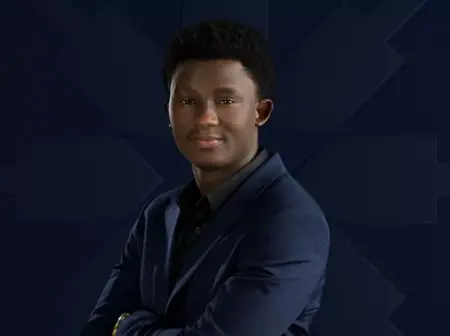
  • The Trading Routine Nobody Sees: How 2 AM Market Checks Shaped Kojo Forex’s Discipline

    The Trading Routine Nobody Sees: How 2 AM Market Checks Shaped Kojo Forex’s Discipline

    Most people only see a trade after the decision has already been made. They see the chart, the result, the lesson, or the lifestyle around it. What they don’t usually see is the routine behind the trade: the checks, the waiting, the no-trade days, and the discipline it takes to watch the market without forcing a position.

    For me, that routine has often started with a 2 AM market check. Not because I’m sitting at the screen ready to trade at 2 AM, but because I trade from the one-hour timeframe, and every hourly close can be a source of information.

    There were times when I’d set alarms from 2 AM through to 10 AM at one-hour intervals. I’d wake up, check what the market had done, and go back to sleep if nothing was happening. At 3 AM, I’d check again. At 4 AM, again. By 5 AM, around the London session, I’m usually more awake. If the market’s making sense, I’d come into the room, sit by the screen, and watch properly. If it’s quiet, I’d stay away and not force anything.

    That’s the part people don’t always understand. The discipline isn’t only in waking up early. The discipline is in being awake, checking the market, and still being able to say, “There’s nothing to do.”

    What makes a chart worth getting up for

    Before I sit at the desk, I usually start with my phone. I check a few messages, open the charts, and scroll through the instruments I follow. I trade very few instruments now, fewer than three, so I know what I’m looking for. If price isn’t moving toward my key entry zones, I can relax. If it is, that’s when I get up and pay closer attention.

    I also check what’s happening outside the chart. On X, I’m not just looking at random trends. I’ll check what’s happening in crypto, politics, stocks, and broader market conversations. If there’s unusual volatility in an instrument I trade, I don’t treat it as normal price action. I want to know what caused it before I continue with the day.

    From ritual to routine

    That kind of preparation has become more natural with experience. Earlier in my career, I treated trading like a ritual. I’d lock the door, put on music, turn off the lights, leave the screens on, and block out every distraction. I was extremely serious. I felt I had to put myself into the right mindset before I could trade.

    These days, I’m more relaxed. I can listen to music casually. I don’t need to create the same atmosphere around trading because the routine is already part of me. The seriousness is still there, but it’s not as visible. It has become internal.

    My screens are almost always on. The instruments I trade are usually open. If price action changes, I can quickly mark up my expectations. Even when I’m away from the desk, I’m still following from my phone or tablet. It has become part of my life, not something I switch on only when I want to place a trade.

    The real work happens before the click

    The moment before entry is different. That’s when I go deeper. Before I open a trade, I want to know how much I’m risking, where the stop loss should be, where the take profit could be, and whether I’ve mentally accepted the outcome. The market is unforgiving. Once a position is open, there’s no eraser. You can’t go back to clean the decision and write a new one.

    That’s why preparation takes more time than monitoring an open trade. Once the trade is placed, the main decision has already been made. I don’t need to keep staring at the screen. I’ll manage the trade, but that’s different from anxiously monitoring it. I can set alerts around potential profit or potential loss. If the trade moves in my favor, I can decide whether to take partial profit or move the stop to break even. If it moves against me, I start accepting that outcome before it reaches the stop.

    Why no trade is still work

    Sometimes that work leads to no trade at all. I may wake up, check the hourly closes, wait for price to reach a zone, wait again for the kind of candle close I want, and still get nothing. That can take hours. It can reach 10 AM and still be a no-trade day.

    For me, that’s still productive.

    No trade means my capital is preserved. The market will always present another opportunity, but only if the capital is still there. I see capital almost like bullets. If you have a limited number of bullets and you keep firing at poor targets, the targets remain but your ammunition disappears. So I’d rather keep the capital and wait for a cleaner opportunity than spend it because I feel I need to be active.

    Keeping the process organized

    That mindset also affects how I use tools. For example, I use the Exness Terminal calendar to separate higher-volatility events from lower-impact ones. Interest rates, inflation, and unemployment data matter more to the way I prepare, especially when they connect to the instruments I’m watching. The platform doesn’t create the trade for me. It helps me keep the information organized before I decide whether the setup deserves attention.

    Resetting away from the market

    Outside the market, the gym helps me reset. It’s not a fixed morning ritual for trading, but it matters. After a difficult trading day, training helps ease the nerves. Losses still hurt, even with experience but the difference is how you manage that pain. For me, the drive to the gym, the training, and the drive back helps clear my head. I can return feeling like a new person.

    My routine has changed over the years. It’s less ritualistic now, but in some ways more disciplined. I don’t need to look intense to be focused. I don’t need to force a mood before I trade. I just need to know what I’m waiting for, what I’m willing to risk, and when the market hasn’t given me enough.

    That’s the routine people don’t see. Not just the early checks, but the restraint behind them. The willingness to wake up, watch, wait, and still do nothing if the market doesn’t meet the plan.

  • Ruto backs Ndii’s housing workers theory on supermarket milk shortages

    Ruto backs Ndii’s housing workers theory on supermarket milk shortages

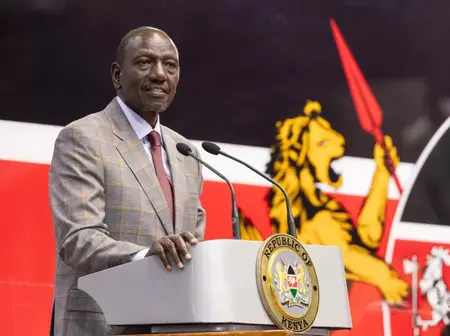
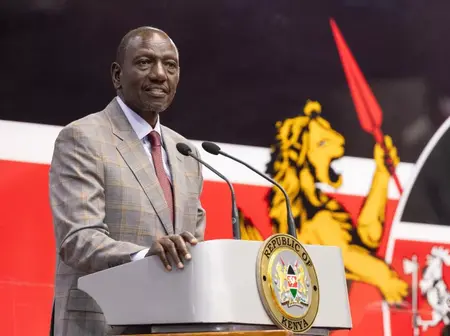
    President William Ruto has backed an argument by his economic adviser David Ndii that milk shortages in supermarkets are being driven by increased demand from workers employed under the Affordable Housing Programme, saying rising employment and purchasing power have changed consumption patterns.

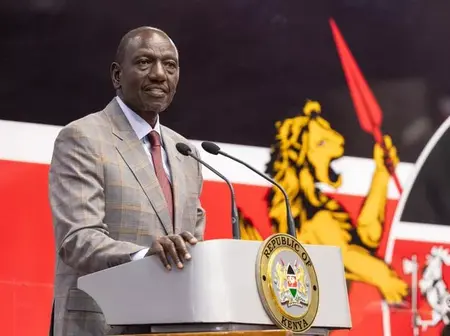
    Speaking on Wednesday during the Industrialisation Summit at the Kenyatta International Convention Centre (KICC) in Nairobi, Ruto said Kenya’s annual milk production had increased from about 4.6 billion litres to 5.5 billion litres last year.

    He also cited Kenya National Bureau of Statistics (KNBS) data showing a 36 per cent increase in milk processing capacity.

    The President said the increase in production and processing had coincided with a rise in the number of Kenyans able to afford milk, including workers at affordable housing construction sites.

    “People are asking, so why do we have a milk shortage? And I think a friend of mine answered very early yesterday,” Ruto said, referring to remarks by his economic adviser David Ndii.

    Ndii had attributed the shortages to increased consumption, arguing that more Kenyans were earning incomes and could now afford basic commodities such as tea and milk.

    Ruto said about two million additional Kenyans had moved into employment, including 1.1 million people working in the affordable housing sector.

    “That is how things change,” he said, arguing that rising incomes were influencing demand for goods and services.

    The President said similar changes in consumption and production were taking place in other sectors, including coffee and tea.

    “Let me conclude by saying that the same story can be done in the coffee, in the tea sector. Our numbers have changed,” he said.

    His remarks come amid reports of milk shortages in supermarkets and retail outlets, with some shops limiting purchases and consumers struggling to find certain brands.

    Ndii had previously cited increased national production and processor intake to argue that the shortages were driven by demand rather than a decline in milk supply.

    However, data on formal milk deliveries have shown fluctuations in recent months.

    An October 19 report indicated that deliveries to processors declined from 88.89 million litres in May to 75 million litres in August 2026.

    The Kenya Dairy Board attributed the decline largely to drought and pressure on animal feed, while also highlighting challenges in milk collection, processing and distribution.

    The KNBS August 2026 Leading Economic Indicators dashboard recorded formal milk intake at 77.1 million litres, down from 81.3 million litres in July.

  • Ruto: I offer internships to 15 students at my farm

    Ruto: I offer internships to 15 students at my farm

    President William Ruto has said he provides internship opportunities to between 10 and 15 university students at his farm, urging businesses to offer similar placements to help young people gain practical work experience.

    Ruto said the students receive stipends during their internships, allowing them to apply the knowledge acquired in college to real-life working environments.

    The President called on businesses and employers to open up opportunities for young people in factories, industries, manufacturing facilities and trading enterprises.

    “I am a farmer. I provide internships for between 10 and 15 young people from universities at my farm. We pay them a stipend, and I have interacted with them. They are very interesting young people because they have learnt so much in college, but they want to see it on the ground,” he said.

    He said internships lasting six months or a year would expose young people to practical work experience while helping employers identify and develop potential future employees.

    “It would give many of our young people an opportunity for a year or for six months to be able to be in a place where real work experience is happening,” Ruto said.

    He added that businesses would also play a role in sharpening the skills of young people, mentoring them and preparing them for employment.

    Ruto said such placements would help interns understand how industries operate and inspire them to pursue opportunities in different sectors.

    The President reaffirmed his administration's commitment to strengthening Kenya's manufacturing sector, saying local enterprises have the potential to produce world-class goods and compete in regional and global markets.

    Ruto said this after touring exhibition stands at the Industrialisation Summit and Changamka Festival at the Kenyatta International Convention Centre (KICC) in Nairobi, where local manufacturers are showcasing Kenyan-made products.

    He said the quality and diversity of products on display demonstrated the country's manufacturing potential and the ingenuity of local entrepreneurs.

    “From established industries to emerging enterprises, the products on show demonstrate our capacity to produce world-class goods, create value and compete in regional and global markets,” he said.

    The President said the government would focus on creating an enabling environment to attract investment, encourage innovation and expand production.

    He added that the administration was committed to sustaining the momentum by supporting Kenyan enterprises to manufacture, add value, grow and thrive.

  • Everything you need to know from the US midterm elections

    Everything you need to know from the US midterm elections

    Democrats have won both the US Senate and House of Representatives, taking control of Congress for the rest of Donald Trump's presidency.

    Projected results have provided the party with a number of things to celebrate – and rival Republicans some reasons to commiserate.

    Here is everything you need to know about some of the big Democratic wins and some historic firsts.

    Democrats toast victories in deep-red Trump country

    Democrats have tallied up victories in states that were comfortably won by Trump two years ago in the presidential election.

    With James Talarico winning a seat in the US Senate seat and Gina Hinojosa being elected state governor, Democrats scored two statewide victories in Texas – ending a string of defeats they have endured for almost two generations.

    Talarico's supporters went beserk as the projected results arrived at an election-night party, wrote the BBC's Gary O'Donoghue. Attendees hugged, kissed and drank to a reality they dared not believe would come true.

    Hinojosa became the first Latina to be elected governor of the state.

    Among the other states where history was made by the Democrats were Kansas, where Adam Hamilton took a closely-fought Senate seat – giving the state its first Democratic senator for nearly a century.

    Senior party figures who cheered the results included Hakeem Jeffries, the top Democrat in the House of Representatives, who is now poised to take over as the Speaker of the lower chamber of Congress.

    "Today begins the great American comeback," he told a crowd of supporters.

    If Jeffries' colleagues choose to keep him as the leader of their party's delegation in House, he will be the next Speaker, taking over from Republican Mike Johnson and becoming the first black person to fill that role.

    Trump congratulates opposition and acknowledges Iran and fuel prices were issues

    Trump spoke throughout the evening to a number of US media outlets, striking a conciliatory tone and conceding that the Democrats did a "good job".

    He said he would accept the results and that he was looking forward to working with the opposition party – albeit he would still have the power, as president, to veto legislation that Democrats advance through Texas.

    Trump distanced himself from some of the Republican candidates who contested the election, saying: "In some cases they didn't like the candidates, and in some cases those candidates were not my friend."

    He acknowledged that the US-Israel war on Iran, which has impacted consumer prices in the US, had affected the vote. Trump argued that high fuel prices meant voters could not see how well his economy was doing "as much as they should have", adding: "The gasoline was caused by Iran."

    El-Sayed wins US Senate race in Michigan after fellow Democrat turns on him

    Abdul El-Sayed has become the first Muslim person elected to the US Senate – after claiming victory in Michigan in what was one of a handful of closely fought contests. His win means the seat stays in Democratic hands.

    He defeated Republican opponent Mike Rogers, who received the surprise backing of El-Sayed's Democratic rival in the primary contest, Haley Stevens, who changed her endorsement at the eleventh hour.

    The race was one of the bitterest of the midterms. Trump invoked 9/11 and even called El-Sayed a "jihadist" without citing any evidence, prompting a backlash and accusations of Islamophobia.

    El-Sayed's supporters went wild when he took the stage to celebrate his claimed victory, wrote the BBC's Nada Tawfik. He said: "Up until right about now, you might have noticed I always say 'inshallah,' or 'God willing,' whenever the outcome of this race was mentioned."

    He went on to say: "But today, tonight, we can turn that 'inshallah' into 'alhamdulillah'. For the right-wing ops, that just means 'praise be to God.'"

    Republicans unable to win by distancing from Trump

    The defeat of Susan Collins, who has served as the Republican senator for Maine for three decades, was one indicator of the scale of the Republican losses.

    She was felled by Democratic candidate Troy Jackson, a logger who sought to point to his background to persuade blue-collar Mainers to vote for him.

    In a statement reported by US media, Collins conceded defeat and said it had been the "honour of my life" to serve the state for 30 years.

    The BBC's Helena Humphrey described a sombre atmosphere at Collins's watch party in the city of Maine – where the song Closing Time was played.

    Collins entered the race as one of the most vulnerable incumbent Republicans seeking re-election, and found that her tactic to distance herself from Trump did not work.

    Ashley Hinson suffered the same fate in Iowa, losing that closely-fought Senate seat to Josh Turek. Hinson had slightly distanced herself from the president, urging him to end the war with Iran and breaking with him on easing beef tariffs, while at the same time defending Trump's broader tariff policies as important.

    History made by new black governors and first openly gay male senator

    Among the other firsts of the night were in Florida, where Republican Byron Donalds has become the state's first black governor, following a hearty endorsement from Trump.

    Donalds, who will take over the job from Ron DeSantis, said his state was the "envy of the nation", and that he would work to make the state more affordable.

    The result was one of the few high points of an otherwise difficult evening for the Republicans.

    In the neighbouring state of Georgia, Democrat Keisha Lance Bottoms, the former mayor of Atlanta, won the governor's race, becoming the first black governor and first woman to be elected to the state's highest office.

    The BBC's Carl Nasman described ecstatic scenes as the race was projected blue. Bottoms defeated Republican Rick Jackson, a billionaire businessman and healthcare executive.

    The state has also not had a Democratic governor for more than 20 years.

    Elsewhere, Democrat Chris Pappas became the first openly gay man elected to the Senate. He celebrated on stage alongside his husband in New Hampshire.

    Pappas defeated former Republican Senator John Sununu in the race, whom he thanked on Tuesday, saying: "We all owe John Sununu a big debt of gratitude for his public service for the people of New Hampshire."

    The 46-year-old Pappas had represented New Hampshire in the House since 2019 but chose not to run for re-election so he could launch his campaign for the Senate.

  • Ruto: New Nairobi airport to be ready in 18 months

    Ruto: New Nairobi airport to be ready in 18 months

    President William Ruto has said construction of a new airport in Nairobi is underway, promising that the facility will be ready in 18 months despite earlier delays and controversy surrounding the abandoned Adani-led proposal.

    Ruto said the government had reorganised the project after the challenges that followed the involvement of Indian conglomerate Adani Group, adding that work on the airport was now progressing.

    “Already, the airport in Nairobi is under construction. Remember, there was a small challenge with the noise around Adani and others, but we've since reorganised, and now the airport is under construction. In another 18 months, you will have a new airport,” he said.

    The President acknowledged that the timeline had become a subject of public debate, with critics initially questioning whether the project was achievable before shifting to concerns about delays.

    He was speaking at the KICC where he presided over the official opening of the five-day 2026 Industrialisation Summit.

    Ruto said the changing criticism was evidence that the project had moved from being dismissed as impossible to being recognised as underway.

    “When I say 18 months, we will have a debate. We have a very interesting debate nowadays in Kenya. Some people said that it was not possible to be done. Then they changed and said this gentleman overpromised, and then they said nothing was happening,” Ruto said.

    He added that the debate had since shifted to claims that the project was happening but was behind schedule by a month or two.

    “That’s a good debate. There is no problem. So it was not a lie. It was not overpromised. It was not that nothing was happening. It’s just that it has not happened, or it is one month late. That we can deal with,” he said.

    The project is being undertaken by China Road and Bridge Corporation (CRBC), which signed a Sh154.2 billion contract with the government in June.

    The works include construction of a new passenger terminal, modernisation of existing facilities and improvements to airside and landside infrastructure.

    Lebanese-founded engineering firm, Dar Al-Handasah Consultants, has been appointed to supervise the engineering works and oversee project implementation.

    The proposed Adani deal had been one of the most contentious infrastructure projects under the Kenya Kwanza administration.

    In 2024, Adani Group submitted a proposal estimated at about Sh230 billion to modernise and expand Jomo Kenyatta International Airport (JKIA) under a 30-year concession.

    The plan included construction of a second runway and an upgraded passenger terminal, with the Indian conglomerate expected to operate the airport under the arrangement.

    The proposal triggered opposition from aviation workers, who raised concerns over possible job losses and working conditions, while the Law Society of Kenya and the Kenya Human Rights Commission challenged the arrangement in court.

    The High Court temporarily halted the process in September 2024 as the legal challenge proceeded.

    Ruto announced the cancellation of the airport proposal on November 21, 2024, alongside a separate Adani-linked power transmission deal, following information from investigative agencies and partner countries.

    The decision came after US prosecutors indicted Adani Group founder Gautam Adani and other executives over alleged bribery involving Indian officials.

    Adani denied the allegations.

    The Kenya Airports Authority (KAA) formally confirmed the cancellation before the High Court in February 2026.

    It later clarified that the ongoing JKIA modernisation programme was a government initiative and that it had no discussions with Adani or its affiliates over the airport.

  • ‘I did not abandon Mosop’: MP Kirwa’s emotional defence against ouster bid

    ‘I did not abandon Mosop’: MP Kirwa’s emotional defence against ouster bid

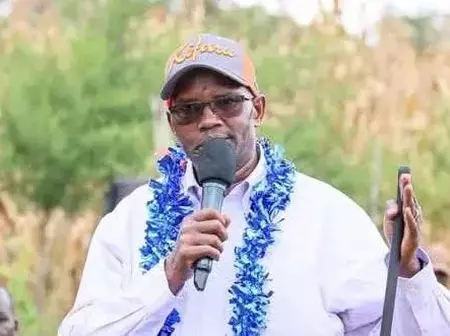
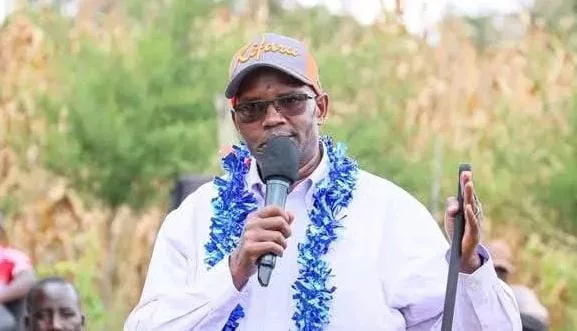
    Mosop MP Abraham Kirwa has broken his silence on the legal challenge to his parliamentary seat, recounting a painful two-year battle with illness and insisting that he never abandoned the constituency.

    In an emotional message to residents, Kirwa said his prolonged absence from Parliament was caused by serious health complications that kept him in hospital away from home, dismissing suggestions that he had deliberately neglected his constituents.

    “No one would wish for sickness. I did not choose to be sick. I did not abandon Mosop,” he said.

    The lawmaker spoke after the High Court gave him five days to respond to a petition seeking to have his parliamentary seat declared vacant over his prolonged absence from parliamentary sittings.

    Kirwa said the legal action came at a particularly difficult time when he was struggling to recover from his illness.

    “I have been fighting a serious battle with my health, in hospital, away from home, for two years. It shattered me that a few busybodies chose that very moment to take me to court,” he said.

    He, however, maintained that he was ready to defend himself in court, saying he had nothing to hide and would comply with the directions issued by the judge.

    “I will answer the court in the five days given. I have nothing to hide,” he said.

    Kirwa also thanked God for his recovery, acknowledging National Assembly Speaker Moses Wetang’ula for understanding his medical circumstances and residents who stood by him through prayers.

    The petition was filed by Mosop voter Timothy Tororey, who wants the court to declare the constituency seat vacant, arguing that the MP's prolonged absence denied residents effective representation in parliamentary debates, voting and oversight.

    Justice Roselyne Aburili allowed applications by Kirwa and the Speaker to reopen the proceedings, giving them an opportunity to respond to the petition.

    The judge directed the MP and the Speaker to file their responses and written submissions within five days from November 2, 2026. The petitioner was also given five days after receiving the responses to file further affidavits and submissions.

    Justice Aburili observed that the case was consequential because its outcome could affect the tenure of an elected legislator and the electorate represented by that office.

    The court did not declare the Mosop seat vacant. The petition will be determined after the parties have presented their respective arguments.

    Kirwa returned to Kenya on November 21, 2025, after receiving treatment in Dallas, United States, following a major stroke.

    He subsequently resumed parliamentary duties, making his first appearance in the National Assembly on November 25, 2025.

    In his message, the MP also sought to reassure residents that development activities had continued despite his absence, crediting the Mosop National Government Constituencies Development Fund (NG-CDF) and constituency office teams for keeping projects on course.

    He said he had resumed his duties barely a year ago after the two-year health battle and appealed to residents to continue supporting him as he recovers.

    “Mosop, I am still your son. I am still your MP. Keep praying for me,” he said.

    His message comes as the court considers whether his prolonged absence breached constitutional requirements governing the continued occupation of an elected parliamentary seat.

  • Journalist mourns school principal who died soon after retirement

    Journalist mourns school principal who died soon after retirement

    thumbnail

    As parents, teachers, students and friends prepare for a grand send-off for retired Principal Lawrence Makori, who died recently, shortly after retirement, one man is gathering himself to come to terms with it. He walked with him, with Makori as his hero. He did not die with him physically, but he believed in his principles.

  • KMPDC Sets Conditions for Use of AI in Medical Practice

    KMPDC Sets Conditions for Use of AI in Medical Practice

    thumbnail

    GuidelinesKMPDC has outlined strict conditions governing the use of artificial intelligence and other technology-based healthcare services in medical practice.The Kenya Medical Practitioners and Dentists Council (KMPDC) has outlined strict conditions governing the use of artificial intelligence and other technology-based healthcare services in medical practice.In a notice on Wednesday, November 4, the Council highlighted the professional obligations that must be observed when adopting emerging technologies, including telemedicine, e-health, m-health, robotic medicine, wearable devices and artificial intelligence.

  • World Bank: Why it costs up to Ksh162,000 to move a container from Mombasa to Nairobi

    World Bank: Why it costs up to Ksh162,000 to move a container from Mombasa to Nairobi

    World Bank: Why it costs up to Ksh162,000 to move a container from Mombasa to Nairobi

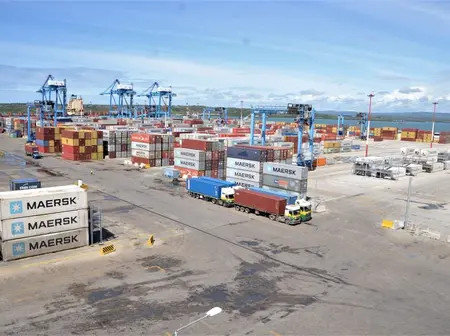
    Moving a 20-foot shipping container from Mombasa to Nairobi costs up to Ksh162,425, despite the two cities being about 480 kilometres apart, according to a new World Bank report that raises fresh questions about the cost of doing business in Kenya.

    The World Bank’s November 2026 Kenya Economic Update says that transporting the same container by road in Europe costs about Ksh93,557, nearly Ksh69,000 less, even though fuel and labour costs are higher there.

    The comparison is particularly striking because the report notes that Europe has higher fuel and labour costs.

    For Kenyan importers, manufacturers and retailers, the figures expose a costly part of the supply chain that begins after goods have already arrived at the country’s main seaport.

    The expense becomes clearer when the entire journey is considered.

    According to the World Bank, shipping a 20-foot container from China to Mombasa costs around US$2,000, equivalent to approximately Ksh259,880.

    Moving that same container from Mombasa to Nairobi adds another Ksh110,449 to Ksh162,425.

    That means the inland journey alone accounts for around one-third of the total cost of transporting the container from China to Nairobi.

    The World Bank says the problem is not simply the distance or the cost of fuel.

    “Logistics costs increase due to a combination of constraints,” the report states.

    Vehicles being transported by the SGR from Mombasa to Nairobi PHOTO/@KenyaRailways/X

    It identifies problems including Mombasa port management and congestion, administrative delays, and official and unofficial checkpoints affecting inland transport.

    For businesses, such obstacles can create uncertainty over delivery times and add expenses to moving goods. Importers dealing in machinery, raw materials and finished products must factor these costs into their operations.

    The report also raises concerns about the efficiency of the Port of Mombasa, the largest port in East Africa.

    In the World Bank’s Global Container Port Performance Index, Mombasa ranked 326th out of 348 ports assessed in 2022. In the 2024 edition, it ranked 375th out of 403 ports.

    The report contrasts this with Senegal’s Dakar Port, which improved from 371st to 108th place over the same two-year period.

    The World Bank says businesses using Mombasa face multiple inspections, recurring system downtime, rising fees and demands for bribes, all of which increase delays and costs.

    It also cites a 2025 assessment by the Shippers Council of Eastern Africa, which described logistics costs at the port as “alarmingly high”, estimating that they account for 35 to 42 per cent of the total landed cost of goods.

    The report adds that the number of agencies involved in inspections keeps expanding, bringing additional fees and increasing the risk of delays.

    The implications extend beyond clearing agents, shipping companies and importers.

    When businesses spend more to move goods from the coast to the country’s commercial centre, they face pressure on their operating costs. Depending on the market and the product, some of those expenses may eventually be reflected in prices paid by consumers.

    The World Bank warns that port congestion creates “greater uncertainty, additional costs, and foreclosed opportunities” for businesses.

    It also links higher corruption levels internationally with weaker logistics performance, pointing to bribe requests and inefficient public investment as possible contributing factors. However, it cautions that this relationship shows correlation rather than proving corruption alone causes poor logistics performance.

    For Kenya, the challenge is to make the journey from Mombasa to Nairobi more predictable, efficient and affordable.

    The question raised by the report is difficult to ignore: why should moving a container 480 kilometres inside Kenya cost up to Ksh162,425 when an equivalent journey in Europe is estimated at Ksh93,557?