President William Ruto has announced ambitious plans to manufacture leather shoes locally for all 14 million school-going children across Kenya, leveraging guaranteed domestic demand to revive the country’s leather industry.
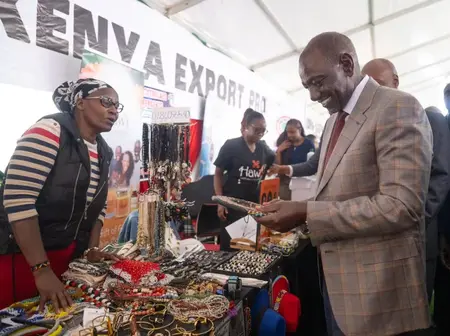
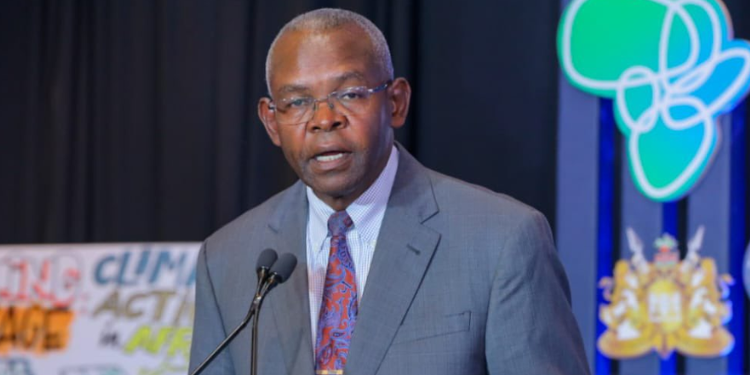
Speaking during the Innovation Summit at the Kenyatta International Convention Centre (KICC) on Wednesday, November 4, 2026, the Head of State directed local footwear manufacturers to prepare to supply schools nationwide.
“We will now move a step further. We want you to manufacture all the shoes for our school-going children, and we have 14 million of them,” President Ruto stated, framing the initiative as a major driver for youth employment and economic growth.
To support the directive, President Ruto emphasized that the government is decentralizing leather production rather than concentrating operations exclusively in Nairobi.
The strategy relies heavily on the Ksh 5.8 billion Kenya Leather Industrial Park in Kenani, Machakos County—unveiled in September 2026 by Deputy President Kithure Kindiki—which features modern tanning, processing, and manufacturing infrastructure. The government aims to establish satellite ecosystems across counties to ensure regional participation in the supply chain.
This expansion builds on a similar policy implemented in June, when the President issued a strict ban on foreign military and police boots. By October 2026, all security agency footwear was sourced entirely from domestic producers.
Despite owning Africa’s third-largest livestock population and ranking 11th globally with approximately 80 million animals, Kenya has historically underutilized its leather potential.
According to data from the World Bank and the Kenya Leather Development Council:
Kenya ranks 87th globally in leather apparel exports, earning just Ksh 68 million ($527,000).
The country ranks 101st in imports, spending Ksh 285 million ($2.2 million) on foreign leather products.
President Ruto noted that channeling the local demand of 14 million students directly to domestic tanneries and shoe factories will reverse these trade imbalances and capitalize on Kenya’s vast raw material reserves.
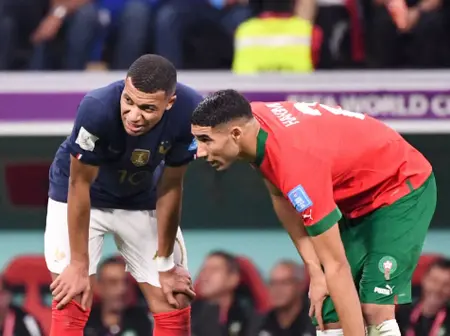
Reigning African Player of the Year Achraf Hakimi faces competition from several of the continent’s top footballers, including former winner Sadio Mané, Ghanaian forward Antoine Semenyo and Morocco’s Brahim Diaz, following the announcement of the 2026 CAF Awards men’s nominees.The Confederation of African Football (CAF) released the shortlisted candidates on Wednesday, November 4, 2026, ahead of the awards ceremony scheduled for Monday, December 7, 2026 in Lagos, Nigeria.
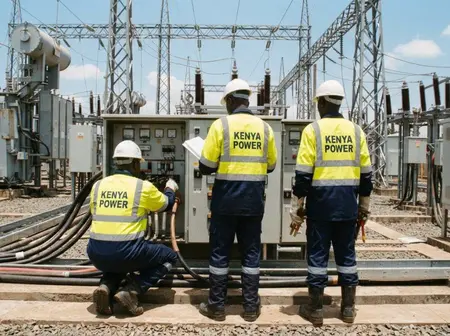
Kenya Power has urged electricity customers to verify the identities of people claiming to be its employees or contractors before allowing them to access their homes or handle electrical installations. The power distributor is encouraging customers to use its MyPower App to establish whether the individuals they are dealing with are genuine representatives of the company.
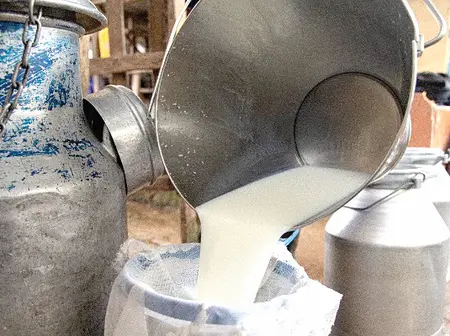
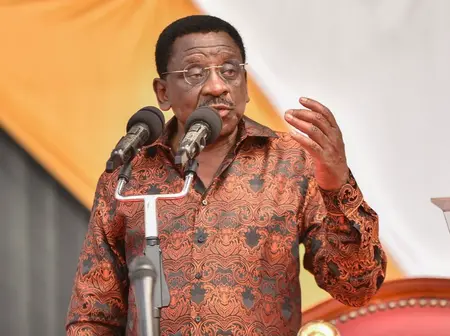
President William Ruto and his economic adviser David Ndii are facing questions over their explanation for Kenya’s milk shortages, after linking rising demand to newly employed Kenyans, including workers on affordable housing projects.
Their argument is that more people earning wages can afford milk, pushing consumption higher. But official figures reveal another side of the story: although Kenya’s annual milk production increased in 2025, the volume reaching formal processors declined for three consecutive months between May and August 2026.
The figures raise a crucial question: are newly employed workers driving supermarket stockouts, or are problems in milk production and distribution also responsible?
On Wednesday, November 4, 2026, Ruto defended Ndii’s explanation, citing increased employment and the purchasing power of workers.
“There are too many people now who can afford some tea and some milk because we have close to another two million people who are not working. Now they are working. 1.1 million of them are in the affordable housing space,” Ruto said.
The President argued that increased employment was changing consumption patterns as more Kenyans gained the ability to buy basic commodities.
The explanation is economically plausible. However, the number of people employed does not, by itself, establish how much additional milk they consume or how much they contribute to supermarket shortages.
Speaking at the NCBA Economic Forum in Nairobi on Tuesday, November 3, 2026, Ndii questioned whether reduced national supply was responsible for the stockouts.
“If there is no reduction in supply, and there is actually a very sharp increase in both production and the intake by processors, what can explain the stock-outs on the shelves?” Ndii asked.
He pointed to affordable housing construction sites as an example of rising consumption.
“If you go to any of our construction sites, where we are doing affordable housing, where there are a couple of hundred thousand people working every day, you will find crates of milk sitting there,” he said.
But the examples do not quantify the workers’ total consumption. No worker-specific breakdown cited in these reports establishes the volume of milk consumed at housing sites or its share of national demand.
The Kenya National Bureau of Statistics (KNBS) reported that annual milk production increased from 5.3348 billion litres in 2024 to 5.5211 billion litres in 2025, a rise of 3.5 per cent.
However, KNBS’s Leading Economic Indicators, August 2026 report shows formal-sector milk intake fell from 88.89 million litres in May to 84.44 million in June, 81.32 million in July and 77.13 million in August.
That is a decline of approximately 13.2 per cent between May and August. Intake also fell by 5.1 per cent between July and August alone.
The data does not prove that total national milk production declined by the same amount. It measures milk entering formal processing channels, not all milk produced or sold through informal markets.
Nevertheless, it demonstrates why higher annual production does not automatically guarantee steady supplies of packaged milk in supermarkets.
Agriculture Cabinet Secretary Mutahi Kagwe has identified drought, inadequate animal feed and competition from brokers as factors affecting formal milk deliveries.
“There is a shortage of animal feed in areas where cows normally graze on green pasture. A well-fed cow is not the same as one that isn’t, and therefore there is a reduction in the quantity of milk,” Kagwe said.
Kagwe revealed brokers offering farmers better prices were also diverting milk away from processing companies, leaving supermarkets short of supplies even where milk remained available through informal channels.
Partly plausible, but not proven. Ruto and Ndii offer a credible explanation for how rising employment could increase milk demand.
However, the available data does not establish that affordable housing workers are a major cause of supermarket stockouts. KNBS figures and the government’s own statement point to supply-chain pressures that must also be considered.
The key unanswered question is how much milk the new workforce consumes compared with the volume no longer reaching formal processors. Without that evidence, attributing the shortage primarily to housing workers goes beyond what the published figures establish.
The Central Bank of Kenya (CBK) has received bids worth KSh99.47 billion from investors seeking to purchase two reopened Treasury bonds.In results released on Wednesday, November 4, 2026, the CBK said it accepted KSh70.86 billion in bids for the 15-year and 30-year Treasury bonds.
Orengo made the announcement on Facebook, saying the party's footprint has spread from Kwale to Garissa, from Garissa to Turkana, and onward to the shores of Lake Victoria. He described the discussions as candid and productive.
Among the leaders he met were Rael Arot, an MP aspirant for Turkana Central, and Mariam Mbindo, a Woman Representative aspirant for Kwale County.
He also met Mohammed Dimbil, the former Garissa ODM chairperson who is now an aspirant for the Garissa Township MCA seat, and Alice Ajikon, an aspirant for the Lodwar Township MCA seat in Turkana Central.
The presence of Dimbil is notable. He previously chaired ODM in Garissa, and his move to LDP suggests that Orengo's new party is drawing from the Orange party's own ranks.
Orengo, a long-serving ODM figure, has left the party to lead LDP, a move that marks a significant shift in the politics of the Nyanza region and beyond.
The governor's message ended with the Swahili phrase "Mbele kuzuri", which loosely means a better future lies ahead.
It remains unclear what Orengo's own plans are for 2027. He has not said whether he will seek a second term as Siaya governor or run for the presidency on the LDP ticket.
His decision will be closely watched, given his standing as a senior lawyer and a veteran of Kenyan politics, and because Siaya has long been a stronghold of the late Raila Odinga's ODM.
For now, the focus appears to be on building the party's structures. By recruiting aspirants for parliamentary, women representative and ward seats in counties far from his Siaya base, Orengo is signalling that LDP intends to field candidates across several regions, including northern Kenya and the Coast, rather than remain a regional outfit.
The expansion comes as parties across the political divide scramble to recruit candidates ahead of the 2027 General Election.
Liverpool will be without Ryan Gravenberch when they travel to Turkey to take on Fenerbahce in Wednesday’s, November 4, 2026 UEFA Champions League encounter.The Dutch midfielder has been ruled out after suffering a heel fracture, which has continued to trouble him since Liverpool’s recent meeting with Arsenal.
Businesses last month raised prices of goods and services at second-highest pace in three years to protect their profit margins as rising fuel, transport and purchase costs eat into earnings, threatening to undermine a private-sector recovery driven by improving customer demand
The latest Stanbic Bank Kenya Purchasing Managers’ Index (PMI) shows that while companies are receiving more orders, mounting cash-flow difficulties and inflationary pressures are limiting their ability to expand production, clear backlogs and hire more workers.
A new category of wearable technology is quietly finding its way onto the fingers of Kenya’s fitness enthusiasts, offering an alternative to the familiar smartwatch and fitness tracker wristband.
The smart ring, a compact device that resembles ordinary jewellery, tracks sleep patterns, heart rate, activity levels and other health indicators without the bulk of a watch or the need to keep checking a screen.
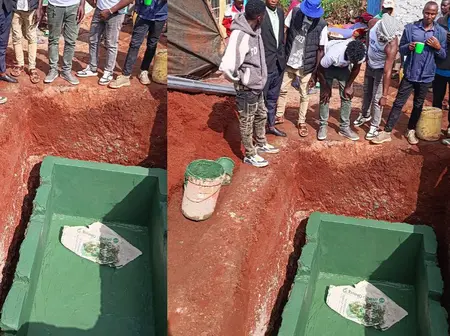
Gusii singer and digital content creator Vickytam Embande has shared a glimpse of the custom-built grave where late entertainer MC Ogwatoni will be laid to rest, revealing a striking green concrete finish on its interior as preparations for the burial continued.Vickytam shared photographs in a Facebook post on Wednesday, November 4, 2026, showing how the grave was dug deep into the ground before its interior was lined with concrete.