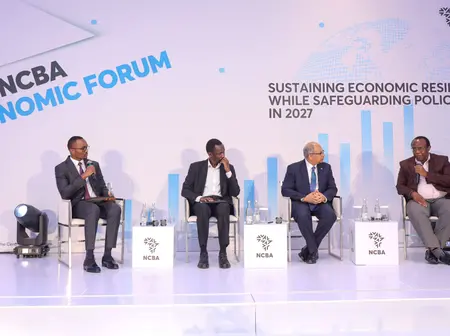
Kenya’s cost of doing business is back in focus after David Ndii proposed a dedicated function to oversee regulatory requirements and the charges imposed on businesses. Speaking at the NCBA Economic Forum 2026, Ndii argued for a more coordinated approach to monitoring regulations, with attention to the fees, licences and administrative obligations that affect companies.
The proposal addresses a concern raised during the forum about the accumulation of charges across government agencies. Businesses must navigate different regulatory requirements while managing the financial and administrative costs associated with operating in Kenya.
Ndii’s proposal centres on giving regulatory oversight a clearly defined institutional responsibility. A dedicated function would monitor the rules affecting businesses and examine how new requirements add to existing compliance obligations.
The issue is particularly relevant to smaller enterprises, which often have fewer resources to manage multiple licences, inspections and administrative processes. Companies operating across different sectors can also face requirements from several agencies, adding to the complexity of compliance.
Dr Bimal Kantaria raised concerns about the number of fees and levies affecting exporters. He referred to 47 charges and five additional levies, arguing that regulatory costs contribute to the difficulties facing Kenyan businesses competing in international markets.
His comments also connected regulatory costs with logistical challenges affecting horticultural exports. Charges imposed at different stages of production, transportation and export can add to the cost of getting Kenyan goods to overseas buyers.
For businesses operating on tight margins, these expenses affect pricing and competitiveness. Smaller exporters and producers must also account for the administrative time involved in meeting different requirements.
The debate highlighted the relationship between regulation and the ability of businesses to invest and expand. Predictable rules allow companies to plan their operations, while multiple and fragmented requirements can complicate investment decisions.
Gossip’s closing remarks at the forum also emphasised lower business costs, accountability and economic diversification as priorities for Kenya’s private sector.
A dedicated regulatory oversight function would place greater attention on the cumulative cost of government requirements. The broader policy question concerns how Kenya can maintain effective regulation while ensuring that businesses are not burdened by unnecessary administrative expenses.
For SMEs, exporters and larger companies, the cost of compliance forms part of the wider operating environment. Ndii’s proposal puts responsibility for examining that burden at the centre of the business policy discussion.
Manchester City manager Enzo Maresca has challenged his other attacking players to contribute more goals instead of depending heavily on Erling Haaland to deliver in front of goal.The Norwegian striker has enjoyed an outstanding spell since arriving at the Etihad Stadium in the summer of 2022, registering 175 goals in 209 appearances for the Premier League champions.
A journalist who was present in Ferrari's hospitality at the Mexico City Grand Prix has revealed what he saw following the incident between Lewis Hamilton and Charles Leclerc on lap one.
Hamilton was ahead of Leclerc going into turn four when the Monegasque driver left the track and gained an advantage after carrying too much speed into the corner.
Leclerc did not give back the position to Hamilton and took over the race lead, with Hamilton – who also left the track but rejoined in the correct manner – dropping behind Max Verstappen.
The seven-time world champion criticised the FIA's decision to only give Leclerc a five-second penalty rather than the standard 10-second punishment, with race stewards citing mitigating factors – Hamilton leaving the track – as the reason behind their decision. During the red flag period, Hamilton told his race engineer Carlo Santi that Ferrari had 'big problems' over the incident, and now more details have emerged about what went on behind-the-scenes.
Journalist Edd Straw, speaking on The Race's YouTube channel, stated that he attended Ferrari team principal Frederic Vasseur's media briefing in the team's hospitality building after the Mexico City Grand Prix – at which point Leclerc walked in.
"He's [Vasseur] not going to talk to them like naughty school children. He's not going to take that approach," Straw said. "But I am convinced he will be forceful. He knows how to do it.
"Funnily enough, as we were coming out of the room in the back of the Ferrari hospitality, the little group of us, Charles Leclerc arrived. Face like thunder, I think it's fair to say. He didn't look very happy. Marched into the drivers' room at the back, and Fred went in after him. So that's where the conversations began.
"And around about the same time, the press conference was starting where Lewis Hamilton was continuing to presumably take what he thought was his very strong position."
In his post-race interview, Leclerc accepted that he deserved a five-second penalty 'in a way', but stopped short of admitting complete fault for the incident with Hamilton.
"The thing is that it was a bit confusing because we both didn't make Turn 4," he said. "Then I stayed ahead, and then Max got past Lewis. So yeah, then I asked what should I do? And I kept the position and took a deserved penalty."
Hamilton, meanwhile, said he would take his frustrations with Ferrari and Leclerc 'offline', but admitted he was unhappy with the team losing out on what could have been a one-two finish had it not been for Leclerc's move at turn four.
"I'm happy because this guy [Antonelli] just won the championship," he said in the post-race podium press conference. "So I'm really torn because, on one side, I'm happy and, on the other side, I'm really p—ed.
"We lost valuable points. We, as a team, worked so hard. We could have easily had a one-two today. We had the pace to do so.
"So we're going into turn four, first and second. If we just held position, I think anything can happen in the race, but when your team-mate works against you, and then you lose positions like that, it's definitely tough.
"I think the core thing to remember, which maybe comes with age, is that every decision you make in the car impacts all the people who work in the background – the whole team. Working as a team is part of our job and part of our contract. We have to work as a team, which we could have easily done today.
"So it's a shame to see us lose as we did, and that will just continue unless action is taken and a real, deep, serious conversation is had so it shouldn't happen moving forward."
As thousands of Kenyans prepare to travel to different destinations during the festive season, passengers using the Standard Gauge Railway (SGR) have been encouraged to remain vigilant and take personal security precautions throughout their journeys.With increased movement of people during the holidays, travellers may become vulnerable to theft, particularly when carrying luggage, valuables and personal belongings in busy public spaces.
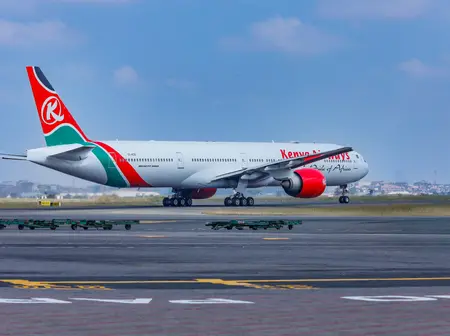
Kenya Airways cargo operations could play a greater role in supporting agricultural exporters under a proposal by Dr Bimal Kantaria to lease two dedicated freighter aircraft. Speaking at the NCBA Economic Forum 2026, Kantaria proposed one aircraft serving the United Kingdom and another covering the wider European market.
The proposal addresses the cost and capacity challenges facing Kenya’s horticultural exporters, particularly businesses that depend on reliable airfreight to transport fresh produce to overseas buyers.
Kantaria’s proposal involves leasing two cargo aircraft through Kenya Airways, with separate coverage for the UK and European markets. The arrangement would give exporters a dedicated cargo option serving two important destinations for Kenyan produce.
Fresh produce exports depend on transportation arrangements that can preserve quality and meet delivery schedules. Airfreight capacity is therefore an important part of the economics of exporting horticultural products.
Kantaria argued that Kenya needs to address the logistical constraints affecting exporters, including the availability and cost of transporting goods to international markets.
Kenya’s horticultural sector competes in markets where delivery times, transport costs and product quality influence commercial performance. Exporters must manage these requirements while competing with suppliers from other producing countries.
A dedicated cargo arrangement through Kenya Airways could provide another route for moving Kenyan produce to buyers in Britain and Europe. The proposal also places the national carrier within a wider discussion about how aviation infrastructure can support trade and agricultural exports.
Kantaria’s comments extended beyond airfreight. He raised concerns about delays at the Port of Mombasa, including vessel waiting periods of 45 to 50 days, and the financial costs associated with delays affecting fertiliser shipments.
He also discussed the burden of multiple charges and levies facing exporters. These costs form part of the operating environment for companies that must move goods through several stages before reaching international customers.
The combination of transport costs, administrative charges and supply-chain delays affects the competitiveness of Kenyan exports.
The two-aircraft proposal places cargo capacity within the broader question of how Kenya can support its export industries. Horticultural exporters need transport options that connect production areas with overseas markets while managing the cost of moving perishable goods.
For Kenya Airways, the proposal points to a potential role in supporting agricultural trade through dedicated freight services. For exporters, the wider issue is whether the country’s transport infrastructure can support the volume, timing and cost requirements of international markets.
Listen to articleThe affected club, Armée Patriotique Rwandaise (APR), is one of Rwanda's leading basketball teams and is funded by the country's military.The National Basketball Association (NBA) has linked the exclusion of Rwanda's army-backed basketball club from the 2026 Basketball Africa League (BAL) to US sanctions against the country's military in March.
There is always that one friend who reaches for the bill before anyone else has had a chance to open their wallet. At dinner, on a weekend getaway or when booking a group activity, they are quick to pay, trusting that everyone will send their share later.
It may seem like a harmless gesture of generosity, but being the friend who always picks up the tab can come at a cost.
A politician’s campaign vehicle is rarely just a means of transport. With speakers mounted on its roof, cables running through its interior and sound equipment fitted into its boot, an ordinary car can be transformed into a mobile public address system capable of addressing thousands of people.
The conversion, however, comes at a price. Depending on the vehicle and the equipment installed, turning a Subaru or Toyota Probox into a campaign sound system can cost hundreds of thousands of shillings, while more elaborate installations on high-end SUVs can run into millions.
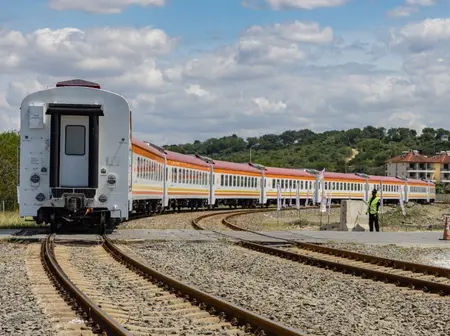
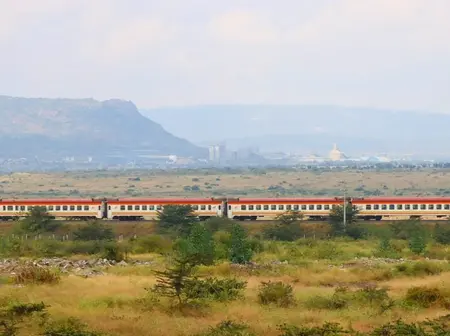
Kenya could have saved up to Ksh117 billion during the initial construction of the Mombasa–Nairobi Standard Gauge Railway (SGR) if it had matched Tanzania’s construction cost per kilometre, according to the World Bank.
The estimate, equivalent to US$900 million, appears in the lender’s November 2026 Kenya Economic Update, which examines how governance weaknesses affect public spending, economic growth and job creation.
“With the same cost metric as the Tanzanian line, Kenya could have saved up to US$900 million in initial construction costs,” the report states.
The World Bank estimates that at least 30 per cent of the potential savings is attributable to governance challenges, including non-competitive contracting, land speculation and fraud involving land titles, valuations and compensation payments.
The findings raise questions about value for money in major infrastructure projects as Kenya faces substantial public debt and repayment obligations.
The World Bank puts Kenya’s Mombasa–Nairobi SGR construction cost at US$7.6 million per kilometre, compared with US$5.7 million for Tanzania’s Dar es Salaam–Dodoma railway and US$5.3 million for the Djibouti–Addis Ababa line.
Using the report’s approximate Kenyan shilling equivalents, the costs were: Kenya SGR: Ksh988 million per kilometre, Tanzania railway: Ksh741 million per kilometre and Djibouti–Addis Ababa railway: Ksh689 million per kilometre.
Kenya’s railway therefore costs approximately Ksh247 million more per kilometre than Tanzania’s and Ksh299 million more than the Djibouti–Addis Ababa line, placing it about 33 per cent above Tanzania’s benchmark.
Applying Tanzania’s cost metric to Kenya’s railway produces the estimated US$900 million, or approximately Ksh116 billion to Ksh117 billion, in potential initial construction savings.
The figure is a hypothetical comparison, not a confirmed amount of recoverable public money or proof that the entire cost difference was stolen.
The report identifies governance weaknesses as a significant contributor to the potential savings.
“Of this amount, at least 30 percent is considered attributable to governance challenges,” the World Bank says.
The concerns include direct contracting instead of competitive tendering, land speculation, and fraud involving land titling, valuation and compensation payments.
The lender warns that limited competition can weaken scrutiny of contract prices and create opportunities for inflated costs.
“Once contracts are awarded to connected companies, this also raises the likelihood of further collusion and cost markups during project execution,” the report states.
The World Bank does not say that 30 per cent of the entire SGR budget has been proven stolen. Its estimate refers to at least 30 per cent of the potential savings.
The comparison is notable because Kenya’s SGR is diesel-powered, while the Tanzania and Djibouti–Addis Ababa lines are electrified. Electrification requires additional infrastructure, although the World Bank cautions that the projects differ in specifications, construction periods, terrain and other physical conditions.
All three railways are single-track lines. The Djibouti–Addis Ababa railway was built between 2011 and 2016 and has an elevation gain of approximately 2,300 metres. Kenya’s Mombasa–Nairobi line was constructed between 2014 and 2017, with an elevation gain of about 1,600 metres.
Tanzania’s Dar es Salaam–Dodoma line was built between 2017 and 2024, with an elevation gain of approximately 1,060 metres.
The Ethiopian line therefore faced more mountainous terrain and a greater elevation gain than Kenya’s railway.
The World Bank acknowledges that land acquisition costs were significantly higher in Kenya but says they do not fully explain the cost difference. Tanzania’s railway was also built later and to a higher specification, including electrification.
The comparison does not establish that every additional shilling spent on Kenya’s SGR resulted from corruption. It identifies governance weaknesses as an explanation for part of the potential savings.
SGR flagged in corruption risk assessment
The findings echo Transparency International Kenya’s June 2026 Corruption Risk Assessment of Infrastructure Projects in Kenya, which examined vulnerabilities in major public investments, including the SGR.
The World Bank references the assessment, noting that the railway was highlighted as particularly vulnerable to corruption risks. The assessment considered procurement transparency, public participation, oversight and access to project information.
The concerns are especially significant for infrastructure financed through public borrowing, where construction costs affect taxpayers through debt repayments and other fiscal commitments.
The SGR comparison forms part of a broader warning about corruption and collusion across Kenya’s economy.
The World Bank estimates that governance weaknesses linked to corruption and collusion increase Kenya’s annual fiscal deficit by approximately two percentage points of gross domestic product through higher public expenditure and lower revenue collection.
The resulting deficits increase borrowing requirements and add to the country’s debt pressures. The lender also identifies governance concerns in sectors such as electricity and logistics, where weak oversight and non-competitive contracts can raise costs for businesses and consumers.
The report argues that corruption can undermine investment and productivity while reducing resources available for essential public services.
The lender recommends stronger competition and transparency in public procurement, alongside more effective oversight of public investment.
Its proposals include fully implementing electronic government procurement, improving access to contract information, publishing comprehensive public-project data and increasing transparency around beneficial ownership to reveal who ultimately owns companies receiving government contracts.
Other recommendations include strengthening oversight institutions, following up on Auditor-General recommendations and applying procurement rules effectively to public-private partnerships and other contracting arrangements.
For taxpayers, the estimated Ksh116 billion to Ksh117 billion represents the potential cost of failing to achieve comparable construction costs, not a confirmed amount that can be recovered.
The World Bank’s central finding is that governance challenges account for at least 30 per cent of those potential savings. It does not establish that the entire difference was caused by corruption or that the full amount was stolen.
Kenya Railways has cautioned passengers against fraudulent Madaraka Express ticket booking platforms as Kenyans prepare for increased travel during the festive season.
In a public notice issued on Wednesday, November 4, 2026, the corporation urged travellers to remain alert and use only its authorised channels when purchasing Standard Gauge Railway (SGR) tickets.
The warning, headlined, lists three official booking options and cautions passengers against using unauthorised platforms.
Passengers can book tickets online through the official Kenya Railways website at https://metickets.krc.co.ke, dial *639# on their mobile phones or visit any Madaraka Express Passenger Service station.
“Visit any of our Madaraka Express Passenger Service stations For more information, please contact: Phone: 0709 907 000, 0709 907 555,”Kenya Railway post read in part.
The corporation urged travellers to verify booking platforms before making payments to avoid falling victim to fraudulent ticket sellers.
According to the advisory, passengers seeking to travel on the Madaraka Express should make reservations exclusively through the three recognised channels.
Those booking online should use the official ticketing portal, while passengers without internet access can use the USSD service by dialling *639#.
Travellers can also purchase tickets physically at any Madaraka Express Passenger Service station.
Kenya Railways provided additional contacts for passengers seeking clarification or assistance with their bookings.
The corporation listed 0709 907 000 and 0709 907 555 as its official telephone contacts. Passengers can also reach it through info@krc.co.ke or visit www.krc.co.ke.
Its official social media accounts operate under the name Kenya Railways on X and Facebook.
The warning comes ahead of the Christmas and New Year holidays, when many Kenyans travel to different parts of the country to spend time with family and friends.
The Nairobi-Mombasa route is among the key travel corridors served by the Madaraka Express, which offers passenger services between the two cities.
With demand for holiday travel expected to increase, the advisory reminds passengers to confirm that they are using legitimate booking channels before completing transactions.
The corporation’s notice provides a direct way for travellers to distinguish its authorised ticketing services from other platforms claiming to offer Madaraka Express reservations.
Passengers seeking assistance with bookings can contact Kenya Railways through its published telephone numbers or email address.
On October 31, 2026, the corporation completed its first vehicle transportation service, moving 24 vehicles from Mombasa to the Nairobi Inland Container Depot.
The corporation plans to increase the service to approximately 700 vehicles monthly, targeting car dealers, importers and individual motorists.
Kenya Railways Managing Director Philip Mainga said the service would provide another revenue stream while helping reduce pressure on roads.
The development adds vehicle transportation to the range of services offered through the SGR infrastructure.
Meanwhile, passengers planning to use the Madaraka Express have been advised to make bookings through the official portal, USSD code or passenger service stations to avoid ticketing fraud.