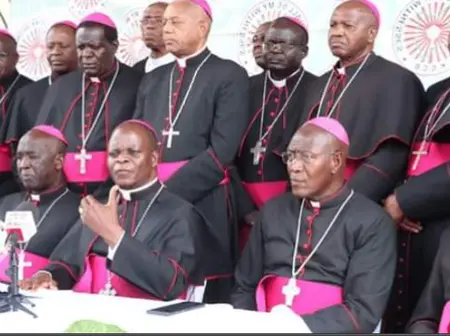
The Kenya Conference of Catholic Bishops (KCCB) has banned politicians from making political speeches in Catholic churches across the country ahead of the 2027 General Election.
The directive was announced on Thursday, November 12, 2026, during a press briefing held at the Cardinal John Njue Pastoral Centre in Embu. Speaking on behalf of the bishops, Nyeri Archbishop Anthony Muheria said churches should not be used as platforms for politicians seeking votes or promoting their political interests.
Muheria explained that the decision was intended to protect places of worship from political interference and preserve their spiritual purpose. He added that Catholic priests across the country had been instructed to enforce the directive and ensure that political activities do not interfere with church services.
The Archbishop emphasised that no politician would be permitted to deliver political addresses in any Catholic church, regardless of their position or political affiliation.
The bishops further noted that politicians had several alternative platforms through which they could communicate with voters, present their manifestos and seek political support. These include television and radio interviews, public barazas and roadside rallies.
They explained that churches bring together Kenyans from different political backgrounds who attend services for spiritual nourishment, prayer and guidance rather than political messaging.
The Catholic leaders also urged Kenyans to carefully evaluate the performance of current leaders and make informed decisions when choosing their representatives in the 2027 General Election. They cautioned voters against allowing political campaigns and competing political narratives to influence their judgment.
Bishops Oppose Proposed Changes to Electoral Laws
Separately, the bishops expressed concern over proposed amendments to electoral laws, particularly proposals seeking to prohibit the livestreaming of presidential vote tallies.
They warned that restricting public access to election information could undermine transparency, create unnecessary political tension and weaken public confidence in the electoral process.
The religious leaders called on National Assembly Speaker Moses Wetangula and Senate Speaker Amason Kingi to reject legislation that could compromise electoral transparency.
They maintained that Kenyans should have unrestricted access to election information to promote accountability, protect public trust and ensure credible elections in 2027.
Source
Catholic Church Bans Ruto, Gachagua, Kalonzo Among Others From Addressing Congregants
Leave a Reply