In a ruling delivered on Monday, November 16, 2026, US District Judge Dennis Saylor declared the proposed restrictions unlawful, describing the policy as arbitrary, capricious and an abuse of government discretion.
The decision followed a legal challenge filed by a coalition of organisations representing universities, educators, international students and journalists. The groups had challenged the Department of Homeland Security (DHS) over changes that would have replaced the longstanding Duration of Status policy with fixed periods of admission and additional visa extension requirements.
Under the proposed regulations, international students would have been allowed to stay in the United States for a maximum of four years before applying for an extension. The changes would have affected students pursuing lengthy academic programmes, particularly those enrolled in doctoral studies that often take more than four years to complete.
Foreign journalists would also have faced tighter restrictions, with their permitted stay reduced to 240 days, equivalent to approximately eight months. They would, however, have been allowed to apply for extensions of similar duration.
Journalists from China would have faced even shorter admission periods of 90 days, with the possibility of applying for additional 90-day extensions.
In his ruling, Judge Saylor expressed concern that the policy would undermine opportunities for international students seeking higher education in the United States.
He argued that the Department of Homeland Security was discouraging the very educational opportunities that Congress had intended to support.
The judge also noted that the restrictions could interfere with students' academic plans by making it difficult for them to pursue extended programmes, obtain joint degrees or change their academic concentrations.
The proposed rules had raised concerns among universities and education organisations, which argued that fixed admission periods would create unnecessary uncertainty for international students and institutions.
The case was brought against the Department of Homeland Security by a coalition that included the Association of International Educators, the Presidents' Alliance on Higher Education and Immigration, the American Federation of Teachers and The NewsGuild-CWA, which represents journalists and other media workers.
The organisations argued that the government had failed to adequately justify the restrictions and consider their potential consequences.
The court ultimately set aside the rule in its entirety, preserving the longstanding Duration of Status framework. This means the new fixed admission periods and additional extension requirements will not take effect under the struck-down policy.
The decision also addressed restrictions that would have affected students seeking to transfer institutions or pursue additional academic programmes.
The ruling is significant for the United States, which remains a major destination for international education. Official figures show that the country hosted more than 1.1 million international students during the 2023–2024 academic year.
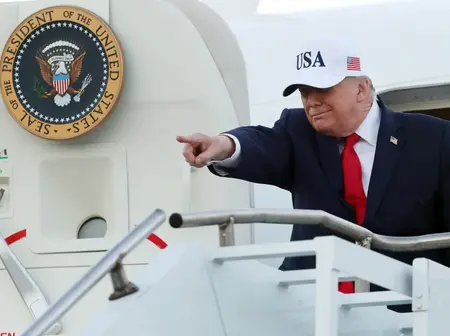
The policy formed part of the wider immigration crackdown pursued by the Trump administration, which has included stricter immigration enforcement and changes to legal pathways for foreign nationals seeking to live, study or work in the country.
For international students, researchers and journalists, the court's decision offers relief from the proposed restrictions and preserves greater flexibility over the duration of their authorised studies or professional assignments.
However, the ruling does not remove other existing immigration and visa requirements. Foreign nationals must still comply with the conditions attached to their respective visa categories.
The decision marks a setback for the administration's attempt to introduce stricter limits on the length of stay for certain foreign nationals, while highlighting the role of the courts in reviewing government immigration policies.
Leave a Reply