
They miss games; the cheque’s still clearing.And you’re trying to tell me they got this kind of addiction to a video game that they sitting there with their thumbs looking like Donald Trump?”That was ESPN’s Stephen A. Smith, one of the US’s most provocative and influential sports pundits, spitting fire and fury last week after hearing that so many NBA and NFL stars were absorbed in Grand Theft Auto VI.
Tag: Donald Trump
-
China hosting world’s leaders in its AI wonderland. Here’s what they won’t see
At 27, Huang Shihua is living the Chinese Dream.
He works as an engineer for a leading humanoid robot company in Shenzhen. The sprawling south-eastern metropolis is touted by China as the origin story for a high-tech future powered by artificial intelligence, robotics and homegrown innovation.
Drones soar across the sky to deliver your dinner, driverless taxis play relaxing music as you journey to your destination, and robots don't just hand you a cappuccino – they explain the origin of your coffee beans.
"We have created a miracle in Shenzhen," Huang says, surrounded by humanoid robots making coffee and playing chess. "Many young people from across China, full of passion and dreams, have flocked here."
Now they all spend their days figuring out ways to make robots smarter.
The Chinese call Shenzhen the "city of dreams". The moniker suits it: one of China's wealthiest, it is close to Hong Kong and the place where the country's explosive growth took off decades ago.
Its manufacturing inventory mirrors China's rise: cabbage patch dolls, then TVs, later iPhones, electric vehicles, drones and now the robots, which are drawing Huang and a new generation of Chinese ambition.
The "miracles" these young engineers are chasing are central to Xi Jinping's bold vision for China. So where better to show it off than Shenzhen, which will be centre-stage when US President Donald Trump, Russian leader Vladimir Putin and others arrive for a global economic summit this week.
And yet there is another side to this flashy, coastal city, a side that they will not get to see. Drive away from towering skyscrapers towards Shajing and Songgang, once the source of much of the world's electronics, and you will run into the challenges confronting Xi's China.
"Everyone feels life is hard," one construction worker tells us. "Lots of factories have relocated and workers lost their jobs."
China remains exceptionally good at making things – and Shenzhen is proof of that. But the city also holds the evidence for what ails the world's second-largest economy. The property crisis is not over, denting confidence in the future. This is one of China's most expensive cities but even here, our taxi driver tells us, his house is now only worth a third of its original price.
A weak property market and sluggish consumer spending mean many households are buying less. Factories are increasingly relying on exports while many manufacturers have cut production, downsized, automated or moved elsewhere in search of cheaper labour.
The result is a growing number of workers turning to temporary jobs in the gig economy, often with lower pay and fewer benefits.
"Shenzhen is not a magic place," says one delivery driver in his 40s, unwilling to give his name.
"Some say there is gold everywhere in Shenzhen, but it's not like that anymore. It's not a city where you can come and thrive. If you don't work hard, you won't have anything."
The BBC spent several days in Shenzhen exploring these two very different sides of China's progress: on the one hand is the dazzling promise of AI, and on the other are the anxieties of workers who worry if there will be room for them in the future it creates.
Wednesday is sandwich and bubble tea day in the offices of DexForce Technologies.
The elevator is packed with young engineers and developers headed to the right floor for the free carbs and sugar that will fuel their afternoon. They jostle past their creations en route: human-sized, yellow robots whose limbs fill every available corner.
"I believe that in a decade, robots will be able to better serve humanity by taking on highly repetitive or even dangerous tasks," Huang says. That could be anything from serving coffee to working in mines, and they are being trained for all of that in this laboratory for the future, where machines flail, jerk or lurch into motion as they learn to behave.
To him, "Shenzhen is another 'America'. Because, much like in the US, many young people have been able to realise their dreams and earn the wealth they desire."
This is what Xi wants to hear as he pushes China to lead the world in advanced tech. Shenzhen has indeed long been a place for seeking opportunity but Huang and his colleagues want to do much more. They don't simply want to continue China's manfuacturing supremacy. They want to transform it.
Beyond making "our lives more convenient and comfortable", Huang sees AI as helping "the entire world become one family – a global village. AI has the potential to foster equality and the prospect of AI-driven equality is, to me, the most exciting possibility of all."
Smiling enthusiastically, he explains how he hopes that robots can help emerging economies across Africa and South East Asia catch up by reshaping their production lines too.
This tech-charged optimism, which is everywhere in the building, jars with the uncertainty elsewhere in Shenzhen, where robots are nowhere to be found. Yet. But that's just the first of the differences.
In Huang's side of the city, tech and finance workers stroll to the office after a morning workout, sipping coffee that probably cost more than 30 yuan ($4.50; £3.40).
On the other side, scooters whizz through streets piled high with goods being shuttled between factories as vendors sell whole breakfast plates of spicy noodles for under 3 yuan.
Outside one of the city's tallest skyscrapers, 50-year-old Ms Lu has a phone to her ear and a pen in her right hand while grabbing a bag with her left from a delivery driver.
She shouts four key numbers at her co-worker: instructions for another Chinese woman who is waiting to take the delivery up the elevator to someone sitting at their desk.
This is the lunchtime rush outside SEG plaza, home to 70 storeys of thousands of tenants. Lu used to be one of them. "I ran a small business on the second floor. I sold circuit boards," she says. "But it's getting so hard to do business these days and the rental fees got higher."
Often likened to China's Silicon Valley, Shenzhen has seen rents soar with the influx of new capital, squeezing out smaller, more traditional businesses. At 50, Ms Lu couldn't find another job until the delivery drivers came to her with a plan.
The wait for the elevator can take half an hour – wasted money for a driver trying to fill as many orders as possible. So Ms Lu became a new layer in the ever-evolving gig economy.
"The delivery drivers bring food here to the building entrance. We pick it up and take it upstairs. The drivers pay us 2 yuan per order," she explains, always on the move. Delivery drivers earn between four to eight yuan per order, so Ms Lu gets a decent cut of their earnings.
"The lunch peak time only lasts two or three hours… if they use our service, they can get more orders done, and we can earn some money as well. But the market is bad. These days I only earn around 200 yuan per day."
An estimated 200 million Chinese workers, roughly 40% of the urban labour force, now depend on some form of gig work. Many delivery drivers in Shenzhen tell us they chose temporary work because there are fewer opportunities at factories than before.
"We need to adapt to the situation we find ourselves in," one driver told us, "rather than waiting for it to adapt to our needs." A group of them are waiting outside the gates of an e-cigarette factory to make industrial deliveries.
Others nod in agreement. Another driver says he has little choice: "I have two children to raise and I can't stop working. I don't have time to think about anything else."
Permanent jobs often require contributions to social security and pension, which reduces take-home pay. But gig work means more cash in hand and flexibile hours.
"Most workers prefer jobs with a fixed, shorter-term duration. It allows them the flexibility to resign and leave whenever they choose; they have no desire to become permanent employees," says job agent Li Xiaohe.
Increasingly, he puts up boards on pavements advertising temporary factory jobs that pay around 22 yuan an hour for assembling small electronics.
Although agents also appear to be in a shrinking pool, with several former shop fronts shuttered: yet another sign of the downturn in traditional manufacturing.
"Our business is perhaps not as optimistic as it once was," Li admits. "We can feel the effects of Shenzhen going through a transformation."
That transformation is hard to miss.
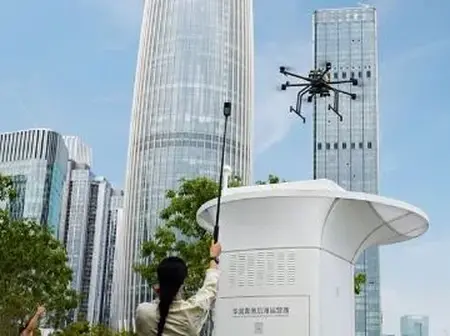
Drones buzz above the lush grounds of a purpose built "talent park" along the city's waterfront, dipping and darting as they deliver meals to a dedicated platform. Phones held high, tourists capture them landing with their lunch.
"This is amazing. The technology is just great. I wish we had this back at home," exclaims one Canadian tourist. Our coffee order – for a five-yuan delivery – arrives in just over 15 minutes, the drone landing seamlessly so I can pick up my order.
"I heard that many years ago, Shenzhen was a fishing village," says Anle, who is visiting from Vietnam. "Ha – no more fishing village," he laughs as he orders milk tea to be delivered by drone for him and his wife.
For all the ingenuity on display, it feels more like a demonstration of what is possible rather than a mundane reality. The deliveries, which are only possible in certain locations, stop at 20:00 local time. The driverless cars, which need a separate app to order, are also a novelty – they even offer you a massage when you are on your way.
At night, in the glow of a thousand dancing lights, the drones take on a different role. They fly above the park warning people to behave and not cause trouble.
Far from the glittering skyline, workers gather around plastic tables outside restaurants serving cheap hotpot and seafood skewers.
There are more expensive restaurants along the street, but they too have taken a hit. One owner told us business is down by more than 70% as workers are hesitant to splurge on dinner.
Many of them have spent decades here, including 58-year-old construction worker Mr Wu. He arrived in Shenzhen from Sichuan in the 1990s not long after China opened the city up to foreign businesses.
He was among millions of migrants from poorer provinces who came to work on production lines or build skyscrapers. They are still coming.
All the people we spoke to came from elsewhere. They often labour up to 14 hours a day and live in shared dormitories, sustained by the prospect of stable work and decent pay to send home to their families.
For these workers, the Covid pandemic, when Chinese manufacturing hit a record low, appears to have been the first turning point.
"After Covid, our salary dropped by at least a third," Mr Wu recalls, after which wages never fully recovered.
"I will continue to work," he adds. "As long as you keep working, you will have an income. More salary or not? It doesn't matter. As long as you keep working, you will have an income. If the economy slows down, we all slow down. If it grows, we all get better."
For all these decades, Shenzhen lived up to its bargain: work hard, and your life would improve.
But now, in a city that is being redefined by automation and AI, that old promise feels less secure.
-
Major Relief for Foreign Students as US Judge Strikes Down Trump’s Tough Visa Rules
In a ruling delivered on Monday, November 16, 2026, US District Judge Dennis Saylor declared the proposed restrictions unlawful, describing the policy as arbitrary, capricious and an abuse of government discretion.
The decision followed a legal challenge filed by a coalition of organisations representing universities, educators, international students and journalists. The groups had challenged the Department of Homeland Security (DHS) over changes that would have replaced the longstanding Duration of Status policy with fixed periods of admission and additional visa extension requirements.
Under the proposed regulations, international students would have been allowed to stay in the United States for a maximum of four years before applying for an extension. The changes would have affected students pursuing lengthy academic programmes, particularly those enrolled in doctoral studies that often take more than four years to complete.
Foreign journalists would also have faced tighter restrictions, with their permitted stay reduced to 240 days, equivalent to approximately eight months. They would, however, have been allowed to apply for extensions of similar duration.
Journalists from China would have faced even shorter admission periods of 90 days, with the possibility of applying for additional 90-day extensions.
In his ruling, Judge Saylor expressed concern that the policy would undermine opportunities for international students seeking higher education in the United States.
He argued that the Department of Homeland Security was discouraging the very educational opportunities that Congress had intended to support.
The judge also noted that the restrictions could interfere with students' academic plans by making it difficult for them to pursue extended programmes, obtain joint degrees or change their academic concentrations.
The proposed rules had raised concerns among universities and education organisations, which argued that fixed admission periods would create unnecessary uncertainty for international students and institutions.
The case was brought against the Department of Homeland Security by a coalition that included the Association of International Educators, the Presidents' Alliance on Higher Education and Immigration, the American Federation of Teachers and The NewsGuild-CWA, which represents journalists and other media workers.
The organisations argued that the government had failed to adequately justify the restrictions and consider their potential consequences.
The court ultimately set aside the rule in its entirety, preserving the longstanding Duration of Status framework. This means the new fixed admission periods and additional extension requirements will not take effect under the struck-down policy.
The decision also addressed restrictions that would have affected students seeking to transfer institutions or pursue additional academic programmes.
The ruling is significant for the United States, which remains a major destination for international education. Official figures show that the country hosted more than 1.1 million international students during the 2023–2024 academic year.
The policy formed part of the wider immigration crackdown pursued by the Trump administration, which has included stricter immigration enforcement and changes to legal pathways for foreign nationals seeking to live, study or work in the country.
For international students, researchers and journalists, the court's decision offers relief from the proposed restrictions and preserves greater flexibility over the duration of their authorised studies or professional assignments.
However, the ruling does not remove other existing immigration and visa requirements. Foreign nationals must still comply with the conditions attached to their respective visa categories.
The decision marks a setback for the administration's attempt to introduce stricter limits on the length of stay for certain foreign nationals, while highlighting the role of the courts in reviewing government immigration policies.
-
US Court Blocks Tough New Visa Restrictions on Foreign Students and Journalists
A United States federal judge has struck down a controversial Trump administration policy that sought to impose stricter limits on how long foreign students, academics and journalists could remain in the country, delivering a major victory to universities, education organisations and media unions.
District Judge F. Dennis Saylor IV issued the ruling on November 16, describing the policy as arbitrary, an abuse of discretion and inconsistent with the law. The decision followed a legal challenge filed by a coalition of organisations representing universities, educators, students and journalists against the Department of Homeland Security (DHS).
The regulation, introduced in July 2026, proposed limiting international students and academic exchange visitors to a maximum stay of four years. Those wishing to remain longer would have been required to apply for extensions.
Foreign journalists holding I visas would have faced an even shorter limit of 240 days, approximately eight months. Journalists from China would have been restricted to 90-day stays, with the possibility of applying for extensions.
Previously, international students were generally permitted to remain in the United States for the duration of their academic programmes, while foreign journalists could stay for up to five years.
In his ruling, Saylor warned that the restrictions could disrupt higher education and prevent international students from completing lengthy academic programmes, particularly doctoral degrees. He also highlighted the potential difficulties for students pursuing joint degrees or changing their fields of study.
The judge argued that the government's policy undermined Congress's intention to encourage educational opportunities for international students in the United States.
The lawsuit was supported by higher education associations and labour unions, including organisations representing journalists.
The ruling comes amid President Donald Trump's broader immigration crackdown, which has introduced tighter restrictions across several visa categories.
The United States hosted more than 1.1 million international students during the 2023-2024 academic year, highlighting the importance of foreign students to its education sector.
The decision represents a significant setback for the administration's efforts to tighten immigration controls.
Source: https://www.facebook.com/share/18a3PcZjBf/
-
Kenya Among 57 Countries in Melania Trump’s Global Technology Coalition
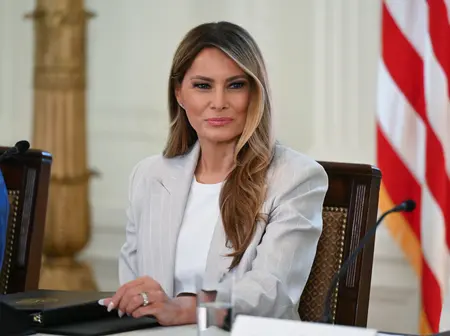
Kenya is among 57 countries participating in Melania Trump’s Fostering the Future Together coalition, which is seeking to expand children's access to artificial intelligence, digital literacy and education technology.Artificial intelligence is increasingly shaping how people learn, work and interact with the world.
-

F1’s three options for season finale as championship faces Middle East crisis
The 2026 F1 season run-in is still up in the air, with few paddock insiders or experts knowing exactly how this year’s championship will end.
The ongoing conflict and tensions in the Middle East mean that the last two races of 2026, in Qatar and Abu Dhabi, still look in doubt.
It now appears that the series has three main options for how to bring the season to a close. We assess them below.
Option 1: Keep the calendar unchanged and race at Qatar and Abu Dhabi
As it stands, Formula 1 and its FIA governing body are still insisting that the Qatar GP (November 27-29) and Abu Dhabi (December 04-06) will end this year’s world championship.
The recent attacks on Saudi Arabian airports, though, mean that flights to Qatar and Saudi Arabia that go through its airspace look at risk.
Despite that, FIA president Mohammed Ben Sulayem said: "I can only tell you today that there is nothing and the two races are going to happen."
At October’s Bahrain GP in Malaysia, F1 CEO Stefano Domenicali was similarly defiant.
"Yes, as we've already said, the calendar is confirmed: the last two Grands Prix will be in Qatar and Abu Dhabi,” he said.
“This is the direction we've taken based on the information and reassurances we have – and which we absolutely must have, of course. It's the strategy we'll apply until the end of the year."
However, F1 later clarified that the races could still be subject to change if the circumstances required.
Several drivers, including Carlos Sainz and Max Verstappen, have spoken out against racing in the region at this time.
However, their teams are choosing to publicly defer to F1 and the FIA instead of airing their concerns in the press.
“We actually do trust the FIA and F1, because that's the reality in all seriousness, it is a serious topic, […] and it is typically the FIA and F1’s task to approach it in the most complete way with a full set of informations and to give us the direction on that,” said Red Bull boss Laurent Mekies in Mexico.
However, it’s been reported by the BBC that many in the paddock are uncomfortable with making the trip to the Middle East.
That feeling is shared with MotoGP, the motorcycle series also run by F1’s owner, Liberty, which is racing in Qatar this weekend (November 6-8).
One of the championship’s biggest teams, Yamaha, has already withdrawn from the event, citing safety concerns.
Elsewhere, the World Rally Championship cancelled its round in Saudi Arabia, while the Dakar Rally has moved its January event from the country to North Africa.
With the New York Times reporting that, despite Donald Trump’s mid-term election losses, the US and Israeli forces were building plans for a “short and intensive” offensive in Iran soon, this will have done little to reassure anyone in F1, MotoGP or elsewhere.
As part of its pre-event media information, the Lusail circuit in Qatar sent MotoGP staff and press instructions on what to do in case of an attack.
If F1 cancels the two Middle East races, various sources have reported that it would stand to lose around $100m – $180m (£74.2m) in race hosting fees.
Option 2: Race at Imola instead of both Qatar and Abu Dhabi
If F1 does decide to cut its losses in the Middle East this year, it’s become public knowledge that the races would be swapped for a single event at the Imola circuit in Italy.
A well-loved classic venue, the Autodromo Internazionale Enzo e Dino Ferrari returned to the World Championship after an extended absence during Covid, but was dropped again after 2025.
There are also different options on the Imola plan. Either both Middle East races could be cancelled for Imola, or just Qatar could go ahead and then the paddock could be flown into Europe for an Imola race after that.
Audi F1 boss Mattia Binotto said in Baku at the end of September that “mid-October is the last call for such a decision” on Imola, before paddock insider Adam Cooper reported that this was then pushed back to November 10.
Option 3: End the season in Las Vegas
The F1 season could also come to an early close, with the season ending in Las Vegas instead.
Putting aside the massive financial cost of F1 losing its last two Middle East races, with the drivers’ championship now settled – and Mercedes’ lead in the constructors’ almost unassailable – there will be reduced pressure on the series to run the calendar to its full length.
Therefore, the championship could bring the curtain down at Las Vegas instead – a glamorous location to match the occasion.
-
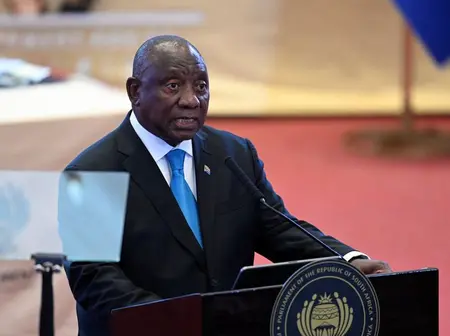
US midterm elections: Ramaphosa sees ‘new era’ after Democratic wins
Listen to articleRelations between the US and South Africa have deteriorated under Trump. During a televised Oval Office meeting in May 2025, he confronted Ramaphosa with misleading footage and news clippings promoting false claims of a genocide against white South Africans. Ramaphosa repeatedly sought to rebut the allegations.
-
US midterm elections 2026: 5 African countries that could benefit from Democrats’ control of Congress
The 2026 United States (US) midterm elections could reshape America’s troubled diplomatic relations with Africa after Democrats won control of both chambers of Congress in a major political setback for President Donald Trump.
The Democratic victories in the House of Representatives and Senate allow the opposition party to scrutinise Trump’s foreign policy, challenge controversial executive decisions and demand greater accountability over America’s engagement with African countries.
Five countries stand out: South Africa, Rwanda, Somalia, Ghana and Nigeria. All have experienced significant tensions with the Trump administration over trade, immigration, security cooperation, development assistance or national sovereignty.
The election result does not automatically reverse Trump’s policies. The president retains substantial executive authority over foreign affairs, immigration and military operations. However, a Democratic-controlled Congress can investigate the administration, scrutinise spending, influence legislation and make it harder for the White House to pursue its agenda without political resistance.
For African governments, the central question is whether the new congressional majority will translate its electoral victory into a more accountable and predictable US foreign policy.
South Africa could find renewed support in Congress following Washington’s latest move against its trade relationship with Pretoria.
On November 2, 2026, US Trade Representative Jamieson Greer announced that President Trump had notified Congress and the South African government of his intention to terminate the country’s African Growth and Opportunity Act (AGOA) eligibility from 1 January 2027. Rwanda received the same notification.
The decision threatens preferential access to the American market for eligible exports, with potential consequences for South African businesses, manufacturing and employment.
A Democratic-controlled Congress could increase pressure on the administration to justify the decision, examine its economic consequences and pursue a more predictable approach to US-Africa trade. Congress also has an important role in AGOA’s legislative framework.
Rwanda faces an additional diplomatic challenge. On October 28, the US Treasury sanctioned Rwanda’s Ministry of Defence and Zigama Credit and Savings Society over claimed support for the M23 armed group in eastern Democratic Republic of Congo.
Washington accused Rwanda of supporting M23 through military equipment, logistics and training. Kigali has disputed allegations concerning its involvement in the conflict and maintains that regional security concerns must also be addressed.
Democratic lawmakers could push for stronger congressional oversight of sanctions and the Washington Accords peace process. However, concerns about instability and human rights abuses in eastern DRC are not exclusive to Republicans. Rwanda should therefore expect scrutiny to continue even under a different congressional leadership.
Somalia could benefit from renewed congressional scrutiny of Trump’s immigration restrictions.
The US State Department confirms that visa issuance to Somali nationals was suspended from 1 January 2026 across immigrant and non-immigrant categories, subject to specified exceptions.
The restrictions have implications for family reunification, education, business travel and the Somali diaspora.
Democrats could challenge the humanitarian consequences of the policy through hearings, legislative proposals and oversight of immigration enforcement. However, congressional opposition alone cannot automatically overturn a presidential entry restriction.
Ghana presents a different test of US-Africa relations: the sovereignty of African countries over their health systems and sensitive medical information.
Ghana rejected a proposed US health assistance compact worth approximately $109 million over five years after raising concerns about access to pathogen information, medical records, counterpart funding and the regulatory authority of its Food and Drugs Authority.
Speaking at the Council on Foreign Relations in September 2026, President John Mahama questioned the proposed access to Ghanaian medical information:
“I mean, who takes another country’s medical records?” The Democratic majority could increase scrutiny of the conditions attached to American development assistance, particularly health-data protection and the autonomy of recipient countries.
For Ghana, the issue goes beyond the value of the rejected agreement. It concerns whether development partnerships respect national institutions and public-interest safeguards.
Nigeria’s relationship with Washington could also come under increased congressional scrutiny, particularly over military cooperation, counterterrorism and religious freedom.
On December 25, 2025, US forces conducted airstrikes against Islamic State-linked targets in Sokoto State. However, Nigeria’s government confirmed that the operation was conducted in coordination with Nigerian authorities and with President Bola Tinubu’s approval.
The distinction matters because President Trump had previously framed US intervention in Nigeria around the alleged persecution of Christians, while Abuja has maintained that terrorism threatens Nigerians across religious communities.
A Democratic-controlled Congress could demand greater transparency about the intelligence behind military operations, civilian protection and the legal framework governing US involvement.
It could also question whether Washington’s approach strengthens Nigeria’s security institutions or creates further diplomatic tensions.
Nevertheless, counterterrorism cooperation is likely to retain bipartisan support. Nigeria should expect greater congressional oversight rather than an automatic end to American military assistance.
Beyond trade, immigration and military relations, the election raises broader questions about democracy, human rights and accountability.
The 2026 CIVICUS State of Civil Society Report offers an important framework for understanding these challenges. Covering developments during 2025 and early 2026, it warns that unaccountable power is on the offensive, with powerful states weakening international institutions and undermining human rights protections.
The CIVICUS Monitor’s current country ratings also reveal significant civic-space challenges across the five countries: South Africa and Ghana both score 60/100 and are classified as having obstructed civic space, while Rwanda scores 25/100, Somalia 28/100 and Nigeria 36/100, with all three classified as having repressed civic space.
These ratings measure the conditions in which civil society organisations, journalists, activists and citizens exercise fundamental freedoms. They are not assessments of US foreign policy or evidence that American pressure will necessarily improve civic space.
Nevertheless, they provide an important lens for evaluating Washington’s engagement with African governments.
A Democratic-controlled Congress could place greater emphasis on human rights reporting, democratic accountability, press freedom and protection of civil society organisations when scrutinising US assistance and diplomatic partnerships.
For African civil society organisations, this could create additional opportunities to engage American lawmakers and raise concerns about government accountability and restrictions on fundamental freedoms.
The Democratic victory in the 2026 US midterm elections presents an opportunity for African governments to reassess their diplomatic engagement with Washington.
South Africa and Rwanda could seek congressional intervention or greater scrutiny over their impending AGOA exclusions. Somalia could find political support for reviewing immigration restrictions, while Ghana may benefit from renewed debate about the conditions attached to American development assistance.
Nigeria, meanwhile, could use congressional oversight to reinforce the importance of sovereignty, transparency and accountable security cooperation.
However, African governments should avoid assuming that Democratic control means a return to the traditional US foreign policy approach. Competition with China, counterterrorism, critical minerals, migration control and American commercial interests are likely to remain central to Washington’s Africa strategy.
The real test will be whether the new Congress can turn electoral change into meaningful policy accountability. For the five countries facing diplomatic difficulties with Washington, the midterm elections offer a new political opening, but not a guaranteed diplomatic reset.
-
Democrats tear up Trump’s political map on historic night
Democrats have torn up Donald Trump’s political map on a night that will send shockwaves through American politics for years to come.With a string of major Senate victories in states that have been reliably Republican for decades – and in Kansas’s case, nearly a century – a blue tidal wave crashed across the nation, sweeping Republicans out of power.
-
Trump Moves to Kick South Africa and Rwanda Out of US Trade Deal, What It Means
The United States has moved to withdraw South Africa and Rwanda from a major trade arrangement that gives selected African countries duty-free access to the American market, putting thousands of export products at risk of losing preferential treatment from January 1, 2027.The proposed move, initiated by President Donald Trump’s administration, follows an assessment of the two countries’ compliance with the African Growth and Opportunity Act (AGOA), a US trade programme established to strengthen economic relations with eligible African nations.