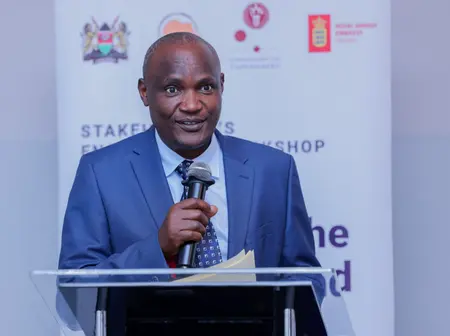
The question featured during the official opening of the Government of Kenya–African Economic Research Consortium–University of Cape Town–DERG Stakeholder Workshop. Organised by the National Treasury in partnership with the African Economic Research Consortium (AERC), the meeting brought together researchers and policy stakeholders to examine how evidence can support a stronger tax system. Treasury Cabinet Secretary John Mbadi presided over the workshop.
Mbadi said Kenya needs a tax framework that is fair, efficient and predictable. He emphasised that tax decisions must consider the realities facing households, businesses and the wider economy.
The discussions explored ways to broaden the tax base, improve compliance and ensure that the tax burden is shared fairly. The goal is to create an environment where businesses can thrive and investment can grow without unnecessary obstacles.
Mbadi stressed that raising revenue is only one part of responsible public finance management. Public resources must also be spent prudently, transparently and accountably, with a focus on value for money.
For ordinary Kenyans, the impact of taxation is measured by the services and development they receive. Citizens want to see improvements that reflect their contributions, rather than feel they are paying taxes without meaningful results.
The workshop’s message is that sustainable revenue collection must go hand in hand with fairness, economic growth and accountability. As Kenya shapes its next tax policies, the challenge will be to balance government funding needs with the financial realities of citizens and businesses.
Do you think this approach can make Kenya’s tax system fairer while protecting households and businesses? Share your remarks, views and comments in the comment section.
Leave a Reply