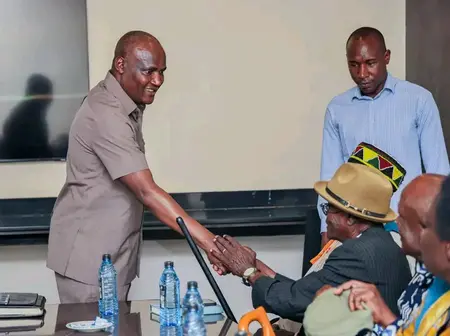
In a statement shared after the engagement, Mbadi described elders as custodians of culture, wisdom and values. He noted that their guidance remains important in bringing people together and encouraging leaders and community members to act responsibly.
His message places emphasis on the role respected community figures can play beyond cultural ceremonies and traditional responsibilities. Through their experience and counsel, elders can help encourage dialogue, promote peaceful coexistence and remind political actors to put the community's long-term interests first.
However, the impact of such engagements will depend on whether the concerns raised are followed by practical action. Continued dialogue between elders, political leaders and residents can help ensure that the issues discussed receive attention and that calls for peace are reflected in conduct throughout the campaign period.
Mbadi's meeting with the Homa Bay chapter of the Luo Council of Elders highlights the place of consultation and community guidance in preparations for the elections. His remarks offer a reminder that political competition need not come at the expense of cohesion and mutual respect.
What do you think about the role of elders in promoting unity and peaceful leadership as elections approach? Share your views, remarks and comments in the comment section.
Lawyer Willis Otieno has taken a fresh swipe at Treasury Cabinet Secretary John Mbadi, questioning his commitment to fiscal discipline amid a court finding that has placed the Treasury's handling of sovereign debt agreements under renewed scrutiny.
Otieno's criticism comes against the backdrop of Mbadi's public pronouncements on economic management and responsible utilisation of public resources.
The lawyer has questioned the apparent contradiction between the Treasury's emphasis on financial discipline and the failure to provide comprehensive information concerning sovereign bond agreements and the utilisation of funds borrowed through these instruments.
The development has intensified questions about transparency in public borrowing and the government's obligation to provide citizens with a clear financial account of national debt.
Otieno has maintained that borrowing alone cannot constitute responsible economic management. He has emphasised that Kenyans deserve to know the specific projects financed through sovereign bonds, their actual implementation costs and the economic returns generated from the investments.
The lawyer's concerns also extend to accountability, particularly regarding the officials responsible for ensuring that borrowed resources translate into tangible public benefits rather than becoming unexplained figures in government financial statements.
His intervention places the Treasury's debt management practices under renewed public scrutiny, with transparency emerging as a central issue in the debate over Kenya's mounting financial obligations.
Otieno has consequently challenged the Treasury to open the sovereign debt register and provide comprehensive disclosures on borrowed funds. His position is that fiscal discipline must be demonstrated through verifiable accountability, not merely public lectures on economic responsibility.
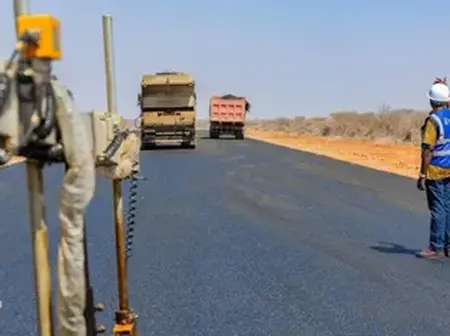
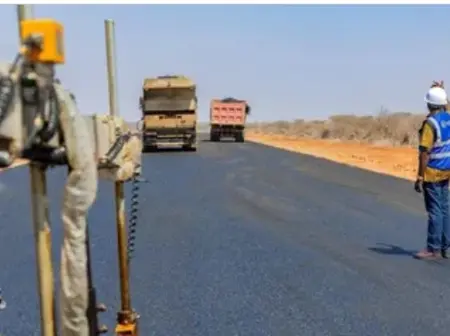
The National Land Commission (NLC) has defended its role in compensating landowners affected by the construction, of the Isiolo-Mandera highway following concerns raised by the World Bank over delays in the process.
In a statement issued on Wednesday, November 18, 2026, the commission dismissed claims that it was responsible for the delays, saying its mandate in the compensation process was limited to land valuations and preparation of compensation schedules.
NLC explained that it was responsible for assessing affected properties, verifying assets and determining the value of land and other developments belonging to Project Affected Persons (PAPs).
However, the commission said the processing and disbursement of compensation funds were handled by the Kenya National Highways Authority (KeNHA), following directives from the World Bank.
"The National Land Commission (NLC) wishes to clarify media reports regarding concerns raised by the World Bank over alleged delays in land valuation and compensation of Project Affected Persons (PAPs) under the Horn of Africa Gateway Development Project (HOAGDP)," the commission stated.
It added that KeNHA was responsible for handling payments to affected landowners as part of the project's implementation arrangements.
The clarification came after the World Bank raised concerns that delays in land compensation were affecting progress on the 740-kilometre Isiolo-Mandera highway.
In a letter addressed to Treasury Cabinet Secretary John Mbadi, Roads and Transport Cabinet Secretary Davis Chirchir and Lands Cabinet Secretary Alice Wahome, the bank's Kenya Division Director, Qimiao Fan, warned that the compensation challenges were slowing down construction.
The bank said contractors had not received unrestricted access to sections of land required for the project, making it difficult to carry out planned works.
It further warned that the delays were increasing project costs, with additional expenses estimated at more than KSh1.2 billion every month.
The concerns have placed renewed attention on the compensation process, which is a key requirement before contractors can access and work on the affected sections of the highway.
NLC's statement sought to distinguish its valuation responsibilities from KeNHA's role in processing and paying compensation.
Kenyans could soon get a clearer picture of proposed changes to Pay As You Earn (PAYE) tax after Treasury Cabinet Secretary John Mbadi revealed that the proposed adjustment Bill will be tabled in Parliament next week.
The announcement is likely to attract attention from salaried workers, employers and businesses across the country, as any changes to PAYE could affect how much employees take home at the end of each month.
Mbadi said the proposed Bill would be presented to Parliament for consideration, setting the stage for lawmakers to examine the planned tax adjustments.
The proposed changes are expected to offer relief to low-income earners who have been paying income tax under the existing tax bands.
According to the proposal, Kenyans earning KSh32,333 or less per month will be exempted from PAYE, up from the current tax-exempt threshold of KSh24,000.
This means workers earning KSh32,333 could save approximately KSh2,083 in monthly PAYE deductions if the proposal becomes law.
However, the changes will not take effect immediately after the Bill is tabled. Parliament must first debate and approve the proposed amendments before they can be implemented.
Mbadi has expressed confidence that lawmakers will give the proposal priority when they resume sittings in February 2027, following the December recess.
The development comes as the government continues facing public attention over taxation and the cost of living, with many salaried Kenyans keen to see how proposed tax relief will affect their monthly earnings.
The coming parliamentary discussions will therefore be important in determining when workers can finally benefit from the proposed changes.
The big question is whether Parliament will approve the Bill in time for Kenyans to enjoy the expected tax relief in 2027.
Lower income earners and university lecturers will have to wait until February to enjoy their respective tax cuts and pay increments, with Parliament set to go on recess next month before approving the measures.
National Treasury Cabinet Secretary John Mbadi says the Amendment Bill that will back the changes to the Income Tax Act will be presented to Parliament next week at the earliest.
In a statement issued on Wednesday, November 18, 2026, the commission defended its handling of land valuation and asset verification, saying the responsibility for processing and disbursing compensation payments rests with the Kenya National Highways Authority (KeNHA).
NLC explained that its mandate is limited to assessing land and property belonging to affected residents, verifying assets and preparing compensation schedules. KeNHA is responsible for processing payments and releasing the money to Project Affected Persons (PAPs), in line with the World Bank's implementation requirements.
The clarification followed concerns raised by the World Bank over delays in compensating residents whose land is required for the Horn of Africa Gateway Development Project (HOAGDP).
In a letter addressed to Treasury Cabinet Secretary John Mbadi, Roads and Transport Cabinet Secretary Davis Chirchir and Lands Cabinet Secretary Alice Wahome, World Bank Division Director Qimiao Fan warned that unresolved compensation issues were slowing down construction.
The bank estimated that delays were generating additional project costs of more than KSh1.2 billion every month because contractors could not obtain unrestricted access to sections of land earmarked for construction.
It also disclosed that only 1,281 out of 1,669 identified project-affected persons had received compensation at the time of its assessment, raising concerns about the pace of land acquisition.
Responding to the concerns, NLC outlined the progress made across several sections of the highway, including compensation approvals and ongoing payment processes involving billions of shillings.
Along the Isiolo-Kulamawe-Modogashe section, the commission said KeNHA was awaiting the World Bank's no-objection approval to proceed with payments amounting to KSh554.9 million for 1,280 affected people.
For the Wajir-Kotulo section, NLC said it had approved compensation worth KSh824 million for 1,619 affected persons.
The commission also approved KSh497 million in compensation for 296 affected people along the Isiolo-Kachuru section.
Meanwhile, asset verification had been completed for more than 1,105 affected persons along the Dimu-Elwak section. NLC said the valuation exercise was expected to be completed by the end of November 2026.
The commission maintained that these activities demonstrated progress in the land acquisition process, despite the challenges affecting the wider project.
However, it identified several obstacles that have complicated compensation and delayed the release of land for construction.
These include court cases involving disputed compensation claims, insecurity in some areas, landowners who have not collected their compensation offers and difficulties tracing certain property owners.
The Isiolo-Mandera highway is part of the Horn of Africa Gateway Development Project, a major infrastructure programme intended to improve transport connections across northern Kenya and strengthen regional trade links.
The approximately 740-kilometre road was reported to be 60 per cent complete as of October 26, 2026.
It was initially expected to be completed by January 2028, but the completion timeline was subsequently pushed towards 2030 following project implementation challenges.
While NLC maintains that it has completed key valuation and approval processes, the World Bank's concerns point to the need for faster compensation payments to prevent further delays and additional project costs.
Safina Party leader Jimi Wanjigi has launched a fresh attack on Treasury Cabinet Secretary John Mbadi following remarks in which the CS questioned his understanding of Kenya's public debt.
The exchange has intensified the debate surrounding the country's growing debt burden and calls for transparency in government borrowing.
On Monday, November 16, 2026, Mbadi dismissed Wanjigi's concerns about Kenya's debt, telling him to seek serious intellectual assistance, arguing that some of the arguments he had been making about public debt did not make sense.
"A lot of this odious debt narrative I have heard from Jimi Wanjigi. He should get some serious brain to help him because he talks about things that don't make sense," Mbadi said.
However, Wanjigi was quick to respond, turning the criticism back on the Treasury Cabinet Secretary and demanding that the government publish the public debt audit.
In his response, the Safina Party leader accused Mbadi of being part of the economic problems facing the country, insisting that Kenyans deserve to know how public money has been borrowed and utilised.
"Mbadi, stop stammering, Publish the public debt audit! You're a perpetrator of the economic crime! This odious debt is the cancer ailing Kenya, we shall end it soon! Mene Mene tekel," Wanjigi declared.
Wanjigi's response places the spotlight back on the longstanding debate over Kenya's public debt, with growing demands for accountability and transparency in the management of public finances.
The businessman-turned-politician has consistently questioned the country's borrowing practices, arguing that Kenyans should not continue carrying the burden of debts whose utilisation and accountability remain subjects of public concern.
The latest exchange also highlights the growing political disagreements over the government's economic management, with the Treasury CS defending the administration's position while Wanjigi insists that the public debt audit should be made available.
The demand for the publication of the audit is likely to keep the debt debate alive, as Kenyans continue seeking answers on government borrowing, expenditure and the country's financial obligations.
WhenTreasury Cabinet Secretary John Mbadi has revealed that the proposed Pay As You Earn (PAYE) tax adjustment Bill will be tabled in Parliament next week.Treasury Cabinet Secretary John Mbadi has revealed that the proposed Pay As You Earn (PAYE) tax adjustment Bill will be tabled in Parliament next week.
Listen to articleHe said the external debt service-to-exports ratio had fallen from 40 per cent in 2024 to 18 per cent currently, reflecting an improvement in the country's ability to repay foreign debt using export earnings.Treasury Cabinet Secretary John Mbadi has defended the government's handling of public debt, citing slower debt growth and a decline in key external debt indicators as evidence of progress in managing the country's borrowing.
Treasury Cabinet Secretary John Mbadi said the government’s proposed PAYE tax reduction bill is complete and has been forwarded to the Attorney General ahead of its submission to Parliament.In an interview on Citizen TV on November 17, Mbadi said the Treasury had finished the bill and was awaiting completion of the legal review process before presenting it to lawmakers.