Treasury Cabinet Secretary John Mbadi has revealed that the China Road and Bridge Corporation (CRBC), the company that constructed the Nairobi Expressway, will take up an investor role in the Rironi-Mau Summit road project, alongside its position as contractor.Mbadi said CRBC is part of the investment consortium, which also includes the National Social Security Fund (NSSF) and other investors, in a Public-Private Partnership (PPP) arrangement that differs from the model adopted for the Nairobi Expressway.
Tag: John Mbadi
-

John Mbadi Highlights School Infrastructure Improvements as He Supports Nyandiwa Comprehensive School
Mbadi made the remarks after joining residents, education stakeholders and members of the community at Nyandiwa Comprehensive School in Kanyamwa Kologi Ward for a fundraising event aimed at improving the institution's infrastructure.
The fundraiser brought together various stakeholders with a shared objective of addressing the school's infrastructure needs and creating a more conducive environment for learning. The CS used the occasion to highlight several educational institutions that have benefited from infrastructure improvement initiatives since he assumed office.
According to Mbadi, the commitment to improving school facilities has already extended to different wards within Ndhiwa Constituency.
Among the institutions he highlighted were Sasi Comprehensive School in Kanyadoto Ward, Nyandemra, Got Kojowi and Osogo schools in Kwabwai Ward, as well as Rota and Yiembe Comprehensive Schools in Kanyamwa Kosewe Ward.
The Cabinet Secretary emphasised that providing children with a suitable learning environment remains an important investment in the future of the country.
He noted that children deserve access to better learning facilities because they represent the next generation of leaders, professionals and nation builders.
His message also highlighted the importance of community participation in supporting educational institutions. Fundraising activities bring together parents, local leaders and other stakeholders who can contribute towards addressing challenges facing schools.
For families in Ndhiwa, improved school infrastructure is an important consideration in ensuring that learners have an environment where they can concentrate on their studies and develop their abilities.
Mbadi's remarks place school infrastructure development at the centre of his message on education and community progress.
As efforts to improve Nyandiwa Comprehensive School continue, residents and stakeholders will be looking forward to the progress of the planned improvements.
What is your view on John Mbadi's focus on improving school infrastructure across Ndhiwa Constituency? Share your remarks, views and comments in the comment section below.
-
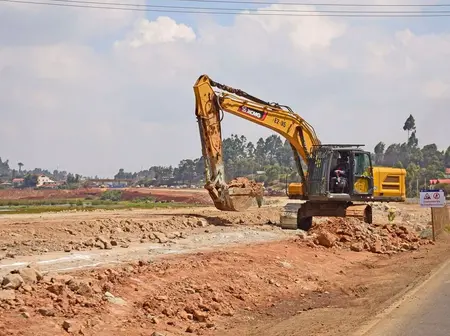
Private investors line up Sh96bn for State projects
Private investors are expected to pour Sh96 billion into public infrastructure projects in sectors such as electricity transmission and water in the current financial year ending June 2027 in the wake of mounting debt repayments, which have shrunk the room for the government to finance development.
Treasury Cabinet Secretary John Mbadi says the amount targeted is a 74.5 percent increase from the Sh55 billion mobilised through public-private partnerships (PPPs) last financial year ended June 2025.
-
Kenyans Receive Fresh Fuel Update as Mbadi Reveals Government Plan to Reduce Pump Prices
Kenyans have received a fresh update on fuel prices following remarks by Treasury Cabinet Secretary John Mbadi about the government's plans to reduce the cost of petroleum products in the coming weeks.The announcement has attracted attention from motorists, public transport operators and businesses that have been struggling with the high cost of fuel.
Speaking during an interview with Ramogi FM on November 3, Mbadi explained that the government was planning to use money from the fuel stabilisation fund to help reduce pump prices during the November-December pricing period.
According to the Cabinet Secretary, the government deliberately avoided using the stabilisation fund during the October fuel price review. This was because officials expected international fuel prices to increase as European countries prepared for the winter season.Mbadi explained that increased energy demand in Europe and other Western countries could put pressure on global petroleum prices, eventually affecting Kenyan consumers.
He said the government wanted to preserve the available funds so that they could be used to protect Kenyans from possible sharp increases.The development comes after the Energy and Petroleum Regulatory Authority (EPRA) increased fuel prices in October 2026.Under the current prices, motorists in Nairobi are paying KSh226.96 per litre for super petrol, KSh227.76 for diesel and KSh219.87 for kerosene.
These prices took effect on October 15 and are expected to remain in place until November 14, 2026.The next fuel price review is expected to take effect on November 15.Mbadi explained that the stabilisation fund helps the government support oil marketers through subsidies, reducing the amount of international price increases passed on to consumers.However, the Cabinet Secretary did not reveal the exact amount by which fuel prices could decrease in the next revie
soures:https://www.facebook.com/share/p/1bJ1TR9bS8/
-
Workers earning over Sh32,333 pocket Sh2,000 more in review
Salaried workers with a gross pay of over Sh32,333 a month will pocket an additional Sh2,083 each, as the National Treasury moves amendments to the pay-as-you-earn (PAYE) bands, extending relief beyond low-income workers.
The National Treasury has said it will not change the higher tax bands for those earning more than Sh32,333 but will end the Sh2,400 monthly personal reliefs across all salary levels.
-
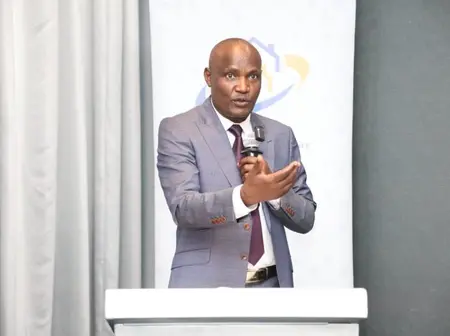
Mbadi: Kenya’s e-procurement system awards 4,470 contracts worth Ksh18.3B
Kenya’s electronic government procurement system has facilitated the award of 4,470 government contracts valued at approximately Ksh18.3 billion since its launch in April 2025, Treasury Cabinet Secretary John Mbadi has announced.
Mbadi said the digital platform had also registered 45,000 suppliers, onboarded 1,546 procuring entities and processed more than 30,000 requisitions, highlighting its growing role in the management of public procurement.
Speaking on Wednesday, November 4, 2026, during a breakfast meeting convened by the Institute of Public Finance (IPF), the CS said the government was using the Electronic Government Procurement (e-GP) system to strengthen transparency, accountability and efficiency in the awarding of public contracts.
Since its launch on April 7, 2025, the platform has been at the centre of government efforts to digitise procurement processes and improve oversight of public spending.
“The system has facilitated the award of 4,470 contracts valued at approximately Ksh18.3 billion,” Mbadi said, outlining the progress made since its introduction.
The platform has also been integrated with several government systems, including the Integrated Financial Management Information System (IFMIS), Business Registration Service (BRS), National Construction Authority (NCA), Access to Government Procurement Opportunities (AGPO) and i-Tax.
These integrations are intended to improve coordination between government institutions and make procurement processes more transparent and accountable.
However, Mbadi cautioned that registering public institutions on the platform would not, on its own, guarantee the success of the procurement reforms.
“The success of e-GP will depend not only on onboarding procuring entities but also on sustained system utilisation, compliance and building the capacity of public institutions and suppliers,” he said.
The CS also identified the participation of small businesses as a key consideration in the next phase of the digital procurement programme.
He said particular attention was needed to ensure that micro, small and medium-sized enterprises (MSMEs), as well as businesses owned by young people, women and persons with disabilities, could effectively access government procurement opportunities.
The inclusion of these groups is expected to widen participation in public tenders and expand opportunities for businesses seeking government contracts.
Mbadi said the government was preparing to extend the platform to procuring entities that had not yet been onboarded while introducing additional features to strengthen the procurement process.
The next phase will include electronic complaints and appeals mechanisms, alongside contract management modules designed to improve the handling of procurement disputes and monitoring of awarded contracts.
Development partners are also expected to support the government through technical integration and change management as implementation expands.
The Treasury is advancing e-GP as a fundamental public procurement reform aimed at strengthening oversight, minimising irregularities and enhancing competition.
The government also expects the platform to help secure greater value for money in the use of public resources.
With 4,470 contracts already awarded through the system, attention is now shifting towards expanding institutional participation, improving compliance and ensuring that more businesses can compete for government tenders through the digital platform.
-
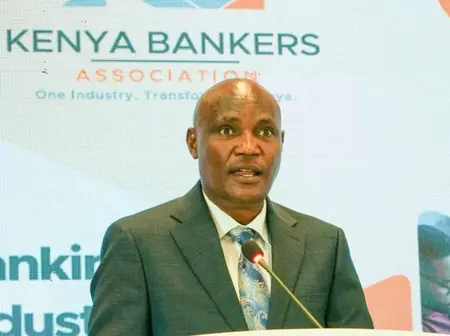
Treasury projects Ksh5.4 trillion national budget for 2027/2028 financial year
National Treasury Cabinet Secretary John Mbadi has projected a Ksh5.4 trillion budget for the 2027/2028 financial year, representing an increase from the current Ksh4.8 trillion budget.
Speaking during the NCBA Bank 2026 Kenya’s Outlook in Nairobi on Tuesday, November 3, 2026, Mbadi said the proposed budget would be supported by revenue projections of slightly below Ksh4 trillion.
“For the financial year 2027/2028, we are planning a budget of about Ksh5.4 trillion, with revenue projected at just under Ksh4 trillion,” Mbadi said.
The Treasury CS projected a fiscal deficit of 5.9 per cent of the Gross Domestic Product (GDP), noting that his team was working towards reducing the figure further while making provisions for pending bills and priority government programmes.
“The fiscal deficit is projected at 5.9 per cent of GDP, but I am still working with my team even further down below 5.9 per cent as we provide for pending bills and priority programmes before declining steadily to 4.6 per cent by the financial year 2029/2030,” he stated.
Mbadi said the government had identified five key areas it would focus on to safeguard the country’s economic gains and strengthen public finances.
The first priority involves broadening the tax base without increasing existing tax rates.
According to Mbadi, the Treasury intends to rely on data, technology, improved compliance and administrative reforms to enhance revenue collection.
“One, broadening the tax base but not raising tax rates. Through data, technology and better compliance, administrative reforms, some of which will start taking effect from January next year,” he explained.
The second priority involves improving public expenditure by ensuring the government spends within its means.
Mbadi said the Treasury would embrace zero-based budgeting as part of efforts to improve resource allocation and ensure government spending is directed towards priority programmes.
The National Treasury has set November 16, 2026, as the deadline for submitting Kenya’s 2027 Budget Policy Statement to Parliament, bringing forward the budget process ahead of the August 2027 General Election.
Treasury Cabinet Secretary John Mbadi said in a notice on Tuesday, November 3, 2026, that the revised calendar was intended to accommodate the upcoming elections and allow the government to prepare the 2027/28 financial year budget earlier.
“In view of the revised budget calendar to accommodate the General Elections scheduled for August 2027, the 2027 BPS will be submitted to Parliament by 16th November 2026,” Mbadi said in a public notice.