Category: Politics

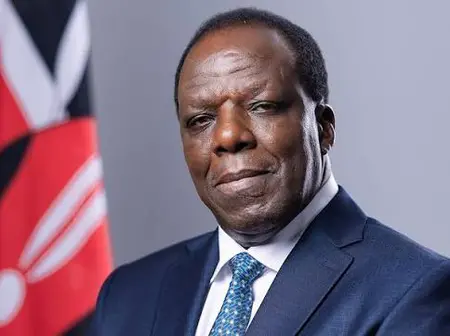
  • Wycliffe Oparanya Claims Opposition Politics Is Easy Because It Involves Only Talking With No Burden

    Wycliffe Oparanya Claims Opposition Politics Is Easy Because It Involves Only Talking With No Burden

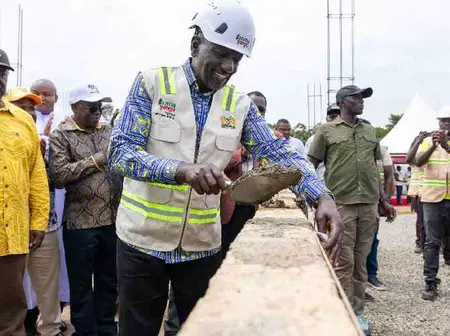
    Speaking on Monday, November 23, 2026, in Western Kenya where he accompanied President William Ruto in a public engagement, the Cabinet Secretary dismissed the work of government critics while drawing from his own past political experience.

    Oparanya stated that having previously stayed in the opposition for many years, he understands how that side of the political divide operates on a daily basis.

    He explained that being in the opposition requires very little effort because leaders only need to criticize the administration rather than implement actual development projects for citizens.

    According to the former Kakamega Governor, opposition politicians face no pressure to mobilize resources, manage public budgets, or solve complex economic challenges affecting ordinary Kenyans.

    The Cabinet Secretary contrasted that reality with the demanding nature of serving in the national executive, where leaders are judged by tangible results on the ground.

    Oparanya noted that holding a government portfolio requires constant planning, accountability, and hard work to ensure that state programs reach wananchi across the country.

    Before joining President William Ruto's Cabinet in 2024 under the broad-based government arrangement, Oparanya served as a deputy party leader in the Orange Democratic Movement.

    During his tenure in the opposition, he frequently participated in national campaigns and oversight forums aimed at keeping the ruling administration in check.

    Since transitioning into the executive arm of government, the veteran politician has repeatedly urged leaders from his region to embrace cooperation with the state to secure development.

    https://www.facebook.com/100040319114203/posts/2066806414673309/?mibextid=rS40aB7S9Ucbxw6v
  • Opposition Within Opposition? Inside the Rumours Shaking Kenya’s 2027 Race

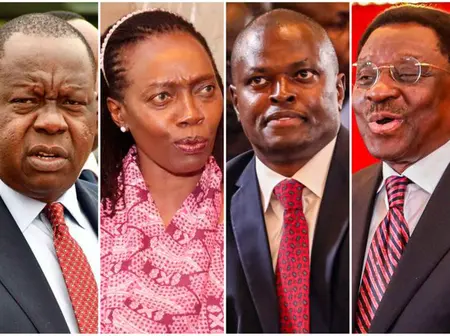
    Opposition Within Opposition? Inside the Rumours Shaking Kenya’s 2027 Race

    Image

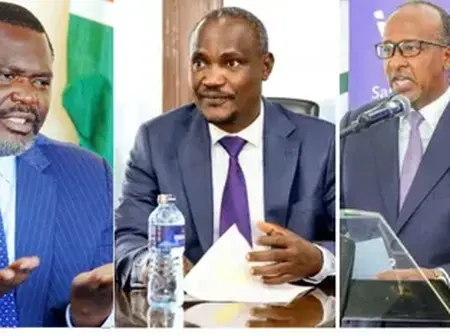
    In remarks reported on November 22–23, 2026, alongside Narc-Kenya leader Martha Karua and other allies, Nyoro dismissed media reports of a "third force" emerging inside the opposition, maintaining that separate engagements reflect active mobilisation rather than division.

    Matiang’i echoed that message by urging colleagues to avoid internal wrangling and focus on presenting a unified alternative government, while multiple opposition actors—including Kalonzo Musyoka, Rigathi Gachagua, Justin Muturi, and Edwin Sifuna—continue to navigate competing ambitions and strategic tracks.

    Talk of rival blocs or third-force dynamics persists because several leaders and movements—spanning established opposition parties, newer outfits such as DCP, and movements like Linda Mwananchi—are simultaneously building grassroots bases while jockeying for bargaining leverage.

    At the same time, differing approaches to coalition timing, candidate selection, and protest or reform tactics keep questions around cohesion alive even as leaders publicly affirm unity.

    Across Kenya’s pre-election landscape, managing multiple power centres within a broad anti-incumbent camp remains one of the most consequential tests of coalition politics before formal nomination deadlines arrive.

    Observers note that whether leaders consolidate cleanly behind one flagbearer or allow competing poles to harden will heavily shape their competitiveness against the governing alliance.

    With less than nine months remaining before Kenyans head to the ballot box on August 10, 2027, how opposition leaders balance individual positioning with collective unity will remain closely watched.

    https://x.com/ntvkenya/status/2124525815324885257?a=bBlvNieDlCWj0NwvhEU&s=20

  • Gachagua Raises Alarm Over 2027 Elections After Meeting UN Official in Nairobi

    Gachagua Raises Alarm Over 2027 Elections After Meeting UN Official in Nairobi

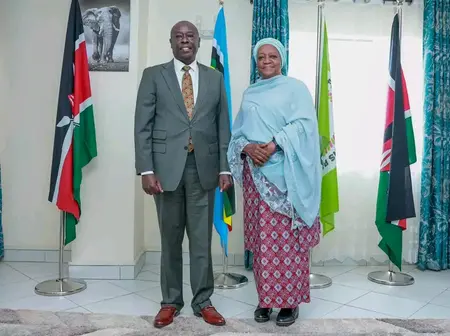
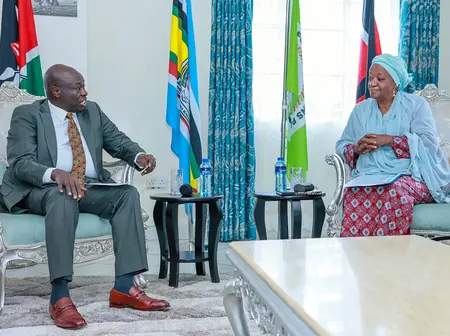
    In a statement following the meeting, Gachagua revealed that he had held discussions with United Nations Nairobi Office Director-General Zainab Bangura, who paid him a courtesy visit at his Nairobi office.

    He claimed that cases of abductions, extrajudicial killings and violence targeting young Kenyans were threatening democratic values and undermining respect for the rule of law.

    Gachagua also questioned the credibility of the Independent Electoral and Boundaries Commission (IEBC), arguing that its perceived lack of impartiality could undermine public confidence ahead of the 2027 elections.

    He maintained that the electoral body must demonstrate independence, transparency and fairness by engaging all political players rather than appearing aligned with the government.

    The former Deputy President further called on the United Nations to engage the Kenyan government on human rights concerns and encourage the IEBC to address issues raised by different stakeholders.

    He warned that unresolved electoral disputes and declining public confidence in institutions could create tensions during the pre-election, election and post-election periods.

    Kenya has experienced politically charged electoral periods in the past, making questions surrounding electoral credibility and national stability particularly important as the country approaches another general election.

    His remarks place renewed attention on electoral preparedness, institutional independence and the protection of fundamental rights as political activities gradually intensify ahead of 2027.

    What is your view on Gachagua's concerns about the IEBC and human rights ahead of the 2027 General Election? Share your remarks, views and comments in the comment section below.

  • Gachagua Meets UN’s Zainab Bangura And Issues A Severe Warning About IEBC And 2027 Election Violence

    Gachagua Meets UN’s Zainab Bangura And Issues A Severe Warning About IEBC And 2027 Election Violence

    Former Deputy President Rigathi Gachagua has taken his concerns about Kenya's political climate straight to the United Nations. He met the UN Nairobi Office Director-General Zainab Bangura on Monday morning at his Nairobi office after she paid him a courtesy call.

    Gachagua said the talks centred on human rights abuses and political violence across the country. He also raised the issue of State-sponsored militias that he claims are wreaking havoc and the alleged partisan nature of the Independent Electoral and Boundaries Commission ahead of the 10 August 2027 General Election.

    He told the UN that the IEBC has lost the confidence of Kenyans and that this could be a precursor to mischief in the coming polls. According to him the partisanship of the commission is already in the public domain.

    The opposition leader insisted that the electoral body must be objective and non-partisan. He said it should listen to all stakeholders instead of staying in bed with the current regime.

    Gachagua urged the UN to press the IEBC to engage all stakeholders and address issues that have eroded public trust.

    He also asked the world body to urge the government to end violence and extrajudicial killings and abductions of young people and to respect human rights.

    He said he shares the UN's concern about the cycle of violence that has marked past election periods in Kenya. In his view electoral bodies have fuelled tension through acts of commission or omission.

    Gachagua noted that Kenya remains a strategic UN member state and described the expansion of the UN in Nairobi as vital to the country's image globally.

    He welcomed the call for peaceful elections that are transparent, free, fair and verifiable ahead of the polls.

    https://www.facebook.com/share/1CXdnixveE/

  • Kenya and DR Congo Move to Restore Diplomatic Relations

    Kenya and DR Congo Move to Restore Diplomatic Relations

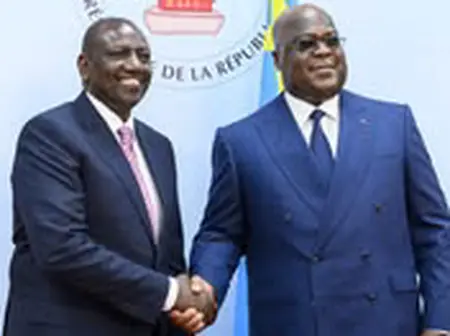
    The agreement was reached on Sunday, November 22, during a quadripartite summit in Oyo, Republic of the Congo, involving President William Ruto and his Congolese counterpart, Félix Tshisekedi.

    The meeting was also attended by the Republic of the Congo President Denis Sassou N'Guesso and Togo's President of the Council of Ministers, Faure Essozimna Gnassingbé, who is an African Union mediator in the Great Lakes region.

    Following the discussions, the two leaders agreed to work towards restoring diplomatic representation at ambassadorial level, reviving the Joint Grand Commission for Cooperation and holding regular consultations to address bilateral concerns.

    They also committed to strengthening cooperation in trade, investment, security and cultural exchange.

    The agreement signals a fresh attempt to repair relations between Nairobi and Kinshasa, which have experienced diplomatic tensions in recent years.

    However, the announcement does not mean that full diplomatic representation has already been restored. Both governments are expected to take further steps to implement the commitments reached at the summit.

    The talks were facilitated by Sassou N'Guesso, with Gnassingbé participating in his capacity as an African Union mediator.

    The development comes amid continuing security challenges in eastern DR Congo, making regional dialogue an important part of wider efforts to promote stability.

    If implemented, the agreement could reopen diplomatic channels, strengthen economic partnerships and improve cooperation between the two countries.

    Attention will now turn to how quickly Nairobi and Kinshasa translate their commitments into concrete diplomatic action.

  • Edwin Sifuna Steps Out With Heavily Built Bodyguard During Pennsylvania Town Hall Meeting

    Edwin Sifuna Steps Out With Heavily Built Bodyguard During Pennsylvania Town Hall Meeting

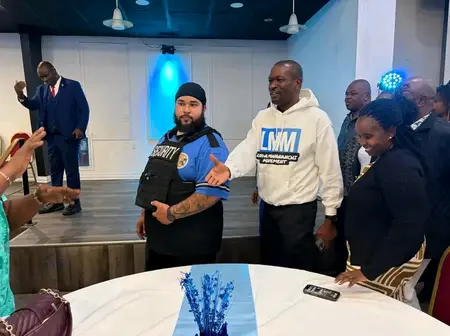
    Photographs from the event offered a glimpse of Sifuna's appearance, with his bodyguard spotted walking close to him as he moved around the venue.

    The security officer's imposing physical build and close proximity to the senator caught the attention of some Kenyans following the delegation's activities abroad.

    Sifuna appeared focused on the engagements as he joined other members of the delegation for the town hall meeting, which brought together Kenyans interested in hearing from the visiting leaders.

    The Pennsylvania gathering formed part of the Linda Mwananchi Movement team's ongoing engagements with Kenyans living in the United States.

    During the meeting, the delegation had an opportunity to interact with members of the diaspora and discuss issues surrounding the country's political and social direction.

    Sifuna's visit has attracted attention among Kenyans, particularly because of movement's efforts to establish connections with supporters outside the country.

    The bodyguard's presence attracted attention after photographs from the Pennsylvania meeting circulated online, giving Kenyans a glimpse of the senator's security detail.

    https://www.facebook.com/100028331567142/posts/2233395220948175/?app=fbl

    https://www.facebook.com/reel/975629841943195/?app=fbl

  • New Government Appointments: Mbadi, Duale Take Leading Roles in State Agency Changes

    New Government Appointments: Mbadi, Duale Take Leading Roles in State Agency Changes

    President William Ruto and several Cabinet Secretaries have announced 15 fresh appointments, and reappointments to various government agencies, councils and boards.

    The changes were communicated through a series of Gazette notices published on Friday, November 20, 2026, covering different sectors, including health, agriculture, finance, environment and public service.

    In one of the notices, Ruto appointed Mwanakitina Bakari and Samuel Kaunda Ogweno as members of the NEPAD/APRM Kenya Governing Council for a three-year term starting November 20.

    The Head of State also revoked the appointment of Francis Habara Moroto, effectively ending his membership of the council.

    Treasury Cabinet Secretary John Mbadi made several appointments, including the constitution of the Kenya Institute of Supplies Management Board.

    Leonard Mayende was appointed chairperson of the five-member board, with Sadam Ismail, Esther Wainoi Ndiga, Mathew Kipkoros Kibet and Saadia Ibrahim Farah named as members.

    Mbadi also appointed Catherine Asemeit Omasete to the Public Sector Accounting Standards Board for three years. The appointment of Rispher Olick to the same board was revoked.

    Public Service Cabinet Secretary Geoffrey Ruku appointed Dr Rebeccah Ann Maina to the Institute of Human Resource Management Council.

    Maina will represent Nairobi, Central and North Eastern regions in the council, which plays a role in matters relating to human resource management.

    Health CS Aden Duale also announced changes affecting two agencies under his ministry.

    Duale appointed a six-member team to the Occupational Therapy Council of Kenya, with Noel Tanui taking up the position of chairperson.

    The council is responsible for regulating the occupational therapy profession, including overseeing professional standards and registration.

    The Health CS further appointed Kassim Mohamed Farrah to the Kenya Nuclear Regulatory Authority Board for a three-year term.

    In the agriculture sector, Cabinet Secretary Mutahi Kagwe appointed Evans Kimeres to the Council of the Coffee Research and Training Institute of Kenya.

    His Co-operatives counterpart, Wycliffe Oparanya, appointed Hussein Haret Borle to the Uwezo Fund Oversight Board, also for three years.

    Environment CS Deborah Barasa made two reappointments to the National Environment Trust Fund Board of Trustees.

    Labour CS Alfred Mutua also renewed Philip Ledama Ololngojine's appointment to the National Council for Occupational Safety and Health for another three years.

    The latest changes affect several public institutions responsible for professional regulation, financial oversight, research and service delivery. The appointees are expected to serve within the terms specified in the respective Gazette notices.

    LINK: https://www.kenyans.co.ke/news/129597-css-mbadi-duale-lead-new-state-appointments-across-govt-agencies?fbclid=IwZXh0bgNhZW0CMTEAcGRvZgRzcnRjBmFwcF9pZA80MDk5NjI2MjMwODU2MDkAAR_MSdfLwC_pt9LznZBgOyKLgQXt8wvBRylumfRNs1YZQ7fa7P7ghWtRIl9KiQ_aem_v41lH6u5ahEcUHAqJapzAg

  • ‘Usiweke vidole mbili juu’: Sifuna cautions diaspora supporters

    ‘Usiweke vidole mbili juu’: Sifuna cautions diaspora supporters

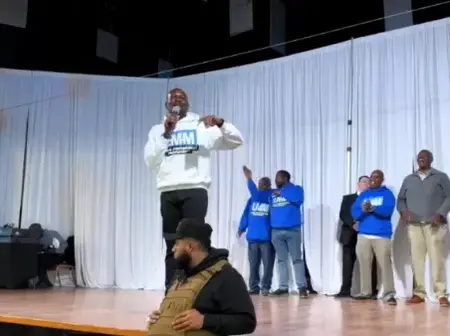
    A light moment sparked laughter at Linda Mwananchi's town hall meeting in Pennsylvania on Sunday after movement leader Edwin Sifuna cautioned Kenyans against flashing a two-finger salute during a show-of-hands vote.

    The meeting, held at the Palace Center, followed a church service earlier in the day at Grace Community Church, where Sifuna and members of the Linda Mwananchi team worshipped before engaging the Kenyan diaspora.

    Before the start of the engagement, Sifuna sought to set the rules of engagement to be observed during the question-and-answer session.

    He invited attendees to participate in deciding how much time each speaker should be allocated and how many questions they would be allowed to ask.

    "I can hear one minute, I can hear two minutes, I can hear three," he said.

    He then quickly cautioned those raising their hands against using two fingers, drawing laughter from the audience.

    "Wewe usiweke vidole mbili juu buana. Hata kama ni vidole mbili fanya hivi (Don't raise two fingers, please. Even if you want to show two fingers, do it like this)," he said, demonstrating a clenched fist.

    The two-finger salute has become associated with President William Ruto's re-election campaign, commonly referred to by the political slogan 'Tutam'.

    Sifuna said photographs of the gathering could be taken out of context and used to suggest that Kenyans attending the Linda Mwananchi meeting in the United States supported Ruto's bid for a second term.

    "Wanaweza piga picha waseme ati hapa United States ni two term. Tunawajua hao wakora (They could take photographs and claim that this gathering in the United States supports a second term. We know those crooks)," he said.

    The audience eventually settled on two minutes per speaker and one question each, prompting an approving response from the senator.

    "One? Napenda sana, tingisha, tingisha (I love it, shake it, shake it)," he said.

    Beyond the light moment, Sifuna used the engagement to explain the kind of political leadership he hopes to offer, insisting that he does not intend to change his personality to win public support.

    He said he had never presented himself as a perfect leader and would not abandon his preferred dress code, including his preference for T-shirts over formal suits, if elected president.

    "Even within the opposition, there are people who think that Sifuna will walk on egg shells so that we get the support of the members of the opposition. I want to remain the way I am; you should know me for who I am and not change when I get there," he said.

    The Nairobi senator said he wanted to build relationships with supporters on the basis of truth and honesty, rather than making promises that would be difficult to fulfil.

    "The Sifuna you see today, should be the Sifuna that comes back seeking for your support for re-election in 2032," he said.

    He also dismissed criticism of his campaign's financial capacity, sarcastically questioning what his team would do with a substantial financial pledge.

    "Yesterday, we were somewhere and someone pledged to give us Sh100 million? What are we supposed to do with all that money?" he posed.

    Sifuna is undertaking a 17-day diaspora tour of the United States from November 21 to December 7, 2026, with engagements in New Jersey, Pennsylvania, Maryland, Washington DC, Texas, Seattle and California.

  • Are Key State Appointments Quietly Setting the Stage for 2027? Read This Eye-Opening Analysis

    Are Key State Appointments Quietly Setting the Stage for 2027? Read This Eye-Opening Analysis

    Why I am increasingly uneasy about government appointments, 2027 elections

    According to Njeru’s commentary, citizens must actively reclaim their civic voice rather than leave critical governance and institutional decisions to entrenched political networks.

    The piece reflects wider public scrutiny surrounding how state appointments are structured ahead of an election year, with critics questioning whether patronage and regional balancing risk overshadowing meritocracy and institutional neutrality.

    Conversely, government defenders consistently maintain that executive appointments follow constitutional vetting procedures and are aimed at strengthening service delivery and broad national representation.

    The debate over state appointments unfolds alongside heightened attention to the Independent Electoral and Boundaries Commission’s (IEBC) readiness for 2027.

    As reported by People Daily following the commission’s annual report to Parliament, IEBC Chairperson Erastus Ethekon has highlighted pressing operational hurdles—including a Sh22.94 billion funding shortfall against a Sh63.95 billion budget, pending supplier bills, and 319 vacant staff positions.

    Meanwhile, the Ethics and Anti-Corruption Commission (EACC) has urged tougher candidate integrity vetting after noting past lapses in enforcing Chapter Six requirements.

    While opposition leaders have questioned the pace of electoral preparations, state officials have reiterated commitment to constitutional timelines and cautioned public officers against misusing state resources for partisan campaigns.

    Merit-based public appointments, adequate funding for electoral institutions, and active civic participation by younger generations remain essential to strengthening democratic confidence ahead of 2027.

    What are your thoughts about this articles? Share your reactions in the comment section and don't forget to share and follow for more updates.

    https://www.standardmedia.co.ke/opinion/article/2001562847/why-i-am-increasingly-uneasy-about-government-appointments-2027-elections

  • Edwin Sifuna Challenges Kenyans in Diaspora to Name Health CS Who Can Outperform Aden Duale

    Edwin Sifuna Challenges Kenyans in Diaspora to Name Health CS Who Can Outperform Aden Duale

    Sifuna challenges diaspora to find a Health CS who can outperform Duale

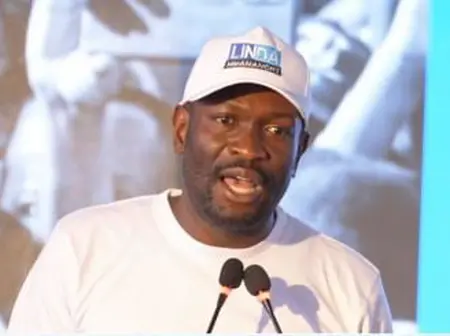
    Speaking on Monday, November 23, 2026, during the launch of the Linda Mwananchi headquarters in Nairobi, Sifuna pressed the audience on where an incoming administration would draw capable cabinet talent while pointing to skills held by Kenyans living abroad.

    Citing the example of Kenyan professional James Wafula—whom he noted designed and built a boardwalk in East London, South Africa—Sifuna argued that qualified Kenyans are achieving major milestones overseas while their expertise remains underutilised in public policy and implementation back home.

    He maintained that members of the diaspora should be actively involved in shaping government and executing policy rather than being reduced to seeking personal favours from leaders once they take office, while reiterating calls for constitutional accountability and competent administration.

    Sifuna’s challenge places a spotlight on the Ministry of Health under Duale, whose tenure has involved high-profile rollouts and debates around the Social Health Authority (SHA), digital health systems, oncology care authorisations, and hospital billing accountability.

    Across Kenya’s pre-election landscape, arguments over administrative competence, cabinet appointments, and how to harness diaspora skills frequently surface as camps seek to project readiness to govern.

    Observers note that contrasting incumbent performance with alternative talent pools helps test how political movements frame both criticism of current officials and their own plans for state management.

    With less than nine months remaining before Kenyans head to the ballot box on August 10, 2027, how debates over cabinet capacity, diaspora participation, and public service delivery evolve will remain closely watched.

    https://peopledaily.digital/inside-politics/sifuna-challenges-diaspora-to-find-a-health-cs-who-can-outperform-duale