Category: Politics

  • State of the Nation Address Moved to Wednesday Next Week as Parliament Announces New Date

    State of the Nation Address Moved to Wednesday Next Week as Parliament Announces New Date

    The State of the Nation Address, which brings together members of the National Assembly and the Senate, has been rescheduled to Wednesday next week.

    The address will take place during a joint sitting of Parliament, where the President is expected to address lawmakers on the country's progress, key achievements and challenges facing the nation.

    The change of date means that members of both Houses will now have to adjust their schedules to accommodate the important parliamentary event. The joint sitting provides an opportunity for legislators to listen to the President's assessment of the country's situation and his administration's priorities.

    President William Ruto is expected to use the address to outline his administration's achievements, explain the challenges facing the country and highlight its development priorities.

    The annual address is a constitutional requirement under Article 132 of the Constitution, which requires the President to address a special sitting of Parliament once every year.

    The announcement of the revised date comes after Parliament had initially scheduled the address for Thursday, November 19, 2026. The latest update, also highlighted in a Facebook post, confirms that the event will instead take place on Wednesday, November 18.

    The President's speech is expected to cover several national issues, including the economy, security, governance and the delivery of essential public services.

    The address will also provide an opportunity for the Head of State to report on the measures taken by his administration to promote national values and fulfil Kenya's international obligations.

    Lawmakers from both Houses will attend the special sitting, which will bring together elected representatives to listen to the President's annual report.

    The rescheduling means that Parliament and other relevant offices will have to work with the revised programme ahead of the presidential address.

    The event is expected to attract public attention as Kenyans await the President's account of his government's performance and plans for the country.

    The Wednesday, November 18 address will therefore be an important moment for the administration to present its record to Parliament as the country continues to debate its political and economic direction.
  • Not Matiang’i: Details Emerge on Who Is the Most Popular Opposition Presidential Candidate

    Not Matiang’i: Details Emerge on Who Is the Most Popular Opposition Presidential Candidate

    Political analyst Herman Manyora has praised Nairobi Senator Edwin Sifuna, describing him as the most popular candidate within Kenya's opposition as political activities ahead of the 2027 General Election continue to gain momentum.

    Speaking about the country's changing political landscape, Manyora argued that Sifuna currently enjoys greater popularity than other opposition leaders and has the support needed to compete for the country's top seat.

    "Sifuna is popular right now. In fact, he is the most popular candidate in the opposition," Manyora said.

    His remarks come at a time when Sifuna has continued to attract attention through his association with the Linda Mwananchi Movement, which has brought together several politicians seeking political change ahead of the next general election.

    The Nairobi senator has also established political links with former Deputy President Rigathi Gachagua, Embakasi East MP Babu Owino and other opposition figures.

    On October 20, Gachagua hosted Sifuna and other Linda Mwananchi leaders at his Wamunyoro residence in Nyeri, raising expectations of possible cooperation between different opposition groups.

    The latest TIFA Research survey released on Thursday, November 12, has also placed Sifuna among the leading figures in the 2027 presidential contest.

    According to the poll, President William Ruto and Sifuna are tied at 31 per cent when Kenyans are asked who they would like to win the next presidential election.

    The survey further found that Sifuna received 34 per cent support among DCP supporters, compared to Gachagua's 25 per cent.

    However, Manyora's assessment remains a political opinion, while the survey provides a separate measure of public preference.

    With the opposition yet to settle on a joint presidential candidate, Sifuna's growing political profile could influence discussions about who should lead the coalition.

    The coming months will show whether his current popularity can translate into wider national support and an actual presidential victory in 2027.

  • Nairobi Senator Edwin Sifuna Outpaces Gachagua Among DCP Supporters in New TIFA Survey

    Nairobi Senator Edwin Sifuna Outpaces Gachagua Among DCP Supporters in New TIFA Survey

    Sifuna is more popular than Gachagua among DCP supporters – survey

    The survey finds that 34 percent of declared DCP supporters favour Sifuna for the 2027 presidency, compared with 25 percent who prefer Gachagua. Nationally, the report positions Sifuna and President William Ruto as joint frontrunners in the 2027 presidential contest, with both leaders tied at 31 percent overall support.

    Nairobi Senator Edwin Sifuna and former Deputy President Rigathi Gachagua during their meeting at Thika Green Stadium on Saturday, November 7, 2026. PHOTO//https://web.facebook.com/EdwinWSifuna

    Cross-Party Appeal: Beyond commanding 90 percent of his Linda Mwananchi Movement, Sifuna captured 34 percent preference among DCP followers and 33 percent among Orange Democratic Movement (ODM) supporters—trailing President Ruto’s 42 percent within ODM.

    National Presidential Rankings: President Ruto and Senator Sifuna lead the national tally at 31 percent each. Wiper Patriotic Front leader Kalonzo Musyoka follows at 9 percent, former Interior Cabinet Secretary Fred Matiang’i registers 5 percent, while Gachagua stands at 4 percent nationally.

    Party Strength Shifts: The United Democratic Alliance (UDA) reclaimed the lead in overall party affiliation at 25 percent (up from 17 percent in June 2026), followed by the Linda Mwananchi Movement at 17 percent, ODM at 10 percent, and DCP at 9 percent.

    Coalition Friction Perceptions: Among opposition-aligned respondents, 43 percent identified Gachagua as the primary figure contributing to internal opposition disagreements over a joint 2027 ticket.

    Wamalwa, Kalonzo, Gachagua, and Sifuna during Linda mwananchi Movoment launch. PHOTO/@EugeneLWamalwa

    The polling data follows a series of high-profile political engagements between Sifuna and Gachagua, including an October 20 consultative meeting at Gachagua’s Wamunyoro residence in Nyeri County and joint appearances at Thika Green Stadium on November 7, 2026. During recent public addresses, Gachagua has signaled openness to deputizing Sifuna in a unified opposition arrangement while insisting that Mt. Kenya voters will demand structured policy negotiations before committing their votes.

    Conducted between October 26 and November 5, 2026, across all 47 counties with a sample size of 2,036 adults and a margin of error of plus or minus 2.16 percentage points, the TIFA study underscores the fluidity of voter allegiances. While researchers cautioned that DCP party numbers do not automatically represent the broader Mt. Kenya electorate, the findings highlight growing pressure on opposition principals to finalize a cohesive joint ticket before early 2027.

    sources: people daily

  • Karua Speaks On Kalonzo Being United Opposition’s Potential Flagbearer As Speculation Heats Up

    Karua Speaks On Kalonzo Being United Opposition’s Potential Flagbearer As Speculation Heats Up

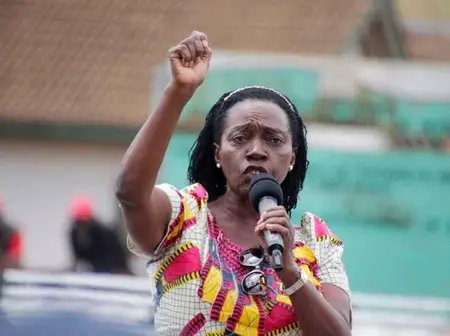
    People's Liberation Party leader Martha Karua has dismissed reports that the opposition has agreed to nominate Wiper leader Kalonzo Musyoka as its presidential candidate in the 2027 General Election.

    The claims circulated online suggested that Kalonzo would lead the ticket, Nairobi Senator Edwin Sifuna would become his running mate, and former Interior Cabinet Secretary Fred Matiang'i would take the position of Prime Cabinet Secretary.

    Karua rejected the reports, maintaining that the opposition has not reached an agreement on its presidential line-up. She questioned how such an arrangement could have been concluded when the coalition had yet to settle procedures governing its decisions.

    Her response comes as opposition leaders continue consultations on how to present a candidate against President William Ruto. The discussions have involved political figures, including Kalonzo, former Deputy President Rigathi Gachagua, Matiang'i, Karua and Sifuna.

    The question of who should carry the opposition flag has remained contentious, with different leaders and their supporters expressing preferences. Reports published in October indicated that discussions between principals had not produced consensus, despite meetings aimed at strengthening cooperation.

    Karua has made clear that she is interested in seeking the coalition's presidential ticket. In a June interview, she ruled out becoming a running mate, saying she would support whoever was selected if she did not secure the nomination, without accepting the deputy position.

    The denial addresses more than speculation about Kalonzo's candidacy. It also highlights the need for opposition leaders to agree on a transparent selection process before announcing a joint ticket.

    No opposition statement confirming the reported Kalonzo-Sifuna-Matiang'i arrangement has been produced. Until the principals make an announcement, the circulating line-up should be treated as unconfirmed.

    With the 2027 election approaching, the opposition faces the task of reconciling individual ambitions and agreeing on a candidate through a process its members accept together.

    https://www.facebook.com/share/1DkZGdzbC6/

  • Khalwale Forced To Withdraw ‘TikToker’ Remark Against Murkomen During Heated Parliamentary Session

    Khalwale Forced To Withdraw ‘TikToker’ Remark Against Murkomen During Heated Parliamentary Session

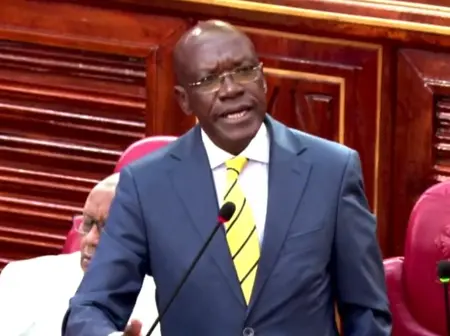
    The outspoken senator has been critical of Murkomen's handling of the country's security affairs and has questioned whether the Cabinet Secretary is the right person to lead such an important government department.

    In one of his pointed attacks, Khalwale reportedly referred to Murkomen as a 'TikToker', a description that drew attention because of the serious responsibilities attached to the Interior Ministry.

    The senator has also challenged President William Ruto over the appointment, suggesting that the Interior docket should be reassigned to Deputy President Kithure Kindiki.

    Khalwale's position is that Kindiki should return to the security portfolio, where he previously served as Interior Cabinet Secretary, instead of Murkomen continuing in the position.

    The disagreement highlights growing political conversations about security leadership, particularly as Kenyans continue to raise concerns about crime, insecurity and the government's response to security challenges.

    Khalwale has previously questioned Murkomen's suitability for the position, arguing that security leadership requires practical engagement with communities rather than appearances and public statements.

    In September 2025, the senator described Murkomen as a "TikTok phone boy with too much English" while criticising his approach to insecurity in Western Kenya.

    He also questioned the Cabinet Secretary's decision to hold meetings at a luxury hotel in Kakamega rather than engaging directly with residents and local security officials.

    According to Khalwale, effective security leadership requires officers and political leaders to understand the problems affecting communities on the ground.

    His criticism has therefore extended beyond personal remarks to the broader question of whether the current Interior leadership is delivering the expected results.

    However, the reported parliamentary intervention over his language adds another dimension to the disagreement, particularly regarding the standards of conduct expected from elected representatives.

    Murkomen's position in government remains an important one because the Interior Ministry oversees national administration and plays a central role in the country's security arrangements.

    For President Ruto, any decision concerning the Interior docket would involve an important government leadership consideration.

    Source:https://x.com/citizentvkenya/status/2120881794803204470?a=x6nRUb8bDq6qLU3Dr0M&s=19

  • “What Does a Chicken Seller Know About the State?” Ngunyi Reveals Why Uhuru Looks Down on Ruto

    “What Does a Chicken Seller Know About the State?” Ngunyi Reveals Why Uhuru Looks Down on Ruto

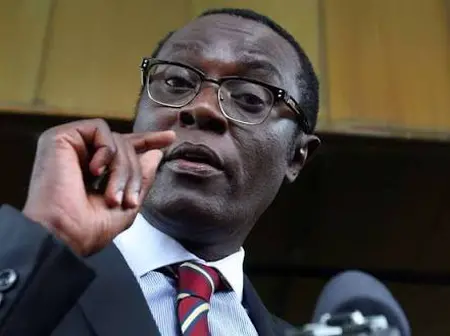
    Ngunyi has suggested that the differences between the two leaders go beyond politics, arguing that social class continues to influence how they relate to each other.

    He also sent Ruto a strong message ahead of the 2027 General Election.

    In a post shared on his X account on Wednesday, November 11, Ngunyi urged Ruto not to lose the focus he had during the 2022 presidential election.

    He argued that the coming election would still be about class differences, which he described as the real enemy.

    According to the analyst, Ruto should understand this issue instead of allowing political disagreements to distract him.

    Ngunyi went further to claim that Uhuru does not respect Ruto because of their different social backgrounds.

    He suggested that the former president's attitude towards his successor is connected to how he views Ruto's humble beginnings.

    The analyst's remarks have brought renewed attention to the political relationship between the two leaders, which became strained after the 2022 election.

    To explain his argument, Ngunyi used a striking question that he believes reflects the attitude towards Ruto's background. He stated, "What does a chicken seller know about the state?"

    The remark referred to Ruto's past as a chicken seller before he rose through politics to become Kenya's president.

    Ngunyi used the statement to highlight what he considers class-based prejudice in the country's political leadership.

    He concluded by advising Ruto that he should not allow anger to overcome him as political competition intensifies.

    Ngunyi told the president that he could either get angry or get even, adding that he should first get angry and then get even.

    His message has raised questions about how Ruto will approach his political differences with Uhuru as the country moves closer to the 2027 General Election.

    https://x.com/MutahiNgunyi/status/2120598176747114761?a=Inj3tQIYjxS4jO56uPw&s=19

  • “I Thought I Was Going Too Early” Oburu Odinga Reacts After Battling Illness

    “I Thought I Was Going Too Early” Oburu Odinga Reacts After Battling Illness

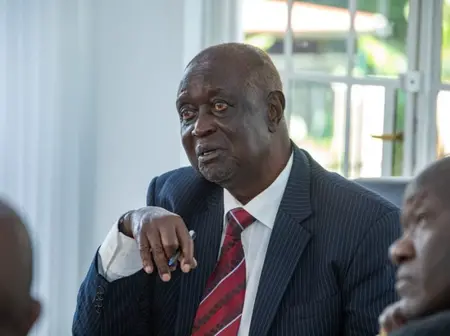
    Oburu returned to the Upper House on Thursday, November 12, 2026, where he received a warm welcome from fellow senators. During his address, the veteran politician reflected on his health struggles, expressing gratitude for surviving an experience that made him question whether he would live to accomplish his ambitions.

    He disclosed that his condition had at one point left him worried that his life could end before completing what he described as his mission.

    “When I was sick, I thought I was going too early before I finished my feelings,” Oburu told lawmakers.

    However, he said his recovery had strengthened his determination to continue living and serving Kenyans. He recalled experiencing a strong conviction while undergoing treatment that his time had not yet come.

    “I heard the spirit when I was lying there. I heard the spirit that I don’t die, and I will not die before I finish my mission. Madam Speaker, that’s why I’m up,” he stated.

    Beyond discussing his recovery, Oburu also highlighted the importance of maintaining personal relationships despite disagreements in the political arena.

    He singled out Nyandarua Senator John Methu, who serves as the Secretary General of the Democracy for the Citizens Party (DCP), for supporting him throughout his illness.

    Oburu revealed that Methu visited him and regularly called to establish how he was doing, despite their different political affiliations.

    The ODM leader said political competition should not translate into personal enmity, noting that leaders can disagree on national issues while maintaining friendships.

    He observed that political positions can change over time, making it important for leaders to preserve relationships even when they find themselves on opposing sides.

    Oburu's return comes after a period of recovery during which his health attracted public attention. His appearance in the Senate marked his resumption of legislative responsibilities.

    https://peopledaily.digital/news/i-thought-i-was-going-too-early-oburu-sparks-excitement-as-he-returns-to-senate-after-illness

  • Sifuna Visits Gachagua At His Karen Home In An Emotional Show Of Unity As Burial Plans Are Announced

    Sifuna Visits Gachagua At His Karen Home In An Emotional Show Of Unity As Burial Plans Are Announced

    Nairobi Senator Edwin Sifuna on Thursday visited former Deputy President Rigathi Gachagua at his Karen home. He went to offer condolences following the death of Gachagua’s elder sister Eunice Nyangari Gachagua.

    Sifuna who leads the Linda Mwananchi Movement posted on X that he had spent the afternoon with Gachagua and the family. He shared photos of the visit.

    “Condoling with H.E @rigathi and his family at their Karen home this afternoon following the passing of his elder sister Eunice Nyangari Gachagua. The late Eunice will be laid to rest this Saturday. May her soul rest in peace” he wrote.

    Eunice Nyangari died aged 77 on November 5 2026 in Naro Moru in Nyeri County. Gachagua announced the loss the following day. He described her as the family’s firstborn and the mother figure who held the household together after their mother Martha Kirigo Gachagua died seven years earlier.

    He said the family was grateful for the 77 years she lived as a warm and wise presence. He extended condolences to her daughter Waithera and son Murimi and her grandchildren and great-grandchildren.

    The burial is scheduled for Saturday. Other opposition figures have also paid their respects. They include Embakasi East MP Babu Owino who visited the same Karen residence earlier.

    The visit comes amid ongoing contacts between Sifuna’s Linda Mwananchi group and Gachagua’s Democracy for the Citizens Party. The two leaders previously met at Gachagua’s Wamunyoro home in October. They described that meeting as an early step toward broader opposition cooperation ahead of 2027.

    Thursday’s private condolence call underscored a personal gesture that went beyond political differences. It adds to a series of public expressions of solidarity with the Gachagua family during their period of mourning.

    https://x.com/edwinsifuna/status/2120890760748822720?a=TfGo6vuUjsRZT0yuaNc&s=19

  • Ruto Brings The Bible Into Politics As He Makes A Remark About Kenyans

    Ruto Brings The Bible Into Politics As He Makes A Remark About Kenyans

    In a statement that combines religion, everyday social life and politics, the President compared the biblical teaching about people gathering in God's presence with what he described as the reality of conversations among Kenyans.

    Ruto began by referring to the familiar biblical message that God is present wherever two or more people gather.

    However, he quickly turned the statement into a comment about the country's political environment, suggesting that political discussions have become almost unavoidable whenever Kenyans meet.

    "In the Bible, where two or more are gathered, God is present. But in Kenya, wherever two or more people gather, they talk about politics," Ruto said.

    The remark offers an interesting glimpse into how deeply politics has become part of everyday conversations in Kenya.

    From workplaces and public transport to family gatherings and social events, political discussions frequently feature in conversations about the country's leadership, economic direction and future.

    For many Kenyans, politics is not simply something discussed during election campaigns. It is connected to everyday issues such as the cost of living, employment opportunities, taxation, education and government decisions.

    Consequently, political conversations often extend beyond formal political meetings and find their way into ordinary social interactions.

    Ruto's observation also highlights the prominent position politics occupies in Kenya's public life.

    The country has a politically active population, with citizens frequently expressing their views about government policies, elected leaders and national developments.

    Political discussions can bring people together, but they can also expose sharp differences in opinion, particularly when supporters of opposing political parties debate the direction the country should take.

    The President's comparison is particularly striking because it uses a familiar biblical message to describe something many Kenyans may recognise from their own daily experiences.

    His words also provide an interesting talking point about whether Kenyans genuinely discuss politics more frequently than other subjects when they gather.

    Although the statement was presented humorously, it touches on a broader reality about the influence of politics on public conversations and national identity.

    For some people, discussing politics is an important way of participating in democracy and holding leaders accountable. For others, constant political debates can become exhausting, especially when disagreements turn personal.

    Source: https://x.com/Kenyans/status/2120828794181152986?a=0GwiSRnBN1N3Bboo1lo&s=19

  • KANU Official Announces Deal to Back Linda Mwananchi Candidates in Nairobi After Meeting Sifuna

    KANU Official Announces Deal to Back Linda Mwananchi Candidates in Nairobi After Meeting Sifuna

    In a post on his X account, Gachoka said the arrangement was struck soon after he met his friend Sifuna to discuss a Nairobi lineup.

    He described himself as KANU's Nairobi gubernatorial candidate and said the two sides will work together as the race for the capital takes shape.

    His announcement came after a Tifa Research survey, shared in the post, which found that Linda Mwananchi is the most popular party in Nairobi at 26 per cent. DCP came second at 11 per cent, while UDA and ODM tied for third at 9 per cent.

    The figures give the movement a strong lead in the city, where the governor's seat is expected to be one of the most competitive in the 2027 General Election.

    In a second post, Gachoka said he had told some people to make way and declared that Sifuna is now their president, urging them to see it for themselves.

    It is also a notable turn, since Gachoka's earlier television comments on Sifuna's bid and on Kalonzo's role drew a sharp response from Wiper spokesperson Ndegwa Njiru.

    If the agreement holds, it would give Linda Mwananchi a partner with an existing party structure in Nairobi, while giving KANU a route into a larger movement.

    The deal also puts the spotlight on how the other opposition parties in the city will line up behind a common ticket, as the race for the governor's seat and the capital's parliamentary and ward seats takes shape.

    Nairobi remains one of the biggest prizes in the election, and the alliances formed in the coming months will go a long way in deciding who controls the city.

    How the other opposition parties respond will show whether the deal can grow into a wider Nairobi front before the vote.

    Link; https://x.com/TonyGachok15769/status/2120885707807850597?a=giuKYLDfYpZBrBr6VAM&s=19