Category: Politics

  • “Usawa ni Sawa,” President Ruto’s Punchline Statement in State of Nation Address

    “Usawa ni Sawa,” President Ruto’s Punchline Statement in State of Nation Address

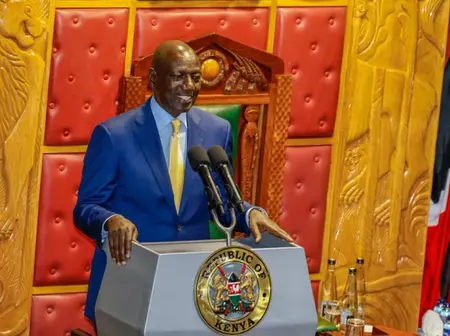
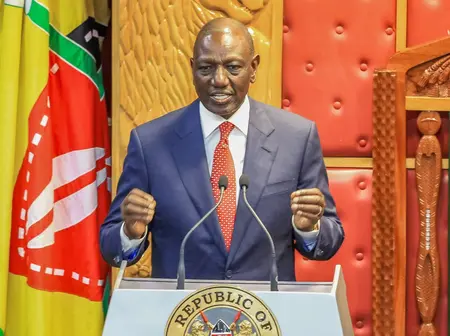
    President William Ruto has reaffirmed his ambition to build an inclusive Kenya where every citizen enjoys equal opportunities, every community feels represented and no individual is left behind.

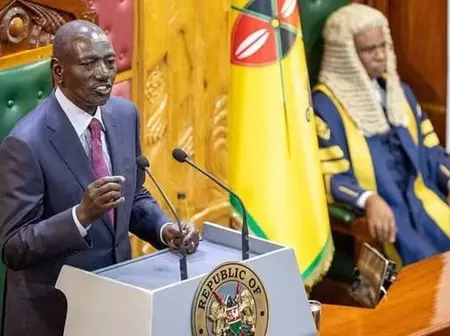
    Speaking on Wednesday, November 18, 2026, at Parliament Buildings in Nairobi during his fourth State of the Nation Address, the Head of State described equality, fairness and inclusivity as important pillars of his administration's vision for the country.

    Ruto maintained that his dream of creating a Kenya where all citizens count is gradually becoming a reality, highlighting the principle of Usawa ni Sawa as the foundation of his development agenda.

    "My greatest ambition, the dream of building a Kenya where every citizen counts, every community belongs and no Kenyan is left behind is taking shape. At the heart of this principle is Usawa," Ruto stated.

    The President's remarks placed emphasis on equal opportunities, national unity, social justice and balanced development across the country's 47 counties. He also highlighted the importance of ensuring that communities from different regions benefit from government programmes and have opportunities to participate in the country's economic transformation.

    Among the major issues surrounding his address were economic growth, employment creation, agricultural transformation, affordable housing, healthcare reforms, education, infrastructure development and national security. Ruto also used the constitutional occasion to account for his administration's performance and outline its priorities as Kenya approaches the August 2027 General Election.

    The President's emphasis on Usawa comes amid continued national conversations about the cost of living, unemployment, equitable distribution of resources and the need for improved public service delivery. His message was that national development should not benefit only selected communities or individuals but should create opportunities for Kenyans regardless of their background.

    The address provided an opportunity for the President to present his government's achievements, challenges and plans for the remaining period of his first term.

    Click the link below:

    https://x.com/KBCChannel1/status/2123033168207028269?a=zDqwPNUBnK0lsme2yac&s=19
  • Junet and Osoro Cause Stir as They Rally MPs to Applaud Ruto During State of the Nation Address

    Junet and Osoro Cause Stir as They Rally MPs to Applaud Ruto During State of the Nation Address

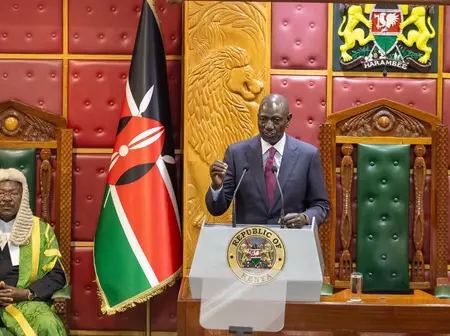
    President William Ruto appeared impressed during his 2026 State of the Nation Address after MPs allied to the broad-based government were prompted to stand and applaud following a touching story about the benefits of the Social Health Authority.

    The moment unfolded after Ruto narrated the experience of a Kenyan woman identified as Veronica Wambui, who lives in Kiambu County, while highlighting how the government's healthcare reforms were changing lives across the country.

    In his address to Parliament, the Head of State used Wambui's experience to demonstrate the impact of SHA, which replaced the National Health Insurance Fund as part of his administration's efforts to transform healthcare delivery.

    The President's account appeared to resonate with several lawmakers, although the reaction from MPs became particularly noticeable when Suna East MP Junet Mohamed and South Mugirango MP Sylvanus Osoro encouraged their fellow broad-based legislators to rise and applaud the President.

    The lawmakers responded by standing and clapping, creating a lively moment inside Parliament as Ruto watched the reaction with visible satisfaction.

    The incident attracted attention because of the political symbolism surrounding the broad-based arrangement, which has brought together leaders from different political backgrounds to support aspects of the government's agenda.

    Ruto has repeatedly defended his administration's healthcare reforms, arguing that SHA is designed to make medical services more accessible and reduce the financial burden facing ordinary Kenyan households.

    However, the implementation of the new health insurance system has also attracted criticism from sections of the public over registration challenges, payment concerns and access to medical services.

    By highlighting Veronica Wambui's experience, Ruto sought to demonstrate the positive impact of the programme and reinforce his administration's position that the healthcare reforms are delivering meaningful results.

    The parliamentary reaction provided one of the memorable moments of the State of the Nation Address, with Junet and Osoro drawing attention for rallying fellow lawmakers to applaud the President.

    Sources;

    https://www.facebook.com/share/v/1FZvTqj3qY/

  • Ruto Impresses MPs as Osoro and Junet Make Broad-Based Leaders Stand and Clap After SHA Story

    Ruto Impresses MPs as Osoro and Junet Make Broad-Based Leaders Stand and Clap After SHA Story

    President William Ruto attracted attention in Parliament after a story about the Social Health Authority (SHA) prompted MPs from the broad-based government to stand and applaud.

    The moment followed remarks by South Mugirango MP Sylvanus Osoro and Suna East MP Junet Mohamed, who reportedly asked their fellow lawmakers to rise and clap for the President after he narrated how SHA had helped a Kenyan woman identified as Veronica Wambui from Kiambu County.

    According to the account shared by Ruto, Veronica's experience demonstrated how the new health insurance system was making a difference in the lives of ordinary Kenyans.

    The incident came as the President continued defending his administration's healthcare reforms, with SHA remaining one of the major programmes introduced after the transition from the National Health Insurance Fund (NHIF).

    Ruto has repeatedly used public platforms to highlight the progress made under the new health system. His administration maintains that SHA is expanding access to healthcare by bringing more Kenyans into the national health insurance programme.

    During his remarks, the President also highlighted the growth in registration figures. He said 33.7 million Kenyans had registered with SHA, compared with approximately eight million under NHIF in 2022.

    The figures have featured prominently in the government's efforts to explain the changes introduced in the healthcare sector.

    However, the transition to SHA has also attracted public debate, with some Kenyans raising concerns about access to services, payments and challenges experienced during registration and treatment.

    The applause in Parliament therefore provided another political moment for Ruto as he continued selling his administration's healthcare agenda.

    The story of Veronica Wambui became the centre of attention during the exchange, while the reaction from Osoro, Junet and other lawmakers added to the moment.

  • Ruto: SHA is saving families from selling land and livestock to pay hospital bills

    Ruto: SHA is saving families from selling land and livestock to pay hospital bills

    Ruto: SHA is saving families from selling land and livestock to pay hospital bills

    President William Ruto says Kenya’s new health financing system is helping protect families from selling land, livestock and draining their savings to pay for treatment, as the government seeks to reduce the financial burden of illness on households.

    Speaking during his State of the Nation Address, Ruto said medical emergencies have pushed families into debt, forced them to dispose of property or abandon treatment because they could not afford hospital bills.

    “For too many Kenyans and their families, falling ill has meant borrowing from friends, selling their livestock, disposing land, or abandoning treatment altogether,” he said on Wednesday, November 18, 2026.

    The President said the Social Health Authority (SHA) reforms were intended to change that reality by shifting the cost of medical care from individual households to a shared financing system, cushioning families against the financial shock of serious illness.

    He said the reforms were particularly significant for patients requiring expensive and prolonged treatment, including those battling cancer and kidney disease, whose medical costs can consume family savings or force households to seek financial assistance.

    The Social Health Authority (SHA) headquarters in Nairobi. PHOTO/@_shakenya/X

    Ruto cited 53,465 patients receiving cancer treatment and 24,468 undergoing dialysis, alongside 89 patients who have undergone kidney transplants, saying their treatment costs were being financed through the shared health system.

    “These are among the most expensive forms of medical care, often beyond the financial reach of ordinary households,” he said.

    The President argued that financing such treatment collectively was reducing the amount families would otherwise have to raise through savings, borrowing from relatives or selling assets.

    For households facing chronic illnesses, the financial pressure often extends beyond hospital bills to transport, lost income and the cost of supporting relatives during prolonged treatment.

    Ruto said the government’s ambition was to ensure that falling ill no longer pushed families that had been making economic progress into poverty.

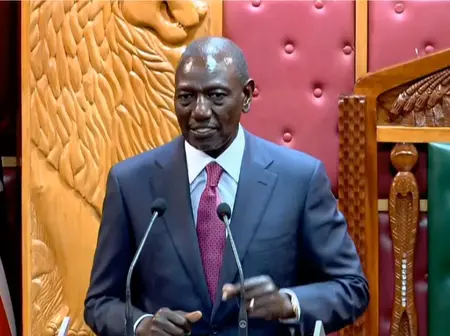
    President William Ruto during the State of the Nationa Address on Wednesday, November 18, 2026.PHOTO/A screengrab by PD Digital/K24TV

    The President said 33.7 million Kenyans had registered with the Social Health Authority, compared with approximately eight million registered under the National Hospital Insurance Fund in 2022.

    He said the significance of the expanded registration should be measured not only by the number of Kenyans enrolled but also by the treatment they could access and the medical bills families no longer had to shoulder alone.

    However, Ruto acknowledged that the transition to SHA had encountered challenges, noting that the government had recognised concerns raised by Kenyans and continued working to address them.

    “The transition to SHA had initial challenges, and we recognized the legitimate concerns of Kenyans,” he said.

    The reforms have faced scrutiny over access to care, registration, claims processing and patients’ experiences at health facilities, leaving actual treatment access and the cost borne by households as important measures of the system’s performance.

    Ruto said the government’s ultimate goal was to progressively eliminate the crushing burden of medical expenses, protect family savings and ensure illness did not become a pathway into poverty.

    “Our undertaking is to progressively and eventually remove the crushing burden of medical expenses from Kenyan households, protect family savings, and ensure that illness does not become a sentence to poverty,” he said.

    He linked the reforms to the broader cost-of-living agenda, arguing that reducing healthcare expenses would ease pressure on household finances.

    For families confronting cancer, kidney failure and other costly illnesses, the promise of SHA is ultimately whether treatment can be accessed without sacrificing the assets they depend on for survival.

  • Bungoma Senator’s Staff Member Dies Shortly After Being Active on Social Media

    Bungoma Senator’s Staff Member Dies Shortly After Being Active on Social Media

    Bungoma Senator Wafula Wakoli has announced the sudden death of Susan Ndieyira, a young woman who served on his media team and was reportedly active on social media only hours before she passed away.

    Susan

    Senator Wakoli shared the news on his Facebook page on Wednesday, November 18, expressing grief over the unexpected loss and extending his condolences to Ndieyira's family, friends, fellow online influencers and all who knew her.

    In his post, the senator described Ndieyira as a committed member of his digital team who consistently shared his content, promoted constructive conversations and championed his leadership agenda on social media.

    Kenyan Woman Confronts Father's Relatives at Burial: "You Made My Mum Go Through a Lot"

    He added that the circumstances surrounding her death made the loss particularly difficult to process, noting that she had been visible and active online just a few hours before she died.

    Senator Wakoli made clear that Ndieyira's passing represented more than the loss of a supporter. He described her as someone whose energy and loyalty he had come to deeply value over the course of their shared work.

    He closed his tribute with a farewell message: "Rest in eternal peace, Susan. You may be gone, but your kindness, loyalty and contribution will never be forgotten."

    No details regarding the cause of Ndieyira's death have been disclosed publicly.

    Source: TUKO.co.ke

  • “If We Are Printing Currency in Kenya, Why Can’t We Print Exams in Kenya”: President William Ruto

    “If We Are Printing Currency in Kenya, Why Can’t We Print Exams in Kenya”: President William Ruto

    Speaking about the initiative, Ruto explained that he challenged ministry officials to justify why Kenya could print its own currency but continued relying on external arrangements for examination printing.

    The President used the comparison to question the country's dependence on foreign printing services, particularly when local printing capacity could potentially handle important government responsibilities.

    Ruto said: "The question I asked our ministry officials is this: if we are printing currency in Kenya, why can’t we print exams in Kenya? In this single undertaking, we have taken off close to a billion and a half shillings that would have been wasted."

    His remarks highlight the government's position that keeping examination printing within Kenya can help reduce unnecessary expenditure while allowing more public resources to remain in the country's economy.

    The financial figure is particularly significant because examination administration is an important responsibility that requires substantial planning, security arrangements and funding.

    For students, parents and teachers, the printing of national examinations is not an ordinary government activity. It is a sensitive process that requires strict confidentiality and reliable systems to ensure that examination papers reach candidates without compromising their integrity.

    Ruto's argument suggests that Kenya should make better use of its domestic capabilities instead of spending substantial amounts on services that can be provided locally.

    The announcement also fits into wider discussions about reducing government expenditure, supporting local industries and ensuring that public funds are used more efficiently.

    If local printing arrangements can deliver the required security and quality standards, the initiative could demonstrate how government procurement decisions can potentially generate significant savings.

    However, the President's statement did not provide a detailed breakdown of the expenditure involved, the specific contracts affected or the calculation behind the estimated Sh1.5 billion savings.

    Further details would help Kenyans understand precisely how the savings were achieved and whether the arrangement could deliver similar financial benefits in other government departments.

    Source:https://x.com/citizentvkenya/status/2123032564562575730?a=mw4zbY2_8dHXho3lZ4I&s=19

  • Sifuna enjoys dance session as Ruto delivers state of the nation address

    Sifuna enjoys dance session as Ruto delivers state of the nation address

    thumbnail

    Nairobi Senator Edwin Sifuna enjoyed a dance session with members of the Linda Mwananchi Movement (LMM) as President William Ruto delivered his State of the Nation Address in Parliament on Wednesday, November 18,2026.Sifuna was engaging with various delegations of the movement at its headquarters in Nairobi, where he joined supporters in dancing ahead of his planned tour of the United States.

  • Ruto Reveals How His Bottom-Up Economic Plan Is Expected to Transform Kenyans’ Lives

    Ruto Reveals How His Bottom-Up Economic Plan Is Expected to Transform Kenyans’ Lives

    Speaking during his State of the Nation Address at Parliament on Wednesday, November 18, Ruto said the economic programme was developed to address challenges affecting people who operate at the grassroots level of the economy.

    He pointed to small-scale farmers struggling with the cost of agricultural inputs, Jua Kali workers lacking adequate equipment, small traders facing difficulties accessing affordable loans and university graduates unable to secure employment.

    According to the Head of State, these groups play an important role in supporting Kenya's economy but have not always had the necessary resources to benefit fully from their efforts.

    Ruto argued that his administration's responsibility was to create an environment where ordinary citizens could turn their hard work into meaningful economic progress.

    He recalled that Kenyans entrusted his government with leadership in 2022, giving it the responsibility of addressing obstacles that limit economic opportunities.

    Six Areas at the Centre of BETA

    The President outlined several priority sectors through which his administration intends to deliver its economic transformation plan.

    They include agriculture, affordable housing, healthcare, education, support for small businesses and employment creation.

    The government has also identified infrastructure investment and economic stability as important components of the programme, arguing that they can improve productivity and create favourable conditions for businesses.

    Ruto maintained that the agenda was built around two major goals: lowering the amount households spend on essential needs and improving the money individuals earn through their daily economic activities.

    Food, Housing and Healthcare Costs

    The President identified food, transport, education, housing and medical services as major areas where reducing expenses could provide relief to Kenyan families.

    He said improving affordability in these sectors would allow households to manage their finances better while creating opportunities for people operating small businesses and other income-generating activities.

    His remarks formed part of a broader defence of his administration's economic policies during the annual address, as the government continues to explain how BETA is expected to translate into better living conditions.

    https://peopledaily.digital/inside-politics/ruto-explains-how-bottom-up-agenda-seeks-to-improve-kenyans-livelihoods

  • Sifuna Reveals Why He Boycotted Ruto’s State of the Nation Address

    Sifuna Reveals Why He Boycotted Ruto’s State of the Nation Address

    Sifuna said some members of Linda Mwananchi were boycotting the address because they believe it should reflect the true condition of Kenyans, which he described as unpleasant.

    “Some of us are boycotting the State of the Nation address because we, as Linda Mwananchi, believe that State of the Nation is about the state of the people, which is not pleasant as of now,” Sifuna said.

    His remarks shifted attention from the parliamentary occasion to the struggles facing ordinary Kenyans. For many following the developments, the message was a direct challenge to the government’s account of the country’s progress.

    Ruto was scheduled to deliver the address during a joint sitting of the National Assembly and Senate on Wednesday, November 18. The occasion gives the Head of State an opportunity to report on the country’s condition and outline government priorities.

    Sifuna’s decision to stay away introduced a different political message on a day when lawmakers were expected to listen to the President. Instead of attending, he explained why Linda Mwananchi believes citizens’ concerns should take centre stage.

    The position is likely to attract debate, especially among Kenyans concerned about the cost of living, jobs and public services. Supporters may view the boycott as a protest, while critics may question whether absence is the best way to make their concerns heard.

    The incident sparked reactions online, and many people were left talking about what the boycott says about the country’s mood. Supporters appeared divided over the decision.

    Do you agree with Sifuna’s decision to boycott the address, or should he have attended and challenged Ruto inside Parliament? Share your views in the comments.

  • Daughters of the Mountain Accuse Gachagua of Tribal Politics, Defend Sakaja’s Record

    Daughters of the Mountain Accuse Gachagua of Tribal Politics, Defend Sakaja’s Record

    PAY ATTENTION: Mark TUKO.co.ke as a preferred source, and our content will appear higher in your Google feed!

    Amos Khaemba is a Current Affairs Editor at TUKO.co.ke, covering political and world news. Khaemba has over four years of journalism experience and joined TUKO.co.ke in 2022.

    Nairobi – A women's lobby group, Daughters of the Mountain, has publicly condemned Democracy for the Citizens Party (DCP) leader Rigathi Gachagua, accusing him of fuelling tribal divisions in Nairobi and jeopardising national cohesion ahead of the 2027 General Election.

    The group made the declaration during a media briefing on the State of the Nation in Nairobi on Tuesday, November 18, 2026, responding to statements Gachagua had made the previous day at the opening of DCP's Nairobi County offices in Kasarani.

    ODM MP dismisses opinion poll placing Sifuna at par with Ruto ahead of 2027: “He is too small”

    Gachagua's Nairobi Takeover Bid

    At the Kasarani event on Monday, Gachagua announced that the DCP was preparing to contest every elective position in Nairobi, including the governorship, senate seat, woman representative post, 17 parliamentary constituencies and 85 ward positions. He also dismissed Governor Johnson Sakaja and Kasarani MP Ronald Karauri as political threats, suggesting Sakaja had been used and discarded in the aftermath of his impeachment.

    Daughters of the Mountain member Elijoy Gatwiri said the group took direct issue with the DCP leader's approach, arguing that his remarks risked reducing a cosmopolitan city into an ethnic battleground.

    PAY ATTENTION:TUKO is in WhatsApp Channels now! Subscribe and read news in your favourite messenger.

    "We take issue with DCP leader Rigathi Gachagua for propagating tribal politics and division. Nairobi does not belong to one tribe. It belongs to all Kenyans," Gatwiri said.

    She demanded that political leaders show respect for Sakaja and steer public debate towards development and service delivery rather than ethnic identity or political allegiances.

    "We demand that Governor Johnson Sakaja must be respected. Leadership should be judged by service delivery, not by tribe or by who stood with whom during impeachment," she added.

    Blow to William Ruto as 3 UDA MPs join Gachagua’s DCP ahead of 2027 poll: “Transfer window is open”

    Group Defends Sakaja's Track Record

    Fellow member Wanjiku Mbugua pushed back against the narrative that Sakaja's administration had been exclusionary, pointing to tangible programmes implemented across Nairobi's diverse communities.

    She highlighted the Dishi na County school feeding programme, scholarships, bursaries and county employment initiatives as examples of interventions that had reached residents from multiple backgrounds, including communities from the Mt Kenya region. Mbugua argued that Gachagua had chosen to ignore this record in favour of political rhetoric designed to mobilise ethnic support before the next election cycle.

    The lobby urged all Nairobi political actors to shift focus to pressing issues affecting city residents, including youth unemployment, the cost of living, education, healthcare and infrastructure, saying the capital deserved issue-based politics rather than tribal mobilisation.

    The group also called on leaders to treat Nairobi's diversity as a unifying asset and to commit to peaceful, accountable political competition as Kenya approaches the 2027 General Election.

    Gachagua shares cryptic message over appointment of Cheptumo, Ronoh and Sitienei

    We also highlighted facts about Rigathi Gachagua’s plan for his Democratic Change Party to contest every constituency and ward in Nairobi in the 2027 general election.

    The announcement rules out zoning deals with allied parties and could complicate Babu Owino’s gubernatorial ambitions. Gachagua also accused President William Ruto of bringing Ronald Karauri to Nairobi to split the Mt Kenya vote.

    Source: TUKO.co.ke