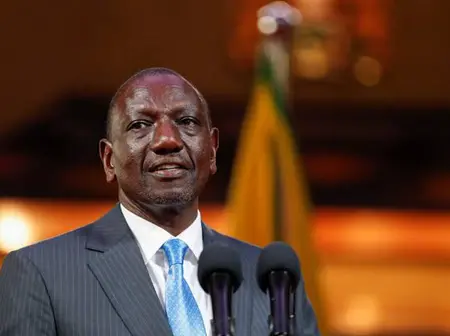
Speaking about the initiative, Ruto explained that he challenged ministry officials to justify why Kenya could print its own currency but continued relying on external arrangements for examination printing.
The President used the comparison to question the country's dependence on foreign printing services, particularly when local printing capacity could potentially handle important government responsibilities.
Ruto said: "The question I asked our ministry officials is this: if we are printing currency in Kenya, why can’t we print exams in Kenya? In this single undertaking, we have taken off close to a billion and a half shillings that would have been wasted."
His remarks highlight the government's position that keeping examination printing within Kenya can help reduce unnecessary expenditure while allowing more public resources to remain in the country's economy.
The financial figure is particularly significant because examination administration is an important responsibility that requires substantial planning, security arrangements and funding.
For students, parents and teachers, the printing of national examinations is not an ordinary government activity. It is a sensitive process that requires strict confidentiality and reliable systems to ensure that examination papers reach candidates without compromising their integrity.
Ruto's argument suggests that Kenya should make better use of its domestic capabilities instead of spending substantial amounts on services that can be provided locally.
The announcement also fits into wider discussions about reducing government expenditure, supporting local industries and ensuring that public funds are used more efficiently.
If local printing arrangements can deliver the required security and quality standards, the initiative could demonstrate how government procurement decisions can potentially generate significant savings.
However, the President's statement did not provide a detailed breakdown of the expenditure involved, the specific contracts affected or the calculation behind the estimated Sh1.5 billion savings.
Further details would help Kenyans understand precisely how the savings were achieved and whether the arrangement could deliver similar financial benefits in other government departments.
Source:https://x.com/citizentvkenya/status/2123032564562575730?a=mw4zbY2_8dHXho3lZ4I&s=19
Leave a Reply