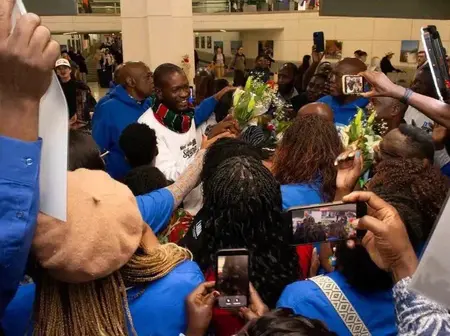
Nairobi Senator and Linda Mwananchi Movement leader Edwin Sifuna has arrived in the United States to kick off a two week diaspora engagement tour ahead of the August 2027 General Election.Sifuna touched down at Newark Liberty International Airport in New Jersey, where he was received by dozens of Kenyans waving flags and chanting slogans as they welcomed his delegation to the East Coast.
Category: Politics
-
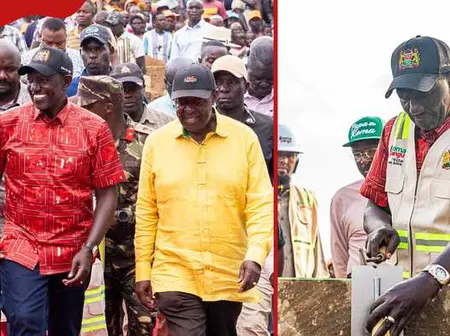
Mudavadi Rallies Western Kenya Behind Ruto as Govt Unveils Multi-Billion Projects
Prime Cabinet Secretary Musalia Mudavadi has called on residents of Western Kenya to throw their full support behind President William Ruto ahead of the next general election, arguing that political opposition has historically failed to deliver tangible development to the region.

Speaking in Butere on Friday, November 20, Mudavadi invoked the legacy of the late Martin Shikuku, widely regarded as a standard-bearer of opposition politics in Western Kenya, to make his case that opposition politics cannot be a permanent destination for the region's leaders.
PAY ATTENTION:TUKO is in WhatsApp Channels now! Subscribe and read news in your favourite messenger.

Kalonzo Musyoka names one Ruto CS who could support his 2027 presidential bid: "Don’t be surprised"
The Prime Cabinet Secretary went further to predict that Ruto would secure a second term in a free and fair election, declaring his full commitment to the partnership with the President.
President Ruto, also speaking at rallies in the region, announced a sweeping package of government investments for Kakamega County under the affordable housing programme. He said the government had committed KSh 21 billion to construct housing units, hostels, and markets across the county.
Specifically, the President said 850 housing units are under construction in Kakamega, alongside a planned 14-storey building and an additional 2,000 units to be built in the area. He added that 20 markets are either complete or ongoing in the county.
Ruto also announced a KSh 3 billion allocation from the Housing Fund to construct hostels for 11,000 university students in Kakamega, with hostels to be built within every constituency.

Dorcas Rigathi shows off gifts she received from politicians switching to Gachagua’s DCP
Ruto linked the investment surge to the formation of the broad-based government with the late Raila Odinga, which he said was designed to end political divisions and distribute development equitably across Kenya.
He dismissed critics who questioned why high-rise construction was being extended to towns such as Butere, arguing that the government had already delivered similar projects in Nairobi, Eldoret, Kisumu, Mombasa, and Machakos.
Source: TUKO.co.ke
-

Kanyari Confirms He’s Joined DCP after Visiting Wamunyoro, Meeting Rigathi Gachagua
Controversial pastor Victor Kanyari has taken a bold step into electoral politics, formally enlisting in Rigathi Gachagua's Democracy for the Citizens Party (DCP as he sets his sights on the Kasarani parliamentary seat.
Footage from the November 12, 2026 event showed Kanyari at Wamunyoro as he met Gachagua before later sharing details online.
He was among the politicians dressed in matching green and neon-green branded caps and scarves marked "DCP Party," exchanging party paraphernalia in a lively, celebratory atmosphere.
In a caption accompanying the video on his Instagram page, Kanyari left no doubt about his intentions, spelling out exactly why he chose Gachagua's outfit as his political vehicle.

Blow to Ruto as another UDA MP ditches party for Gachagua’s DCP
He added:
Watch Kanyari receive his DCP cap and scarves at the event:
The video quickly caught attention online, with Kenyans divided between amusement and scepticism.
@sonnih_bhoke wrote:
@mwaikadu was less than convinced, joking:

Boost for Sakaja as Nairobi traders rally behind his 2027 re-election bid, slam Gachagua
Kanyari, who built his public profile through his televised ministry and later became a subject of wide controversy following an exposé on his faith-healing practices, is now betting that a fresh political chapter under Gachagua's growing opposition movement could open the door to Kasarani's voters.
Source: TUKO.co.ke
-
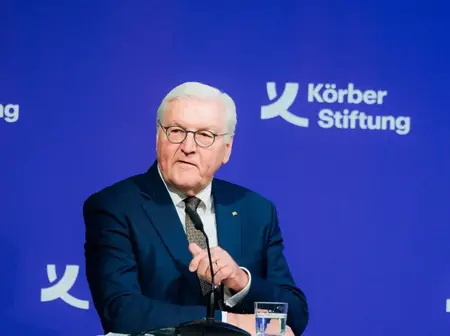
German President announces Kenya visit next week, reveals plans with Ruto
President William Ruto is set to host German President Frank-Walter Steinmeier at State House, Nairobi, on Wednesday, November 25, as Germany moves to strengthen its economic and diplomatic relations with Kenya.
Steinmeier will arrive in the country as part of a five-day African tour running from November 22 to 26, which will also take him to Côte d’Ivoire and Ghana.
The visit will be his final trip to Africa during his tenure as Germany’s president, having served two five-year terms since taking office in March 2017.
According to the programme published by German media outlet Merkur, Steinmeier will be received by Ruto with military honours before the two leaders hold bilateral talks.
The meeting will be followed by a joint press conference and a luncheon hosted by the Kenyan Head of State.
Steinmeier’s visit will also include engagements with businesses and organisations involved in healthcare, digital services and vocational training.
He will begin his Kenyan programme at Tatu City, where he is scheduled to visit a mobile medical clinic operated by Zuri Health, a Kenyan company providing digital healthcare services.
The German leader will also visit Call Centre International Kenya (CCI Kenya), which provides digital services, and CareerBox, a non-profit organisation involved in training and skills development.
The engagements will highlight areas where Kenya and Germany are seeking to expand cooperation, particularly in technology, healthcare and employment opportunities.
In the afternoon, Steinmeier will visit Anno’s One Fine Day Art Centre, which provides artistic and cultural programmes for children and young people.
He will then travel to Naivasha, where his final engagements in Kenya will take place on Thursday, November 26.
The programme includes a visit to Crescent Island nature reserve on Lake Naivasha and a meeting with representatives of Kenyan civil society before his departure for Berlin.
The visit comes as Kenya and Germany continue to strengthen their economic ties, including cooperation in vocational training, renewable energy, labour migration and the recruitment of skilled workers.
Steinmeier will be accompanied by a German business delegation comprising representatives of large companies and medium-sized enterprises.
The delegation is expected to explore opportunities for greater economic cooperation between the two countries.
In October, Steinmeier announced that his upcoming African tour would be his eleventh and final visit to the continent as Federal President.
Speaking at an event in Berlin on October 22, he identified Côte d’Ivoire, Ghana and Kenya as countries offering economic opportunities, particularly for young people.
“All three countries stand for economic dynamism and for future opportunities, especially for young people,” he said.
Kenya will be the final country on his itinerary after engagements in Côte d’Ivoire and Ghana.
In Ghana, Steinmeier is scheduled to meet President John Dramani Mahama and address the German-African Business Summit, which will bring together political and business leaders to discuss trade, investment and industrial cooperation.
His African tour comes ahead of the end of his second presidential term in March 2027. Germany’s Federal Convention is scheduled to elect his successor on January 30, 2027.
Under Germany’s Basic Law, a president cannot serve more than two consecutive five-year terms.
-
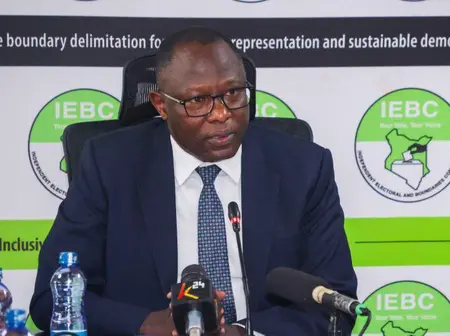
IEBC Breaks Silence on the United Opposition Walkout from Stakeholder Meeting
Appeal"Walking away from dialogue before substantive discussions begin does not advance the resolution of electoral concerns."Independent Electoral and Boundaries Commission (IEBC) has issued a statement following the United Opposition Leaders' walkout during a stakeholder meeting.In a statement issued on Friday, November 20, IEBC said that the leaders missed out on an opportunity to receive firsthand information on the Commission's state of preparedness, the progress made, the challenges being addressed, and the measures being undertaken to deliver credible elections.
-
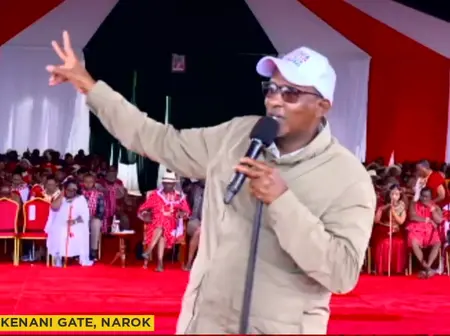
Duale hits back at opposition over calls to scrap IEBC’s national tallying centre
Health Cabinet Secretary Aden Duale has challenged opposition leaders over their demand to scrap the Independent Electoral and Boundaries Commission’s (IEBC) national presidential tallying centre, arguing that their proposal contradicts the Constitution, the Elections Act and established court decisions.
In a statement issued on the night of Friday, November 20, 2026, Duale accused the opposition of selectively interpreting the Constitution to advance its political position, insisting that the law gives IEBC a collective responsibility to tally and verify presidential election results before its chairperson declares the winner.
His remarks came amid an escalating dispute over the handling of presidential results ahead of the August 10, 2027 General Election, following a walkout by opposition leaders during a consultative meeting with IEBC on November 19, 2026.
The opposition wants the national tallying centre at Bomas of Kenya abolished, proposing that presidential results declared at constituency level should be final, with the national centre only receiving, aggregating and announcing the results.
However, Duale maintained that the commission cannot abandon its constitutional responsibility to verify and tally the results nationally.
“The Opposition’s argument is a selective reading of the Constitution that disregards the Elections Act and established court decisions. The law must be read as a whole, not selectively to advance political arguments,” he stated.
The CS pointed to Article 88(5) of the Constitution, which requires IEBC to perform its functions in accordance with the Constitution and national legislation.
He also cited Article 138(3)(c), which requires the commission to tally and verify votes counted at polling stations before declaring the presidential election results.
According to Duale, Article 138(10) separately provides that the IEBC Chairperson is responsible for declaring the presidential election result.
He argued that the two provisions establish complementary responsibilities rather than conflicting mandates.
Under this arrangement, the commission collectively handles the tallying and verification process, while the chairperson makes the final declaration.
Duale said the constitutional provisions did not support the opposition’s proposal to limit the national tallying centre to merely receiving and announcing results.
The Cabinet Secretary also relied on the Supreme Court’s judgment following the 2022 presidential election petition to support his argument.
“On tallying and verification: The Supreme Court’s 2022 presidential election judgment affirmed that tallying and verification at the national level are collective responsibilities of the IEBC, not the Chairperson acting alone,” Duale stated.
In Odinga & 16 Others v Ruto & 10 Others, the Supreme Court examined the respective responsibilities of IEBC and its chairperson in processing presidential election results.
The court affirmed that the responsibility of tallying and verifying presidential results at the national tallying centre belongs to IEBC as a collective institution, rather than the chairperson acting alone.
It distinguished this responsibility from the declaration of the final presidential election result, which Article 138(10) assigns to the chairperson.
The judgment also addressed the role of the commission’s other members in the tallying and verification process, rejecting an arrangement that would give the chairperson exclusive control over responsibilities vested in the commission collectively.
Duale argued that this established legal position should guide discussions about electoral reforms ahead of the 2027 elections.
The CS’s argument also draws support from a September 22, 2026 High Court judgment in consolidated petitions challenging the legality of the national tallying centre.
The petitions were filed by activist Okiya Omtatah and opposition leaders, including Kalonzo Musyoka, Rigathi Gachagua, Fred Matiang’i and other political figures.
In Okoiti & another v Independent Electoral and Boundaries Commission & 5 Others [2026] KEHC 13916 (KLR), Justice Gregory Mutai upheld the constitutionality of Section 39 of the Elections Act and Regulation 83(2) of the Elections (General) Regulations, which provide for national tallying and verification of presidential election results.
The petitioners had argued that results declared and certified by constituency returning officers should be final and should not undergo further tallying or verification at the national level.
However, the court ruled that IEBC has a constitutional responsibility to aggregate and verify the constituency results nationally to establish whether a presidential candidate has attained the constitutional threshold for election.
The judgment therefore upheld the legal basis of the National Tallying Centre.
However, the court also placed important limits on the commission’s powers.
It ruled that IEBC cannot alter, cancel, or vary certified constituency results at the national tallying centre, except under a court order.
The physical results declared and certified at constituency level must remain the authoritative reference documents, and electronic figures cannot override them where discrepancies arise.
The judgment therefore preserved national tallying and verification while reaffirming the finality of certified constituency results.
Led by Wiper Party leader Kalonzo Musyoka, the leaders said they were dissatisfied with the commission’s engagement on electoral preparedness and the reforms they wanted addressed before the 2027 polls.
One of their central proposals is to abolish Bomas of Kenya as the national presidential tallying centre.
They want constituency-declared presidential results to be final, with the national centre limited to receiving, aggregating and announcing the figures.
The opposition has also called for a clean and verifiable voters’ register, secure electronic voting for Kenyans in the diaspora and livestreaming of voting, counting and results announcements at polling stations and tallying centres.
The leaders argue that decentralising the process would strengthen transparency and reduce opportunities for manipulation during the transmission and verification of presidential results.
IEBC Chairperson Erastus Ethekon subsequently criticised the opposition’s decision to leave the November 19 meeting, saying walking away from dialogue would not resolve electoral concerns.
In a statement issued on November 20, the commission said the leaders left after making preliminary remarks and presenting their demands, before IEBC could present its position and substantive discussions could begin.
The commission invited the political leaders to formally submit their proposed reforms, maintaining that consultations should continue in good faith.
IEBC also said the opposition had missed an opportunity to hear about its state of preparedness, progress made, and challenges ahead of the 2027 General Election.
-
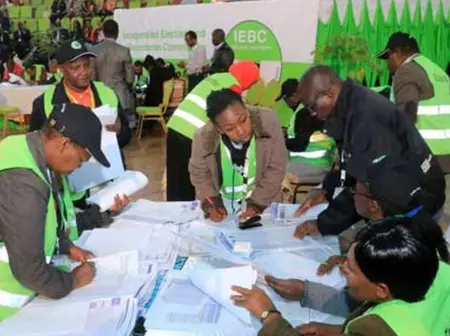
IEBC in crossfire as Senators, MPs clash over livestreaming election results
A fresh legislative showdown is brewing between the National Assembly and the Senate over whether to entrench the livestreaming of election results, as announced at the polling stations, into the law.The bitter standoff between the two Houses puts the Independent Electoral and Boundaries Commission (IEBC) on the back foot in its preparations, threatening to push the critical Elections (Amendment) Bill, 2024 into a high-stakes mediation process just eight months before the August 10, 2027 general election.
-
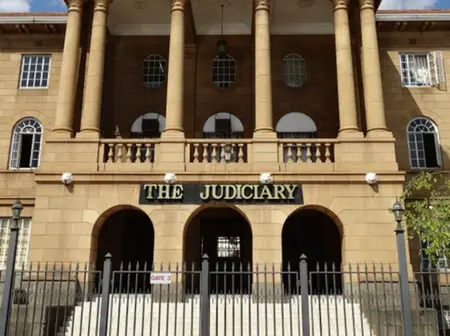
Justice Delayed: Judiciary Opens Books, Shows Huge Gap Between Hardest Workers and Bottom of Pile
According to the paper's front page, the disclosure shows that one magistrate determined 3,929 cases in a year, while a High Court judge managed to determine just two.
The paper says the Judiciary currently has 579,954 pending cases, including 341,412 backlog cases. Another 175,360 cases have remained unresolved for more than three years.
Behind the numbers, the paper says, lies a grim human reality. It reports that one Kenyan waited 30 years for justice that never came, while another person who is deaf and dumb endured 13 years awaiting an appeal.
These examples show the cost of delays for ordinary litigants, who often exhaust their savings and patience as cases drag on from one court to another.
The front page also names the officers it places among the hard workers and those at the bottom of the pile. Those listed among the hard workers include Reuben Nyakundi, Alfred Mabeya, Teresa Odera, Richard Mwongo, Teresia Matheka and Dennis Kizito Magare.
Listed at the bottom of the pile are Winnie Narasha, Joseph Were, Joseph Kipkoech, David Wanjohi Mburu and Francis Nyungu. The paper does not give the full figures for each officer on the cover, so the details are likely contained in its inside pages.
The release of the data is a significant step for transparency in the Judiciary, which has often faced criticism over delays in delivering justice.
It comes at a time when the country is also preparing for the August 2027 General Election, with the paper's Kivumbi 2027 countdown showing 263 days to the polls. Election-related disputes are likely to add pressure on courts, making the question of efficiency even more urgent.
The performance gaps highlighted in the data are likely to fuel debate on how cases are allocated, how workloads are managed and what action should be taken against officers who record low output. They also raise the question of whether the Judiciary has enough judges and magistrates to clear the backlog.
How the Judiciary responds to the public scrutiny, and whether the figures lead to reforms, will be closely watched in the coming months.
-
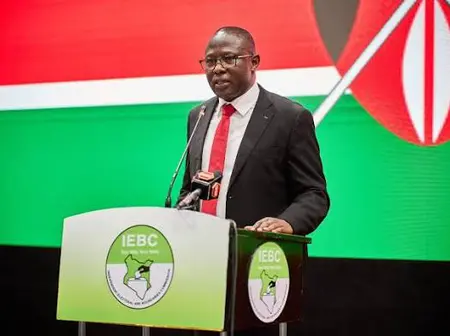
IEBC Clears Only 11 Parties in First Review of 2027 Nomination Rules
NAIROBI The Independent Electoral and Boundaries Commission (IEBC) has found that only 11 political parties met the legal requirements in their nomination rules in a first review ahead of the 2027 General Election.
In a statement dated November 20, 2026, the commission said that of the 105 parties whose rules it reviewed 11 complied with the applicable requirements.
The other 94 must amend their rules to fix the shortcomings it identified. The parties found compliant include the Kenya Moja Movement Party, Wiper Patriotic Front, Jubilee Party, Safina Party, The Mwananchi Party and the Liberal Democratic Party. Reports indicate that the parties asked to make changes include UDA, ODM, DCP and TEP.
The exercise followed a submission deadline earlier this month. IEBC confirmed on November 11 that 105 fully registered parties had submitted certified nomination rules before the November 6 deadline and that a 14-day review would follow.
The commission had cautioned parties against treating receipt of their documents as approval, saying each party's compliance status would only be known once the review was complete.
The review was carried out under Article 88(4)(d) of the Constitution and Section 27 of the Elections Act. IEBC chairperson Erastus Ethekon directed the affected parties to address the deficiencies and resubmit their amended rules within the applicable timelines.
Importantly, the finding does not shut anyone out. The commission clarified that being found non-compliant in the first review does not automatically exclude a party from the August 10, 2027 election.
The nomination rules are the framework parties use to pick their candidates, covering matters such as eligibility, nomination methods and participation by members.
The review focuses on nomination procedures, candidate eligibility, methods of nomination and the participation of party members.
For the 94 parties the focus now shifts to correcting their rules and resubmitting them quickly. With the election just under nine months away, those that fail to resolve the commission's concerns risk complications when nominations begin.
Link; https://x.com/citizentvkenya/status/2123866819895218484?a=VbkhPXPM9EJVMqlhFFs&s=19
-
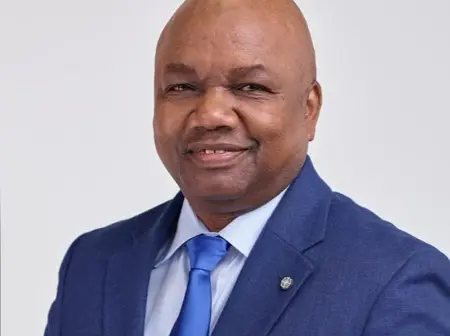
Jubilee Diaspora Sends Ruto Strong Warning Over Cost of Living and Corruption
In a statement responding to the President's State of the Nation Address, Jubilee Diaspora Chairman Thomas Mwaura said the government's "Usawa ni Sawa" slogan should deliver meaningful economic relief, equal opportunities and improved access to essential services.
Mwaura argued that despite government assurances about economic recovery and national transformation, millions of Kenyans continue struggling with unemployment, rising household expenses and the increasing cost of accessing basic services, including healthcare and education.
He raised concerns over the growing dependence on diaspora remittances, saying money previously directed towards investments, businesses and property development was increasingly being used to settle medical bills, school fees and everyday household expenses.
According to Mwaura, the situation reflects mounting financial pressure on families and raises questions about whether Kenya's economy is empowering citizens or increasingly relying on relatives abroad to sustain struggling households.
The Jubilee Diaspora chairman also called on the government to confront corruption, eliminate wastage of public resources and strengthen accountability, arguing that Kenya's ambition to become a first-world nation requires responsible leadership.
The statement further raised concerns about insecurity and the independence of constitutional institutions, urging the administration to allow independent government bodies to discharge their responsibilities without interference to protect democracy and uphold constitutional principles.
On devolution, the group rejected what it described as an unequal development model that favours certain regions, insisting that every Kenyan deserves access to infrastructure, public services and economic opportunities regardless of political affiliation or geographical location.
Mwaura maintained that national unity should be built through equitable resource distribution and shared opportunities, adding that successful leadership should be measured by meaningful improvements in citizens' lives rather than political speeches and government announcements.