
Category: Politics

  • IEBC, chairperson and national tallying centre: What does the law say?

    IEBC, chairperson and national tallying centre: What does the law say?

    I have been following the debate surrounding the IEBC, particularly the questions being raised about the authority of its Chairperson and the legal basis of the National Tallying Centre.

    Think about this objectively: in a democracy governed by the rule of law, electoral questions must be examined through the Constitution, legislation and judicial precedent, not selective interpretations shaped by political interests.

    The law is developed through constitutional provisions, legislation enacted by Parliament and judicial interpretation.

    Courts apply and interpret these provisions, progressively developing jurisprudence that guides their application. These sources must be considered together when determining the legal position on electoral matters.

    Article 259(1) of the Constitution requires it to be interpreted in a manner that promotes its purposes, values and principles, advances the rule of law and contributes to good governance. This demands a harmonious reading of the Constitution as a whole, rather than isolating individual provisions to advance particular arguments.

    The debate must therefore be understood within this constitutional, statutory and jurisprudential context.

    Article 88(5) requires the Commission to exercise its powers and perform its functions in accordance with the Constitution and national legislation. Its constitutional mandate must consequently be read alongside the Elections Act, which provides the statutory basis for administering elections.

    Article 138(3)(c) requires the IEBC to tally and verify the votes counted at polling stations and declare the result. Article 138(10) assigns the Chairperson the responsibility of declaring the presidential election result.

    These provisions establish distinct but complementary responsibilities. The Chairperson's authority to declare the result does not convert the Commission's collective responsibility for tallying and verification into an individual function.

    The Supreme Court addressed this distinction in Raila Odinga & 16 others v Ruto & 10 others; Law Society of Kenya & 4 others (Amicus Curiae) [2022] KESC 56 (KLR). The Court affirmed that tallying and verification of presidential election results at the national level are collective responsibilities of the Commission, not functions exercisable by the Chairperson acting alone.

    Section 39 of the Elections Act provides for the transmission, tallying and verification of election results through constituency and national tallying centres. The National Tallying Centre is therefore grounded in the statutory framework through which the IEBC fulfils its constitutional mandate.

    In Independent Electoral and Boundaries Commission v Maina Kiai & 5 others [2017] eKLR, the Court of Appeal affirmed the finality of results declared by constituency returning officers. National tallying and verification must therefore be distinguished from the alteration of constituency results.

    The former does not give the Commission or its Chairperson administrative authority to reopen or alter results already declared.

    The High Court, in Okoiti & another v Independent Electoral and Boundaries Commission & 5 others [2026] KEHC 13916 (KLR), also upheld the legal basis of the National Tallying Centre and the statutory provisions governing national tallying and verification.

    The constitutional necessity of this process is reinforced by Article 138(4), which requires a presidential candidate to obtain more than half of all votes cast and at least 25 per cent of the votes cast in each of more than half of the counties.

    Establishing whether these thresholds have been attained necessarily requires national aggregation and verification.

    The legal position is that the IEBC collectively tallies and verifies presidential election results, while its Chairperson bears the specific responsibility of declaring the final outcome. These are complementary responsibilities expressly recognised by the Constitution and legislation, not competing mandates.

    Our electoral jurisprudence has developed through the interpretation and application of these constitutional and statutory provisions. Judicial decisions are essential to understanding how the law operates in practice.

    Political debate cannot displace this body of law, nor can constitutional provisions be invoked selectively while disregarding the legislation and judicial decisions that inform their application.

    Respect for the Constitution must extend beyond its text to recognition of the authority vested in the institutions established under it.

    Each institution has its own mandate, powers and limitations. Respecting these boundaries, alongside the decisions of competent courts, fosters harmony in governance, strengthens public confidence and sustains our democratic order.

    The Constitution belongs to all Kenyans. Its authority and application must transcend political affiliations, electoral ambitions and individual interests.
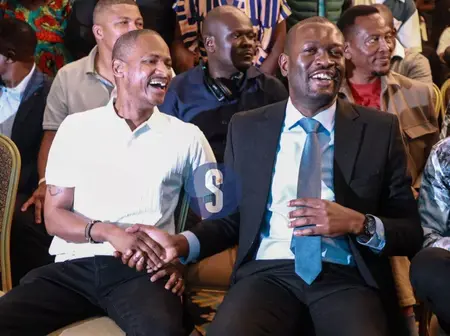
  • Babu Owino Eyes Nairobi Governor Seat As He Backs Edwin Sifuna’s 2027 Presidential Bid

    Babu Owino Eyes Nairobi Governor Seat As He Backs Edwin Sifuna’s 2027 Presidential Bid

    Embakasi East MP Babu Owino has reaffirmed his political alliance with Nairobi Senator Edwin Sifuna, referring to the legislator as his brother and dismissing speculation that their respective ambitions within the Linda Mwananchi movement could spark a rift.

    Speaking during a media interview discussing the Mwananchi Party, Owino asserted that he has played a major role in Sifuna’s political rise—claiming to have contributed 99.9 percent to his growth—and stated that he remains committed to seeing the senator advance further.

    “Edwin Sifuna is my brother. I have contributed 99.9 per cent in his growth, and I still want him to grow,” Owino said.

    The MP brushed off suggestions of internal rivalry, explaining that both leaders are eyeing distinct offices ahead of the 2027 General Election under the same political umbrella. According to Owino, Sifuna is positioned as the Linda Mwananchi movement’s presidential flagbearer, while he intends to run for the Nairobi gubernatorial seat.

    “Within Linda Mwananchi movement, he’s our presidential candidate. Babu is the next governor of Nairobi. There’s no problem if we both grow,” he remarked.

    Addressing questions surrounding his association with the Mwananchi Party, Owino clarified that the outfit is an integral component of the wider Linda Mwananchi movement rather than a rival splinter group. Describing himself as an inseparable stakeholder in the movement, he noted that the initiative was forged through the collective sacrifices of Kenyans.

    Owino further explained that aligning with a distinct political vehicle is a strategic move aimed at broadening the movement’s appeal and strengthening its bargaining power. He noted that while some voters back both leaders, others strictly favor either Sifuna or himself—making an additional party platform useful for capturing diverse support bases without fracturing the coalition.

    “There are people who like Sifuna and don’t like Babu and vice versa. Some like both of us. People who don’t like him, won’t they go to him through Babu Owino? And they need a vehicle,” Owino explained, maintaining that their partnership remains solid as they pursue their separate 2027 bids.

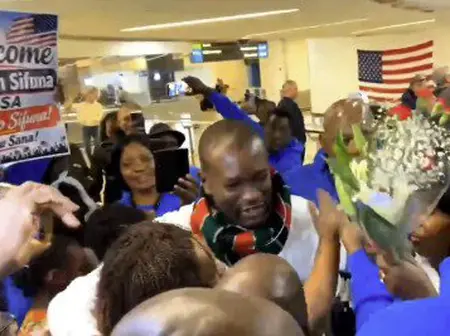
  • Cheers, excitement and huge crowds as Edwin Sifuna arrives in the U.S

    Cheers, excitement and huge crowds as Edwin Sifuna arrives in the U.S

    thumbnail

    Nairobi Senator Edwin Sifuna arrived in the United States (U.S) on Saturday, November 21 morning, ahead of his engagement tour with Kenyans in diaspora.Sifuna, who has declared his interest to unseat President William Ruto in 2027, was warmly received by Kenyans living in New Jersey, with supporters breaking into song and dance.

  • Canada opens door for skilled Kenyans seeking permanent residence amid labour shortages

    Canada opens door for skilled Kenyans seeking permanent residence amid labour shortages

    Canada opens door for skilled Kenyans seeking permanent residence amid labour shortages

    Kenyans seeking opportunities to relocate to Canada could explore an immigration pathway that allows qualified foreign professionals to obtain permanent residence as the country seeks to address labour shortages across key sectors of its economy.

    Immigration, Refugees and Citizenship Canada (IRCC) encouraged skilled workers from around the world to create profiles under its Express Entry system, which manages applications from qualified professionals seeking to settle permanently in the country.

    In a post on X on Friday, November 20, 2026, the department said it was looking for skilled workers to strengthen key sectors and meet the country’s labour market needs.

    “Canada is looking for skilled workers to address critical labour shortages, strengthen key sectors of the economy, and meet the diverse needs of the labour market across the country,” IRCC stated.

    The department urged interested candidates to begin preparing their applications by having their foreign academic qualifications assessed and taking the required language tests.

    Express Entry is an online immigration system that manages applications under three federal programmes: the Canadian Experience Class, the Federal Skilled Worker Program and the Federal Skilled Trades Program.

    The system allows eligible professionals living outside Canada, as well as qualified temporary residents already in the country, to seek permanent residence.

    Under the process, applicants first create an online profile and submit details about their education, work experience, language abilities and other qualifications.

    Eligible candidates are then placed in a pool and awarded points under the Comprehensive Ranking System (CRS), which determines their position against other applicants.

    Canada invites the highest-ranking eligible candidates to apply for permanent residence through regular invitation rounds.

    Candidates selected under category-based rounds must also meet the requirements of the particular occupation or language category.

    Statement on Canada's Express Entry system encouraging skilled foreign workers to apply for permanent residence. PHOTO/Screengrab by PD Digital/@CitImmCanFR/X

    Canada’s current Express Entry selection categories include healthcare and social services, science, technology, engineering and mathematics (STEM), skilled trades, education and transport.

    The country also has categories targeting French-language proficiency, physicians with Canadian work experience, senior managers with Canadian work experience, researchers with Canadian work experience and skilled military recruits.

    For occupation-based categories, applicants generally need at least 12 months of qualifying work experience in an eligible occupation within the previous three years.

    The experience can be acquired in Canada or abroad, although candidates must also meet the requirements of one of the three immigration programmes managed through Express Entry.

    Being employed in a priority occupation does not automatically guarantee an invitation or permanent residence.

    IRCC advises foreign-trained professionals to have their educational qualifications assessed through an approved Educational Credential Assessment (ECA) organisation where required.

    Applicants must also take an approved English or French language test to demonstrate their ability to communicate in either of Canada’s official languages.

    Other documents may include proof of work experience, travel documents, police certificates and evidence of settlement funds, depending on the immigration programme and individual circumstances.

    According to the Canadian government’s published fee schedule, an Express Entry permanent residence application costs CAD1,590 (approximately Ksh154,000), including the processing fee and right of permanent residence fee.

    The same fee applies to an accompanying spouse or partner, while each dependent child attracts a CAD270 (approximately Ksh26,000) fee.

    The costs do not include other potential expenses, such as language examinations, educational credential assessments and medical examinations.

    IRCC’s latest message does not introduce a new visa programme or guarantee employment for foreign applicants. Instead, it encourages qualified professionals to explore the existing immigration system and prepare their documents before seeking an invitation to apply for permanent residence.

  • South Africa’s first female Deputy President Mlambo-Ngcuka dies at 71

    South Africa’s first female Deputy President Mlambo-Ngcuka dies at 71

    South Africa’s first female Deputy President Mlambo-Ngcuka dies at 71

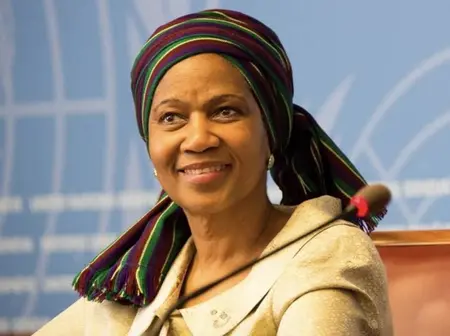
    South Africa is mourning former Deputy President Phumzile Mlambo-Ngcuka, who has died aged 71, bringing to an end a career that spanned the anti-apartheid struggle, government leadership and international diplomacy.

    The Presidency announced her death on Friday, November 20, 2026, saying Acting President Paul Mashatile had received the news with shock and sadness.

    Mashatile conveyed condolences to the Mlambo-Ngcuka family on behalf of President Cyril Ramaphosa, the government and the people of South Africa.

    The Presidency said further details would be communicated after consultations with the family, which has requested privacy while expressing appreciation for messages of support from South Africans and the international community.

    Mlambo-Ngcuka made history in 2005 when she became South Africa’s first female Deputy President, serving under former President Thabo Mbeki until 2008.

    She later took her leadership experience to the United Nations, where she served as Under-Secretary-General and Executive Director of UN Women from 2013 to 2021.

    Her death drew tributes from political leaders and institutions that worked with her during her years in public service.

    African National Congress Secretary-General Fikile Mbalula described her as a trailblazer and stalwart of the liberation movement, recognising her contribution to South Africa and the advancement of women and children globally.

    Mbalula said the party had lost not only a leader but a mother, confidant and deployee par excellence.

    He recalled her words: “There is no great force for change, for peace, for justice and democracy, for inclusive economic growth than a world of empowered women.”

    He concluded his tribute with the traditional farewell: “Hamba kahle, Mkonto WeSizwe, ulufezile ugqatso.”

    During her time at UN Women, Mlambo-Ngcuka championed gender equality and the empowerment of women and girls, working with governments and international partners to address discrimination and expand opportunities for women.

    Even after leaving the United Nations in 2021, Mlambo-Ngcuka remained involved in education, governance and women’s empowerment initiatives.

    In April 2026, she was appointed chairperson of the National School of Government’s Ministerial Advisory Committee on Curriculum and Quality Assurance by Public Service and Administration Minister Inkosi Mzamo Buthelezi.

    The committee brought together local and international experts to advise on curriculum development and training standards for South Africa’s public service.

    The National School of Government also recognised her contribution as an educationist and supporter of efforts to strengthen state capacity.

    She had previously delivered a masterclass on women in the public sector at the institution’s Sunnyside campus in Pretoria on August 3, 2023.

    Her career included roles in government, politics and international institutions, with much of her work centred on public service, education and women’s rights.

    The Presidency said further information about her passing would be shared after consultation with her family.

  • Senate summons four cabinet secretaries over Thange River oil spill

    Senate summons four cabinet secretaries over Thange River oil spill

    thumbnail

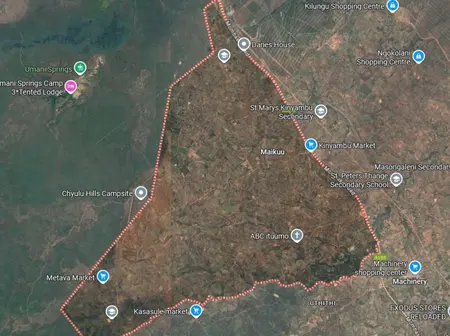
    The Senate Energy Committee has summoned four Cabinet Secretaries and the Kenya Pipeline Company leadership to answer questions over the 2015 oil spill in Thange, Makueni County, as residents continue to suffer health and environmental consequences a decade later.Cabinet secretaries Opiyo Wandayi (Energy), Deborah Barasa (Environment), Aden Duale (Health) and Eric Mugaa (Water) are expected to appear before the committee chaired by Elgeyo Marakwet Senator William Kisang.

  • Pastor Kanyari Joins Gachagua’s DCP

    Pastor Kanyari Joins Gachagua’s DCP

    thumbnail

    New DawnPastor Kanyari will run for the Kasarani MP seat.Popular evangelist, Pastor Victor Kanyari, has joined the Democracy for the Citizens Party (DCP).Party Leader Rigathi Gachagua officially welcomed Kanyari to the party at his Wamunyoro residence.Join our WhatsApp Channel for the latest news updates.

  • South Africa’s first female Deputy President Phumzile Mlambo-Ngcuka dies

    South Africa’s first female Deputy President Phumzile Mlambo-Ngcuka dies

    thumbnail

    Listen to articleMlambo-Ngcuka, who died aged 71, served as South Africa’s Deputy President from June 22, 2005, to September 23, 2008, becoming the first woman to hold the position in the country’s history.South Africa’s first female Deputy President and former UN Women Executive Director, Phumzile Mlambo-Ngcuka, has died, the country’s Presidency has announced.

  • Kaluma questions IEBC’s priorities as 2027 election countdown gathers pace

    Kaluma questions IEBC’s priorities as 2027 election countdown gathers pace

    Kaluma questions IEBC’s priorities as 2027 election countdown gathers pace

    Homa Bay Town MP George Peter Kaluma has challenged the Independent Electoral and Boundaries Commission (IEBC) over its engagement with political parties, urging the electoral body to prioritise voter registration and preparations for the 2027 General Election.

    In a statement posted on X on Saturday, November 21, 2026, Kaluma argued that the commission’s constitutional responsibility was to organise free and fair elections and ensure eligible Kenyans were registered to vote.

    He questioned why the electoral body was holding meetings with political parties instead of concentrating on what he described as its core responsibilities.

    “Your mandate is set out in Article 88 of the Constitution – to manage free and fair elections in Kenya. Having set the date for the next general election, move fast to ensure all adult citizens of Kenya are registered to vote and set in motion the electoral process. You’ve no business meeting political parties,” he stated.

    Statement by Homa Bay Town MP George Peter Kaluma challenging IEBC over its engagement with political parties ahead of the 2027 General Election. PHOTO/Screengrab by PD Digital/@gpdkaluma/X

    Kaluma’s remarks came a day after IEBC announced that 94 political parties had failed its first review of nomination rules submitted ahead of the 2027 elections.

    In a statement dated Friday, November 20, the commission said only 11 parties had met the applicable legal requirements, while the remaining 94 had been directed to amend their nomination rules.

    Among the affected parties were the ruling United Democratic Alliance (UDA), the Orange Democratic Movement (ODM), the Democracy for the Citizens Party (DCP) and Azimio la Umoja One Kenya Coalition Party.

    The review examined eight areas, including the structure of party election boards, procedures for identifying and nominating candidates, eligibility requirements, party lists and internal dispute resolution mechanisms.

    IEBC explained that the exercise was conducted under Article 88(4)(d) of the Constitution and Section 27 of the Elections Act, which give the commission responsibility for regulating the process through which political parties nominate candidates.

    The commission also clarified that being flagged during the first review did not automatically disqualify any of the affected parties from participating in the 2027 General Election.

    IEBC chairperson Erastus Ethekon.PHOTO/@IEBCKenya/X

    Kaluma’s criticism comes amid growing political tension over the commission’s preparedness for the next General Election.

    On Thursday, November 19, opposition leaders led by Wiper Patriotic Front leader Kalonzo Musyoka walked out of a consultative meeting with IEBC, raising concerns about the commission’s independence, impartiality and readiness to conduct credible elections.

    Democracy for the Citizens Party leader Rigathi Gachagua also demanded that the commission address concerns surrounding the credibility of the voters’ register and transparency in the handling of election results before resuming engagement.

    IEBC, however, maintained that it would continue engaging political parties and other stakeholders to promote credible, transparent, inclusive and peaceful nominations.

    Under Article 88(4) of the Constitution, the commission is responsible for the continuous registration of citizens as voters, regular revision of the voters’ roll, voter education and regulation of political party nominations, among other functions.

    Kenya’s next General Election is scheduled for August 10, 2027.

  • Kivutha Kibwana lists qualities Sifuna needs to lead Kenya, blesses him as he embarks on US tour

    Kivutha Kibwana lists qualities Sifuna needs to lead Kenya, blesses him as he embarks on US tour

    Kivutha Kibwana lists qualities Sifuna needs to lead Kenya, blesses him as he embarks on US tour

    Former Makueni Governor Kivutha Kibwana has sent Nairobi Senator Edwin Sifuna a message of advice and encouragement as he embarks on a political tour of the United States to popularise his presidential ambitions ahead of the 2027 General Election.

    In a statement shared on Saturday, November 21, 2026, Kibwana wished Sifuna safe travels while outlining the personal qualities he believes the senator will need to shoulder the responsibility of leading Kenya.

    The former governor identified wisdom, humility, tact, magnanimity and God’s grace as essential attributes for anyone seeking to lead the country.

    “May you @edwinsifuna travel safely abroad and into the future. The responsibility you are seeking to undertake with Kenyans demands wisdom, humility, tact, magnanimity, and above all, God’s grace. May God sojourn with you,” Kibwana stated.

    His message comes as Sifuna takes his political mobilisation campaign to Kenyans living in the United States, where he is expected to hold town hall meetings, community engagements and discussions on Kenya’s political future.

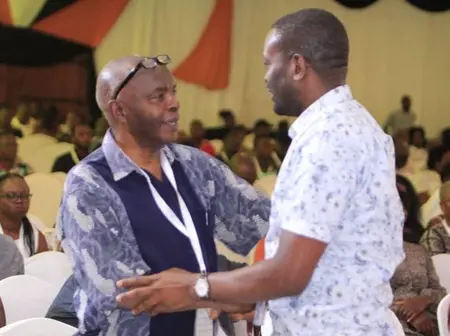
    Kibwana also clarified that the photograph accompanying his message was taken during a Law Society of Kenya (LSK) meeting in 2025, meaning it was not a picture of a recent meeting between the two leaders.

    Sifuna’s American tour is part of efforts to strengthen the Linda Mwananchi Movement’s political structures and build support among Kenyans living abroad ahead of the 2027 elections.

    The programme runs from November 21 to December 7, with planned engagements in New Jersey, Pennsylvania, Maryland, Washington DC, Texas, Seattle and California.

    Some of the activities include town hall meetings, community dinners, church services, meetings with elected officials and engagements with American-based Gen Z and 6.25 movements.

    The senator’s team is also expected to open a Linda Mwananchi Movement office in Hackettstown, New Jersey, marking an attempt to establish a more permanent presence among Kenyans in the diaspora.

    The engagements provide Sifuna with an opportunity to explain his political agenda, interact with potential supporters and mobilise resources for his growing political movement.

    The latest message is particularly significant because Kibwana has recently intervened in discussions surrounding the political relationship between Sifuna and Embakasi East MP Babu Owino.

    On November 15, the former governor urged the two politicians not to allow their individual political ambitions to drive them apart ahead of the 2027 elections.

    He argued that Kenyans would prefer to see the two leaders work together, suggesting that one could become President while the other serves as Nairobi Governor.

    “Those who try to estrange these two are enemies of Kenya and the future,” Kibwana stated at the time.

    His remarks came amid growing attention on the political ambitions of the two leaders, with Sifuna associated with a presidential bid and Babu also building his own political platform.

    Kibwana’s latest message therefore adds to his public expressions of support for Sifuna’s political journey, although he has not announced a formal endorsement of his presidential candidature.

    Interestingly, Kibwana’s political interventions come despite his association with Babu’s political outfit.

    On November 6, Babu appointed the former governor patron of The Mwananchi Party, describing him as a distinguished law professor and human rights defender with extensive public service experience.

    Former Makueni Governor Kivutha Kibwana shaking hands with Embakasi MP Babu Owino.PHOTO/@HEBabuOwino/X

    The appointment placed Kibwana within the broader political formation associated with the two leaders, whose cooperation could become significant in shaping opposition politics ahead of 2027.

    Kibwana served as Makueni’s first governor between 2013 and 2022 and previously held Cabinet positions in the national government.

    His latest message to Sifuna comes at a time when the senator is seeking to expand his political appeal beyond Nairobi and establish himself as a national leadership contender.

    Sifuna’s decision to engage Kenyans abroad comes as several opposition figures increasingly turn to the diaspora to popularise their political agendas and mobilise financial support ahead of the next General Election.

    Former Deputy President Rigathi Gachagua undertook an extended US tour between August and October 2026, while former Chief Justice David Maraga also held engagements with Kenyans abroad as part of his presidential campaign.

    The diaspora has become an increasingly important constituency in Kenyan politics because of its financial contributions, influence and participation in national political discussions.

    For Sifuna, the American tour offers an opportunity to introduce the Linda Mwananchi Movement to a wider audience while testing the appeal of his leadership ambitions among Kenyans outside the country.