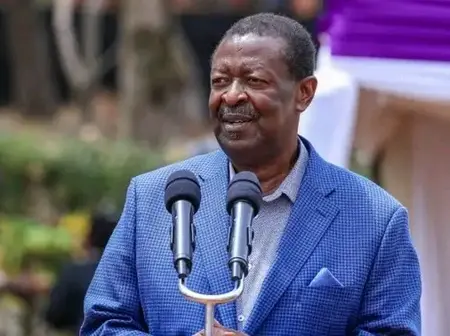
In remarks that have attracted attention, Mudavadi is reported to have warned that a strong political shift by the Luhya community towards Sifuna could jeopardise his political standing and position in government.
The remarks have added another dimension to the growing political contest in Western Kenya, where different political leaders are fighting to influence the region's voting direction ahead of the 2027 elections.
Sifuna has increasingly attracted attention among opposition supporters, particularly through his outspoken criticism of the Kenya Kwanza administration and his association with the emerging Linda Mwananchi political movement.
His growing popularity has seemingly become a concern for leaders allied to President Ruto, who are keen to retain Western Kenya's support.
The unfolding political contest raises questions about whether the Luhya community will remain aligned with the Kenya Kwanza administration or embrace the growing opposition wave ahead of 2027.
With Edwin Sifuna emerging as an influential opposition voice, Western Kenya could become one of the most fiercely contested political battlegrounds in the upcoming General Election.
The big question remains: Will the Luhya nation stand with Mudavadi and Ruto, or will Sifuna's growing influence change the political equation?
Waiganjo's entry into PPK was announced by party leader and Kiharu MP Ndindi Nyoro, who welcomed the musician-turned-politician while confirming that he would seek the Ol Kalou parliamentary seat in the next General Election.
"Karibu sana to the People's Party Paul Waiganjo.
Paul Waiganjo will be vying for the Ol Kalou Constituency Parliamentary seat in the 2027 General Elections.
Karibu sana, Mheshimiwa.
We are African, and Africa is our business," Nyoro announced.
The move marks another major shift in Waiganjo's political journey, which began with an unsuccessful attempt to secure the DCP ticket ahead of the Ol Kalou parliamentary by-election.
During the May 2026 nominations, Waiganjo finished second with 4,978 votes, losing to Sammy Kamau Ngotho, who garnered 12,957 votes to secure the party's ticket. Ngotho went on to win the July 16 by-election with 35,440 votes, becoming the DCP MP for Ol Kalou.
Waiganjo subsequently abandoned DCP and joined President William Ruto's UDA, where he threw his support behind the ruling party's candidate.
His move was followed by a government appointment in June 2026 when Tourism Cabinet Secretary Rebecca Miano announced that President Ruto had appointed him as an adviser on Development Affairs, working under the Office of the President at State House.
However, the appointment lasted only a few months. On September 25, Waiganjo announced his resignation, citing structural limitations that prevented him from effectively executing his mandate.
He said he had joined government hoping to contribute to development projects but found that his office lacked the capacity to deliver the changes he had envisioned, particularly in areas such as healthcare, education, infrastructure and agriculture.
His latest decision to join Nyoro's PPK signals a return to elective politics, with Ol Kalou once again at the centre of his ambitions.
For Ngotho, the development introduces a familiar rival into the political equation. The two previously faced off during the DCP nominations, where Waiganjo finished second before leaving the party.
With the 2027 elections approaching, their paths are now set for another possible political showdown, this time with Waiganjo seeking to challenge the sitting MP under a different party.
Kenyans could soon lose the legal guarantee to watch vote counting live from polling stations.
Kiharu MP and People’s Party of Kenya (PPK) leader Ndindi Nyoro has declared that live broadcasts of vote counting at polling stations must remain mandatory during the 2027 General Election. Speaking during a public rally in Ongata Rongai town, Kajiado County, and in recent engagements with party aspirants, Nyoro condemned proposed legislative changes that would scrap the livestreaming requirement.
At the centre of the dispute is the Elections (Amendment) (No. 2) Bill, 2024, which the National Assembly passed in October 2026. The legislation amends Section 39 of the Elections Act by deleting the clause that legally compels the Independent Electoral and Boundaries Commission (IEBC) to livestream results as they are announced at polling centres.
Nyoro warned that removing the live feed would weaken public trust in the upcoming polls. He argued that instant broadcasts allow ordinary voters, journalists, party agents, and observers to verify figures on the ground before they reach national tallying centres.
"Live streaming from polling station level is not negotiable," Nyoro told supporters, insisting that Kenyans have a democratic right to follow the count in real time. He also urged the electoral commission to keep its internal preparations—including the recruitment of a new Chief Executive Officer and the setup of election technology—completely open to public scrutiny.
"IEBC, in all the work you are doing, from hiring the CEO to matters of systems, we must do them above board and in an acceptable manner," Nyoro said, adding that citizens simply want a free and fair contest next year. He further stated that opposition groups would set up parallel tallying mechanisms to protect the vote.
Supporters of the amendment, however, say the change will not compromise election integrity. During parliamentary debates, lawmakers backing the Bill—including Deputy Speaker Gladys Boss Shollei—maintained that existing constitutional safeguards remain intact. Under the revised rules, polling station results are still final, and the IEBC is still required to electronically transmit tally forms and upload them to a public online portal immediately after counting ends.
Proponents also pointed out that deleting the mandatory clause does not stop media houses, observers, or the commission itself from broadcasting announcements voluntarily. Meanwhile, the IEBC has previously dismissed claims that it plans to ban live coverage, though the commission recently expressed regret after opposition leaders walked out of a consultative meeting over reform demands.
For everyday voters, the debate comes down to how easily they can trust the numbers announced after queues close. While uploaded forms offer a paper trail, many citizens rely on live video feeds to confirm that what happens at their local school or hall matches the final tally.
Do you think uploaded result forms on an online portal are enough to guarantee a fair election, or should live video broadcasts from every polling station remain mandatory by law?
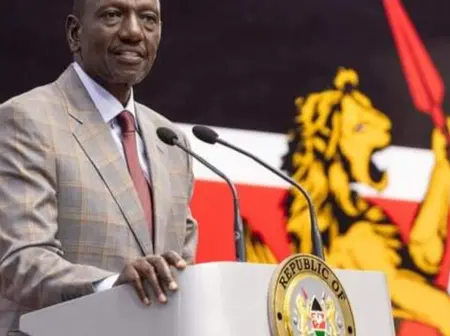
Speaking in Bungoma on Monday, November 23, 2026, the President claimed that some politicians had used misinformation to influence young people and turn them against his government.
Ruto argued that the controversy surrounding the Finance Bill was driven by misleading claims, adding that the legislation eventually passed without causing harm to the country.
He accused his competitors of taking advantage of young Kenyans for political reasons, saying the information circulated during the 2024 protests had negatively affected the lives and future prospects of some youths.
“You have manipulated the young people of Kenya for far too long. You manipulated them in 2024 using fake news, using misinformation about a finance bill that was eventually passed, and there was no harm to our nation,” Ruto said.
The Head of State warned political leaders against continuing to influence young people through what he described as fake news and deliberate misinformation.
He also used the opportunity to challenge Gen Z to concentrate on their personal ambitions rather than allowing themselves to be drawn into political battles.
Ruto encouraged young people to pursue education, look for internship opportunities, seek employment and establish businesses, saying these were the priorities that would help them build better futures.
“I want to tell the young people of Kenya, don't avail yourself for manipulation, for misinformation, for disinformation,” he stated.
The President further urged the youth to remain focused on their goals and make decisions that would improve their economic and social prospects.
“You must be very clear about where you want to go. Get your education, get an internship, get a job and get a business. That is what the young people of Kenya deserve,” he added.
Ruto ended his remarks by calling on political opponents to stop using misleading information to influence the younger generation for political gain.
The 2024 Finance Bill protests were largely driven by young Kenyans who opposed proposed tax measures in the legislation, making Gen Z a major force in the demonstrations that challenged the government.
Sifuna said an incoming administration would have very little time to convince Kenyans that a change of government had brought a meaningful difference to their lives, particularly at a time when households continue to face pressure from the high cost of living.
“If we slacken, if we go there and continue with business as usual, it will not take more than three months; these young people will be back in the street saying, ‘The government must go,’” Sifuna said.
His remarks serve as a warning to opposition leaders that defeating Ruto at the ballot would only mark the beginning of a much bigger responsibility, with Kenyans expected to judge the incoming administration by its actions rather than campaign promises.
The Nairobi Senator, who is associated with the Linda Mwananchi movement, maintained that opposition unity should be built around a common agenda for addressing the problems facing the country instead of concentrating on political positions and the distribution of government appointments.
He challenged leaders seeking to unite ahead of the 2027 elections to first agree on why they want Ruto out of office and what they intend to change if they eventually secure power.
Among the measures he wants implemented immediately is a reduction in government expenditure to create room for tax relief.
Sifuna specifically mentioned taxes on fuel and electricity, as well as the housing levy, arguing that reducing these financial burdens would provide relief to ordinary Kenyans.
He further insisted that leaders should not enter government to become comfortable while citizens continue struggling to meet their daily needs.
The warning comes as opposition figures continue navigating political differences and competing interests in their efforts to establish a united front capable of challenging Ruto in the next General Election.
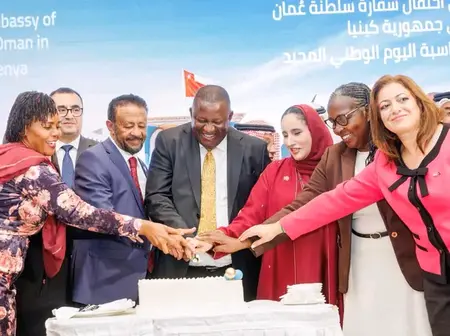
He noted that Kenya and Oman enjoyed warm relations built over centuries through maritime trade, cultural exchanges and strong people-to-people connections.
According to the Cabinet Secretary, the partnership has continued to grow through mutual respect & common aspirations for economic development and prosperity.
Mvurya said Kenya was keen to build on the existing relationship by expanding cooperation in several key sectors, including trade, investment, blue economy development, maritime connectivity, tourism, education and labour mobility.
He observed that strengthening these areas would help translate the longstanding diplomatic relationship into practical opportunities for citizens and businesses in both countries.
The CS further emphasised the importance of developing partnerships that support sustainable economic growth while creating stronger links between the two nations.
CS Salim Mvurya expressed Kenya’s commitment to maintaining the cordial relationship and exploring new opportunities that would benefit both countries.
A political engagement in Tulimani, Makueni County, descended into chaos on Saturday after angry residents chased away Prof. Philip Kaloki and his United Democratic Alliance team, accusing them of refusing to give out money.
The event, which was intended to be a routine meet-the-people tour, turned dramatic when a charged crowd turned against the leaders, forcing them to beat a hasty retreat.
According to eyewitness accounts, the residents, who had gathered in large numbers, grew increasingly hostile after the leaders allegedly declined to hand out cash, a practice that has become synonymous with political gatherings in the region.
Tensions boiled over as the crowd began shouting "WANTAM! WANTAM!" a rallying cry that has become a symbol of political defiance while the visibly rattled leaders scrambled to safety.
The engagement, which had been billed as an opportunity for the UDA team to connect with locals, ended abruptly as the convoy sped off amid jeers and shouting.
The incident has sparked mixed reactions online, with some residents defending their actions, arguing that politicians should focus on development rather than handouts.
"We are tired of leaders who only come around during election periods with empty promises. If you cannot deliver, do not come to buy us with money," said one resident who spoke on condition of anonymity.
Others, however, criticized the heckling, noting that dialogue remains the best way to address grievances.
"Chasing leaders away does not solve anything. We should engage them and demand accountability," said another local.
Prof. Kaloki, who has been at the forefront of UDA's political activities in the region, has yet to issue a statement regarding the incident.
The drama in Tulimani is the latest in a series of chaotic political gatherings across the country, highlighting growing public frustration with Kenya's political class.
As the dust settles, the incident serves as a stark reminder that voters are increasingly demanding substance over spectacle and that the era of easy political handouts may be drawing to a close.
Robert Alai has ignited a fresh debate over identity, political allegiance and the right of leaders to participate in discussions concerning the Luo community following remarks targeting Ugenya MP David Ochieng.
Alai questioned what he described as inconsistent political standards among sections of the Luo community who have expressed discomfort with Ochieng's involvement in Luo political affairs while embracing Treasury Cabinet Secretary John Mbadi.
Alai's reaction centred on the apparent contradiction surrounding Ochieng's political identity and the acceptance of Mbadi, who comes from the Abasuba community.
He suggested that political acceptance should not be determined by selective interpretations of ethnic identity, particularly when leaders are judged differently despite their respective backgrounds and political affiliations.
The controversy erupted after remarks emerged questioning why Ochieng, described as a Marachi from Busia, was involving himself in the political affairs of the Luo community. The argument maintained that the Luo community had a democratic right to independently determine its political direction without external interference.
However, the ensuing exchanges exposed deeper disagreements about the historical relationship between the Luo and Abasuba communities. Some contributors challenged attempts to portray the Abasuba as outsiders, pointing to historical and cultural connections, including shared linguistic influences and accounts of interactions within the ancient Buganda Kingdom.
Others argued that Mbadi had never presented himself as a Luo or addressed the community in a manner they considered condescending. They also questioned why criticism was being directed at Ochieng while other politicians were seemingly treated differently.
The debate further expanded into questions surrounding Raymond Omollo, Junet Mohamed and Shakil Shabir, with some contributors accusing political actors of allowing financial interests to influence their loyalties.
Ultimately, Alai's intervention has reopened a sensitive conversation about ethnic identity, political inclusion and democratic freedom, exposing competing interpretations of who has the right to participate in shaping the political destiny of the Luo community.
Zuena made the announcement on Monday, November 23, 2026, during a political meeting in Gilgil, Nakuru County, where she declared that she would seek election on the Linda Mwananchi Party ticket.
The aspiring legislator said she was ready to enter the parliamentary race, expressing confidence in the movement's ability to mobilise residents and challenge the existing political leadership.
"I want to vie under the Linda Mwananchi Party in Gilgil, to be specific," Zuena declared, formally signalling her intention to join the growing list of politicians seeking elective positions under the emerging political outfit.
Her announcement comes at a time when the Linda Mwananchi Movement, associated with Nairobi Senator Edwin Sifuna, is expanding its political activities and attracting leaders interested in challenging the established political order.
Her declaration comes against the backdrop of a political realignment in Gilgil following Wangari's recent departure from President William Ruto's United Democratic Alliance (UDA) to join former Deputy President Rigathi Gachagua's Democracy for the Citizens Party (DCP). Wangari announced the move on November 20, saying she had consulted constituents before making the decision. Citizen Digital
Zuena has criticised the incumbent's political shift, questioning the consistency of her political record, particularly her previous support for government policies and parliamentary decisions.
The Linda Mwananchi activist has previously been vocal about the Finance Bill 2024, which triggered nationwide protests led largely by young Kenyans. The demonstrations resulted in deaths, injuries and widespread destruction of property.
Her criticism centres on the need for voters to examine the voting records of their elected representatives rather than judge them solely by their latest political affiliations.
Zuena's political ambitions also come as Linda Mwananchi continues building structures across different counties ahead of the 2027 elections. She serves in the movement's presidential campaign secretariat, where she is part of its digital, media and publicity team.
The Gilgil parliamentary contest could therefore become an important test of the movement's ability to translate its growing political activities into electoral support.
With Wangari seeking another term under a different political vehicle and Zuena announcing her intention to challenge for the same seat, residents will have an opportunity to assess the competing candidates, their records and their proposed agenda.
The 2027 General Election is expected to attract increased competition as political parties and movements intensify grassroots mobilisation.
For now, Zuena's declaration has introduced another name into the Gilgil parliamentary race, with the battle for the constituency expected to attract attention as campaigns gather momentum.
Political discussions surrounding Nairobi Senator Edwin Sifuna and Embakasi East MP Babu Owino have taken an interesting turn following remarks by Geoffrey Mosiria, who has challenged Babu to respect Sifuna and recognise his position in the political landscape.
According to Mosiria, Babu Owino should understand that Sifuna is a different political figure and deserves respect. He suggested that the two leaders should not be treated as though they occupy the same political position, adding that Babu should carefully consider how he approaches his political relationship with the Nairobi senator.
The remarks come at a time when political conversations about the future of the opposition are becoming increasingly interesting. Several young leaders have expressed interest in national leadership, while others are working to strengthen their political influence ahead of the 2027 General Election.
Sifuna has continued building his political profile through his outspoken positions on governance, accountability and the country's political direction. His growing influence among sections of the opposition has also made him an important figure in discussions about the country's future leadership.
On the other hand, Babu Owino has established himself as one of the most vocal politicians in Nairobi. His popularity, political communication skills and ability to attract public attention have kept him relevant in national political debates.
However, Mosiria went further by challenging Babu to openly declare his presidential ambitions if he genuinely wants to become Kenya's next Head of State.
Ultimately, political competition should not prevent leaders from maintaining mutual respect. Both Sifuna and Babu have their own political strengths, supporters and leadership ambitions.
Kenyans will be interested in seeing how the two leaders manage their political relationship as conversations about the opposition's future direction continue.
What is your opinion? Should Babu Owino openly declare his presidential ambitions, or should he first concentrate on strengthening his political relationship with Sifuna?