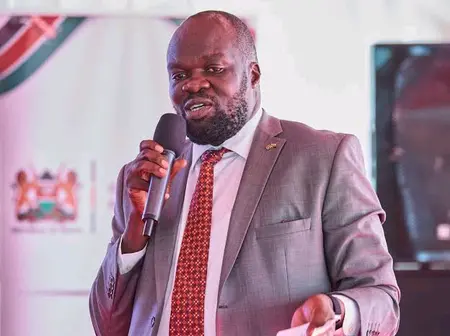
Robert Alai has ignited a fresh debate over identity, political allegiance and the right of leaders to participate in discussions concerning the Luo community following remarks targeting Ugenya MP David Ochieng.
Alai questioned what he described as inconsistent political standards among sections of the Luo community who have expressed discomfort with Ochieng's involvement in Luo political affairs while embracing Treasury Cabinet Secretary John Mbadi.
Alai's reaction centred on the apparent contradiction surrounding Ochieng's political identity and the acceptance of Mbadi, who comes from the Abasuba community.
He suggested that political acceptance should not be determined by selective interpretations of ethnic identity, particularly when leaders are judged differently despite their respective backgrounds and political affiliations.
The controversy erupted after remarks emerged questioning why Ochieng, described as a Marachi from Busia, was involving himself in the political affairs of the Luo community. The argument maintained that the Luo community had a democratic right to independently determine its political direction without external interference.
However, the ensuing exchanges exposed deeper disagreements about the historical relationship between the Luo and Abasuba communities. Some contributors challenged attempts to portray the Abasuba as outsiders, pointing to historical and cultural connections, including shared linguistic influences and accounts of interactions within the ancient Buganda Kingdom.
Others argued that Mbadi had never presented himself as a Luo or addressed the community in a manner they considered condescending. They also questioned why criticism was being directed at Ochieng while other politicians were seemingly treated differently.
The debate further expanded into questions surrounding Raymond Omollo, Junet Mohamed and Shakil Shabir, with some contributors accusing political actors of allowing financial interests to influence their loyalties.
Ultimately, Alai's intervention has reopened a sensitive conversation about ethnic identity, political inclusion and democratic freedom, exposing competing interpretations of who has the right to participate in shaping the political destiny of the Luo community.
Leave a Reply