Category: Health

  • 10 People With Rare Conditions and Extraordinary Abilities That Seem Almost Impossible

    10 People With Rare Conditions and Extraordinary Abilities That Seem Almost Impossible

    While some have broken world records, others have overcome unimaginable challenges to live relatively normal lives. From a man who can stretch his skin several inches to a woman with an unusual eye-popping ability, these individuals have captured worldwide attention.

    Here are 20 people whose extraordinary stories will leave you amazed.

    Standing at an astonishing 8 feet 3 inches (2.51 metres), Sultan Kösen from Turkey holds the Guinness World Record as the tallest living man.

    His unusual height was caused by a tumour affecting his pituitary gland, which triggered excessive growth during his childhood. Although he was once offered an opportunity to pursue basketball because of his height, his delicate physical condition made the sport unsuitable for him.

    During her life, she endured cruel online bullying, with some people even labelling her the world's ugliest woman.

    Rather than allowing the insults to define her, Lizzie became an advocate against bullying. She has delivered motivational speeches, published books and shared messages encouraging people to embrace their differences.

    At one point, her legs reportedly weighed approximately 210 pounds, making movement and everyday activities incredibly difficult.

    In 2010, she underwent an amputation of her left leg following an infection. She has since undergone treatment aimed at managing the unusual growth associated with her condition.

    He lives with Ehlers-Danlos syndrome, a group of genetic disorders affecting connective tissue, which can cause unusually stretchy skin and joint problems.

    Turner became famous for his extraordinary ability to stretch the skin around his stomach by approximately 6.3 inches, earning recognition from Guinness World Records.

    Her short stature is caused by achondroplasia, a form of skeletal dysplasia that affects bone growth.

    In 2011, she was officially recognised by Guinness World Records as the world's shortest living woman. She later gained additional international attention after appearing in the television series American Horror Story: Freak Show.

    Following an incident involving a hockey mask, she discovered that she could make her eyeballs protrude significantly from their normal position.

    Her unusual ability attracted international attention, earning her a place in Guinness World Records for the greatest eyeball protrusion.

    Her extremely slender figure, facial features and distinctive appearance earned her the nickname 'Human Barbie'.

    Lukyanova has previously claimed that she has not undergone facial surgery and attributes her appearance to her lifestyle, diet and fitness routine.

    Aaron Ratchford became famous for an unusual ability that makes him appear to have magnetic powers.

    He claims that his body can attract metal objects, including spoons, which seem to stick to his skin.

    His unusual demonstrations have attracted public attention, although the scientific explanation for such demonstrations is generally associated with skin friction and other physical factors rather than actual magnetism.

    Taking a shower is an ordinary daily activity for most people, but for Ashley Morris from Australia, it can be an extremely painful experience.

    She suffers from a rare condition known as aquagenic urticaria, which causes her skin to develop itchy red bumps after coming into contact with water.

    Even her own sweat can trigger reactions. According to reports about her condition, bathing can leave her experiencing discomfort for hours, forcing her to keep showers extremely short.

    Sleep is essential for human survival, but young Rhett Lamb reportedly struggled with an unusual medical condition that prevented him from sleeping normally.

    His condition was initially associated with restless legs syndrome, which can cause uncomfortable sensations and an uncontrollable urge to move the legs.

    His inability to get adequate sleep affected his early childhood, but doctors eventually performed surgery that helped improve his sleeping condition.
  • MPs Approve New Law to Stop Hospitals From Holding Dead Bodies Over Unpaid Bills

    MPs Approve New Law to Stop Hospitals From Holding Dead Bodies Over Unpaid Bills

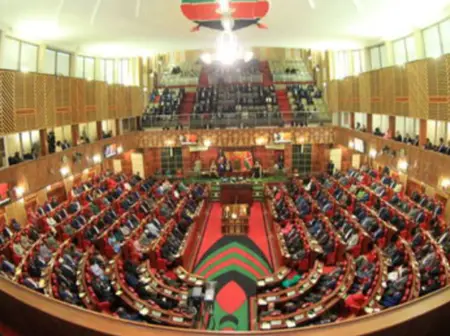
    Kenyans could soon access emergency medical services without first raising money for hospital bills following the approval of a proposed law by the National Assembly.

    The Health (Amendment) Bill, 2024, sponsored by Kirinyaga Woman Representative Jane Njeri Maina, was approved during its third reading on Wednesday, November 11, 2026. The proposed legislation seeks to strengthen patients' rights and prevent hospitals from denying emergency care to people who cannot immediately afford treatment.

    Under the proposed changes to the Health Act, public healthcare facilities that demand payment before providing emergency medical attention could face fines of up to KSh3 million.

    The proposal addresses a challenge that has affected patients and families who arrive at hospitals during medical emergencies but are asked to make payments before receiving treatment.

    In some cases, families have been forced to look for money while their relatives require urgent medical attention, raising questions about the accessibility of emergency healthcare.

    The Bill also targets the practice of public hospitals detaining bodies of deceased patients because of outstanding medical bills.

    If the amendments become law, public healthcare officers who authorise or facilitate the detention of bodies over unpaid bills could face fines of up to KSh2 million.

    The proposed provision seeks to ease the difficulties faced by grieving families who sometimes struggle to secure the release of their relatives for burial because they cannot clear hospital charges immediately.

    Following the parliamentary proceedings, Kitutu Masaba MP Clive Ombane Gisairo welcomed the approval, arguing that the proposed changes would protect vulnerable patients and their families from exploitation.

    “The exploitation of vulnerable patients in both public and private hospitals will soon be a thing of the past under the proposed reforms in the health sector,” Gisairo stated.

    He further said he had endorsed the Health (Amendment) Bill No. 56 of 2024, describing it as an important step towards strengthening the protection of patients.

    “Once enacted, this landmark legislation will guarantee access to emergency medical treatment and prohibit hospitals from detaining patients or withholding deceased persons over unpaid medical bills,” he added.

    Despite securing approval in the National Assembly, the Bill has not yet become law. It will proceed to the Senate for consideration before being forwarded to President William Ruto for assent if it successfully completes the remaining parliamentary stages.

    Once enacted, the proposed amendments would introduce financial penalties for public healthcare facilities and officers who violate the new requirements.

    The changes could significantly affect how public hospitals handle emergency admissions and outstanding medical bills, particularly for families facing financial difficulties.

    https://www.facebook.com/100064288795404/posts/1578084697677808/?app=fbl

  • Kenya Discharges Last Ebola Patient as 42-Day Countdown to Declaring Country Disease-Free Begins

    Kenya Discharges Last Ebola Patient as 42-Day Countdown to Declaring Country Disease-Free Begins

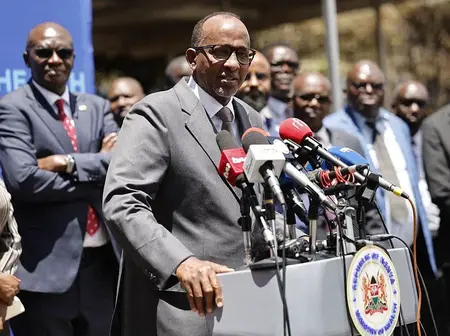
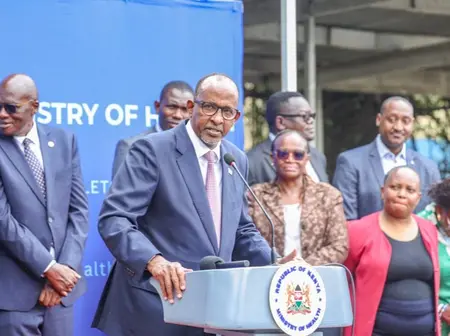
    Health Cabinet Secretary Aden Duale made the announcement on Wednesday, November 11, revealing that the patient had tested negative for the virus and was in good health.

    According to Duale, the development means that Kenya currently has no Ebola patients receiving treatment for the first time since the outbreak started.

    The CS also confirmed that the final 11 people who had been under quarantine after coming into contact with infected individuals had completed their monitoring period and returned to their families.

    Duale said the progress was achieved through coordinated efforts involving national and county governments, public and private hospitals, security agencies and international health partners.

    He particularly praised healthcare workers who risked their lives while attending to patients, conducting laboratory tests, tracing contacts and monitoring suspected infections.

    The CS disclosed that four healthcare workers had contracted the virus while performing their duties, acknowledging their sacrifice and commitment during the outbreak.

    He also recognised Kenyatta National Hospital, The Nairobi Hospital, the Kenya Medical Research Institute (KEMRI), the World Health Organization and Africa CDC for their contributions to containing the disease.

    Despite the latest breakthrough, Duale cautioned that Kenya had not yet officially defeated the outbreak.

    He announced that Thursday, November 12, would mark the beginning of a 42-day countdown required before the country could be declared Ebola-free.

    The monitoring period is twice the virus's longest incubation period. If no new infections are reported, Kenya is expected to receive an official Ebola-free declaration on or around December 23, 2026.

    Meanwhile, Duale maintained that Kenya would not allow itself to become a quarantine destination for travellers from other countries seeking to meet foreign travel requirements.

    He added that the Ministry of Health would not issue quarantine or Ebola-free certificates to international passengers for travel purposes, arguing that such documents have no basis under the International Health Regulations.

    https://nairobileo.co.ke/news/article/31409/govt-discharges-last-ebola-patient-as-all-contacts-complete-quarantine

  • “A Hospital Demanded KSh1 Million Before Admitting My Mum to ICU” – Njeri Maina

    “A Hospital Demanded KSh1 Million Before Admitting My Mum to ICU” – Njeri Maina

    In a statement shared on social media, Maina expressed appreciation to an individual she addressed as Mhesh for pushing a bill that she believes could help address some of the difficulties experienced by patients and their families when accessing healthcare services.

    Maina revealed that her motivation for pursuing parliamentary leadership was largely driven by a painful experience involving her mother, who reportedly required admission to an Intensive Care Unit (ICU).

    According to her account, the hospital demanded a deposit of KSh1 million before admitting her mother to the critical care unit. Even more disturbing, she claimed that the family was given only 30 minutes to raise and pay the required amount.

    Unfortunately, Maina disclosed that she eventually lost her mother. The experience left her with painful memories and strengthened her desire to see changes in a healthcare system where access to emergency treatment can become a major financial challenge for ordinary families.

    Maina also praised the efforts being made to push the proposed legislation, saying she could now return to her usual responsibilities with greater confidence, knowing that someone was pursuing an issue she considers important.

    Her message has also drawn attention to the wider debate surrounding healthcare affordability, emergency admissions and the financial demands placed on families during medical crises.

    For many Kenyan households, the cost of specialised treatment remains a serious concern, particularly when emergencies occur without sufficient financial preparation.

    Maina's account is a reminder of the human stories behind debates on healthcare reforms. What are your views on her heartbreaking revelation and the need to make emergency treatment more accessible? Share your remarks and comments in the comment section.

  • SHA Announces Nationwide Community Visits Starting November 16 as Kenyans Receive New Registration

    SHA Announces Nationwide Community Visits Starting November 16 as Kenyans Receive New Registration

    The exercise, which will run until December 15, 2026, is expected to reach communities across the country as the government steps up efforts to increase public awareness and improve participation in the national health insurance programme.

    During the planned visits, SHA teams will engage residents and explain how the health coverage system works. They will also assist Kenyans who have not registered by providing guidance and helping them complete the registration process.

    The programme comes at a time when many households are seeking clearer information about their responsibilities and benefits under the new healthcare arrangement.

    Another major focus of the exercise will be encouraging members to keep up with their required contributions. SHA officials are expected to explain why regular payments are important and help individuals understand the available ways of meeting their obligations.

    For Kenyans facing difficulties making payments at once, the teams will provide information about flexible payment arrangements. This is expected to help more households understand the available options and make informed decisions based on their financial situations.

    The outreach will also give residents an opportunity to raise questions, seek clarification and receive assistance directly from SHA representatives instead of relying entirely on information circulating online.

    By taking these services to local communities, the authority hopes to address confusion, improve registration numbers and encourage greater compliance among members.

    The month-long exercise is expected to play an important role in bringing healthcare information closer to ordinary citizens while strengthening public understanding of SHA services.

    Kenyans are therefore expected to take advantage of the visits to register, seek assistance and understand the available payment options.

  • Njeri Maina’s Health Bill Could Change How Public Hospitals Treat Patients Who Cannot Pay

    Njeri Maina’s Health Bill Could Change How Public Hospitals Treat Patients Who Cannot Pay

    The proposed protections are contained in the Health (Amendment) Bill, 2024, sponsored by Kirinyaga Woman Representative Jane Njeri Maina, which was passed by the National Assembly on Wednesday, November 11, 2026.

    The legislation seeks to address two problems that have affected families seeking medical services in public hospitals: patients being held after receiving medical clearance because of unpaid bills and hospitals withholding bodies of deceased persons over outstanding debts.

    One of the major changes proposed in the Bill is a prohibition on demanding payment before providing emergency medical treatment. Under the proposed law, public hospitals would be required to attend to patients facing life-threatening conditions without first demanding deposits or proof that they can afford the services.

    The amendments also seek to expand the definition of emergency care to include assistance provided at the scene of an accident or illness, during transportation to hospital, in emergency departments and during the initial stages of inpatient care.

    This would mean that financial difficulties should not prevent someone involved in an accident or experiencing a serious medical emergency from receiving immediate attention.

    Public health facilities found demanding payment before offering emergency treatment could face fines of up to KSh3 million under the proposed amendments.

    The Bill also addresses the difficult situation faced by patients who remain in hospital even after doctors have approved their discharge because they cannot settle their medical expenses.

    If enacted, public healthcare facilities would be prohibited from keeping medically discharged patients solely because of outstanding bills.

    Families who lose loved ones in hospitals could also benefit from the proposed changes. The legislation seeks to criminalise the detention of bodies of deceased persons as a way of pressuring relatives to pay outstanding medical charges.

    Public officers who authorise or facilitate such detention could face fines of up to KSh2 million.

    However, the proposed law does not mean that hospital debts will automatically be cancelled. Healthcare facilities would still have the right to recover outstanding payments through lawful procedures rather than withholding patients or bodies.

    The protections also have a specific limitation because the amendments agreed upon during parliamentary consideration apply to public healthcare facilities, rather than automatically covering all private hospitals and mortuaries.

    Maina's push for the legislation was informed by cases involving families who have been unable to bury their relatives because of medical debts.

    During parliamentary debate on February 11, 2026, she highlighted the case of Kelvin, a former medical student who reportedly turned to boda boda work after failing to secure employment.

    Kelvin died in a road accident, but his body was allegedly held at a funeral home for nearly a year over an outstanding hospital bill of KSh1.42 million.

    Maina said she represented the family without charging legal fees and witnessed the suffering of a mother who could not give her son a dignified burial.

    Dagoretti South MP John Kiarie also criticised hospitals that prioritise payment demands over emergency medical attention, arguing that emergency departments should focus on saving lives.

    Despite passing the National Assembly, the Bill is not yet law. It must first undergo consideration by the Senate before being

    https://www.facebook.com/100063646850476/posts/1743146681150210/?app=fbl

  • What Njeri Maina’s Health Amendment Bill means for ordinary Kenyans

    What Njeri Maina’s Health Amendment Bill means for ordinary Kenyans

    What Njeri Maina’s Health Amendment Bill means for ordinary Kenyans

    Kenyans who cannot raise hospital deposits during medical emergencies could soon receive treatment without first proving they can pay, while families struggling with medical debts may no longer have to fight to retrieve the bodies of deceased relatives from public health facilities.

    These are among the proposed changes in the Health (Amendment) Bill, 2024, sponsored by Kirinyaga Woman Representative Jane Njeri Maina, which was passed by the National Assembly on Wednesday, November 11, 2026.

    The Bill seeks to amend the Health Act to strengthen access to emergency medical treatment and prevent public healthcare facilities from detaining patients or bodies of deceased persons over unpaid medical bills.

    For ordinary Kenyans, the proposed changes would affect what happens when a patient arrives at a public hospital in a critical condition without money, when a family cannot clear a medical bill, or when relatives need to collect a loved one’s body for burial.

    One of the Bill’s key proposals is to stop public health facilities from demanding payment before providing emergency medical treatment.

    This means a patient who arrives at a public hospital with a life-threatening condition should receive the necessary initial medical attention without first being required to produce cash, make a deposit or demonstrate their ability to pay.

    The Bill also seeks to broaden the definition of emergency medical treatment to cover necessary care provided at the scene of an injury or illness, during transportation to a health facility and through emergency departments and early inpatient care.

    The proposed change is intended to prevent financial requirements from delaying treatment when a patient’s condition requires immediate medical attention.

    Public health facilities that demand prepayment before providing emergency treatment could face fines of up to Ksh3 million under the proposed amendments.

    The legislation also targets the practice of detaining patients who have been medically discharged because they cannot settle outstanding hospital bills.

    If enacted, public health facilities would no longer be allowed to keep a medically discharged patient in hospital solely because of unpaid charges.

    It also seeks to make it an offence for public healthcare facilities and the officers responsible for them to detain the bodies of deceased persons as a way of forcing families to clear medical debts.

    Public officers who authorise or facilitate the detention of bodies over unpaid bills could face fines of up to Ksh2 million.

    For families, the proposed protection would mean that inability to clear a hospital bill should not prevent them from collecting a deceased relative’s body and proceeding with burial arrangements.

    However, the Bill does not cancel medical debts. Hospitals would still be entitled to pursue payment through lawful means, but would not be permitted to use the detention of patients or bodies as a debt-recovery measure.

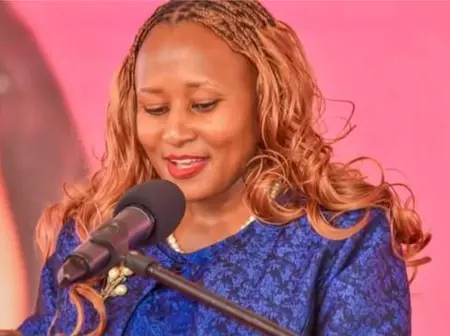
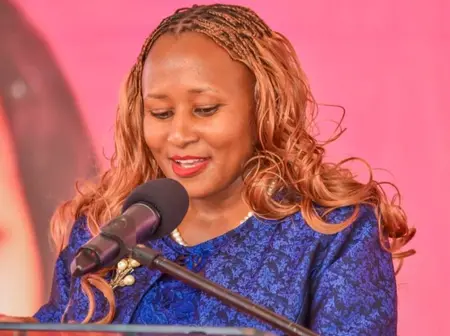
    Kirinyaga Women representative Njeri Maina during a poast event: PHOTO/@Hon_Njeri_Maina/X

    An important distinction in the Bill is its scope.

    During the Second Reading on February 11, 2026, Maina told MPs that although the initial proposal sought to cover both public and private facilities, consultations with the Departmental Committee on Health resulted in the amendments applying to public facilities.

    The legislator questioned the limitation, saying it did not fully address the need to protect all Kenyans equally.

    This means the proposed protections should not be presented as a blanket prohibition covering every private hospital and mortuary. The scope agreed upon during parliamentary consideration is public healthcare facilities.

    Foremer Deputy President Rigathi Gachagua and Kirinyanga Women Rep Njeri Maina during a past rally. PHOTO/@rigathi/X

    Maina’s push for the amendments was informed by her experience representing families unable to retrieve the bodies of relatives because of outstanding medical bills.

    During the February 11 parliamentary debate, she cited the case of Kelvin, a former medical student who turned to boda boda work after struggling to find employment.

    Kelvin died in a road accident, and his body was reportedly held at a funeral home for nearly a year over an outstanding hospital bill of Ksh1.42 million.

    Maina told MPs that she represented the family on a pro bono basis and witnessed the pain of a mother who could not give her son a dignified burial.

    “This Bill is not mere rhetoric or politics. It is a crucial step towards addressing the profound suffering faced by many Kenyans,” she said.

    Dagoretti South MP John Kiarie also questioned the practice of demanding payment before attending to patients in emergency units.

    “The emergency unit of any hospital should live up to its name. Today, instead of checking a patient’s vitals, we check their ability to pay,” Kiarie told the House.

    The legislation now proceeds to the Senate for consideration before it can be presented to the President for assent.

    If it completes the legislative process and becomes law, public healthcare facilities will be required to comply with the new provisions.

    For Kenyans, the central question is whether a medical emergency will be treated as a matter of urgency rather than an opportunity to demand payment first, and whether families will be able to bury their loved ones without having to secure the release of their bodies by clearing hospital debts.

  • Kenya discharges last Ebola patient, begins 42-day countdown to Ebola-free status

    Kenya discharges last Ebola patient, begins 42-day countdown to Ebola-free status

    thumbnail

    Kenya has discharged its last Ebola patient, marking a major milestone in the country's efforts to contain the outbreak and paving the way for a possible declaration that the disease has been eliminated.Health Cabinet Secretary Aden Duale said the final patient had recovered and been discharged from the treatment facility, leaving the country with no active Ebola cases for the first time since the outbreak was reported.

  • Acanthamoeba Keratitis: Why Baba Talisha’s rare eye infection can cause vision loss

    Acanthamoeba Keratitis: Why Baba Talisha’s rare eye infection can cause vision loss

    thumbnail

    Acanthamoeba Keratitis is a rare eye infection that can cause severe damage to the cornea and, in advanced cases, lead to permanent vision loss.The condition is caused by a microscopic parasite known as Acanthamoeba, which is commonly found in water, soil and dust. It affects the cornea, the transparent outer layer at the front of the eye responsible for helping focus light.

  • Boy’s eight-year battle with skin disease prompts Mosiria to intervene

    Boy’s eight-year battle with skin disease prompts Mosiria to intervene

    thumbnail

    A boy who has battled a skin condition for more than eight years has received support from Nairobi County Chief Officer for Environment Geoffrey Mosiria, who has pledged support.Mosiria shared Bryson’s story on Wednesday, November 11, saying he had been tagged in a video showing the boy’s condition before contacting his family.