Kenya has stepped up cross-border health surveillance following a joint warning from six foreign governments—including the United States and the United Kingdom—over the acute threat of an Ebola outbreak in neighboring South Sudan.
In a joint statement issued on Thursday, November 12, 2026, the embassies of Germany, Japan, the Netherlands, Norway, the United Kingdom, and the United States expressed grave concern over potential spillover into South Sudan. Although Juba has not yet confirmed a case of the Bundibugyo Ebola virus, the World Health Organization (WHO) estimates a 99 percent risk of virus importation due to active transmission across its 813-kilometer border with the Democratic Republic of the Congo (DRC), where confirmed cases surpassed 10,900 as of November 9.
“These risks give even greater urgency to the need for South Sudan’s leaders to start using South Sudan’s public revenue to fund the health sector, including the salaries of public health workers. It also gives greater urgency to our calls for South Sudan’s leaders to support full access throughout the country for organisations providing assistance to South Sudanese people in need,” the embassies stated.
Health authorities in South Sudan have been actively investigating suspected viral alerts, including a fatal haemorrhagic fever case in Morobo County—which twice tested negative for Ebola before being confirmed as yellow fever on November 10, 2026—alongside another pending alert in Yei.
The heightened alert directly impacts Kenya, as South Sudan serves as a major regional trade partner with between 800 and 1,500 people crossing the shared border daily.
The warning coincides with Kenya beginning its mandatory 42-day monitoring countdown toward being declared Ebola-free. In October 2026, Kenya recorded its first imported case of Ebola, followed by eight secondary cases; two patients succumbed to the virus while the remaining patients recovered and were discharged from quarantine.
“Forty-two days is twice the longest incubation period of the virus. If no new case is recorded in that period, Kenya will be declared free of Ebola on 23 December 2026,” Health Cabinet Secretary Aden Duale announced on Wednesday.
Despite the countdown, the WHO has urged Kenyan health authorities to maintain strict disease surveillance, screen patients at health facilities, and bolster laboratory capacity and frontline worker preparedness. Meanwhile, South Sudan remains among regional nations facing international travel restrictions from countries including the U.S., Canada, Saudi Arabia, and the United Arab Emirates.
Nakuru-In Kenya’s health facilities, breast cancer is spoken of almost exclusively in the feminine. Every October brings pink ribbons, and public health campaigns urge women to examine themselves, get mammograms, and seek early detection. This messaging has saved many female lives. Over time, though, it has also built an invisible barrier for Kenyan men, who may believe, or feel culturally, that they are immune to the disease.
Listen to articleThe new blood test could eventually provide additional information to help doctors and patients assess the presence of these changes before deciding on preventive treatment.Ovarian cancer could be detected before tumours develop through a blood test that identifies early molecular changes in the body, raising hopes for earlier diagnosis of one of the deadliest cancers affecting women.
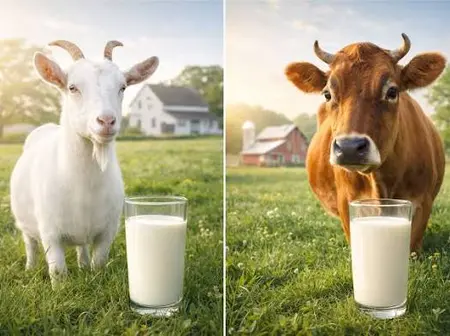
Goat Milk vs Cow Milk: Which Is a Better Choice for People With Diabetes?
Standing in front of the dairy section of the store or in the supermarket can be a confusing experience for someone with diabetes or prediabetes. You want to easily grab something to add to your morning tea or bowl of oats, but you also have to think about how much it will affect your blood sugar levels. Many people wonder if it is a better choice to switch to goat milk.
Both cow milk and goat milk provide good sources of nutrients, such as calcium to help keep your bones healthy and protein to keep you feeling full. However, both contain natural milk sugars that will increase your blood sugar.
The Kenya National Clinical Guidelines for Management of Diabetes Mellitus state that you do not have to avoid milk while managing diabetes, though you should be mindful of the amount you consume, the fat content, and how many carbohydrates it contains (Kenya Ministry of Health). The American Diabetes Association (ADA) also advises that you can safely include milk in your meal plan.
Comparing the two will help you decide which is best to keep in your kitchen.
What Is in Your Cup?
Comparing the nutritional information of the two milks using the Kenya Food Composition Tables (published by the Kenya Ministry of Health and the Food and Agriculture Organization) and the U.S. Department of Agriculture (USDA) FoodData Central shows they are both good sources of nutrition. However, goat milk contains slightly more calories, fat, and protein.
One 8-ounce cup of plain milk provides:
• Natural Sugars (Lactose): Whole goat milk contains around 11 grams of carbohydrates, while whole cow milk contains around 12 grams.
• Protein: Goat milk contains around 9 grams of protein, whereas cow milk contains 8 grams.
• Fat and Calories: Whole goat milk contains around 10 grams of fat and 168 calories, while whole cow milk contains around 8 grams of fat and 149 calories.
• Vitamins and Minerals: Research by food scientists at Jomo Kenyatta University of Agriculture and Technology (JKUAT) and Dedan Kimathi University of Technology shows that goat milk contains more calcium, potassium, vitamin A, and vitamin B6, while cow milk contains more vitamin B12 and folate.
Blood Sugar Reaction
Because both milks contain lactose (a natural sugar), neither is carb-free. However, both rank low on the glycemic index (GI). Plain milk usually scores between 24 and 39, meaning it releases sugar into your blood slowly (University of Sydney Glycemic Index Research Service).
Dietitians have stated that the fat and protein contents cause your stomach to empty more slowly, which keeps your blood sugar levels stable (Verywell Health). Milk proteins also help your body release insulin properly (Archives of Internal Medicine).
Benefits of Goat Milk
Goat milk has several benefits that make it a good option for those looking to control their blood sugar:
• Easier on the Stomach: Studies by the Kenya Agricultural and Livestock Research Organization (KALRO) and JKUAT confirm that goat milk contains much smaller fat globules. Combined with having around 1 gram less sugar per cup, many people find it lighter and easier to digest.
• Good for Gut Bacteria: Goat milk contains natural prebiotic fibers that support beneficial bacteria in your gut, helping keep your metabolism healthy (Current Developments in Nutrition).
• Early Research: Studies in Molecular Nutrition & Food Research showed that goat milk helped improve fasting blood sugar in diabetic mice. However, endocrinologists note that large human studies are limited, so goat milk should not be used as a medical treatment.
Why Cow Milk Is a Good Option for Many
Despite goat milk's benefits, many people with diabetes find it easiest to use regular cow milk:
• Easy to Find Low-Fat Options: Whole goat milk contains quite a lot of saturated fat. Because diabetes increases your risk of heart problems, the Kenya Ministry of Health, the American Heart Association (AHA), and the Centers for Disease Control and Prevention (CDC) advise choosing low-fat or fat-free milk most of the time. Low-fat cow milk is easy to find at most shops, whereas low-fat goat milk can be difficult to find.
• More Affordable and Fortified: Cow milk is usually cheaper and is sold everywhere in Kenya. Most packaged cow milk also contains added vitamin D, which helps support insulin health (National Institutes of Health).
Which Milk to Choose?
Both milks can be enjoyed in small amounts. If you want slightly fewer carbohydrates per cup or find cow milk difficult to digest, plain goat milk is a great option. If you want less saturated fat, lower grocery costs, or more vitamin D, low-fat cow milk is usually the better choice.
No matter which milk you choose, avoid flavored or sweetened varieties. Stick to one 8-ounce cup and pair it with high-fiber foods, such as plain rolled oats or chia seeds, to keep your blood sugar levels stable (Mayo Clinic and Kenya National Clinical Guidelines for Management of Diabetes Mellitus).
References
• Kenya Ministry of Health – Kenya National Clinical Guidelines for Management of Diabetes Mellitus
• Government of Kenya and Food and Agriculture Organization (FAO) – Kenya Food Composition Tables
• Kenya Agricultural and Livestock Research Organization (KALRO), Jomo Kenyatta University of Agriculture and Technology (JKUAT), and Dedan Kimathi University of Technology – Kenyan Dairy Goat Milk Composition and Digestibility Research
• U.S. Department of Agriculture (USDA) – FoodData Central Nutrient Database
• American Diabetes Association (ADA) – Standards of Care in Diabetes and Nutrition Guidance
• American Heart Association (AHA) and Centers for Disease Control and Prevention (CDC) – Diabetes Meal Planning and Heart Health
• National Institutes of Health (NIH) and University of Sydney – Vitamin D Fact Sheet and Glycemic Index Database
• Current Developments in Nutrition, Molecular Nutrition & Food Research, and Archives of Internal Medicine – Peer-Reviewed Research on Dairy Proteins and Glucose Tolerance
• Verywell Health and Mayo Clinic – Clinical Guidance on Milk Choice
Note: This article is for educational purposes only and should not be used as a substitute for professional medical advice. Always consult your doctor, endocrinologist, or registered dietitian before making any major dietary changes.
“I am sure there were people who wanted me to DIE, but it is well,” the veteran politician said as he spoke publicly for the first time after his health break. His remark has drawn attention because it hints at the difficult period he endured.
Oburu’s words have quickly become a talking point, especially among people concerned about his health and absence from public engagements. Although he did not name anyone he believed wished him harm, the statement was strong enough to spark questions and debate.
The politician’s return to the public conversation is likely to reassure supporters who had been waiting to hear directly from him. His message also showed a man determined to move forward despite the challenges he says he faced.
For some Kenyans, the reference to people who wanted him dead was the most striking part of the remarks. Others may interpret his words as an expression of pain, disappointment and relief after a difficult health experience. Without further details, it would be wrong to assume that he was accusing any particular person or group.
The incident sparked reactions online, with many people sharing messages of support and wishing him continued recovery. Supporters appeared divided over the meaning of his statement, while others focused on the fact that he had finally spoken after a long break.
Oburu’s remarks have placed his health and return in the spotlight again. Many people were left talking about the emotional words, especially the declaration that “it is well.”
What do you make of Oburu Oginga’s message, and what would you wish him as he returns to public life? Share your views in the comments.
Former Chief Justice David Maraga has challenged President William Ruto’s administration over its sudden policy reversal regarding a controversial Ebola quarantine deal, calling out the state for abandoning a plan it had fiercely defended against public outcry.
In a statement on Thursday, November 12, Maraga criticized Health Cabinet Secretary Aden Duale’s recent announcement that Kenya will not allow foreign states to use its territory as a holding destination for travelers undergoing mandatory isolation before heading to their home countries.
Maraga pointed out that this declaration directly contradicts the administration's earlier stance, particularly its promotion of a designated quarantine site in Laikipia County.
The initial proposal, introduced around five months ago, triggered widespread resistance from locals and the broader public, who raised alarms over potential public health threats, compromised national sovereignty, and the rationale behind hosting facilities for foreign governments.
Maraga noted that demonstrations opposing the project were aggressively suppressed by law enforcement, resulting in the deaths of two young protesters. He questioned why the state championed the arrangement despite intense civil pushback and legal challenges, and pressed officials to clarify why it took months to adopt a stance aligned with citizens' concerns.
“If serving as a quarantine hub had ‘no basis in International Health Regulations’, why was it signed, defended and enforced with police violence in the first place?” Maraga asked, demanding accountability for the fatal crackdown rather than allowing the government to quietly walk away from the deal.
Maraga’s comments came shortly after CS Duale stated that Kenya would neither serve as a foreign quarantine hub nor provide documentation certifying Ebola-free status or quarantine completion for international travel. While Duale declined to provide details on the fate of the Laikipia facility due to active court cases, the policy shift coincides with Kenya discharging its final Ebola patient and releasing the last 11 individuals under observation.
Kenya has now entered a mandatory 42-day surveillance window to monitor for any new infections, aiming for an official Ebola-free declaration by late December if no new cases arise.
Maraga reiterated that the state must take responsibility for its initial decisions and the violence that followed, bringing the debate back into focus as the country begins its final observation period.
The comedian celebrated the growing contributions, describing the public response as a demonstration of unity and generosity among Kenyans.
"We are at 5 million 665k!!! Team Sisi Kwa Sisi nyinyi ni wale waseee!!! God bless you," he wrote.
The fundraiser was launched after a video of Bryson Makokha went viral, showing him breaking down in tears while selling bananas along roadside, Bungoma.
Bryson, who comes from Lukhuna in Chwele, has reportedly struggled with the skin condition for approximately eight years.
His situation attracted public attention after he explained how some customers avoided purchasing his bananas because of assumptions that his condition could be contagious.
He also pledged support towards establishing a business for the household.
The fundraising effort initially received hundreds of thousands of shillings within hours, prompting organisers to introduce a paybill after the boy's father's M-Pesa account reached its receiving limit.
The latest announcement marks a significant increase in public contributions as efforts continue to support Bryson's recovery and future.
Malala revealed that he was glad to find CS Oparanya recovering steadily at his home. During the visit Malala and Oparanya shared a cup of tea and engaged in conversation on matters concerning Kakamega County.
In his update, Malala revealed that Oparanya's health condition has improved and is recovering well at his home. He wished him a speedy recovery and prayed that God gives him renewed strength, good health and more years. Despite the two differing politically, Malala praised Oparanya as a true father figure and pillar of Kakamega whose visionary leadership transformed Kakamega County.
"Get well soon, Omwami! Kakamega loves you and stands with you in prayer." Malala concluded his update.
Public Health Principal Secretary Mary Muthoni has outlined the government's renewed efforts to improve maternal, newborn and child health through stronger partnerships and expanded access to essential healthcare services.
Muthoni said the government is prioritising interventions aimed at reducing preventable deaths among mothers, newborns and children while strengthening the country's healthcare system.
She highlighted improved newborn care, expanded community nutrition programmes and enhanced access to essential medical services as some of the key measures being pursued to improve health outcomes.
The PS noted that stronger partnerships among government agencies, healthcare providers and other stakeholders remain important in addressing challenges affecting maternal and child healthcare.
She emphasised the need for coordinated efforts to ensure mothers and children receive quality healthcare services, particularly during pregnancy, childbirth and the early stages of childhood.
According to Muthoni, improving newborn care is a critical part of the government's strategy, as early medical attention and appropriate interventions can help protect vulnerable infants and improve their chances of survival.
The expansion of community nutrition programmes is also expected to address nutritional challenges affecting children and mothers, while promoting healthier communities.
The government is further seeking to improve access to essential healthcare services to ensure more families benefit from timely and quality medical attention.
Muthoni's remarks underline the importance of investing in maternal, newborn and child health as part of broader efforts to strengthen Kenya's healthcare system and improve the well-being of its population.
The initiatives are expected to support healthier families and contribute to better health outcomesacross the country.
Does Goat Milk Raise Blood Sugar? 7 Things People With Diabetes Should Know
If you live with diabetes or prediabetes, choosing the right type of milk to buy can be confusing. Many people wonder if switching from cow's milk to goat's milk is a better option for maintaining stable glucose levels. Yes, goat's milk does cause your blood sugar to rise; however, this is typically a slow and gradual increase.
Understanding how dairy affects your body can be achieved by looking at the carb, protein, and fat content, as well as the portion size.
There are seven key facts that people with diabetes should be aware of:
1. Goat Milk Contains Natural Sugars
Even unsweetened goat's milk contains carbohydrates. Like cow's milk, goat's milk contains lactose, a natural sugar that is broken down into glucose by your digestive system. An 8-ounce serving of whole goat's milk contains around 11 grams of carbs, all from natural lactose. Because this impacts your blood glucose levels, you should count it toward your daily carbohydrate allowance (American Diabetes Association).
2. It Has a Low Glycemic Index
Despite containing natural sugars, goat's milk has a low glycemic index (GI), which typically ranges between 24 and 35. Low-GI foods cause glucose to enter your bloodstream slowly. Research from the University of Sydney Glycemic Index Research Service confirms that dairy milks cause a much slower increase in blood glucose than sweet fizzy drinks or fruit juices. A clinical trial from 2023 also found that unsweetened goat's milk yogurt had a low GI score of 26, causing much smaller increases in blood glucose after a meal (Nutrients).
3. It Is High in Protein and Fat
Goat's milk contains a natural balance of nutrients. A 1-cup serving of whole goat's milk contains around 9 grams of protein and 10 grams of fat. Combining carbs with protein and fat helps slow down the rate of digestion (Julia Zumpano, RD, Registered Dietitian at Cleveland Clinic). This helps prevent a sudden spike in blood glucose.
4. It Has a Slightly Lower Carbohydrate Content
Goat's milk has a slight advantage when comparing nutritional information. Whole cow's milk contains around 12 grams of carbohydrates per cup, whereas whole goat's milk has around 11 grams (USDA). Whole dairy products also digest more slowly due to their natural fat content (Clemson University Cooperative Extension), helping provide a more stable glucose response.
5. Animal Studies Show Promise, But Human Trials Are Limited
Research has shown that goat's milk helped improve fasting blood glucose, insulin sensitivity, and healthy gut bacteria in diabetic mice and rats. This was found in a 2021 study and a 2024 follow-up study by researchers at Peking University, published in the peer-reviewed journal Molecular Nutrition & Food Research. However, endocrinologists highlight that there are limited large-scale human trials. Therefore, goat's milk should be seen as a healthy dairy option, not a medical solution for diabetes.
6. Watch Out for Added Sugars and Saturated Fat
Plain goat's milk is a healthy option, whereas many sweetened and flavored goat's milk drinks and yogurts contain high amounts of added sugars. Whole goat's milk is also relatively high in calories and saturated fat. Because people with diabetes have an increased risk of heart disease, the American Diabetes Association and the Academy of Nutrition and Dietetics recommend keeping saturated fat to a minimum.
7. Individual Responses Vary
Everyone's body responds slightly differently to dairy products. It is recommended to start with a small portion and combine it with high-fiber foods, such as plain rolled oats, chia seeds, and fresh berries. If you use a blood glucose meter or continuous glucose monitor, the best way to see how your body is responding is to check your levels 1 to 2 hours after drinking goat's milk (Johns Hopkins Patient Guide to Diabetes and Centers for Disease Control and Prevention).
Note: This information is for educational purposes only and should not be used as a substitute for professional medical advice. Always consult your doctor or registered dietitian before making any major changes to your diet or health.