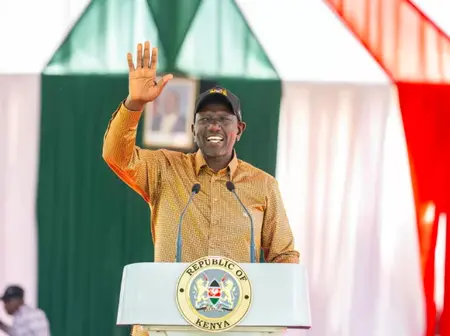
President William Ruto has defended the controversial 2024 Finance Bill, maintaining that its eventual passage did not cause harm to the country.
The Finance Bill 2024 proposed several tax measures aimed at increasing government revenue and reducing the country's borrowing needs. However, some of the proposals attracted strong criticism from Kenyans, who raised concerns about the rising cost of living and the potential financial burden on households and businesses.
The protests, largely driven by young Kenyans, escalated into nationwide demonstrations, with protesters demanding the withdrawal of the proposed legislation.
Following the public outcry, Ruto announced that he would not sign the bill into law, effectively halting its implementation.
Despite the controversy surrounding the legislation, the President has now defended its handling, arguing that the process ultimately did not harm the country.
His latest remarks are likely to attract reactions from Kenyans, particularly those who participated in the protests and opposed the proposed tax measures.
The Finance Bill 2024 remains one of the most significant political and economic controversies of Ruto's administration, highlighting the growing public demand for accountability, transparency and public participation in government decisions.
The Kenya Revenue Authority (KRA) has announced new official channels through which taxpayers and businesses aggrieved by customs tax decisions can submit applications seeking a review, introducing designated email and physical delivery addresses for the process.
In a public notice dated November 23, 2026, the tax authority outlined the new requirements for persons dissatisfied with decisions made by the Commissioner for Customs and Border Control, directing them to submit their applications and supporting documents through designated channels.
The notice, titled “Designation of Place and Means of Service of Applications for Review of Decisions (Customs Appeals),” provides an alternative for affected taxpayers to serve their applications electronically or through physical delivery and post.
KRA said the new arrangements were established pursuant to Section 229 of the East African Community Customs Management Act, 2004, Gazette Notice No. 1036 of 2019 and other enabling provisions of the law.
The authority stated that it had designated official addresses for service following the delegation of powers to the Commissioner, Legal and Board Services Department.
“This designation shall take effect from the date of publication of this notice,” KRA stated.
Under the new arrangements, taxpayers can submit notices of objection and related documents electronically through an email address provided by the authority.
KRA directed affected persons to use LSBCIROStaff@kra.go.ke when submitting their applications and accompanying documents.
The notice states: “Electronic Service: Submit the notice of objection and related documents via email to: LSBCIROStaff@kra.go.ke.”
The electronic option allows taxpayers and businesses to serve their documents without necessarily visiting KRA offices in Nairobi.
The authority also provided the same email address for individuals seeking clarification and further guidance on the new procedure.
For applicants who prefer submitting their documents physically or through postal services, KRA has designated the office of the Deputy Commissioner in charge of the Tax Dispute Resolution Division.
According to the notice, applicants should deliver or post their documents to:
The Deputy Commissioner,
Tax Dispute Resolution Division,
Legal & Board Services Department,
Block B, 7th Floor, Ushuru Pension Towers (UPT),
Elgon Road, Upper Hill,
P.O. Box 48240 – 00100,
Nairobi.
The authority outlined this option under its public notice, stating: “Physical Delivery or Post: Deliver or post the documents to” the designated office at Ushuru Pension Towers.
The designation provides taxpayers with an official physical address for serving applications seeking a review of customs decisions.
KRA said the new arrangements were established under Section 229 of the East African Community Customs Management Act, 2004.
The authority also cited Gazette Notice No. 1036 of 2019, which delegates powers to the Commissioner, Legal and Board Services Department, alongside other enabling provisions of the law.
The notice specifically applies to persons aggrieved by decisions of the Commissioner for Customs and Border Control who wish to seek a review of those decisions.
KRA further encouraged applicants requiring clarification to contact the authority through the designated email address.
“For any clarification and further guidance, you may reach us on email: LSBCIROStaff@kra.go.ke,” the notice stated.
The announcement was signed by the Commissioner for Legal and Board Services and published on November 23, 2026.
The anticipated ceremony will represent a major milestone in Kenya's efforts to transform its oil discoveries into commercial opportunities and establish itself as an emerging player in the international petroleum market.
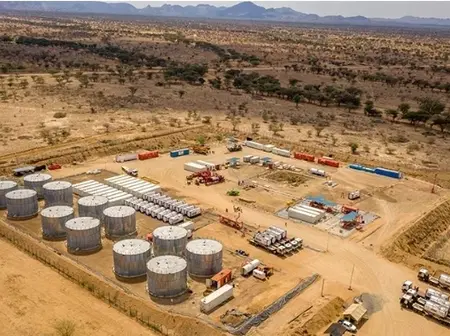
The South Lokichar Basin has been at the centre of Kenya's petroleum exploration activities since oil discoveries were announced in Turkana in 2012.
For years, the government and investors have worked towards developing the oil resources, with the project facing several challenges, including infrastructure requirements, financing and delays in commercial production.
The planned flag-off is therefore expected to draw significant attention as Kenya moves closer to realising its long-standing ambition of exporting locally produced crude oil.
The initial transportation of the crude oil is expected to involve specialised trucks moving the petroleum from Turkana to the Port of Mombasa, where it will be prepared for shipment to international buyers.
The project is also expected to create economic opportunities, particularly for businesses and residents in Turkana County.
Transport companies, workers and other service providers could benefit from activities associated with the movement and handling of crude oil.
Additionally, the government hopes that commercial petroleum production will contribute to national economic growth, attract foreign investment and generate additional revenue.
The development could also strengthen Kenya's position in the regional energy sector as more countries explore opportunities in petroleum production and trade.
However, the actual export process will depend on the completion of the necessary logistical and commercial arrangements.
Ruto's expected appearance at the December 2 ceremony will place the Turkana oil project at the centre of national attention.
For Kenya, the occasion represents an important step from oil exploration towards commercialisation, with expectations that the emerging petroleum industry could open new economic opportunities for the country.
Unlike other parts of Syokimau, where shops, kiosks and informal businesses have sprung up along residential roads, commercial activity in Kiungani remains concentrated around Jambush Market, toward the far end of the neighbourhood.
This has helped Kiungani retain a distinct identity in Syokimau’s property market, attracting homeowners seeking a quieter environment and developers looking to tap into its rising land values.
In a statement shared after the ceremony, Bungoma County Speaker Moses Masika said he joined President William Ruto and other leaders when the payment was made. Masika described the occasion as a significant milestone for cane farmers, saying it was a first for the country.
Masika recalled that the decision to support the leasing of Nzoia Sugar Company had attracted criticism from some politicians when the miller was struggling. However, he said leaders from Bungoma remained convinced that private-sector management offered the best chance of reviving the company.
He pointed to changes that he said farmers and workers were now experiencing. According to Masika, farmers are paid within seven days of delivering cane, while digital weighing has been introduced. He also said employees receive their salaries promptly and that the company meets its tax obligations.
The KSh195 million bonus is being presented by local leaders as evidence of progress at the miller. However, its long-term success will depend on whether the reported improvements are sustained, farmers continue receiving payments on time and the factory remains financially stable.
Masika said leaders would not allow Nzoia Sugar to become a "resurrection ground" for failed leadership and political experiments. His remarks underline the political attention surrounding the miller's future, as farmers look for reliable services and lasting returns from their crop.
For cane-growing families in the region, the key test will be consistent performance beyond the ceremony. What is your view on the KSh195 million bonus and the changes reported at Nzoia Sugar? Share your remarks, views and comments in the comment section.
In a Gazette Notice dated November 20, EPRA listed three adjustments for meter readings taken in November 2026. The fuel energy cost charge is Ksh 3.54 per unit, the forex adjustment is Ksh 1.0031, and a tiny water levy adds under two cents. Together they come to roughly Ksh 4.5567.
October's extras came to about Ksh 4.10, with fuel at Ksh 3.22 and forex at Ksh 0.87. So the real jump from last month is about 46 cents per unit.
A household using 30 units will pay around Ksh 136.70 in extra charges.
When diesel plants run more and the shilling slips, your bill feels it. Watch the monthly notices, not just the headlines.
Do you think these monthly charges are fair to ordinary Kenyans?
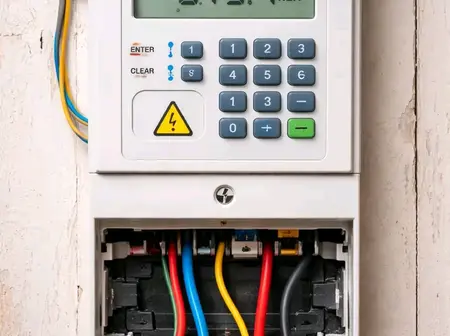
In a formal Gazette Notice dated Friday, November 20, 2026, the energy sector regulator published revised rates that add a combined total of KSh4.5567—or roughly KSh4.56—on every kilowatt-hour (kWh) of power consumed.
These adjustments apply across all meter readings taken in November, directly influencing the number of prepaid tokens consumers receive for their money as well as monthly postpaid bills.
The largest component of the latest review is the Fuel Energy Cost Charge, which EPRA has set at KSh3.54 per kilowatt-hour.
This specific levy is designed to compensate power producers for the cost of diesel and heavy fuel oil used to run thermal generators whenever hydropower or renewable output dips.
To arrive at the KSh3.54 rate, the regulator factored in electricity generation data across diesel, thermal, geothermal, and other domestic plants alongside cross-border power imports.
The second adjustment is the Foreign Exchange Fluctuation Charge, which has been pegged at KSh1.0031 per kilowatt-hour for November.
This mechanism cushions key industry players—including Kenya Power, the Kenya Electricity Generating Company (KenGen), and Independent Power Producers (IPPs)—against currency swings when servicing foreign-denominated loans and contracts.
Notably, EPRA’s notice indicated that the three categories of electricity sector players recorded combined foreign exchange gains of roughly KSh1.16 billion during the preceding month of October 2026.
The third and final component is the Water Resource Management Authority (WRMA) levy, set at KSh0.013606 per kilowatt-hour.
This conservation levy applies to power generated from qualifying hydropower stations with a capacity of at least one megawatt, calculated on the 314.19 million hydropower units purchased in October.
November’s combined KSh4.56 surcharge marks a noticeable uptick compared to the October 2026 cycle, when pass-through charges stood at KSh4.10 per unit.
Over the past four months, pass-through adjustments have consistently hovered above the four-shilling mark—standing at KSh4.70 in August and KSh4.16 in September—keeping pressure high on domestic budgets and commercial operating costs.
For everyday consumers, the adjustments mean that buying prepaid Kenya Power tokens in November will yield slightly fewer units per shilling spent, unless overall consumption is trimmed to offset the revised pass-through rates.
Jimi Wanjigi has reignited the national conversation on Kenya's economic future after presenting an ambitious tax reform proposal that could significantly reshape how households and businesses are taxed.
Wanjigi is advocating for the replacement of the existing 16 per cent Value Added Tax (VAT) with a significantly lower 5 per cent sales tax, arguing that such a transformation would reduce the financial pressure on ordinary Kenyans while giving businesses greater breathing space to operate, expand and create employment opportunities.
His proposal comes at a time when taxation and the rising cost of living remain among the most contentious issues dominating public discourse.
By placing more money in the hands of consumers and entrepreneurs, Wanjigi is positioning his economic agenda around increased purchasing power, business growth and a taxation framework that rewards hard work rather than punishing productivity.
However, the proposal has also attracted critical questions, with some Kenyans demanding clarity on how the proposed changes would affect government borrowing, parliamentary oversight and transparency in public expenditure.
Concerns have equally emerged over whether county governments would continue receiving adequate funding to discharge their constitutional responsibilities under the proposed arrangement.
Other commentators have challenged Wanjigi to take his message beyond social media and communicate its practical implications in ordinary language, particularly to voters in rural communities who may not immediately understand the economic and constitutional dimensions of his proposal.
With the 2027 General Election approaching, the debate presents Wanjigi with an opportunity to demonstrate not only the attractiveness of his economic vision but also its practicality, sustainability and potential consequences.
Ultimately, his political challenge will be convincing Kenyans that his proposed tax restructuring can translate into tangible economic relief, accountable governance and an economy that genuinely works for ordinary citizens.
The Unclaimed Financial Assets Authority (UFAA) has issued a 30-day public notice allowing Kenyans to challenge individuals seeking to inherit or manage financial assets belonging to deceased persons.
Under the Unclaimed Financial Assets Act, 2011, banks, SACCOs, insurance companies and other financial institutions are required to surrender dormant financial assets to UFAA after the prescribed period. The authority holds the funds until rightful owners or beneficiaries come forward to claim them.
The authority has urged Kenyans to check for unclaimed funds belonging to themselves or deceased relatives by dialling *361# or visiting its official website, ufaa.go.ke. Meanwhile, the government is proposing reforms to simplify claims and strengthen reporting requirements for financial institutions. UFAA has clarified that there is currently no deadline for claiming unclaimed assets.
Source courtesy of https://www.facebook.com/100064288795404/posts/1590944776391800/?app=fbl
The Kenya Revenue Authority (KRA) has waived KSh 64.39 billion in penalties, interest and fines for 984,489 taxpayers under its ongoing tax amnesty programme.
According to the programme's latest figures, nearly one million taxpayers have benefited from the waiver, providing relief to individuals and businesses struggling with accumulated tax penalties and interest.
The tax amnesty programme offers eligible taxpayers an opportunity to settle their outstanding principal tax debts while benefiting from the cancellation of qualifying penalties, interest and fines.
With the December 31 deadline approaching, KRA is encouraging beneficiaries to take advantage of the remaining period to ensure their tax affairs are fully regularised.
The programme is also expected to improve tax compliance by encouraging more individuals and businesses to meet their obligations without the burden of accumulated penalties.
Taxpayers who have not yet completed the process are being urged to act before the deadline to avoid missing out on the benefits of the amnesty.
The waiver marks a significant development in KRA's efforts to strengthen tax compliance and support taxpayers in clearing outstanding obligations.