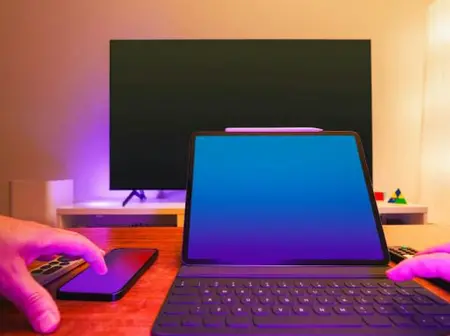
That second-screen routine has become part of digital entertainment across Africa, although it remains far from universal. GSMA’s Mobile Economy Africa 2026 report says 63% of the continent’s population lives within mobile broadband coverage without using mobile internet. Another 9% remains outside that coverage.
The distinction changes how digital sports audiences should be measured. A network capable of delivering football highlights does not establish that every potential supporter can afford the data, device or subscription required to watch. Mobile technology in Africa is widening media choices while exposing a persistent gap between network maps and everyday access.
Following a fixture and watching it are technically different activities. A live-score page can deliver a result, a red card or a substitution in small packets of data. A ninety-minute video stream requires sustained bandwidth, a suitable device and, in most cases, licensed distribution rights. A fan may receive detailed updates without access to moving pictures.
Rights also vary by territory and competition. The official fixture list confirms the match; a licensed broadcaster confirms the available transmission. Links shared on social networks are not proof that a full-match video is authorised.
For supporters who travel or use limited data bundles, a reliable match tracker may provide more useful coverage than an unstable stream.
Sports entertainment platforms now compete with music, messaging, short-form video and digital commerce for the same attention. The customer journey is rarely linear.
Someone might read a team announcement, compare a player’s previous matches, watch a highlight and return to a group chat within minutes. That behaviour rewards platforms which preserve context when an app is closed and reopened.
A basic second-screen toolkit has three different jobs:
Confusing these layers can turn a rumour into a mistaken lineup or create an alert for the wrong local time. Accurate time-zone conversion is a small product feature with a direct effect on usability.
The GSMA estimates that mobile services contributed $240 billion to Africa’s economy in 2025, or 7.8% of GDP. That figure measures a broad economic contribution, not the revenue from games and entertainment.
In its September 2026 roadmap, GSMA and the Partnership for Digital Access in Africa put the usage gap at about 906 million people. Different reports and methods should not be mixed as though they describe the same population at the same date.
For a sports app, the practical questions are straightforward: does its match centre load on an inexpensive handset, how much data do images consume, and can the user find an alert without downloading another large update? Interface speed matters most when the user has a reason to check immediately, such as a penalty or final score.
Adults who follow matches on mobile may also consult betting prices, which are different from a sports journalist’s prediction. Decimal odds change as the market incorporates new information and operator margin.
A platform such as Melbet presents match markets alongside the user’s account functions, subject to what is currently offered. Reading an in-play price requires attention to the match clock, market suspension and any delay in the video feed.
A live score can establish what happened without proving that a particular price offered good value.
Product reviews can help readers check interface claims, although their evidence should be evaluated carefully. An article titled Melbet users review may discuss usability or payment options, but those descriptions can age as platform terms change.
A current reviewer should distinguish a deposit method from a withdrawal method, and mobile-web access from a downloadable app. Verification requirements and market-settlement rules matter more than a simple star rating. These distinctions apply to sports betting specifically, not to streaming or general social-media services.
An online sports fan can be visible in comments without paying for streaming, games or other services. Businesses need to distinguish reach, active engagement and transactions. A clip generating conversation is not equivalent to a completed purchase; an app install is not necessarily a returning viewer.
The next shift in African digital culture may be less about launching another application than improving what existing phones can do: notifications that arrive promptly, clips that do not exhaust a data bundle and a clear path back to the original fixture.
The second screen succeeds when it reduces effort for the fan, not when it demands constant attention.
Cyberweek Africa 2026 concluded on Friday, October 30, 2026, in Nairobi with 21 youths receiving cybersecurity training and certification, as stakeholders called for stronger policies, technologies and skills to tackle emerging digital threats in the age of artificial intelligence.The event was led by the Ministry of Information, Communications and the Digital Economy, alongside the Kenya School of Government, Ministry of Interior and National Administration, National Cybersecurity Agency and University of Nairobi.
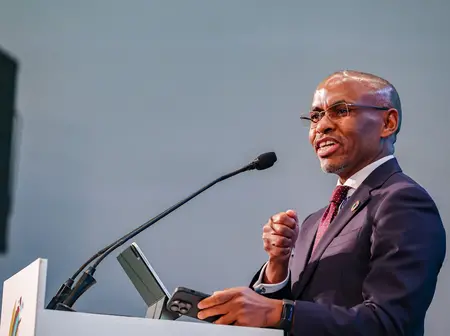
Safaricom is expanding M-Pesa into investments and wealth management, developing more services for merchants and bringing its digital products together through OneApp as it pursues growth beyond traditional telecommunications. CEO Peter Ndegwa says the company’s next stage will involve using technology to address a wider range of financial and business needs, building on decisions made during his six years leading the company.
In a CNN interview with Victoria Rubadiri, Ndegwa identified Safaricom’s entry into Ethiopia, the expansion of M-Pesa beyond payments and the extension of 4G coverage as three of the most consequential decisions of his tenure. He joined Safaricom on April 1, 2020, shortly after the COVID-19 pandemic was declared.
His comments provide a view of how the company intends to develop these investments into additional sources of growth. They also follow Safaricom’s public articulation of its technology ambitions at Decode 4.0 and the subsequent announcement of Decode 5.0, which placed African AI infrastructure at the centre of its next innovation agenda.
Safaricom had already outlined its ambition to become a broader technology company at Decode 4.0 in March and April 2026. The event brought together discussions around artificial intelligence, fintech, developer infrastructure and ecosystem building, with Group CTO James Maitai describing a transition towards a purpose-driven technology company by 2030.
The developer-focused sessions also highlighted Safaricom’s ambition to provide infrastructure that other businesses can build on, including connectivity, payments, identity services, APIs, cloud and AI tools. Its Fintech 2.0 plans placed M-Pesa within this wider platform strategy.
Safaricom subsequently announced Decode 5.0 under the theme “The Rise of Africa’s AI Supergrid”. The proposed initiative extended the company’s technology ambitions across eight African markets, with shared AI infrastructure and applications in areas including climate, food security and health.
Ndegwa’s CNN interview adds the executive and commercial perspective to that direction. Rather than focusing primarily on the technology infrastructure and developer ecosystem, he discussed how Safaricom intends to use its existing platforms to serve consumers, merchants and businesses.
He said the company had moved from its original focus on connecting people towards using technology and innovation to solve a wider range of problems. That includes expanding its services beyond individual consumers to small businesses and established merchants.
Ndegwa said M-Pesa had more than doubled in the previous five to six years as Safaricom expanded the platform beyond payments. He wants customers to use it to pay, save, invest and obtain insurance, describing the ambition as a financial health ecosystem that other businesses can connect to.
Safaricom’s investment products provide a practical example of this expansion. The company launched Ziidi MMF in January 2025, working with Standard Investment Bank and ALA Capital to offer money market fund investments through M-Pesa. It later introduced Ziidi Trader in February 2026, enabling customers to buy and sell shares listed on the Nairobi Securities Exchange through their phones.
The development of Ziidi Trader has brought a new category of financial activity into the mobile money ecosystem. TechTrendsKE reported in May 2026 that 511,000 users had registered on the platform during its early launch period, while 84,000 accounts had actively purchased shares between February and March. Approximately 36,000 of the 73,000 retail applications for the Kenya Pipeline Company initial public offering also came through the platform, according to the publication’s reporting.
Safaricom expanded its investment offering again in October 2026 with Ziidi Shari’ah, a Sharia-compliant money market fund launched with Gulfcap Investment Bank. The product allows customers to start investing with KSh100 and make subsequent contributions from KSh10.
The scale of the business is also reflected in Safaricom’s wealth management figures. TechTrendsKE reported that the company had 2.2 million active customers using its M-Pesa wealth management service and KSh21.1 billion in assets under management in the financial year ended March 2026.
For Ndegwa, the objective is to make financial services accessible through a familiar digital channel while giving customers more reasons to use M-Pesa beyond sending money and paying bills. Working with specialist financial institutions also allows Safaricom to distribute investment products through its established customer network.
Safaricom’s ambitions also extend to the way businesses receive and manage money. Ndegwa said the company was developing tools that allow merchants to accept payments, pay suppliers and settle employee payments through its platforms.
The existing merchant network gives Safaricom a substantial base from which to develop these services. TechTrendsKE reported that M-Pesa had 3.13 million merchants in the financial year ended March 2026. The platform processed 46.4 billion transactions worth KSh41.68 trillion during the period.
In October 2026, Safaricom partnered with Pesapal to introduce tap-to-pay and dynamic QR payments at participating merchant tills. The collaboration provides businesses with additional ways to accept M-Pesa payments at physical retail locations.
The company has also extended credit services to merchants. In October, Safaricom introduced Fuliza Ya Pochi, an overdraft facility for eligible Pochi La Biashara users. The service is designed to help qualifying businesses manage short-term cash flow requirements, including purchasing stock and paying suppliers.
Another potential extension of M-Pesa’s business infrastructure involves tax administration. Safaricom and the Kenya Revenue Authority have been discussing a proposed reverse electronic invoicing arrangement that could allow invoices to be generated on behalf of suppliers and merchants.
These developments extend Safaricom’s relationship with businesses beyond processing customer payments. Merchants can receive money, access eligible credit and potentially use additional services connected to their transactions and daily operations.
Ndegwa also identified OneApp as an important part of Safaricom’s future digital offering. He said the super app had launched in Kenya and was intended to give customers access to multiple services in one place, with artificial intelligence helping personalise the experience.
Safaricom introduced My OneApp in April 2026, combining M-Pesa and MySafaricom within a single application while creating room for third-party mini apps. The move brought together services that customers had previously accessed through separate applications.
The rollout encountered access and reliability problems, prompting Safaricom to issue updates and expand support for connections through Wi-Fi, rival mobile networks and roaming. Subsequent updates addressed authentication, navigation and service availability.
The company’s longer-term ambition is to make the application a common entry point for its digital ecosystem. For consumers, that means easier access to payments and financial products. For businesses, the platform could provide a route to services supporting transactions and other operational requirements.
Ndegwa said artificial intelligence would help tailor the application to individual needs, rather than relying on broad customer categories. He described the ambition as creating an experience for a “segment of one”, whether the user is an individual managing everyday activities or a business running its operations.
That ambition connects with the AI direction Safaricom presented at Decode 4.0 and the continental infrastructure plans announced for Decode 5.0. The interview, however, focuses on how AI could shape the customer experience within OneApp, rather than providing an update on the proposed AI Supergrid.
The expansion of financial and digital services depends on continued investment in the infrastructure that supports them. Ndegwa said Safaricom spends approximately US$400 million to US$500 million on infrastructure in Kenya, with around half going towards its network.
He said data volumes were growing by approximately 30% annually, increasing pressure on network capacity and creating the possibility of congestion in areas experiencing high demand. Safaricom therefore needs to keep investing in capacity as customers consume more mobile internet and use a wider range of digital services.
Ndegwa also highlighted fibre connectivity, particularly for homes, as part of the company’s approach to managing demand. Fibre connections can help offload traffic from mobile networks while supporting customers who require reliable internet access at home.
Satellite connectivity will complement these investments, according to Ndegwa. He described satellite as an additional component of Safaricom’s infrastructure strategy, alongside mobile networks and fibre, rather than a replacement for existing connectivity technologies.
The investment requirements extend beyond maintaining mobile coverage. As M-Pesa develops into a financial services platform and businesses adopt more digital tools, network capacity becomes important to the company’s ability to deliver those services reliably.
Ndegwa identified Safaricom’s entry into Ethiopia as one of the biggest decisions of his tenure. The expansion gave the company another national market in which to build a telecommunications operation and pursue opportunities in digital services.
Safaricom Ethiopia had passed 15 million 90-day active subscribers in 2026, according to TechTrendsKE. The publication reported that the operation generated KSh14.08 billion in service revenue in the financial year ended March 2026, while its loss narrowed to KSh21.2 billion. Safaricom was targeting EBITDA breakeven in the financial year ending March 2027.
The Ethiopian operation gives Safaricom a second market in which to develop its connectivity and digital services ambitions. Its inclusion in the Decode 5.0 AI Supergrid plans also places the country within the company’s broader vision for technology collaboration across African markets.
Ndegwa connected the future of the Kenyan and Ethiopian businesses to the development of OneApp, saying customers in Nairobi and Addis Ababa would be able to access services through a single platform tailored to their needs.
The strategy brings together several areas of investment: M-Pesa’s expansion into wealth management, the development of merchant services, AI-enabled digital platforms and the infrastructure needed to support rising data demand. These are the business priorities through which Safaricom is seeking to extend its reach beyond traditional telecommunications.
The technology-company ambition was already clear in Safaricom’s Decode 4.0 discussions, while Decode 5.0 extended that vision towards shared AI infrastructure across Africa. Ndegwa’s comments explain how the company intends to build a larger commercial business around those ambitions, with M-Pesa, merchant services and digital platforms at its centre.
Go to TECHTRENDSKE.co.ke for more tech and business news from the African continent and across the world.
Follow us on WhatsApp, Telegram, Twitter, and Facebook, or subscribe to our weekly newsletter to ensure you don’t miss out on any future updates. Send tips to info@techtrendsmedia.co.ke
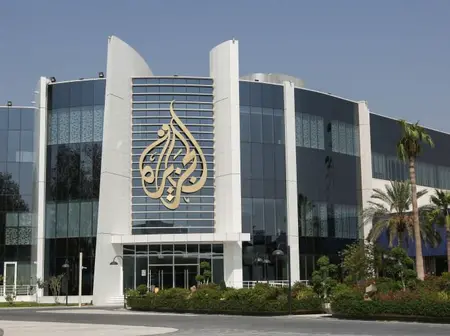
As Al Jazeera marks its 30th anniversary with a special commemorative event, the media network’s history is a timeline of milestones and challenges – from risks, obstacles and attacks, to international awards and recognition from the communities whose stories it strives to tell.
Launched on November 1, 1996, the network broke new ground in Arab broadcasting, bringing previously marginalised political perspectives into the mainstream and creating space for debate on issues seldom openly discussed on regional television.
On Sunday, the network hosted an event to commemorate its enduring legacy at its headquarters in the Qatari capital, Doha, attended by the Emir of Qatar Sheikh Tamim bin Hamad Al Thani and other delegates.
“For three decades, Al Jazeera has helped transform the way news is covered in the Arab world, making room on screen for voices, issues and perspectives that had not been given the space they deserved,” said Director of News Raed Fakih in a statement.
“Today, as we mark Al Jazeera’s 30th anniversary, we are building on that editorial legacy to broaden the scope of our coverage and give greater prominence to a wider range of events and viewpoints.”
The anniversary coincides with a significant restructuring of Al Jazeera Media Network’s Arabic-language news services, separating rolling breaking news coverage, live event broadcasting, and more in-depth reporting across three channels.
Since Qatar’s late Father Emir Sheikh Hamad bin Khalifa Al Thani launched the independent channel – a first in the Arab world – the network has promised to provide “the opinion and the other opinion”.
It launched its first TV broadcast as an Arabic-language satellite news channel in 1996 from Doha and has since then grown into the Al Jazeera Media Network, with several outlets in multiple languages. A private corporation for public benefit, the network now includes television channels, websites and other digital platforms.
As governments have banned it, and as its offices have been bombed in many parts of the world, the network has exacted a huge cost for staying on air.
Yet it has been instrumental in covering key events in the last three decades in the region and beyond.
In 2001, when the United States attacked Afghanistan, Al Jazeera was the only foreign broadcaster in Kabul, its updates and pictures travelling the world.
Then in 2011, millions followed the Arab Spring uprising live on Al Jazeera. Its coverage won a prestigious Peabody Award.
However, the network’s reporting has led to numerous threats over the years. Exclusive pictures have made Al Jazeera hard to ignore, but have also made the network a target.
In 2003, a US strike hit its Baghdad office, killing correspondent Tareq Ayyoub. Two dozen Al Jazeera journalists have been killed since.
In 2022, an Israeli soldier shot Palestinian correspondent Shireen Abu Akleh in Jenin, the 12th Al Jazeera journalist killed in 19 years. Another 12 were then killed in just 30 months, every one of them by Israel during its genocidal war in Gaza.
One of them was Anas al-Sharif, who for many viewers was the face of the war. In August 2025, an Israeli strike killed him and four colleagues as it hit a press tent outside al-Shifa Hospital.
Meanwhile, across the region, governments have closed the network’s bureaus and pulled the channel’s licences.
In 2024, Israel banned the network and raided its Ramallah office. Months later, the Palestinian Authority suspended it.
Overall, at least nine governments have tried to silence Al Jazeera.
Despite the challenges, Al Jazeera’s broadcast continues, with more than 3,000 staff working out of more than 70 bureaus across the globe.
Alongside its digital divisions, as well as its English channel that launched in 2006, Al Jazeera reaches more than 430 million homes.
The network on Sunday also launched The Core, an artificial intelligence (AI) initiative first announced in December 2025 in collaboration with Google Cloud. The initiative aims to integrate AI into newsroom operations, helping journalists manage information, coordinate coverage and make better use of the network’s reporting archives.
Meanwhile, Al Jazeera Balkans was also relaunched in a new digital-first format, opening a new chapter in its journalism in the region.
While the network’s shelves are packed with hundreds of awards, it continues its mission of serving as a voice of the voiceless.
Clicking “Buy Now” takes only a few seconds. The retailer confirms your payment and records your order almost immediately. That action starts a chain of activity that can stretch across warehouses and delivery networks.Most shoppers never see what happens behind the confirmation screen. Software systems coordinate with warehouse teams and shipping carriers to move a product from storage to its final destination.
A feature can look simple on a drawing yet become difficult to inspect once surrounding geometry limits your approach. You may have enough reach to touch the target surface, but that doesn’t guarantee the probe can approach at a useful angle with adequate clearance. Planning probe angles for hard-to-reach features requires you to consider the entire movement toward the measurement point.
In this storyKenya’s reputation for resilience, determination and sheer tenacity is well documented.It is therefore a mildly surprising fact that some of the country’s sons and daughters hold senior positions at some of the world’s largest technology companies.In this article, WoK takes a look at six Kenyan executives holding Senior Positions at Google, Microsoft, Meta and IBM
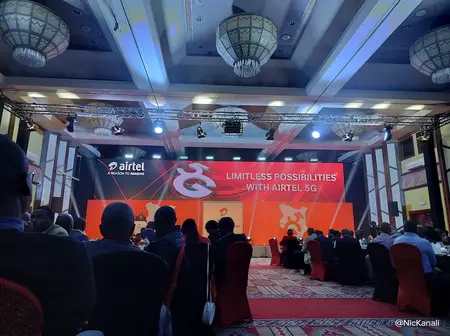
Airtel Kenya has paid $65 million (approximately Sh8.4 billion) for 100 MHz of spectrum in the 3500 MHz band, securing rights to use the frequency for 25 years as it strengthens its position in Kenya’s mobile broadband market.
Airtel Africa said its Kenyan subsidiary acquired the spectrum following approval from the Communications Authority of Kenya (CA), subject to standard conditions. The allocation gives Airtel additional capacity to expand its fifth-generation (5G) network, which competes with Safaricom’s services in a market where demand for high-speed connectivity is growing.
The 3500 MHz frequency range, commonly known as the C-band, is one of the principal bands used for commercial 5G deployments globally. According to the Global System for Mobile Communications Association (GSMA), the band has become a major platform for launching 5G services because of its capacity to support high-speed mobile broadband.
The 25-year spectrum allocation gives Airtel a long-term foundation for expanding its mobile network and serving customers who require higher data speeds and greater network capacity. The company will be able to use the additional frequency resources to support data-intensive applications, mobile broadband and other services running on its 5G infrastructure.
Spectrum is a critical resource for telecommunications operators because it determines the radio-frequency capacity available to transmit data between network infrastructure and connected devices. The 3.5 GHz band offers a balance between network capacity and coverage, making it particularly useful in urban and other locations with high data traffic.
Airtel’s acquisition comes after the company secured a separate 25-year operating licence in August 2026. Airtel Kenya managing director Djibril Tobe announced that the company had obtained the renewed authorisation after paying an undisclosed fee, ending a prolonged dispute over its operating permits.
The company’s original operating licence expired in 2015, after which Airtel relied on permits inherited from YuMobile, which it acquired in 2014. An out-of-court settlement with the CA in 2022 paved the way for renewal arrangements, followed by a temporary two-year authorisation running to January 2027 before the new long-term licence was announced.
The two 25-year authorisations give Airtel a longer planning horizon for its telecommunications operations and access to additional network capacity. The spectrum allocation covers the specific 3500 MHz frequency rights, while the operating licence provides the broader regulatory authorisation for its business.
The investment comes as Kenya’s 5G market records strong subscriber growth, with Communications Authority statistics showing that subscriptions increased to 2.1 million in June 2026 from 1.2 million a year earlier. This represents a 75 percent annual increase as operators expand their networks and more customers adopt compatible devices.
Data consumption figures also illustrate the commercial importance of the technology. According to figures reported by TechTrendsKE from the CA’s June 2026 statistics, average monthly data consumption among 5G subscriptions reached 64.4GB in the quarter ended June, compared with 15.8GB for 4G and 8.3GB for 3G.
The difference points to the heavier network demands associated with 5G users, who consume substantially more data than subscribers on older mobile technologies. For operators such as Airtel, additional spectrum capacity can help accommodate this traffic while supporting the delivery of high-speed services.
Kenya’s wider mobile market provides room for further growth. The CA recorded 52.26 million smartphone connections and 54.93 million mobile broadband subscriptions in June 2026, reflecting the substantial base of connected consumers and businesses that operators can target with broadband services.
Safaricom launched commercial 5G services in October 2022 following trials that began in March 2021 in Nairobi, Mombasa, Kisumu and other urban centres with high data traffic. Airtel Kenya entered the market in 2023, initially recording more 5G sites than its rival before Safaricom expanded its network to 803 sites in March 2024, against Airtel’s 690.
The two operators have since competed to expand their infrastructure and attract customers seeking faster mobile connectivity. Safaricom held 64.4 percent of Kenya’s mobile broadband market in June 2026, while its overall mobile subscription market share stood at 69.8 percent, according to CA figures reported by TechTrendsKE.
Airtel’s spectrum investment forms part of a wider strategy to serve Kenya’s home and business broadband market through different connectivity technologies. In April 2026, the company introduced Airtel Xstream Fibre packages for residential and business customers, with monthly prices starting at Sh1,999 for advertised speeds of 15 Mbps and reaching Sh4,999 for 100 Mbps.
The retail fibre service operates through Airtel Networks Kenya Limited, which is separate from Airtel Kenya Telesonic Limited, the company’s wholesale fibre subsidiary. Telesonic was established to sell fibre capacity and connectivity services to other operators, internet service providers, enterprises and institutions.
Airtel Kenya Telesonic recorded no revenue in 2024 and 2025, while its net loss increased to Sh16.1 million in 2025, according to its financial records reported by Business Daily. The subsidiary subsequently began voluntary winding-up procedures, with the company citing strategic, operational and commercial considerations.
The closure does not affect Airtel’s separate retail fibre operation. Airtel Networks Kenya Limited continues to operate the consumer and enterprise broadband business, giving the company a presence in the fixed internet market alongside its mobile network services.
Airtel Africa has also identified fixed wireless access (FWA) as part of its home broadband strategy, using 5G spectrum to deliver internet connections through compatible wireless routers. The approach allows operators to serve households and businesses through mobile network infrastructure, complementing fibre connections in locations where fixed-line deployment is less practical.
The wider infrastructure programme also includes Airtel Africa’s investment in terrestrial fibre and international connectivity. The group reported adding more than 3,250 network sites and 3,200 kilometres of fibre over the preceding year, while its Nxtra data centre project in Kenya is targeting completion in July 2027.
Airtel’s spectrum acquisition comes as Kenya’s telecommunications industry faces a wider debate over the cost of accessing radio frequencies. In October 2026, Safaricom secured permission from the High Court to participate in a legal dispute involving Jamii Telecommunications and the CA’s revised spectrum pricing framework.
The dispute centres on changes introduced in 2025 that replaced a previous spectrum fee structure based on the number of network transmitters with charges calculated according to the amount of spectrum allocated to an operator. The regulator said the revised framework accounts for inflation, technological developments, efficient spectrum utilisation and investment requirements.
Jamii Telecommunications challenged the revised charges, arguing that the framework could favour larger operators and weaken competition. The Communications and Multimedia Appeals Tribunal suspended implementation of the revised fees in April 2025 pending determination of the company’s application, while Safaricom sought to participate because the outcome could affect its regulatory obligations, financial expenditure and investment planning.
The dispute highlights the financial importance of spectrum allocation as operators seek additional capacity to support mobile broadband growth. Airtel’s purchase of 100 MHz for $65 million represents a long-term commitment to Kenya’s 5G market as it competes with Safaricom for mobile and fixed broadband customers.
Safaricom has also secured a new 25-year operating licence, although it did not disclose the amount paid for the renewal. Its financial statements for the year ended March 2026 showed Sh16.3 billion in licence expenditure in Kenya during the year, reflecting the scale of regulatory costs associated with operating telecommunications infrastructure.
Airtel’s spectrum acquisition adds another substantial investment to the company’s Kenyan operations, giving it access to additional 5G capacity as mobile data consumption grows and competition for broadband customers continues.
Go to TECHTRENDSKE.co.ke for more tech and business news from the African continent and across the world.
Follow us on WhatsApp, Telegram, Twitter, and Facebook, or subscribe to our weekly newsletter to ensure you don’t miss out on any future updates. Send tips to info@techtrendsmedia.co.ke
By Allan Juma, Lead Cybersecurity Engineer at ESETOn 21 October, the PHP project released emergency fixes for two critical flaws in the PHP engine. Tracked as CVE-2026-109618 and CVE-2026-109619 and now widely referred to as PHP2Shell, the flaws allow unauthenticated remote code execution and can impact all PHP installations serving web requests.
This is where NextFlowPR comes in. Designed as a PR distribution and publisher marketplace,In today’s competitive digital landscape, building a strong online presence requires more than simply publishing content. Businesses need effective public relations, relevant media coverage, quality backlinks, and a consistent content strategy to improve their visibility and reach the right audience.