
Listen to articleGathungu warned that the situation could weaken training standards and expose the Technical and Vocational Education and Training Authority (TVETA) to legal and reputational risks for failing to enforce compliance.Over 800 technical and vocational education and training (TVET) institutions were operating without valid licences by November 2025, while more than 2,400 trainers also had expired licences, an audit by Auditor General Nancy Gathungu has revealed.
Category: Technology
-

Safaricom clarifies hidden cost of call forwarding after customer raises concern
Safaricom has clarified that customers who activate call forwarding on their mobile lines are charged for calls redirected to another phone number, warning that the service requires sufficient airtime to remain operational.
The explanation followed a query by an X user who wanted to know whether forwarding all incoming calls to a different number would attract charges.
“Hey @SafaricomPLC, does call forwarding charge me for forwarding all calls to my different number?” the customer, using the handle @ExtraSocialgain, asked.
Responding to the inquiry, Safaricom confirmed that the service attracts charges because the network redirects an incoming call from the originally dialled number to the alternative number provided by the subscriber.
“Call forwarding attracts charges because the call is redirected from the originally dialed number to another number. As a result, you need to have sufficient airtime on the line where call forwarding is activated to facilitate the forwarded calls,” the company said.
The clarification means that customers who divert their calls to another number should expect airtime deductions on the line where the forwarding service has been activated.
Call forwarding is a telecommunications feature that allows subscribers to redirect incoming calls to another phone number instead of receiving them on their original line.
The service can be useful for people who have multiple SIM cards, use separate personal and work numbers, or want to remain reachable when their primary phone is unavailable.
However, forwarding a call involves an additional connection from the original number to the destination number.
In effect, the subscriber activating the forwarding service pays for the redirected leg of the call, while the person who originally placed the call is charged according to the normal rate for calling the number they dialled.
The cost of the forwarded call may depend on the destination network and applicable calling tariff.
For example, a Safaricom customer forwarding calls to another Safaricom number may incur a different charge from someone redirecting calls to a number on another network.
Mobile networks generally support different call-forwarding options depending on when subscribers want incoming calls redirected.
These include:
The options allow customers to decide when and under what circumstances their calls should be transferred to another number.
Safaricom’s response indicates that customers need sufficient airtime on the line where call forwarding is activated to facilitate the redirected calls.
This means subscribers who rely on the service should monitor their airtime balance to avoid interruptions when incoming calls are forwarded.
The company did not specify the exact charge per minute in its response to the customer, nor did it publish a specific tariff for the different forwarding options in the exchange.
Customers seeking clarification on the applicable rates can contact Safaricom through its customer care channels before activating the service.
The clarification is particularly important for subscribers who forward all incoming calls, since each redirected call can attract a charge on the line doing the forwarding.
-
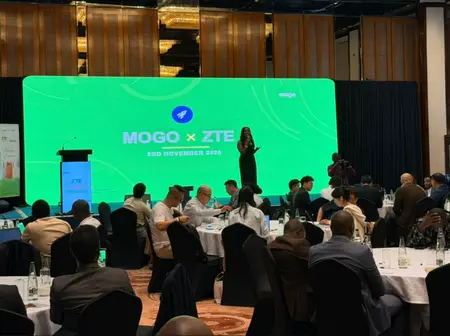
Mogo and ZTE partner to offer smartphones on Sh100 daily repayments
Kenyans can now purchase ZTE smartphones on credit through Mogo Kenya, with deposits from Sh2,500 and daily repayments from Sh100.The device financing firm has partnered with RSC Limited, ZTE's national distributor in Kenya, to enable customers buy the phones through Mogo's network of about 3,000 dealers and retail outlets across the country.
-

More than a Microsoft story: Why there is a silver lining to ADC job losses for Africa
The developments concerning Microsoft’s Africa Development Centre (ADC) in Nairobi have been weighing on me, particularly because of what they mean for the people whose careers have been built there.
I think about the engineers who have spent years developing their skills, working with talented colleagues and contributing to technology with global relevance. I think about the uncertainty facing them and their families, and the disruption to careers they have worked hard to build.
-

Samsung’s Galaxy A production cuts point to a wider shift in its smartphone strategy
Samsung is reportedly planning to cut Galaxy A production by at least 10% in 2027 as rising memory prices and competition for electronic components put pressure on its smartphone business.
The proposed reduction follows a separate decision to lower fourth-quarter 2026 production of the midrange and entry-level phones by approximately 20% against Samsung’s original manufacturing plan.
The production adjustments point to a change in how Samsung allocates resources across its smartphone portfolio. The Galaxy A series accounts for approximately 70% of the company’s smartphone shipments, making it central to its position in the global market. Samsung is now looking to strengthen its premium portfolio as higher component costs make affordable devices more difficult to manufacture profitably.
Samsung’s Mobile eXperience division also expects difficult market conditions in 2027. During its third-quarter financial results discussion, the company said rising memory and raw-material costs would put pressure on smartphone shipments, with higher device prices weighing particularly on entry-level and midrange categories. Samsung also indicated that it would focus more on flagship products and introduce new hardware and form-factor innovations.
Samsung had informed suppliers of a roughly 20% reduction in its original Galaxy A production plan for the fourth quarter of 2026. Component orders were reportedly reduced by a similar proportion, with the adjustment translating into approximately 10 million fewer units against the company’s original annual production target.
The report also cited an industry source who said Samsung was preparing to produce at least 10% fewer Galaxy A devices in 2027. The affected portfolio includes models such as the Galaxy A57, A37 and A17 5G, which serve different price segments within Samsung’s mainstream smartphone range.
The changes come as Samsung competes with Apple for the position of the world’s largest smartphone manufacturer by shipments. Counterpoint Research had projected that Samsung would edge Apple in 2026 by just 0.1 percentage points, making the volume contribution of its affordable and midrange phones particularly important. A reduction in Galaxy A production could affect that competitive position, especially if rival manufacturers maintain stronger availability in the same price segments.
Samsung’s approach also reflects the financial pressure facing its mobile division. Producing fewer devices can help manage exposure to expensive components, particularly when manufacturers cannot pass the full cost increase to consumers. The company is therefore looking to improve the balance between the number of phones it sells and the returns generated by its product portfolio.
Memory prices have become a major pressure point for smartphone manufacturers as demand from AI infrastructure developers competes for semiconductor manufacturing capacity and other electronic components. DRAM and NAND flash are essential to smartphones, supporting active applications, multitasking and internal storage. Their rising costs have a direct effect on the bill of materials, which is particularly difficult for manufacturers selling lower-priced devices.
Counterpoint Research’s March 2026 analysis found that mobile DRAM prices had increased by more than 50% quarter-on-quarter in the first quarter, while NAND flash prices rose by more than 90%. For a representative entry-level smartphone configuration, the combined cost of DRAM and NAND accounted for an estimated 43% of the bill of materials, with the overall component cost rising by approximately 25% quarter-on-quarter.
The pressure extends beyond memory. The GSMArena report identified printed circuit boards and multilayer ceramic capacitors among the components facing competition from demand for AI-related hardware. These components are important in smartphone manufacturing, and tighter supply or higher prices can make production more expensive across different device categories.
Samsung occupies an unusual position because it operates both a semiconductor business and a smartphone division. Its memory operations benefit from strong demand for chips, while its mobile business must manage the cost of using those components in Galaxy devices. The company’s semiconductor business reported strong financial performance in the third quarter, while its Mobile eXperience and Networks Business divisions recorded combined revenue of KRW37.7 trillion and an operating loss of KRW0.6 trillion, according to GSMArena’s October 30 coverage of Samsung’s results.
The difference helps explain why Samsung is placing greater emphasis on premium smartphones. Higher-priced devices give the company more room to accommodate expensive components, while entry-level and midrange phones operate within tighter price constraints. Reducing production in those segments can help Samsung manage costs as it works to improve the performance of its mobile division.
Samsung’s stated plans for 2027 place greater emphasis on premium devices, including its Galaxy S and Galaxy Z portfolios. The strategy builds on the company’s intention to improve its product mix through flagship hardware and new form factors, giving it more opportunities to compete in higher-priced smartphone categories.
The Galaxy S series is likely to remain central to this approach. Samsung could expand its next-generation Galaxy S27 lineup to four core models, comprising the standard S27, S27+, S27 Pro and S27 Ultra. The proposed S27 Pro would occupy a position between the Plus and Ultra variants, offering another option for consumers seeking a premium Samsung phone.
The report also discussed possible Galaxy S27 FE and S27 Edge models later in 2027. A broader lineup would give Samsung additional ways to address different premium price points, although the core strategy is to strengthen the value and differentiation of its flagship portfolio.
The reported plans are particularly relevant as Samsung evaluates how much of its manufacturing capacity and component supply should go towards devices with higher selling prices. The Galaxy S series offers a route to generate more revenue per handset, while the FE range provides a premium-adjacent option for consumers who want selected flagship features at a lower price than the Ultra models.
Samsung’s Galaxy S26 FE illustrates that positioning. The device combines a 6.7-inch AMOLED display, Exynos 2500 processor, 4,900mAh battery, 45W charging and IP68 protection. TechTrendsKE reported its Kenyan launch price at KSh103,000, placing it well above mainstream Galaxy A devices while offering a different balance of hardware and software features.
Samsung’s foldable business is another part of its premium strategy, although its production requirements create their own supply-chain challenges. The Galaxy Z Fold8 had encountered a shortage of display driver integrated circuits used to operate its display panels.
The report identified United Microelectronics Corporation as the Fold8’s sole supplier of the affected chips, with its manufacturing lines already operating at capacity. Samsung reportedly reduced its September production plan for Fold8 components by 10%, moving the affected volume into October while considering GlobalFoundries as an additional supplier.
The situation illustrates the complexity of producing premium smartphones that rely on specialised components. Samsung may prioritise its more expensive devices when allocating resources, but it still depends on suppliers being able to deliver the required components at the volumes its manufacturing operations need.
Supplier diversification could help Samsung reduce its exposure to individual production bottlenecks. SamMobile reported that GlobalFoundries-produced display driver chips could potentially be used in entry-level and midrange Galaxy A devices by late 2027, offering another source for components used across its portfolio.
Samsung’s production decisions matter in Africa because the Galaxy A series occupies an important position in the region’s smartphone market. The company’s affordable and midrange devices serve consumers who want established software support, reliable hardware and access to Samsung’s ecosystem without paying flagship prices.
TechTrendsKE reported in June 2026, citing Counterpoint Research, that African smartphone shipments declined 12% year-on-year in the first quarter. Higher memory costs contributed to rising handset prices and pressure on the availability of lower-priced devices. Samsung overtook TECNO to become the region’s largest smartphone vendor during the same period, while HONOR recorded 98% year-on-year growth.
That market performance provides important context for Samsung’s production plans. Its earlier inventory availability helped it compete in a difficult market, but reducing Galaxy A output could create opportunities for other manufacturers to attract consumers if they can maintain competitive pricing and supply.
The effects could extend beyond individual brand competition. The GSMA warned in September that smartphone affordability remained a major barrier to mobile internet adoption, with more than 3.4 billion people worldwide not using mobile internet despite living within mobile broadband coverage. Higher handset prices make it harder for consumers to acquire devices capable of accessing digital services, including mobile banking, online education and digital work.
For African consumers, the pressure could appear through higher launch prices, reduced hardware configurations or fewer options within familiar price ranges. Manufacturers may also retain components from previous generations for longer as they manage production costs. These decisions would affect the value consumers receive when upgrading, particularly in markets where buyers often prioritise storage, battery life, camera performance and long-term software support.
Samsung’s recent launches in Kenya illustrate the price segments that could be affected by the changing production economics. The Galaxy A18 LTE arrived at KSh32,000, while the Galaxy A08 LTE started at KSh23,300, according to TechTrendsKE’s October 16 report. The devices offer different hardware configurations, with the A18 featuring an AMOLED display and ultrawide camera, while the cheaper A08 provides a larger battery.
Both models also carry Samsung’s commitment to six generations of operating system upgrades and six years of security maintenance releases. That software-support policy is an important part of the value proposition for consumers who want to keep their phones longer rather than replace them every year.
The next Galaxy A generation will provide an important indication of how Samsung intends to manage its mainstream portfolio. TechTrendsKE reported in October that leaked specifications for the Galaxy A38 and A58 pointed to familiar camera configurations on the A58 and an ultrawide camera upgrade on the A38. The anticipated March or April 2027 launch window would place the devices among the first products through which consumers could assess Samsung’s next-generation midrange strategy.
The competitive challenge is particularly relevant in Kenya, where Samsung faces TECNO, Infinix, Xiaomi and other Android manufacturers across several price categories. If Galaxy A prices rise without comparable improvements in hardware, consumers could find better value in competing devices. Other manufacturers are also exposed to memory and component costs, however, making the ability to secure supply and manage product pricing important across the market.
Samsung’s 2027 strategy will therefore have consequences beyond its flagship sales. Its Galaxy S and Z devices may help improve the mobile division’s financial performance, but the Galaxy A range remains central to its reach among mainstream consumers. How the company balances those priorities will shape its competitiveness in markets such as Kenya, where affordable smartphones remain an important entry point into the digital economy.
Go to TECHTRENDSKE.co.ke for more tech and business news from the African continent and across the world.
Follow us on WhatsApp, Telegram, Twitter, and Facebook, or subscribe to our weekly newsletter to ensure you don’t miss out on any future updates. Send tips to info@techtrendsmedia.co.ke
-

Samsung abandoned under-display cameras after four generations. Could Apple’s foldable give the technology a second chance?
Samsung could be preparing to bring back a smartphone camera technology it abandoned after four generations of Galaxy Z Fold devices, just as Apple introduces the same approach on its first foldable iPhone. The reported Samsung under-display camera comeback on the Galaxy Z Fold9 raises an interesting question about how smartphone manufacturers and their innovations are judged, particularly when a technology that attracted criticism from one company receives renewed attention after another adopts it.
Samsung is developing a device with an under-display selfie camera, major internal changes and relatively minor adjustments to its overall thickness and design. The report cites a tipster on X who also claims Samsung is positioning the Galaxy Z Fold9 as a direct competitor to Apple’s iPhone Duo. If the reported camera makes it into the commercial device, Samsung would be returning to an approach it spent four generations refining before moving away from it.
Samsung introduced its first under-display camera on the Galaxy Z Fold3 in 2021, making the inner display appear more continuous by placing the selfie camera beneath the screen rather than cutting a visible hole through it. The 4MP camera was intended primarily to preserve the large internal display’s uninterrupted appearance, giving the foldable a more immersive viewing experience. It was an ambitious implementation of a technology that presented considerable engineering challenges, particularly around allowing enough light through the display to produce usable photographs.
The reception was difficult. Reviews of the Galaxy Z Fold3 repeatedly criticised the camera’s image quality, with publications pointing to blurry photographs, limited detail and weak results compared with conventional selfie cameras. DXOMARK’s assessment also identified problems with image noise, exposure and colour reproduction. The camera delivered on the visual objective of concealing the sensor, but its photographic performance made the compromise difficult to overlook.
Samsung retained the technology on the Galaxy Z Fold4, Galaxy Z Fold5 and Galaxy Z Fold6, making adjustments to the display structure and image processing. The Fold4, for example, introduced a different subpixel arrangement above the camera area, making it less conspicuous when the internal display was in use. Some reviewers found improvements in image output compared with the Fold3, while others still described the resulting photographs as soft and noticeably inferior to those from conventional selfie cameras.
The Fold5 brought further image-processing improvements, including better sharpness, but reviews continued to identify the camera as a weak point.
By the Galaxy Z Fold6, the criticism had become particularly familiar. Reviewers questioned the usefulness of the implementation for photography, while others continued to recommend the camera mainly for video calls rather than taking pictures. Samsung had managed to make the camera less intrusive, although the improvements in image quality never fully resolved the original problem.
The Galaxy Z Fold7 subsequently abandoned the under-display approach in favour of a conventional punch-hole selfie camera. The Galaxy Z Fold8 and Fold8 Ultra continued with that design, ending a four-generation experiment that had made Samsung one of the earliest major smartphone manufacturers to commercialise the technology across its book-style foldables.
The history matters because Samsung’s decision to abandon the camera came after several attempts to improve it, rather than a single unsuccessful product generation. The company had experimented with display construction and software processing, but the camera continued to face the same fundamental optical challenge. Light had to pass through the display layers before reaching the sensor, affecting the amount and quality of information available for image processing.
The 4MP resolution also placed a ceiling on the amount of detail the camera could capture. Even as Samsung improved its processing, the internal camera struggled to match the conventional selfie cameras available on the same devices. Owners could use the cover-screen camera or the rear camera system for better photographs, but those alternatives reduced the practical appeal of having a dedicated camera embedded beneath the larger internal display.
This history illustrates the difficulty of being an early commercial adopter of emerging smartphone technology. Samsung introduced the feature when its implementation still involved substantial compromises, and reviewers assessed those shortcomings against the price and expectations of a premium foldable. The company continued refining the technology, but its eventual return to a conventional camera suggests that the uninterrupted display was not enough to justify the photographic trade-off.
Samsung’s experience with foldables offers another example of the risks associated with early hardware experimentation. The original Galaxy Fold encountered screen failures in its initial review units in 2019, forcing Samsung to revise the device before its commercial release. Subsequent generations helped refine the category, demonstrating how early engineering attempts can provide a foundation for later products even when the first implementations attract criticism.
The under-display camera followed a different commercial path, but the underlying challenge was similar: Samsung was attempting to make a new hardware arrangement work before the technology had reached the level of refinement expected from a flagship smartphone.
Apple’s iPhone Duo has now introduced an under-display selfie camera of its own, reportedly using a 4MP sensor on the internal folding screen. The decision gives the device a cleaner internal display, although reviews have raised familiar concerns about photographic performance. Some reviewers criticised the camera’s low-resolution output, washed-out colours and weak indoor results, while others identified noise, excessive sharpening and reduced detail compared with conventional selfie cameras.
Other assessments have been more measured. Some reviewers found the camera reasonably sharp in some conditions but noted graininess and the advantages of conventional cameras. Others also highlighted its limitations for photography, particularly in challenging lighting. The overall discussion resembles the reception Samsung’s earlier implementations received, with reviewers weighing the appeal of an uninterrupted display against the compromises of placing a camera beneath it.
There is a notable historical connection here. Samsung spent four generations putting under-display cameras into its foldables before deciding that the technology did not provide a satisfactory balance between display aesthetics and image quality. Apple has now entered the same territory, adopting a similar resolution class for a feature that prioritises the appearance of the internal screen.
Apple’s implementation gives the technology another prominent platform, but it does not erase the engineering difficulties Samsung encountered. Both companies are pursuing a similar design objective, and both face the challenge of making the camera useful without compromising the display experience.
This is where the comparison becomes particularly interesting. Samsung’s early under-display cameras attracted years of criticism over their photographic limitations, with reviewers questioning whether the visual benefit justified the poor results. Apple’s adoption has also attracted criticism, although some of the discussion gives greater attention to the design decision, the novelty of its implementation and the possibilities for future improvements.
That difference raises a broader question about the standards applied to smartphone innovation. When Samsung introduced the technology, its implementation was often assessed through the shortcomings experienced by consumers. When Apple adopted it, the discussion also centred on the design benefits and the engineering decision to remove the visible camera opening from the internal display.
There is a distinction between evaluating two different implementations and applying different expectations because of the company behind them. Apple is entering the foldable market after Samsung has spent years developing the category, and its first product can benefit from an industry that already understands the advantages and limitations of folding displays. That context deserves consideration, but it should not exempt Apple’s hardware from the same scrutiny applied to Samsung.
The same issue appears in the wider smartphone industry. Samsung introduced the Galaxy Note in 2011, bringing a large-screen smartphone and stylus combination to a market where such a device was not yet a mainstream proposition. Its original Galaxy Fold also faced criticism during its first commercial attempt, but Samsung continued developing the category. Apple’s anticipated foldable entry has now brought renewed attention to a product segment that other manufacturers have spent years refining.
TechTrendsKE has previously examined this dynamic in its article, Android doesn’t have an iPhone problem. It has an identity problem, which explored how Apple’s position can influence the way Android devices are discussed and evaluated. The under-display camera offers a specific example through which to examine that argument. A technology can attract criticism when one manufacturer introduces it, yet receive renewed attention when another company adopts it, even when the fundamental engineering trade-offs remain familiar.
This does not mean every positive assessment of Apple’s camera is unfair, or that Samsung’s earlier implementations deserved less criticism. The companies introduced their products in different periods, and the quality of their respective implementations must be assessed on the evidence. However, Samsung’s contribution to the technology’s commercial development deserves recognition, particularly when discussions of Apple’s implementation revisit an approach that Samsung had already spent years exploring.
Apple’s influence over smartphone conversations also plays a role. Its adoption of a particular design can bring attention to a feature that competing manufacturers have previously introduced, changing how consumers and technology commentators discuss its relevance. That influence can make an existing technology appear newly important, even when its engineering history stretches back several product generations.
The reported Galaxy Z Fold9 development brings the discussion back to Samsung’s next generation of foldables. The company is considering a return to under-display cameras alongside major internal changes. The tipster has also claimed that Samsung is positioning the device against Apple’s iPhone Duo, placing the two products in direct competition over the design and capabilities of their internal displays.
Samsung could have an opportunity to revisit the technology with improvements informed by its earlier experience. Its previous implementations exposed the limitations of the approach, particularly around light transmission, sensor performance and image processing. A new generation could give the company another opportunity to address those challenges while delivering the uninterrupted internal display that originally motivated the design.
There is also a competitive dimension to the reported development. Apple’s adoption of under-display cameras could give Samsung another reason to pursue a technology it previously abandoned, particularly if consumers begin to associate uninterrupted internal displays with premium foldables. Samsung already has experience developing the technology, and a return would allow it to build on work that began with the Galaxy Z Fold3.
The broader issue is how the industry recognises innovation and the manufacturers that take early risks. Samsung’s under-display camera experiment did not produce the photographic experience reviewers wanted, but it helped establish a commercial reference point for a technology Apple is now using. If Samsung brings it back on the Galaxy Z Fold9, the company will have an opportunity to demonstrate how much it has learned from four generations of experimentation, while the industry gets another chance to assess the technology on the same standards applied to its earlier implementations.
Go to TECHTRENDSKE.co.ke for more tech and business news from the African continent and across the world.
Follow us on WhatsApp, Telegram, Twitter, and Facebook, or subscribe to our weekly newsletter to ensure you don’t miss out on any future updates. Send tips to info@techtrendsmedia.co.ke
-

Freezers in Sweden, Belgium overheat following possible cyberattacks
Possible cyberattacks have triggered rising temperatures in grocery store refrigeration systems across Sweden, Belgium and Luxembourg.
The head of Sweden’s national cybersecurity centre, John Billow, confirmed on Monday to the Reuters news agency that the centre is responding to multiple incidents affecting store cooling systems.
The temperature of freezers at several Swedish stores rose suddenly overnight, store operators ICA and Coop said.
Meanwhile, the Belga news agency reported overnight temperature increases at dozens of Ahold Delhaize stores in Belgium and Luxembourg, which were blamed on a cyberattack, quoting refrigeration company Sabcobel’s chief executive Stephan Moelans.
A spokesperson for the supermarket chain earlier said an “IT incident” had affected its fridges and freezers. The company is investigating the incident.
Ahold Delhaize reported a cybersecurity incident to Dutch police last month.
The cyberattack on refrigeration systems at hundreds of supermarkets in France raised the temperature of fridges and freezers to as high as 50 degrees Celsius (122F), spoiling food and causing fires at several stores.
One Swedish store said in a social media post on Monday that the temperature of its refrigerators and freezers had been set to the same temperature as during the cyberattack in France.
“We are aware that a limited number of stores were affected by an incident overnight, which impacted their refrigeration and freezer systems,” a spokesperson for privately held ICA told Reuters in an email.
Privately held retailer Coop told Swedish daily Aftonbladet that six of its stores had been affected by similar incidents.
-

How to use the KCB Mobile App: Full beginner’s guide 2026
The KCB Mobile App puts your account, bills, airtime, loans and savings in one place, so most of those errands become a few taps.This guide walks you through downloading the app, setting it up, and using the features that matter most whether you are completely new to mobile banking or moving over from *522#.
-

Google launches Skilling Africa hub to train 3m in AI by 2030
Google has launched Skilling Africa with Google, a new learning hub designed to widen access to digital and AI skills across the continent and help meet growing demand for AI-ready talent.
The platform brings more than 15 Google training initiatives into a single, personalised hub, including Hustle Academy, Google Career Certificates and Google Cloud Skills. It aims to equip 3 million people across Africa with digital and AI skills by 2030.
The initiative builds on Google’s earlier programmes, which the company says have trained more than 7 million young Africans.
Google says Africa faces an “AI paradox”: high enthusiasm for digital technology held back by severe infrastructure constraints and talent shortages. According to the company, Africa is on the threshold of a US$2.9 trillion AI-driven economic opportunity, yet more than 90% of companies report a shortage of AI-ready talent.
“Africa has a significant opportunity to shape the future of AI, but unlocking that opportunity will require people with the skills to build, use and innovate with these technologies,” said Alex Okosi, MD of Google Africa.
“Through Skilling Africa with Google, we are bringing our skilling programmes together to make digital and AI learning easily accessible to more people across the continent.”
Built for low connectivity
The hub is designed to tackle some of the main barriers to digital learning in Africa, including high data costs, patchy connectivity, device limitations and language diversity.
Its data-lite design and offline capabilities let learners download bite-sized lessons over Wi-Fi and complete them entirely offline. Learners sign in through Google’s single sign-on (SSO), with no app store download required.
Lessons cover AI, Google Cloud, digital skills, entrepreneurship and career development. They are aimed at students, developers, entrepreneurs and professionals.
The hub also includes an AI-powered study companion called SCOUT (Smart Companion for Online Understanding and Training), which offers personalised learning support and helps users navigate their learning journeys.
Gamified features, including a Skill Tree, let users track their progress, maintain learning streaks, earn badges and discover relevant learning pathways.
The platform is free and open to everyone, and launched publicly across Africa on 2 November.
“Our ambition to equip 3 million people by 2030 reflects our commitment to helping Africans build the skills they need to participate in and contribute to the digital economy,” Okosi said.
Go to TECHTRENDSKE.co.ke for more tech and business news from the African continent and across the world.
Follow us on WhatsApp, Telegram, Twitter, and Facebook, or subscribe to our weekly newsletter to ensure you don’t miss out on any future updates. Send tips to info@techtrendsmedia.co.ke
-

All about Samsung’s AI Laundry Combo that washes and dries in one unit
The Bespoke AI Laundry Combo is an all-in-one appliance that combines washing, drying and smart features, providing households a space-saving and convenient way to manage laundry.Samsung is trying to make keeping a household’s clothes clean easier with the Bespoke AI Laundry Combo™, a washer-dryer that washes and dries clothes in one appliance.