Category: Technology

  • Apple’s iPad Air cut from £749 to 66p a day as Sky teases Black Friday deals

    Apple’s iPad Air cut from £749 to 66p a day as Sky teases Black Friday deals

    Apple iPad Air 2026 M4

    The iPad Air has long battery life, fast speeds, and the M4 Chip

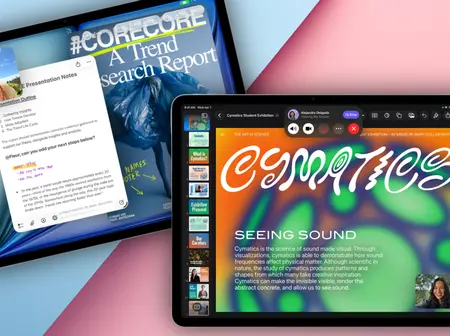
    Anyone looking for a powerful tablet, Apple’s iPad Air should be at the top of the consideration list. A flagship model launched this year, it’s a speedy yet smooth option, with everything from a high-end laptop packed into a sleek tablet.

    Weeks before Black Friday officially starts, shoppers can split the price. The 2026 iPad Air has Apple’s powerful M4 chip and costs upwards of £749 to buy outright, but there’s now a way to pay less than £1 a day for it.

    As the retailer teases “Sky Black Friday is coming soon” with a live countdown and hint to broadband packages, shoppers can save on Apple’s powerful iPad Air.

    Available in all of Apple’s signature blue, starlight, space grey and purple, Sky consumers will pay £19.80 a month (with a £12 upfront fee) for the 11-inch size and 128GB storage model. A cost-splitting plan which cuts the price to 66p a day, based on an average 30-day month.

    For context, Apple’s per-month price is £62.41 for shoppers, a higher cost as it’s split across a 12-month period – which works out to be £2.08 a day. In comparison, Sky Mobile’s price is lower at £19.80 a month but is locked into a longer 48-month contract.

    Apple iPad Air M4

    Content Image

    From £749 outright

    £19.80 a month

    Sky Mobile

    Tech shoppers can split the price of Apple's powerful flagship iPad Air – fitted with the M4 chip. It has quicker speeds, faster interactions by more than 30% compared to older models.

    Sky does offer a shorter option of 36 months, which is priced at £27 a month, again with a £12 upfront fee. This works out to beless than £1 a day, at 90p based on a 30-day average month.

    The model is also WiFi + Cellular, making it good for users who’ll need a consistent, strong internet connection on the go – as they can switch between internet and using data. That being said, users will need to pick an adjacent data plan, which is an additional cost – but currently on sale.

    In Sky’s early Black Friday offer on device plans, its 1GB-a-month data plan is cut from £8 monthly to £1. A 25GB allowance monthly is now £10 per month, not £17, and the optimal unlimited data is now £21 a month, not £28.

    It has Apple’s newest chip everything is as responsive as possible, apps will open quickly, and it makes jumping between a video call, web browsing, and email stutter-free. “Very fast and responsive”, said one iPad Air M4 user who bought it outright at Amazon.

    They bought the model ‘as a great replacement for their older iPad’ and highlighted its specs: “Great battery life. Fantastic picture quality from the screen.

    iPad Air

    It's ideal for anyone looking for a way to upgrade older iPads before Christmas or make a saving in Black Friday(Image: Apple Newsroom )

    “I do, however, find the Touch ID sensor that is now on the power switch doesn’t always work correctly if you use a protective case. I would have much preferred the touch sensor to still be on the screen somewhere like older versions of iPads.”

    “The display is wonderful, the performance is super fast, and the battery charges quickly. It has amazing connectivity and is very easy and smooth to use, whether you’re using the Pencil Pro or not. Plus, it’s the best price I’ve found while browsing. It’s lightweight and has a gorgeous design."

    Another user said: “The display is wonderful, the performance is super fast, and the battery charges quickly. It has amazing connectivity and is very easy and smooth to use, whether you’re using the pencil pro or not.”

    Sky has officially launched a countdown for its Black Friday deals, as they start on Thursday, November 5. It is expected to run across all its TV, broadband, combo, sport and mobile packages, although nothing has been confirmed yet. There is, however, a ‘Black Friday’ homepage ready on their site which highlights its Full Fibre 500 Mbps plan.

    Samsung has gone live with its ‘Samsung Week’ offers, which sees the rival Galaxy Tab S12 Ultra cut by £10 0 with a code at checkout, while Argos and Currys are other retailers to keep an eye on for Black Friday tech discounts.

    Argos’ 2026 Black Friday discounts sees the Honour Pad X7 cut to £119 . Now this doesn’t compare to the above Apple 2026 iPad Air, as it’s not as powerful, has a smaller 8.7-inch screen and only runs on WiFi but it’s an option for everyday simple admin or light work.

    “Black Friday just got bigger” is Currys official site banner as it makes 40% price cuts across home tech and devices. Not a tablet, but this ASUS Vivobook could be another option for on-the-go users as it drops from £1,199 to £849, a £350 saving.

    Productivity is boosted by its integrated Copilot +PC, it can last up to 25 hours on a single charge, and it’s light to carry between the office and home in a backpack thanks to its 1.7kg sleek design.

  • How Instagram is trying to lure YouTube creators with payments of up to Ksh65M

    How Instagram is trying to lure YouTube creators with payments of up to Ksh65M

    thumbnail

    Instagram is offering selected content creators up to $500,000 (approximately Ksh65 million) to publish long-form videos on its platform as it steps up efforts to compete with YouTube for online video audiences.The Meta-owned platform has reportedly offered some creators $50,000 (about Ksh6.5 million), while other deals have reached six figures, according to Business Insider.

  • Kenyan websites suffer blow as hackers exploit AI

    Kenyan websites suffer blow as hackers exploit AI

    Communications Authority of Kenya

    Cyberattacks targeting websites and web-based applications in Kenya have jumped 163 percent in a year, as criminals use artificial intelligence (AI) to identify software weaknesses and exploit them within hours.

    Data from the Communications Authority of Kenya (CA) shows that web application attacks rose to 27.4 million in the three months to September 2026, up from 10.4 million in the same period last year.

  • Safaricom, Airtel face upfront spectrum fee payments in proposed changes

    Safaricom, Airtel face upfront spectrum fee payments in proposed changes

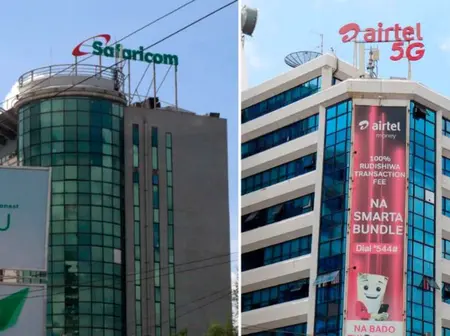
    Telecommunication companies, including Safaricom, Airtel, and Telkom Kenya, will pay billions of shillings upfront for radio frequency rights if Parliament approves a proposal by the ICT Ministry to scrap the decade-long instalment option.

    The ministry proposes changes to the Kenya Information and Communication Act, which would remove provisions enacted in 2019 that allowed piecemeal payment of spectrum licence fees exceeding Sh1 billion over a period of up to 10 years.

  • Goodbye, Buffering! How Safaricom’s 21,000km Fibre Network and 1,879 5G Sites Are Building Kenya’s Digital Future

    Goodbye, Buffering! How Safaricom’s 21,000km Fibre Network and 1,879 5G Sites Are Building Kenya’s Digital Future

    thumbnail

    There are few things more humbling than trying to sound professional on a video call while your screen freezes with your mouth wide open. The loading circle has embarrassed students, entrepreneurs and office workers in equal measure. Kenya’s digital future needs more than ambitious apps and beautiful websites.

  • Your M-PESA Receipt Is Not Your Biography: How Safaricom Is Making Privacy and AI Work for Kenyans

    Your M-PESA Receipt Is Not Your Biography: How Safaricom Is Making Privacy and AI Work for Kenyans

    thumbnail

    Your phone number is not a public announcement. Your full identity is not an optional extra to be handed over every time you make a payment. And a simple transaction should not feel like submitting an application to become someone’s next unsolicited marketing contact. In the digital economy, convenience should not require customers to surrender unnecessary personal information.

  • How counties can turn social media engagement into real value

    How counties can turn social media engagement into real value

    Kenya's digital landscape continues to expand. Platforms such as Facebook, TikTok, YouTube, Instagram, LinkedIn, X and WhatsApp have become the spaces where citizens consume information, debate public issues and engage with institutions.

    As a result, government communication has changed. Gone are the days when public communication meant issuing a press release, holding a press conference or placing an advertisement in a newspaper and waiting for citizens to respond. For County Governments, this shift towards social media platforms and other forms of digital communication presents both an enormous opportunity and a significant responsibility.

    Social media therefore cannot be treated simply as another noticeboard for posting photographs of meetings and speeches. It is increasingly part of the public service itself, acting as a vital tool for widespread democratic participation and catalyst for social change.

    A well-managed county social media channel can explain a new health programme, tell farmers where to access extension services, alert residents about an emergency, explain a budget decision, showcase a local enterprise or direct a citizen to the office that can resolve a problem.

    However, simply being online does not guarantee meaningful engagement. The greatest value of government social media is not the number of followers. It is the trust created when citizens consistently receive information that is timely, accurate, relevant and understandable. This requires County communication executives to rethink what success looks like.

    First, communication must be citizen centred. The starting question should not be, "What did the Governor do today?" but rather, "What does the citizen need to know?" A commissioning of a health facility matters, but citizens are more interested in where it is, what services it offers, who can access them and how their lives will be changed.

    Second, authenticity matters. Government does not have to sound like advertising. Citizens can tell genuine communication from content created simply to make an institution look good. Showing real people, real projects and real experiences can be more powerful than polished publicity.

    Third, trust must be earned through accuracy. While Social media rewards speed, government communication must prioritise verification. A false post can reach far more people than the correction that follows it.

    Communication teams therefore need strong systems for verifying information with technical departments before publication, particularly during emergencies and periods of heightened public interest.

    Fourth, counties must listen, not merely broadcast. A social media account that only publishes announcements is only utilizing half of its potential. Citizens are asking questions, reporting problems and sharing experiences every day. Communication teams should monitor these conversations and establish clear pathways for referring legitimate service issues to the responsible departments.

    Fifth, one Kenya does not mean one audience. The communication needs of a young person in Nairobi may differ greatly from those of a farmer in Turkana, a trader in Mombasa or a parent in Taita Taveta. Even within a single County, urban and rural communities may consume information differently.

    This is why social media should complement, rather than replace, traditional communication channels. County governments must continue to use community radio, public meetings, local networks, websites, SMS and other appropriate channels. Kenya's County public participation framework already recognises the need to use multiple communication platforms depending on their reach, effectiveness and the diversity of the people they serve.

    There are also genuine risks. Social media can amplify misinformation, deepen political tensions, expose institutions to reputational damage and create pressure for communication teams to respond before facts are established.

    The answer, however, is not for government to retreat from social media. It is to become better at using it. County communication executives need clear editorial policies, rapid verification systems, crisis communication protocols, trained digital teams and regular analysis of audience behaviour.

    They must also invest in compelling storytelling, data, visual communication and the capacity to produce content in formats suited to different platforms and users.

    Most importantly, they must understand that digital communication is not simply about technology. It is about relationships.

    The future of government communication will belong to institutions that can explain, listen, respond and build trust consistently. Social media gives County Governments an unprecedented opportunity to make Devolution more visible, understandable and accessible to the people it was created to serve.

    The question is no longer whether government should be on social media, it is whether government is using that space well enough to make citizens better informed, better heard and better served.

    For county governments, that is the real measure of digital communication.

  • Faster Fibre, Better Homes: What Safaricom’s Pata More Upgrade Means for Kenyan Households

    Faster Fibre, Better Homes: What Safaricom’s Pata More Upgrade Means for Kenyan Households

    thumbnail

    If you pay for Safaricom Home Fibre on the entry-level Bronze plan, your connection is now up to 2.5 times faster than the one you signed up for, and your bill hasn’t moved. Bronze went from 15 Mbps to 40 Mbps at the same KES 2,999 a month.

  • Safaricom explains how to use My OneApp to reverse money sent to fraudsters

    Safaricom explains how to use My OneApp to reverse money sent to fraudsters

    Safaricom explains how to use My OneApp to reverse money sent to fraudsters

    Safaricom has outlined steps customers can take to report suspected fraud and seek assistance after sending money to fraudsters, urging victims to act immediately to minimise potential losses.

    In a fraud awareness campaign shared through whatsap channel on Tuesday, November 3, 2026, the telecommunications company advised customers who have sent money to suspicious numbers to contact its customer care team immediately.

    A WhatsApp message from Safaricom explaining how to recover money sent to fraudsters. PHOTO//Safaricom

    “Contact Safaricom immediately. 100 (Prepay) or 200 (Postpay),” the company advised, adding that customers could also use My OneApp to report fraudulent transactions.

    In an infographic titled “Umetuma pesa kwa con? Fanya hivi haraka!” (Have you sent money to a fraudster? Do this quickly!), Safaricom outlined five steps customers should follow after falling victim to fraud.

    The company urged customers to preserve evidence, including transaction messages, phone numbers and conversations that could help with investigations.

    “Keep the evidence,” Safaricom stated, advising customers to retain M-Pesa messages and other information related to the suspicious transaction.

    It further encouraged customers to report suspicious phone numbers by sending an SMS containing the number to 333 or using My OneApp.

    “Report the suspicious number,” the company stated in its guidelines.

    Safaricom also cautioned customers against sending additional money to fraudsters, urging them to follow up on their reports using the reference numbers provided.

    In a separate fraud awareness message, the company warned customers against falling for suspicious calls, SMS messages and WhatsApp communications from individuals impersonating Safaricom officials.

    “Safaricom will only contact you on 0722 000 000,” the company stated, urging customers to verify calls claiming to originate from the telecommunications provider.

    A WhatsApp message from Safaricom explaining how to recover money sent to fraudsters. PHOTO//Safaricom

    It further warned customers against sharing confidential information, including M-Pesa PINs, passwords and verification codes.

    “Never share your M-PESA PIN, passwords or verification codes with anyone,” Safaricom cautioned.

    The company also encouraged customers to report suspicious calls, messages and phone numbers through its official reporting channels.

    The awareness campaign comes amid growing concerns over mobile money fraud, with customers increasingly being targeted through phishing links, fake promotions, suspicious calls and fraudulent messages.

    Safaricom urged customers to remain vigilant, preserve evidence and report suspected fraud promptly.

  • How to Convert an Image to JPEG Format

    How to Convert an Image to JPEG Format

    thumbnail

    Learning how to convert an image to JPEG format is useful when you want to reduce image file sizes, make pictures easier to share, or upload photographs to websites that require JPEG files. JPEG, also known as JPG, is a widely supported image format commonly used for photographs and digital images.